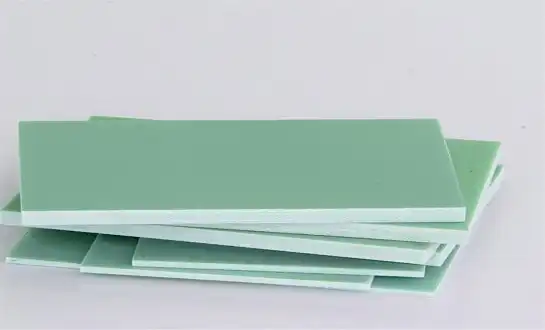
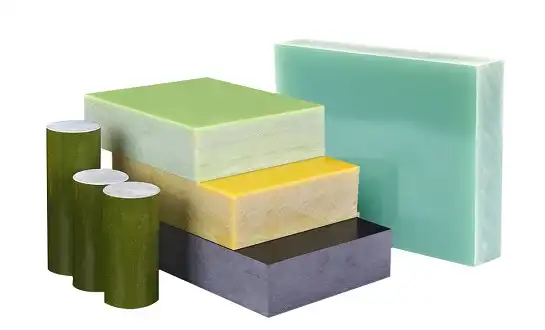
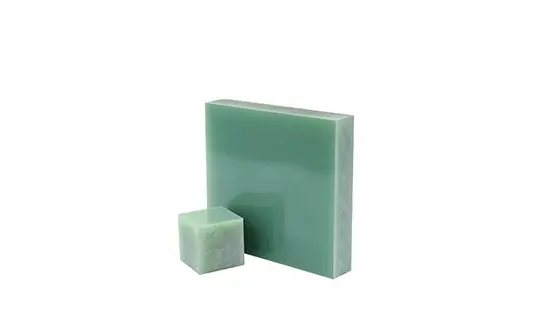
Why Is Surface Finish Critical for G10 Epoxy Sheet Parts?
Surface finish isn't merely about aesthetics when it comes to G10 epoxy sheet components—it's a fundamental determinant of electrical performance, mechanical reliability, and long-term operational safety. The microscopic topography of these glass-reinforced epoxy laminates directly impacts dielectric strength, adhesion properties, wear resistance, and thermal management capabilities. Whether you're designing high-voltage switchgear, precision PCB supports, or structural insulation assemblies, understanding how surface texture influences material behavior helps prevent costly field failures and ensures compliance with stringent industry specifications that govern modern electrical and industrial applications.
Understanding the Role of Surface Finish in G10 Epoxy Sheet Parts
When high-quality epoxy resin binder is mixed with knitted fibreglass cloth in a controlled lamination process, the result is G10 epoxy sheets, which are the best designed composite materials available. When heat and pressure are carefully controlled, these layers join together to form a thick, uniform structure that is very good at insulating electricity, being tough, and staying the same size across a wide range of temperatures. In the 1950s, these G10 epoxy sheet laminates were first made for printed circuit board substrates. Since then, they've grown into mission-critical parts used in aerospace systems, automotive assemblies, electronics manufacturing, and power distribution infrastructure.
Defining Surface Finish Parameters
Surface finish is made up of a number of measurable qualities that engineering teams must specify when they are buying something. Roughness average (Ra) is the mathematical mean of the surface flaws, which can be anywhere from 0.8 to 6.3 micrometres based on how the product was made. Flatness tolerances show how well the material keeps its dimensions the same across bigger sheets, which is very important for automatic assembly and precise fixturing.
Different surface patterns are made by different manufacturing methods. Standard press-plate contact during sealing leads to matte finishes, which leave a slightly wrinkled surface that is moderately rough. When manufacturers use intermediate polishing steps, semi-gloss finishes appear. On the other hand, mirror-polished surfaces go through a lot of grinding and buffing after they cure to get the roughness level down to less than 0.4 micrometres.
Industry Standards Governing Surface Quality
The Institute for Printed Circuits (IPC) and the American Society for Testing and Materials (ASTM) set strict standards for the surface properties of G10 epoxy sheet laminates. For high-performance electrical grade laminates, IPC-4101 standards spell out the acceptable levels of surface defects, the level of cleanliness needed, and the visual acceptance criteria. Standardised test methods in ASTM D709 are used to measure surface resistance and dielectric breakdown voltage, which are directly affected by the texture and amount of contamination of the surface.
When purchasing managers look at a supplier's skills, they should use third-party approval paperwork to make sure they follow these standards. Consistency in surface quality across production runs shows mature process control and stable supply chain performance, which lowers the chance of problems further down the manufacturing chain.
How Surface Finish Influences the Performance of G10 Epoxy Sheet Parts
Surface topography and functional performance are linked in a number of different operational areas. Different application environments have different needs for the surface properties of materials. This is why informed specification is so important for the success of a product.
Electrical Insulation and Dielectric Strength
By getting rid of microscopic bumps that concentrate electric field stress, smoother surface finishes greatly improve the ability to withstand voltage. When there are bumps on the surface, they form high-field areas where partial discharge can start. This can slowly wear away the insulation through tracking and carbonisation paths. This link is especially important in high-voltage switchgear and transformer insulation uses, where parts often have to handle tens of kilovolts.
Manufacturers of power equipment have tested and found that G10 epoxy sheet laminates with Ra values below 1.6 micrometres have dielectric breakdown strengths greater than 20 kV/mm perpendicular to the laminates. This is about 15% higher than the same materials with standard mill finishes. This performance gap immediately means longer service life and lower failure rates in places where electricity is used a lot.
Mechanical Durability and Wear Resistance
How parts react to friction, wear, and mechanical loading cycles is greatly affected by the roughness of their surfaces. Understanding this link is helpful for people who build machines that use G10 epoxy sheet spacers, gears, and structural supports. Smoother finishes lower the coefficients of friction, which means that less heat is produced in moving contact situations and parts last longer because they wear out less quickly.
On the other hand, controlled surface roughness is needed in some assembly situations to improve the performance of adhesive bonds. Epoxy glue and structural films work best on surfaces with Ra values between 3.2 and 6.3 micrometres. This is the right amount of roughness to get the best mechanical joining without sacrificing wetting properties. When automotive part manufacturers make battery pack barriers and thermal management assemblies, they often include surface finish requirements to make sure the structural adhesive works best in these safety-critical situations.
Thermal Management Capabilities
How well heat is dissipated depends in part on the surface's emissivity properties, which are related to the texture of the finish. Matte surfaces have higher emissivity coefficients than polished ones. This means they are better at transferring heat through radiation, which is useful for things like insulating motor parts and mounting plates for power electronics. Getting the surface ready for thermal cycling also makes it last longer. Smooth finishes reduce stress concentrations in places where thermal expansion mismatches can start micro-crack spreading during repeated heating and cooling cycles.
Manufacturers of transformers that use equipment that is constantly heated and cooled between room temperature and 130°C depend on G10 epoxy sheet materials that don't break down even after thousands of thermal cycles. Specifications for the surface finish have a direct effect on this fatigue resistance, which makes it an important thing to think about when buying things for power distribution and the energy sector.
Common Challenges and Risks of Improper Surface Finish on G10 Parts
When choosing materials and evaluating suppliers without paying enough attention to surface quality, it leads to multiple failure modes that hurt product performance and profits. Knowing about these risks helps buying teams put in place the right quality control measures.
Product Integrity Failures
When the G10 epoxy sheet is put under mechanical stress or thermal cycling, micro-cracks start at the surface and spread through the thickness. Eventually, these cracks cause the component to fail catastrophically. The glass support layers and epoxy matrix often start to separate at surface contamination points where there was poor bonding during production. These types of failure are especially bad in safety-critical settings, like electrical switches and car insulation systems, where parts breaking down without warning can cause dangerous situations.
Surface pollution from poor cleaning or handling adds foreign substances that affect how well the electrical system works. Fingerprint oils, machine coolant leftovers, and airborne dust particles make conductive paths across insulating surfaces. This makes tracking resistance and voltage withstand capability much lower. When engineering managers choose parts for high-reliability applications, they need to make sure that the supplier follows proper cleaning and handling procedures to get rid of these contamination risks.
Supply Chain and Procurement Complications
If the quality of the surface finish is different between production batches, it means that the supplier's facilities aren't controlling the process well enough. This variation shows up as differences in size, changing electrical properties, and unpredictable machining behaviour during secondary operations. If a lot of items are being rejected during the arriving inspection process, the procurement team should look at other sellers whose quality systems have been shown to be more mature.
When surface quality problems mean that work needs to be redone or new shipments need to be sent, delivery delays get worse. These problems are especially bad for machinery makers who use just-in-time manufacturing plans, because they can cause production lines to stop and customer deliveries to be late. These supply chain risks can be effectively reduced by setting clear surface specification requirements during supplier qualification and ensuring that incoming inspection protocols are in line with IPC and ASTM standards.
Best Practices for Selecting and Specifying Surface Finish in G10 Epoxy Sheets
Strategic choices about buying things start with clear technical specs that tell possible suppliers exactly what is needed and allow for an objective quality assessment during the incoming check.
Technical Specification Development
Standards for measuring surface roughness, such as ASME B46.1, should be used to set both the Ra (average roughness) and Rz (highest peak-to-valley height) factors. In electrical applications, Ra values below 3.2 micrometres are usually needed to make sure that the dielectric performance is good. On the other hand, bigger roughness may be okay in mechanical applications, based on the loading conditions and expected wear.
Specifications for flatness become more important for larger G10 epoxy sheet sizes that are used in PCB support applications and structural assemblies. When you talk about flatness in terms of the largest variation per unit length, like 0.5 mm per metre, you set clear, measurable standards that providers can check using coordinate measuring machines or optical profilometry.
Comparative Material Considerations
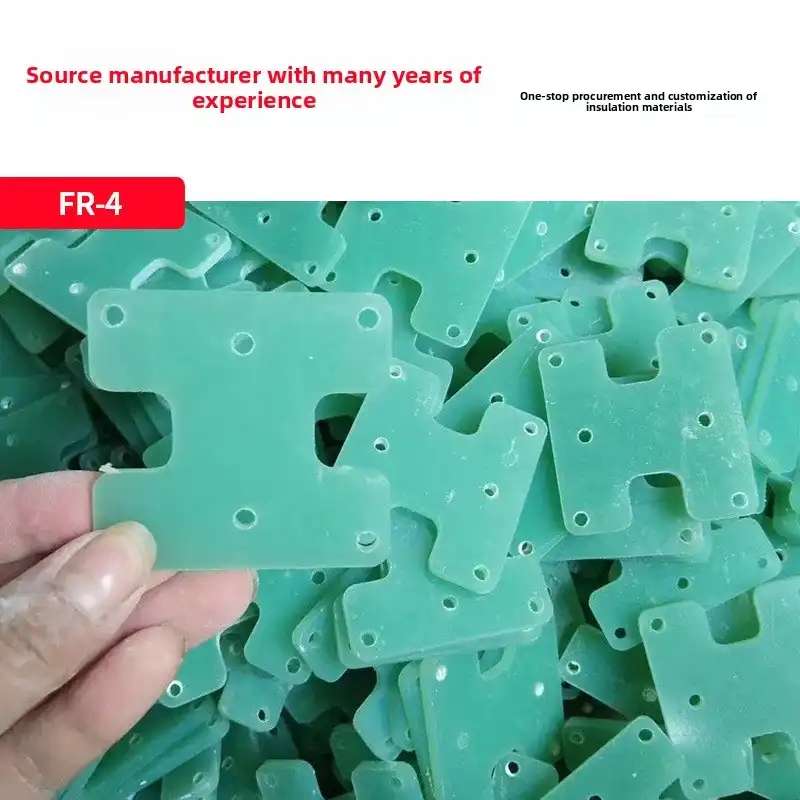
Knowing the differences between G10 epoxy sheet and FR4 types helps buying teams choose the best materials for each job. Both are made of G10 epoxy sheet construction, but FR4 has flame-retardant chemicals based on bromine that meet UL94 V-0 standards, which are required for many household electronics and building electrical systems. Standard G10 epoxy sheet formulations that don't have these additives have slightly higher mechanical strength and resistance to moisture, which makes them better for structural uses in places where fire safety isn't important.
Surface finish behavior differs subtly between these material variants. Because flame retardant particles are spread out in the plastic matrix, FR4 formulations sometimes have slightly rougher surfaces when they are moulded. The specs for buying things should take these unique properties of the materials into account and change the tolerances for surface roughness to match, while still meeting performance standards.
Supplier Qualification Criteria
Trusted suppliers have a quality system that is at least ISO 9001 certified, and electrical component makers gain from suppliers who also have IPC certification. Testimonials and case studies from customers can tell you a lot about a supplier's consistent performance, delivery reliability, and expert help skills, all of which are just as important as low prices.
Suppliers who are open about their manufacturing processes, such as lamination press specs, post-cure machining abilities, and surface preparation routines, show that they are ready to work with you to meet your unique needs. People who work in procurement should give more weight to suppliers who offer detailed technical documentation, material test results that are in line with ASTM standards, and quick engineering help for developing specifications.
Enhancing Procurement Decisions: How to Optimize Surface Finish Outcomes for G10 Sheet Orders
Strategic optimisation weighs the need for technical performance against the overall cost of ownership. It takes into account the fact that expensive surface finishes cost more per unit but may lower the costs of processing and warranties later on.
Application-Specific Alignment
G10 epoxy sheet naturally doesn't absorb much water—usually below 0.1% after 24 hours of soaking testing—which makes it useful for uses that need to keep the material dry. The finish on the surface has a small effect on this behaviour. Because they have less surface area, smoother surfaces have slightly lower absorption rates. To get the best long-term dimensional stability, marine electronics assemblies and outdoor electrical enclosures that work in high-humidity areas should specify tighter surface finish tolerances.
Cost-Quality Balance Assessment
Depending on the complexity of the finish and the number of units ordered, higher-end surface finishes raise the cost of materials by about 15 to 30 percent per unit compared to standard finishes. Managers of procurement have to weigh this price against the money that could be saved on other tasks. Parts that need to be coated, bonded, or metallized later often benefit from having the best surface preparation done by G10 epoxy sheet makers who have special cutting and polishing tools.
Customization and Value-Added Services
Leading makers of G10 epoxy sheet offer a wide range of customisation options, going beyond standard sheet sizes and surface styles. For better adhesion, procurement teams can ask for custom thickness standards, blocks that are precisely cut to near-net shapes, and special surface treatments like chemical cleaning, plasma activation, or corona treatment.
Working together with suppliers cuts down on the time it takes to make a product by using their material knowledge during the planning process. When suppliers help engineering teams figure out the best surface finish specifications for a given manufacturing process, it saves them a lot of money and time on costly design changes and qualification delays. This way of working together is especially helpful in the aerospace and automotive industries, where the processes for qualifying materials need a lot of paperwork and proof of performance.
Conclusion
Surface finish is more than just a matter of looks for G10 epoxy sheet components; it directly affects how well they work electrically, how reliable they are mechanically, and how long they last in critical applications. People who work in procurement who understand the technical connections between surface texture and functional behaviour can get a competitive edge by making sure that material standards are optimised in a way that balances performance needs with total cost concerns. Setting clear standards for surface quality, working with qualified suppliers who can show mature process control, and using customisation options that meet the needs of specific applications all help build strong supply chains that support product excellence in the automotive, electrical, industrial, power generation, and appliance manufacturing sectors.
FAQ
What distinguishes G10 from FR4 in practical applications?
Both materials are made of glass-epoxy construction, but FR4 has flame-retardant chemicals that make it self-extinguishing according to UL94 V-0 grades. what makes G10 epoxy sheet different from FR4? Standard G10 epoxy sheet doesn't have these additives, so it has a little more strength and resistance to moisture. Many suppliers now offer dual-rated G10 epoxy sheet/FR4 materials that work well in both situations.
Does surface finish affect machining requirements?
Of course. When doing secondary machining, smoother finishes mean less tool wear, but you may need to use more aggressive feeds to keep the surface from burning. No matter what finish is used, the glass reinforcement is very rough, so carbide or diamond tools with the right dust extraction methods are needed to keep fibreglass bits from getting into your lungs.
Can surface finish specifications improve outdoor durability?
The texture of the surface has a small effect on how quickly UV damage happens. While G10 epoxy sheet naturally turns yellow when exposed to sunlight for a long time, better finishes reduce the amount of surface area that can absorb water and dirt. UV-resistant coats are still needed for outdoor uses to keep the look, but the electrical and mechanical qualities stay the same.
How does surface preparation impact adhesive bonding?
Controlled surface roughness between 3.2 and 6.3 micrometres Ra is needed for the best glue performance. This allows for mechanical joining without sacrificing wetting. Surfaces that are too smooth weaken the bond, while surfaces that are too rough leave holes in the glue layer. By choosing the right surface finish, you can skip the time-consuming and expensive steps of surface preparation during assembly.
Partnering with J&Q for Superior G10 Epoxy Sheet Solutions
J&Q has more than twenty years of experience making high-performance insulation materials and more than ten years of experience meeting the needs of businesses around the world when they need to buy things. We can help you with your most difficult jobs because we know a lot about how to optimise surface finishes for a wide range of uses. As a trusted provider of G10 epoxy sheets, we make sure that every sheet meets the strict surface finish requirements set by IPC and ASTM standards throughout the entire production process. Our combined logistics skills give you a real one-stop service, which cuts down on the hassles of planning and speeds up delivery times. Get in touch with our expert team at info@jhd-material.com to talk about your specific surface finish needs and find out how our customisation options can help your product work better and make production go more smoothly.
References
1. Harper, Charles A. Handbook of Plastics Technologies: The Complete Guide to Properties and Performance. McGraw-Hill Professional, 2006.
2. Lubin, George. Handbook of Composites. Van Nostrand Reinhold Company, 1982.
3. Mazumdar, Sanjay K. Composites Manufacturing: Materials, Product, and Process Engineering. CRC Press, 2002.
4. Gurrala, Praveen Kumar. "Part Strength Evolution with Bonding Between Filaments in FDM." Virtual and Physical Prototyping 9, no. 3 (2014): 141-149.
5. Sharma, Arun K. Textbook of Correlations and Regression. Discovery Publishing House, 2005.
6. Coombs, Clyde F. Printed Circuits Handbook, Seventh Edition. McGraw-Hill Education, 2016.

Get a complete product list and quotation

J&Q New Composite Materials Company