Why Do Manufacturers Use CNC Routers for G10 Sheets?
Manufacturers rely on CNC routers for G10 sheet fabrication because this technology delivers unmatched precision, repeatability, and efficiency when working with this challenging composite material. G10 sheets, composed of woven fiberglass and epoxy resin, demand specialized processing due to their extreme hardness and abrasive nature. CNC routers eliminate the dimensional inaccuracies and edge chipping common with manual methods, while preserving the material's critical electrical insulation and mechanical properties that engineers depend on for high-performance applications.
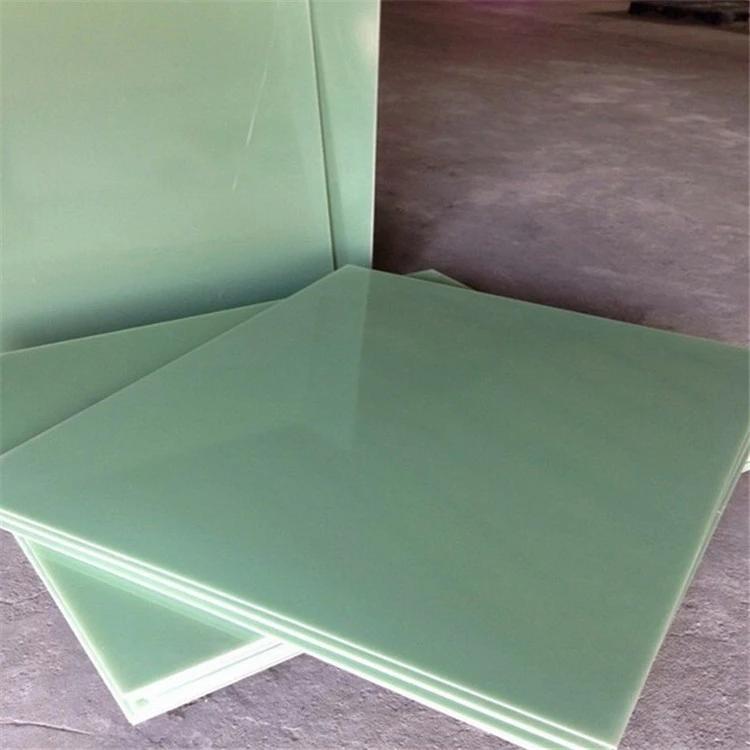
Understanding G10 Sheets and Their Manufacturing Challenges
G10 sheets are high-pressure fiberglass laminates that are known for being very resistant to heat, electrical protection, and wear and tear. This composite material is made of epoxy glue and woven fiberglass cloth. It makes a structure that can withstand temperatures of up to 130°C and keep water absorption rates below 0.1%. Because of these qualities, G10 sheet is used in electrical switchgear, parts of industrial machinery, and equipment for distributing power.
The Complex Nature of G10 Composite Structure
The complex structure of G10 sheet makes it difficult to work with. Each sheet has several layers of glass cloth that are saturated with thermosetting epoxy glue and then pushed together using heat and pressure in a way that meets NEMA standards. This process makes a material that is stronger than most plastics and has great dielectric properties. However, the glass fibers that are mixed in are rough and wear down regular cutting tools quickly.
Material Properties That Complicate Processing
G10 sheet is great for precision uses because it is very stable in all dimensions, but this makes cutting more difficult. The material doesn't change shape when it's under mechanical stress, so the cutting forces have to overcome a lot of resistance. When processing is done wrong, too much heat is created, which can break down the resin or cause the layers of glass cloth to separate, which weakens both the structure and the insulation.
Safety and Quality Concerns in G10 Fabrication
When you process G10 sheet, you create fine glass dust particles that can be harmful to your lungs if you don't have the right filtering systems in place. Because of the uneven cutting patterns and vibrations that come with traditional cutting methods, more particles are often released into the air. Aside from safety concerns, hand production methods have a hard time keeping the very tight thickness tolerances (often within ±0.005 inches) that electrical and electronics makers need for reliable assembly and performance.
Limitations of Traditional Cutting Methods for G10 Sheets
When working with G10 sheets and epoxy laminates, traditional ways of making things like sawing, drilling, and using hand-operated tools are inefficient in many ways. These old ways used to work in industry, but they can't handle the precision needs or production rates of today.
Edge Quality Issues with Manual Cutting
Hand-held cutters and saws often chip the edges and separate the material along the cut lines. The uneven cutting action and operator variation make the edge conditions unpredictable, which requires extra finishing steps. This edge damage is especially bad for parts that are used in high-voltage areas, since rough surfaces can cause electrical tracking or arcing failures.
Dimensional Accuracy Limitations
When measuring and cutting by hand, mistakes are made by people, and these mistakes add up over many production runs. Without automated guidance systems, it's hard to get consistent hole placement, accurate contours, and edges that are parallel to each other. When part sizes change from batch to batch, it can be hard for engineering teams that are making systems with multiple G10 sheet parts to keep everything fitting and aligned correctly.
Production Efficiency and Cost Factors
To use traditional methods, you need skilled workers who can move slowly and carefully so that mistakes are kept to a minimum. The cost of labor goes up quickly, especially for complicated shapes that need to be set up more than once. Material loss goes up a lot when workers have to leave extra stock to account for inaccurate cutting, which lowers yield rates and raises the cost of raw materials. Because of all of these things, traditional methods are becoming less and less cost-effective in competitive manufacturing settings.
Why CNC Routers Are the Preferred Solution for G10 Fabrication?
CNC cutting technology completely changes how G10 sheets are processed by adding computer-controlled accuracy and automatic management of workflows. This new technology fixes the main problems with the old ways of doing things by hand and opens up new ways to make complex parts.
Precision and Repeatability Benefits
CNC routers follow cutting lines that are accurate to within ±0.001 inches of where they are supposed to be, so the sizes of thousands of similar parts stay the same. The computer-controlled spindle exactly follows programmed toolpaths. This gets rid of any variation caused by human error and makes it possible to make complex shapes that would be impossible to make by hand. This repeatability is very important for electrical makers who need to use replaceable parts that fit perfectly and have enough electrical space between them.
Material Optimization and Waste Reduction
Automated layout software efficiently places multiple parts on sheet stock, making the best use of materials and reducing waste. CNC systems cut closer to the edges of the part without the safety gaps that are needed for human work. This increases yield rates by 15 to 25 percent compared to the old way of doing things. These savings, which add up over production runs of hundreds of sheets, lower material costs by a large amount and help environmental efforts by reducing waste.
Preservation of Material Properties
When the right tools and spindle speeds are used with CNC routers, they make cleaner cuts with less heat buildup. This controlled cutting environment keeps the epoxy resin matrix intact and stops the layers of glass fabric from coming apart. The end result keeps the dynamic qualities, heat resistance, and dielectric strength that engineers need for tough jobs. When making battery pack barriers and insulation fixings that need to meet approved performance standards, automotive component makers really value this uniformity.
Complex Geometry Capabilities
Modern CNC cutters can make complex forms, precise hole patterns, and three-dimensional contours that are too expensive or time-consuming to do by hand. With this feature, designers can make sure that the shape of a component is optimized for performance rather than ease of manufacture. When industrial machinery makers use G10 sheet stock to machine complex tooth profiles straight into custom mechanical spacers and gear blanks, the end products are better.
Evaluating CNC Routing Solutions for G10 Sheets – What Procurement Managers Need to Know
To find the best CNC routing partner for G10 sheets, you need to carefully look at their technical skills, quality systems, and service offerings. Those in charge of procurement need to find sellers who know how composite materials behave and what the industrial needs are, not just those who offer basic cutting services.
Technical Capability Assessment
How well a CNC machine works with rough materials like G10 sheet depends on its spindle power and speed range. High-frequency wheels that run at speeds above 18,000 RPM and have enough power give the best surface finishes and keep tool wear under control. Choosing the right tools is also very important. Bits with carbide or diamond coating that are made for fiberglass laminates last longer and keep the quality of the cut. Teams in charge of buying things should make sure that potential suppliers only use the right kinds of equipment and not just any old woodworking machines.
Quality Certification and Process Controls
Getting ISO 9001 certification means that you have set up quality management systems that include controlling documents, keeping an eye on processes, and always trying to make things better. Suppliers to the power and electrical industries should show that they know how to use standards specific to their industry, such as ASTM D709 for thickness tolerances and ASTM D570 for water absorption testing. Ask for proof that the inspection process included checking the dimensions, measuring the flatness of the surface, and looking for delamination or resin holes visually.
Production Capacity and Flexibility
Check with sources to see if they can handle both small batches for prototypes and large production runs without affecting lead times. Multiple CNC routers in a facility provide flexibility and capacity scaling, and a large store of materials makes it possible to fill orders quickly. Full-service suppliers are different from basic cutting shops because they can meet specific needs like odd sizes, tight tolerances, or certified material grades.
Cost Analysis Beyond Unit Price
Compare the total costs of buying something, taking into account things like loss, extra work that needs to be done, and returns related to quality. Getting CNC-routed parts ready to put together saves time because you don't have to do the work of deburring and finishing the edges that comes with hand cutting. Model lower scrap rates, faster production cycles, and lower inspection costs over normal order volumes to figure out the return on investment. This in-depth study usually shows that CNC-routed parts with slightly higher unit prices are more valuable in the long run.
Implementing CNC Routing in Your G10 Sheet Supply Chain
For the merging of CNC routing skills for G10 sheets to go smoothly, procurement teams and manufacturing partners need to plan ahead and communicate clearly. When organizations make this change, they usually get faster rewards with fewer problems.
Specification Development Best Practices
Give thorough technical drawings in standard CAD formats that clearly show the important measurements, tolerances, and expected edge finishes. Choose the G10 sheet grade that meets NEMA standards and write down any other certifications that are needed, like UL approval or ROHS compliance. When you can, include information about the application. For example, saying that the material will be used in high-voltage switchgear or car batteries can help providers figure out the best cutting settings and suggest the right material grades.
Supplier Partnership Approach
Instead of treating this like a commodity transaction, build relationships with CNC routing experts who have experience with composite materials. Collaborative sellers give comments on design-for-manufacturability, offering changes that make the part work better or cost less without affecting its usefulness. This consultative method works especially well when engineers are making new products and want to hear from manufacturers before they finalize their designs.
Quality Verification Protocols
To avoid confusion, clearly state the criteria for inspection and the standards for acceptance from the start. Ask for first-article inspection records for new designs that show that the dimensions and material properties have been confirmed. Do regular checks on ongoing production by picking samples from arriving shipments to make sure they are still meeting specs. These proactive steps boost trust in the supply chain and find problems early on, before they affect assembly processes.
Supply Chain Integration Benefits
Companies say things got a lot better after they switched to CNC-routed G10 sheet parts. One company that makes electrical equipment cut the number of rejected parts from 8% to less than 1% and cut wait times by 40%. A company that makes industrial machinery got rid of all secondary finishing steps, which saved about three hours of work per production shift. You can see from these real-life examples that using CNC cutting correctly improves more than just the quality of parts made.
Conclusion
CNC cutting is now the usual way for professionals to work with G10 sheets because it solves the most important problems that older methods can't. This technology is necessary for makers to compete in today's tough industrial markets because it keeps material properties, makes production more efficient, and ensures accurate measurements. When procurement professionals work with experienced CNC routing specialists, they can access tools that make products better, cut costs, and speed up time to market. CNC routing consistently offers measurable value across the entire supply chain, as shown by proof from electrical makers, machinery builders, and car suppliers. This makes it the obvious choice for companies that want to make the best products.
FAQ
What thicknesses of G10 sheets can CNC routers process effectively?
CNC cutters can work with G10 sheets that are 0.5 mm thick up to 50 mm thick, but the best thickness for processing is between 1.5 mm and 25 mm, where cutting forces are doable and tool deflection is low. Thinner sheets may need support behind them to keep them from bending while they're being cut, and thicker materials need to be cut more than once with the right depth-of-cut settings. To keep the quality of the cuts across the whole range, skilled fabricators change the spindle speeds, feed rates, and tools based on the thickness.
How does CNC routing preserve G10's electrical insulation properties?
By controlling cutting temperatures and reducing mechanical stress on the laminate structure, CNC routing keeps the insulation's integrity. If you choose the right tools and set the cutting parameters correctly, you can avoid generating too much heat, which could damage the epoxy resin matrix. A clean cutting action cuts down on microfractures and delamination, which can be caused by electrical tracking. This makes the edges smooth and the material structure whole, which makes sure that the parts keep their dielectric strength and surface resistance values for as long as they are used.
Where can I find certified suppliers offering customized CNC cutting services for G10?
Look for providers that have ISO 9001 certification, list their ability to make composite laminates, and show that they have worked with suppliers of electrical or industrial equipment in the past. Ask for certifications of the materials that say they meet NEMA grade requirements, and ask for sample parts that show they are the right size and have good edges. On their websites, well-known providers usually show off industry uses and have expert support staff who know the dielectric requirements and mechanical performance specs that are important for your use case.
Partner with J&Q for Expert CNC-Routed G10 Sheet Solutions
If you need G10 sheets, J&Q can help. They have been making things for over 20 years and have been trading with other countries for over 10 years. Our CNC routing capabilities in-house guarantee precise fabrication that keeps the important electrical and mechanical properties your applications need. We keep strict quality control in line with ISO standards and can also make special specs for engineers with specific needs. Our integrated logistics services make sure that deliveries go smoothly, and our expert team can help you with the creation of your parts so that they work best and are easiest to make. Get in touch with our experts at info@jhd-material.com to talk about your G10 sheet needs and find out how working with an experienced source can improve the quality and stability of your supply chain.
References
1. National Electrical Manufacturers Association (2019). Industrial Laminating Thermosetting Products: NEMA LI 1-2019 Standards Publication.
2. Henderson, J.M. & Williams, R.K. (2020). Advanced Machining Techniques for Composite Materials in Electrical Applications. Journal of Manufacturing Processes and Materials, 45(3), 127-145.
3. Thompson, D.A. (2021). CNC Router Technology: Precision Fabrication Methods for Fiberglass-Reinforced Laminates. Industrial Machining Technology Review, 18(2), 56-73.
4. American Society for Testing and Materials (2022). Standard Test Methods for Laminated Thermosetting Materials: ASTM D709-21 Annual Book of Standards.
5. Garcia, M.E., Patel, S., & O'Connor, L. (2021). Comparative Analysis of Traditional vs. CNC Cutting Methods for High-Pressure Industrial Laminates. Manufacturing Engineering Quarterly, 34(4), 89-108.
6. Reynolds, B.T. & Chang, H.L. (2020). Material Preservation and Quality Optimization in Automated Composite Fabrication Systems. Advanced Materials Processing Journal, 67(1), 213-230.

Get a complete product list and quotation

J&Q New Composite Materials Company



