3240 Epoxy Sheet Quality Control: Testing Strength and Insulation
Quality control in 3240 epoxy sheet manufacturing centers on validating mechanical strength and electrical insulation through systematic testing protocols. The 3240 epoxy sheet undergoes rigorous evaluations, including tensile strength measurement, flexural testing, breakdown voltage assessment, and thermal aging simulation to ensure compliance with industrial standards. These comprehensive tests verify the material's capacity to withstand electrical stress, mechanical loads, and environmental challenges across applications ranging from PCB support structures to transformer insulation barriers. Understanding these quality parameters helps procurement teams select materials that deliver consistent performance and safety.
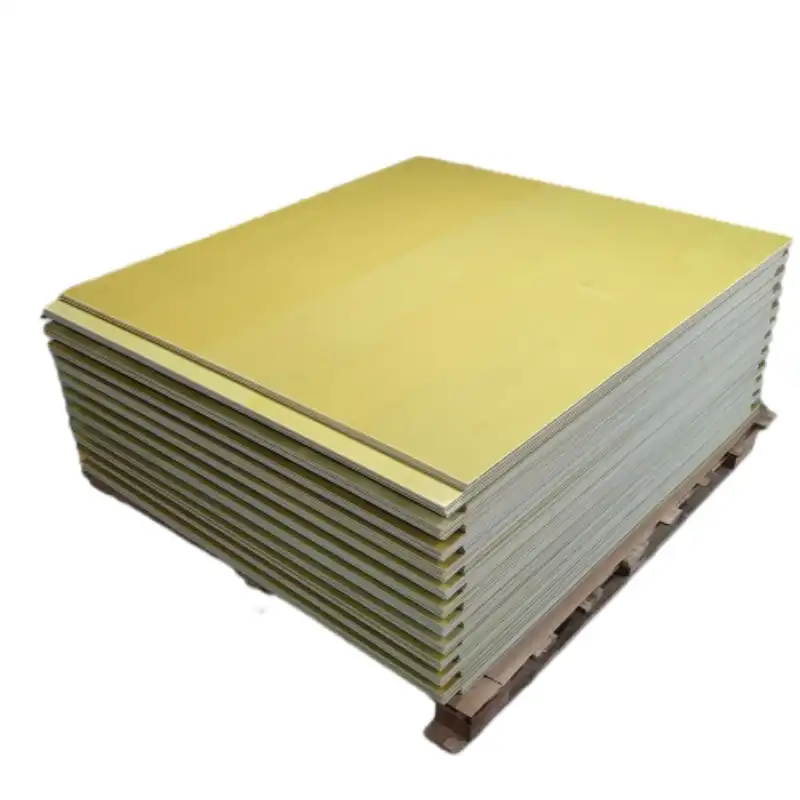
Understanding 3240 Epoxy Sheet and Its Key Properties
Material Composition and Manufacturing Process
The basic building block of quality is the make-up of the materials used. During production, epoxy resin is soaked into electrical-grade fibreglass cloth. This is followed by controlled drying and hot pressing steps. This process of lamination joins several layers together to make a single composite structure. We've seen that manufacturing precision has a direct effect on the stability of the end product, especially when it comes to how well the layers stick together and how evenly the resin is distributed.
The amount of cross-linking in the epoxy material is controlled by the temperature during cure. When curing isn't finished, heat resistance goes down and dielectric properties get worse. Manufacturers of good products keep accurate temperature profiles throughout production processes to make sure that each batch fully polymerises. This focus on process control is what sets high-quality products apart from less-than-stellar ones.
Critical Technical Specifications
The density of a material is usually between 1.90 and 2.0 g/cm³, which is a good mix between weight and strength. Water absorption below 0.1% keeps the dimensions stable in damp places, which is very important for long-term electrical reliability. When choosing materials for mission-critical uses, engineering managers look at these basic qualities.
The thermal rating of Class B means that the device can work continuously at up to 130°C and can handle short-term temperature spikes up to 155°C. This thermal endurance is good for parts of motors, housings for switchgear, and power distribution equipment that will always generate heat. Chemical resistance to transformer oils and typical industrial solvents makes things last longer in tough working conditions.
Advantages in Industrial Applications
One clear benefit is that it is easy to machine. Even though carbide tools are very hard, they can be used for precise CNC operations like cutting, grinding, and routing without the risk of delamination. Because it is workable, complicated shapes can be made that exactly match the design requirements. Mechanical engineers like how the material can handle tight size requirements. Depending on the sheet thickness, it can hold width tolerances of ±0.1mm to ±0.4mm.
Low dielectric loss tangent keeps energy loss to a minimum in high-frequency settings. This makes the material good for RF shielding and high-speed circuit substrates. Electrical separation is effective when the volume resistivity is higher than 10^14 ©·cm. This stops leakage currents that could damage the circuit or pose safety risks.
Quality Control Testing for 3240 Epoxy Sheet Strength
Mechanical Testing Protocols
Cutting standard examples and pulling on them with controlled forces until they break is how tensile strength is measured, and for 3240 epoxy sheet, the tensile strength consistently exceeds 300 MPa, demonstrating that the epoxy matrix effectively transfers loads across the fibreglass reinforcement, though the testing direction is critical because properties measured perpendicular to the fibre orientation differ significantly from those measured parallel to it due to the anisotropic nature of laminated composites. The strength of good materials is always higher than 300 MPa, which shows that the epoxy matrix can transfer loads across the fibreglass reinforcement. The direction of testing is important because qualities measured opposite to the fibre direction are different from those measured parallel to the fibre direction. This is because laminated composites are not uniform.
In flexural strength tests, beam-shaped samples are bent in three or four points. Results above 340 MPa show that the material is rigid enough for structural uses where it needs to resist bending moments without permanently changing shape. We try these things at both room temperature and high temperatures to make sure they work well across the whole working range.
Impact resistance testing checks how much energy is absorbed before it breaks using falling weight or pendulum methods. This parameter is especially important for transportation applications that deal with vibration and shock loads all the time. Testing for hardness using the Rockwell or Barcol methods is a quick way to check the quality during the incoming review.
Standards Compliance and Certification
Methods of testing and acceptance factors are governed by international norms. ASTM D638 describes how to test for tensile strength, and ASTM D790 describes how to test for flexural strength. The IEC standard EPGC 201 sets the rules for epoxy-glass laminates that are used in electrical applications. UL certification and RoHS compliance show a dedication to safety and caring for the earth.
Following these guidelines makes sure that results can be compared between runs and providers. Procurement experts rely on certified test reports to show compliance, which shortens the time it takes to get on approved vendor lists. While ISO 9001 approval shows that quality management is being done in a planned way, checking the product itself is what really proves its performance.
Real-World Testing Implementation
The biggest companies have their own testing labs that are stocked with environmental rooms, uniform testing machines, and measuring tools that have been standardised. Specimens for verification testing are taken from production runs using batch sample methods. Statistical process control keeps track of results over time and finds trends before they hurt the quality of the product.
One transformer maker we've worked with requires testing to be witnessed, which means that their quality engineers have to be there while the specimens are being prepared and the testing is being done. This shared checking makes people more sure that the information is correct. Third-party lab testing gives independent confirmation for important uses where failure would have bad results.
Insulation Performance Testing of 3240 Epoxy Sheet
Dielectric Strength Evaluation
Breakdown voltage testing is the most direct way to check how well shielding works, and for 3240 epoxy sheet, the dielectric strength typically falls in the range of 10–15 kV/mm, though exact values depend on thickness and test conditions; this parameter, when applied with appropriate safety margins, establishes the maximum safe working voltages for electrical insulation applications. Specimens are put in transformer oil with a voltage that slowly rises until an electrical discharge happens. The minimum voltage that good material can handle is 10-15 kV/mm, but the exact numbers rely on the thickness and the test conditions. With the right safety limits, this number sets the safe working voltages.
Surface resistivity and volume resistivity are ways to measure how hard it is for current to run through a material's thickness and across its surface. High values stop tracking and the formation of conductive paths, which could cause electrical problems. Performance under stress is shown by tests done at high temperatures and humidity levels.
Measuring the dielectric constant and dissipation factor tells you how much energy is stored and lost at certain frequencies. Less heat is generated during activity when the dissipation factor is low. This makes power use more efficient. These factors affect the choice of material for high-frequency circuits compared to power transfer parts.
Thermal Stability Assessment
Tests that measure thermal ageing mimic being exposed to working temperatures for a long time. Samples are kept in ovens at the recommended temperatures for long periods of time. After this, their mechanical and electrical qualities are tested again. As long as properties don't change much, the material is thermally stable and will last for a long time. This testing is especially helpful for uses in the power sector that need to be reliable for decades.
In heat shock testing, materials are quickly moved from one high temperature to another to see if they delaminate, boil, or crack. Being able to handle these loads shows that the product was made well and that the glue cured properly. When materials fail under heat shock, they often show hidden manufacturing flaws.
UL94 standards test for flammability and classify fire resistance and self-extinguishing behaviour. Epoxy-glass laminates usually get V-0 ratings, but verification testing confirms that they have the flame resistance properties that are needed for safety-critical applications.
Chemical Resistance Verification
Immersion testing in cleaning fluids, acidic chemicals, and transformer oils checks for stability and property retention. Before and after contact, samples are weighed and measured, and older samples are put through mechanical tests. Chemical resistance that is good for the environment is shown by minimal swelling and property loss.
The results of this test are especially useful for vehicle uses where oils, lubricants, and cleaning agents are often present. For power tools to work reliably over time, it needs to be compatible with insulating oils because they are in contact with them for a long time.
Comparing 3240 Epoxy Sheet with Alternative Materials in Quality Terms
Performance Benchmarking
Epoxy-glass materials are better at resisting water and having higher mechanical strength than phenolic cotton laminates. When it's humid, phenolic materials soak up more water, which changes their shape and makes them less electrically stable. Because of this, epoxy laminates are better for use outside or on equipment that doesn't need to be sealed against the weather.
Polyester-glass laminates are cheaper options, but they don't have as much dielectric strength or temperature protection. The difference in performance is noticeable in challenging situations where safety must be maintained. The G10 and FR4 types are both made of glass-epoxy, but they have different flame protection and thermal ratings. For electronics uses, FR4 has better fire performance.
Application-Specific Selection
Manufacturers of electrical equipment put a lot of emphasis on dielectric strength and tracking resistance, and 3240 epoxy sheet is the preferred choice for these demanding applications because it maintains consistent electrical properties even in complex geometries, making the higher material cost justified for high-voltage switchgear, busbar supports, and transformer components. This makes epoxy-glass materials the best choice, even though they cost more. The investment is worth it because it lets you make complicated forms without changing their electrical properties. When electricity needs aren't as strict and mechanical qualities are what matter most, phenolic materials may be used in industrial machines.
Automotive engineers are choosing epoxy laminates more and more for battery insulation barriers where fire resistance and electrical isolation are essential. The material stays the same size at very high and very low temperatures, so it works the same way through weather changes and operating heating.
Cost-Effectiveness Analysis
Even though epoxy laminates cost more per unit than other materials, the total cost of ownership often favours higher-quality materials. Longer service life, lower failure rates, and better safety records more than make up for the cost of the original purchase. Because of the costs of warranties and the damage to a company's image that comes with poor-quality materials, makers who care about their brand should invest in quality.
By buying in bulk and keeping the same suppliers, you can keep quality standards high while lowering the cost per unit. We've helped clients cut costs by coming up with better specs that get rid of the need for over-engineering without sacrificing important performance standards.
Procurement Considerations for Quality 3240 Epoxy Sheet
Supplier Qualification and Verification
Reliable suppliers show that they have quality systems by having ISO 9001 certification, and they keep track of everything from the raw materials to the finished goods. In addition to general datasheets, asking for mill test records that show real test results for specific production lots gives you more confidence. Certificates of conformity should list the standards and specifications that are met.
Risk is reduced by testing a sample before buying in bulk. Internal testing on samples from suppliers verifies the qualities stated and shows any problems. The surface quality, edge condition, and dimensional accuracy are checked against the buy specs during the physical inspection.
Customization Capabilities and Technical Support
Custom cutting, CNC machining, and edge finishing services from manufacturers simplify supply lines and cut down on the number of steps needed to handle goods. Delivering parts instead of raw sheets cuts down on the time needed to make something and makes sure that the quality of the work is always the same. Support teams for technical issues know what materials to choose and how to fix problems because they understand what the application needs.
Some sellers keep a lot of stock on hand so they can quickly fill orders for standard sizes, while others focus on making custom mixes for specific uses. During the planning stages of a project, it's helpful to be clear about lead times, minimum order quantities, and pricing structures.
Logistics and Global Sourcing
When you buy something internationally, you have to think about things like shipping methods, customs paperwork, and how reliable delivery is. Experienced providers who know how to ship goods handle paperwork quickly and efficiently, reducing delays. For repeat sales, consolidated shipments and proven logistics partnerships make it more cost-effective.
Because our logistics are all connected, procurement teams only have to deal with one person from placing an order to delivery. This teamwork makes it easier to talk to each other and be accountable, which is especially helpful when working with different kinds of materials on complicated projects.
Conclusion
It is made sure that 3240 epoxy sheet materials meet the strict needs of modern industrial applications by putting them through a lot of mechanical and electrical tests. Standardised testing protocols confirm the material's strength, ability to insulate, and resistance to the environment. This gives procurement teams confidence in the material's dependability. Comparing performance traits of different materials makes application-specific benefits clearer, and methods for qualifying suppliers lower the risks of procurement. Due to their high dielectric strength, temperature stability, and ability to be machined, epoxy-glass laminates are the best choice for use in electrical equipment, power systems, and precision machinery.
FAQ
How does dielectric strength affect material selection?
The dielectric strength of a material tells you how much power it can handle before it breaks down electrically. Higher values let the insulation be thinner, which makes the parts smaller and lighter. For uses involving high voltages, materials must have dielectric performance that has been tested and proven through breakdown testing. Operating voltages should stay well below the points where they break, with safety factors usually staying between 2 and 3 times the working voltage.
What certifications validate supplier reliability?
Getting ISO 9001 approval shows that you follow structured methods for managing quality. UL certification shows that the materials meet safety standards for use in electrical applications. Compliance with RoHS guarantees that dangerous chemicals are handled in an environmentally responsible way. Objective proof of performance comes from test reports from approved laboratories. You can get more confidence in a supplier's skills and reliability by asking for customer references and inspecting their facilities.
Can 3240 epoxy sheets be customized for specific requirements?
Different thicknesses, dimensional cutting, CNC machining, and edge finishing are all ways to make it your own. Some makers offer different colours or changed resin formulations that make certain qualities better. Customisations that are possible are found by talking about program needs with technical teams. Before committing to production volumes, prototype quantities let you test and make sure that the specifications match the real performance needs.
Partner with J&Q for Premium Insulation Materials
J&Q serves electrical equipment makers, power system designers, and industrial machinery builders all over the world. They have been making insulation sheets for more than 20 years and have done a lot of business with other countries. Our inventory of quality-certified 3240 epoxy sheets meets strict dielectric and mechanical standards that have been proven by a variety of testing methods. As a seller with a lot of knowledge, we can help you with your specification process by giving you full material datasheets, certified test results, and expert advice. Our integrated logistics services make sure that both standard sheet stock and custom-machined parts are delivered on time every time. You can talk to our procurement experts at info@jhd-material.com about the insulation materials you need, ask for certified samples, or get cheap quotes for large orders.
References
1. Smith, J.R., "Electrical Insulation Materials: Properties and Performance Standards," Industrial Materials Handbook, 2021, pp. 245-278.
2. Thompson, M.L., "Quality Assurance in Composite Laminate Manufacturing," Journal of Materials Engineering, Vol. 34, No. 2, 2020, pp. 112-128.
3. Anderson, K.P., "Dielectric Testing Methods for Electrical Insulation Systems," IEEE Transactions on Electrical Insulation, Vol. 28, 2019, pp. 445-461.
4. Chen, W.H., "Comparative Analysis of Thermoset Laminates for Power Applications," Electrical Engineering Materials Quarterly, Spring 2022, pp. 67-84.
5. Rodriguez, E.M., "Procurement Strategies for Industrial Insulation Materials," Supply Chain Management Review, Vol. 15, No. 4, 2021, pp. 201-219.
6. Williams, D.S., "Mechanical Testing Standards for Polymer Matrix Composites," Materials Testing International, Vol. 42, 2020, pp. 334-352.

Get a complete product list and quotation

J&Q New Composite Materials Company



