Why Choose NEMA Grade FR4 Epoxy Sheet for PCB Applications?
When engineering managers and procurement teams evaluate laminate materials for PCB production, one designation consistently rises above the rest. The NEMA Grade FR4 epoxy sheet delivers a combination of dielectric strength, dimensional stability, and certified flame retardancy that standard laminates simply cannot match. Built from 7628 E-glass fabric bonded with epoxy resin, this fiberglass laminate meets NEMA LI-1-1990, UL 94 V-0, and ASTM D638 benchmarks simultaneously—giving industrial buyers the confidence that every sheet performs consistently across high-stress electrical and mechanical environments.
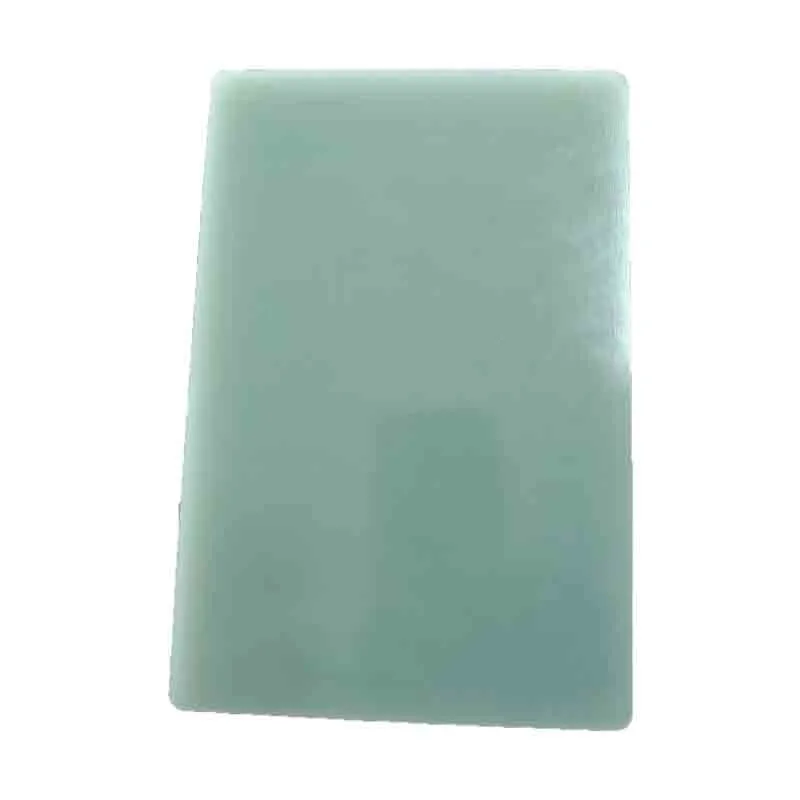
Understanding NEMA Grade FR4 Epoxy Sheet
What Sets the NEMA Designation Apart?
The NEMA designation is what makes it different. There are some FR4 sheets on the market that don't really have a NEMA grade rating. Manufacturers who want to be certified by the National Electrical Manufacturers Association (NEMA) must follow strict rules about how to laminate, the amount of resin to glass, and what to do after the resin has dried. According to independent tests, this means that the bending strength will be more than 415 MPa (lengthwise), the dielectric breakdown voltage will be more than 50 kV, and the water absorption rate will be less than 0.10%.
The NEMA Grade FR4 epoxy sheet made by JingHong is certified by ISO 9001, ISO 14001, and ISO 45001, which means that every production run meets standards for quality, the environment, and worker safety. With a 36,300-m² facility that can produce 43,000 tons of goods a year, when a lot of orders come in, Hebei Jinghong Electronic Technology Co., Ltd. can keep up the scale to make sure that the material qualities are always the same.
Core Material Composition
The sheet is made up of a brominated epoxy resin system and 7628 E-glass woven fabric. Standard grades of this pair have a Glass Transition Temperature (Tg) between 130°C and 140°C. High-Tg versions can reach up to 170°C–180°C for lead-free soldering compatibility. The laminate that was made has a specific gravity of 1.850 g/cm³ and a relative permittivity (Dk) of about 4.4. This makes it a physically thick substrate that can still be machined.
Performance Comparison: NEMA Grade FR4 vs Other Epoxy Sheets
Where Competing Materials Fall Short?
FR4, specifically Nema Grade Fr4 Epoxy Sheet, is often compared to other options such as G10, FR5, and standard commercial-grade laminates by procurement teams. This is how the materials stack up in the most important ways for PCB and industrial insulation uses:
- Standard commercial FR4 vs NEMA Grade FR4: The dielectric constant and flexural strength of commercial FR4 sheets can vary from batch to batch because the resin content is not always checked to make sure it is consistent. It is important for impedance-controlled layered PCB designs that the sheets are NEMA-certified because they require tighter limits.
- G10 vs NEMA Grade FR4: G10 is made of the same fiberglass and resin as NEMA Grade FR4, but it doesn't have the flame-retardant additives that are needed for a UL 94 V-0 rating. In places with switches or motor parts, this difference is not small—it's required by safety codes.
- FR5 vs NEMA Grade FR4: FR5 can handle higher temperatures over a longer period of time, which makes it good for extreme thermal cycles. But its cost increase is pretty big. NEMA Grade FR4 has the best price-to-performance ratio for most PCB substrate and electrical insulator uses that don't go above 140°C. This is because the material standard isn't overengineered.
These differences really matter when it comes to buying. When you choose the wrong laminate grade, it can lead to extra costs for rework, problems in the field, or compliance rejections. All of these things hurt the return on investment (ROI) that engineering-led sourcing decisions are supposed to protect.
Applications and Benefits of NEMA Grade FR4 Epoxy Sheet in PCBs
Industries and Use Cases That Rely on This Material
NEMA Grade FR4 epoxy sheets are used in many challenging situations in many different industries. Because the material is mechanically strong, has stable electrical insulation, and is certified to be flame-resistant, it can be used in places where failure would have major operational or safety effects.
Here are the main places where this material is useful and can be measured:
- PCB substrate manufacturing: The sheet is the base material for printed circuit boards that are single-sided, double-sided, or layered. Because it doesn't change size when heated and cooled, the copper circuit alignment stays accurate even after many reflow and wave soldering processes.
- High-voltage switchgear insulation: The high Comparative Tracking Index (CTI) of the material keeps electricity from moving between wires when there is a fault. This is used in arc chutes, phase barriers, and busbar supports in electrical distribution equipment.
- Structural components in industrial machinery: The laminate can be machined into spacers, gap insulators, and terminal boards, and it can be used instead of metal parts in places where both electrical separation and weight reduction are needed.
- Automotive insulation assemblies: The material works well as battery pack shields and heat-resistant parts in car electrical systems because it doesn't change when exposed to heat over and over again.
All of these uses have one thing in common: the laminate has to work reliably for its whole life, without losing its shape or energy efficiency. Because of its dependability, NEMA-certified FR4 is the standard that procurement teams working in safety-critical supply lines choose most often.
JingHong offers a wide range of thicknesses, from 0.3 mm to 100 mm, and standard sheet sizes of 1030 mm × 1230 mm. Custom sizes are also available, such as 1220 mm × 2440 mm and 1030 mm × 2070 mm. This gives engineering teams the freedom to cut down on waste and directly match sheet sizes to CNC machining needs.
How to Procure NEMA Grade FR4 Epoxy Sheets for Your Business?
Practical Guidance for B2B Sourcing Teams
To get an approved Nema Grade Fr4 Epoxy Sheet on a large scale, you need to do more than just find a good unit price. Before committing to a supply relationship, procurement workers should look at providers based on a number of factors.
Traceability of certification is a must-have first step. Suppliers should show proof that their products meet the requirements of NEMA LI-1-1990 and UL 94 V-0, along with records of mechanical and electrical tests done on each batch. This level of documentation is consistent with JingHong's ISO-certified quality system.
The structure of the order also changes the total cost. JingHong can handle both large-scale purchasing plans and one-off orders for unique projects. They have a minimum order quantity of 500 kg and package their goods on protective pallets. You can ship by ocean freight, land, or air, and the payment terms are T/T, which is standard for B2B procurement workflows.
For teams requiring custom production, JingHong's OEM service lets buyers specify exact sizes and surface finishes. This way, the given material can go straight into downstream manufacturing without needing any extra steps of processing.
Making an Informed Decision: Why NEMA Grade FR4 Is the Preferred Choice
As important as the technical datasheet is when looking at long-term laminate supply strategies, the stability of the supplier and the consistency of the certifications are just as important. NEMA Grade FR4 epoxy laminate combines several performance requirements, such as electrical insulation, flame retardancy, mechanical load capacity, and the ability to be machined on a CNC machine, into a single certified material specification. This makes it easier to manage different grades of laminate across a product line.
With the ability to produce 43,000 tons of insulating materials every year and more than 20 years of experience in the field, JingHong is a reliable long-term partner for electronics manufacturers, power equipment suppliers, industrial OEMs, and buyers of automotive parts in the U.S. market and beyond.
Conclusion
For scientific and business reasons that can be defended, Nema Grade Fr4 Epoxy Sheet is still the standard substrate for making PCBs and industrial electrical shielding. It is the best choice for engineering-led buying decisions because it has certified material qualities, a wide range of thicknesses, and can be used with precise machining processes. Large-scale production, multiple standard approvals, and quick OEM service give high-volume buyers the supply chain security they need. This fiberglass epoxy laminate meets all of the requirements when consistent performance and safety paperwork are important.
FAQ
What is the difference between NEMA Grade FR4 and standard FR4?
Commercial-grade FR4 doesn't have to follow the stricter NEMA LI-1-1990 standards for resin content, lamination uniformity, and electrical property tolerances than NEMA Grade FR4. This makes the dielectric performance and mechanical strength more consistent across production batches, which is very important for multilayer PCBs and high-voltage insulation parts.
Can JingHong's FR4 epoxy sheets be customized to specific dimensions?
Yes. If you ask, you can get them in any size you want, from 1030 mm × 2030 mm to 1220 mm × 2440 mm and 1030 mm × 2070 mm. Options for thickness range from 0.3 mm to 100 mm, and OEM production services can meet specific needs for size and finish.
How do I verify a supplier's NEMA FR4 certification?
Ask for UL 94 V-0 fire rating paperwork, ISO quality system certificates, and batch-level test results that show NEMA LI-1-1990 compliance. FR4 epoxy sheet suppliers with a good reputation keep quality records for each production lot that can be tracked.
What is the minimum order quantity?
If you buy 500 kg or more from JingHong, you can ship it by ocean, land, or air freight, so it can work with global procurement programs.
Partner With J&Q for Certified NEMA Grade FR4 Epoxy Sheet Supply
J&Q offers verified NEMA Grade FR4 epoxy sheet options that are backed by ISO 9001, ISO 14001, and ISO 45001 certifications. They can produce 43,000 tons of epoxy sheets every year and can handle straight shipping. Whether you need regular stock sizes or laminates that are made just for you, our team can help you from the design stage to delivery. To get samples, technical data sheets, or a price quote for a large order from a reliable NEMA Grade FR4 epoxy sheet maker, email us at info@jhd-material.com or visit our blog at blog.jhd-material.com.
References
1. National Electrical Manufacturers Association. NEMA LI 1: Industrial Laminating Thermosetting Products. NEMA Standards Publication, 2020.
2. Coombs, C. F., & Holden, H. T. Printed Circuits Handbook (7th ed.). McGraw-Hill Education, 2016.
3. Underwriters Laboratories. UL 94: Tests for Flammability of Plastic Materials for Parts in Devices and Appliances. UL Standards & Engagement, 2021.
4. Harper, C. A. Electronic Packaging and Interconnection Handbook (4th ed.). McGraw-Hill, 2005.
5. ASTM International. ASTM D638: Standard Test Method for Tensile Properties of Plastics. ASTM International, 2022.
6. Jawitz, M. W. Printed Circuit Board Materials Handbook. McGraw-Hill, 1997.

Get a complete product list and quotation

J&Q New Composite Materials Company



