What Industries Need Epoxy Fiberglass Tube Components?
Epoxy fiberglass tube components serve a remarkably wide range of industries across the United States and globally. These structural insulation tubes — fabricated from alkali-free glass cloth saturated with epoxy phenolic resin — deliver a combination of high dielectric strength, mechanical durability, and thermal stability that few other materials can match. From electrical switchgear to EV battery systems, industries that operate in demanding environments consistently rely on fiberglass-wound epoxy tubing as a core engineering material. Understanding which sectors depend on this component helps procurement managers and engineers make sharper sourcing decisions.
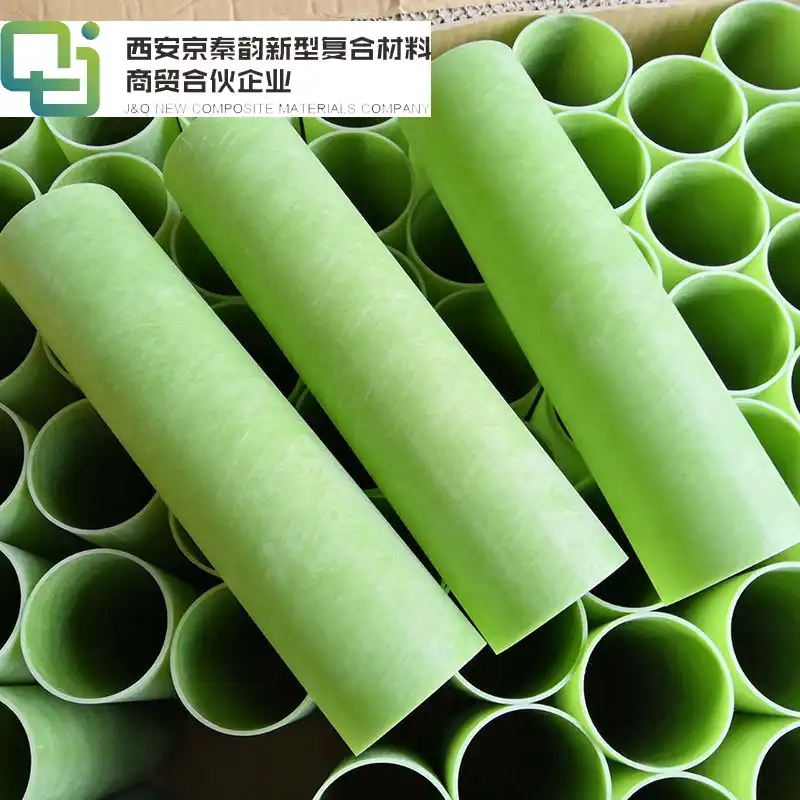
Understanding Epoxy Fiberglass Tubes: Properties and Advantages
An Epoxy Fiberglass Tube is not just a hollow cylinder; it is a carefully engineered laminate composite made to fix real problems in the industrial world. Electrical contractor-grade, alkali-free glass cloth is mixed with epoxy phenolic resin at J&Q to make our tubes. The tubes are then shaped and hardened under controlled heat. The end result is a tube with a smooth surface that stays the same size and shape. Its inner diameters range from φ8mm to φ550mm.
Here are the main things about this material's performance that make it stand out:
- Outstanding dielectric performance: The cured epoxy resin matrix has a volume resistivity of 2.4×10²³ Ω·m and an insulation resistance of 5.5×10²² Ω under normal conditions, so it can be relied on in places with a lot of voltage.
- Thermal stability under load: The material was tested at 150°C for 24 hours and didn't crack or bulge. It keeps its shape where many plastics would bend.
- Low shrinkage and strong adhesion: The ring-opening polymerization curing mechanism doesn't make any volatile byproducts, so the parts can be made to fit together tightly and strongly.
- Chemical resistance across environments: The system successfully fights alkalis, acids, and solvents, and it works when it's wet and when transformer oil is immersed.
All of these benefits add up to longer service life, less upkeep, and a lower total cost of ownership. In highly demanding fields, these are the things that procurement professionals value more than just unit price. Compared to metal tubes, the composite structure eliminates the risk of galvanic corrosion and cuts the weight of each component by about 75%. This lowers the stress of assembly and the cost of shipping.
Top Industries Using Epoxy Fiberglass Tube Components
Electrical and Electronics Manufacturing
In the U.S. market, electrical equipment makers are the main group that buys glass-reinforced Epoxy Fiberglass Tube parts. In circuit breakers, these tubes are used as arc extinguishing chambers, in transformers as coil formers, and in switchgear assemblies as insulating sleeves. The material's vertical layer electrical strength, which was tested at 8 MV/m at 90°C in oil, directly addresses the risk of dielectric breakdown that metal or regular plastic materials can't. The material is easy to CNC-machine and stays the same size, which makes it useful for PCB support structures and motor insulation parts.
Power and Energy Sector
Companies that make transformers and distribute electricity rely on fiberglass epoxy tubes for insulating coils, building arc barriers, and making thermal protection walls inside high-voltage equipment. For these uses, the material needs to be resistant to flames, certified to be thermally stable, and have consistent wall thickness tolerances between batches of production. The material has a density of 1.70 g/m³ and doesn't crack at high temperatures for long periods of time. This makes it a reliable choice for long-term infrastructure projects where replacing parts is expensive.
Industrial Machinery and Equipment
OEM machine builders use wound fiberglass tubes as spacers for insulation, as structural bands in hydraulic systems, and as idler wheels in machines that process paper or textiles. The material doesn't warp when it's working at high speeds because its shape stays the same even when temperatures change, and it's much more resistant to impact than regular industrial plastics, so it lasts longer when it's being loaded and unloaded repeatedly. Mechanical engineers like that the tolerances are always the same, which allows parts to be interchangeable across lines of assembled equipment.
Automotive and Transportation
Automotive tier-1 providers and R&D engineering teams are asking for Epoxy Fiberglass Tube to be used more and more in electric vehicle battery pack barrier structures, thermal insulation fixtures, and under-hood component assemblies. As EV systems spread across North America, so does the need for insulation parts that are light, don't melt, and can be machined perfectly. The material doesn't absorb water or change shape much when it gets hot or cold, so it's a good choice for battery enclosures where changing size could be dangerous.
Home Appliances Manufacturing
Glass-epoxy tubing is used by appliance makers in motor brackets, insulation frames, and thermal separation elements in air conditioners, compressors, and other big home appliances. These companies care about stability from batch to batch and being able to make parts to specifications without wearing out tools too quickly. The material is resistant to mold, which is good for working in wet places, and it's also good for appliance-grade uses where it needs to last for a long time with mild temperature changes.
How to Select the Right Epoxy Fiberglass Tube for Your Industry Needs?
Before you can choose the right Epoxy Fiberglass Tube size, you need to be clear on your working conditions. The four things that determine a material's suitability are its thermal range, its dielectric needs, its mechanical load profile, and its chemical exposure. For transformer insulation duty, a tube that can be used continuously at 150°C and has been tested for insulation resistance is the right choice. On the other hand, a part that is meant to be used for structural space in a hydraulic press puts compressive strength and consistent wall thickness ahead of electrical performance.
The option to customize should also be looked at by procurement teams. Most industry uses inner diameters between φ8mm and φ550mm, but each use has different standards for wall thickness, tube length, and surface finish. Making sure that your supplier uses automated production equipment that keeps the tolerance for wall thickness the same across large batches cuts down on inspection failures and production line delays.
Procurement Insights: Sourcing Epoxy Fiberglass Tubes Efficiently
When you buy Epoxy Fiberglass Tubes from a company that can ship directly, you avoid having to pay extra for middlemen and get them faster. J&Q is the export section of Hebei JingHong Electronic Technology Co., Ltd. It has two production sites that make a total of 43,000 tons of insulation material every year, making it one of the biggest companies in China that makes insulation material. Orders placed directly with us are given production priority, so your timeline is always safe, even when demand is high.
Logistics transparency is also important for reliable procurement. We have our own logistics company, which means we handle the coordination of freight by sea, land, and air. This gets rid of the risk of third-party freight and gives you accurate delivery windows as soon as your order is confirmed. This single-source responsibility makes managing suppliers a lot easier for procurement managers in the U.S. who work with foreign suppliers.
Best Practices for Handling and Using Epoxy Fiberglass Tubes
To keep the cut sides from breaking and the tool from wearing out too quickly, carbide-tipped tools are needed to machine Epoxy Fiberglass Tubes. Glass fiber particles are dangerous to breathe in, so operators should use dust extraction equipment when they are cutting or drilling. Consistent feed rates during CNC operations protect the surface and stop tiny delaminations from happening at the tube wall.
When installing, don't bend the sharp radius beyond the material's stated flex tolerance, and use compliant mounting tools to keep point-load stress from building up. When something is in use, it should be checked for surface cracks or discoloration near heat sources on a regular basis. This finds thermal degradation before it leads to structural failure. When tubes are used in transformer oil, they should be checked after being submerged and then removed to make sure that the amount of water they absorb stays within the recommended limits. The value we found, 0.6 MPa, meets all standard insulation requirements.
Conclusion
Electrical manufacturing, power infrastructure, industrial gear, car, and appliance industries all depend on Epoxy Fiberglass Tube components. Their dielectric performance, heat stability, chemical resistance, and ability to be machined solve real technical problems that metal or regular plastic solutions can't solve as cheaply. Whether you need arc protection in high-voltage switchgear or a lightweight spacer in an EV battery assembly, the composite tube shape will work reliably and measurably. The most important thing to remember about procurement is to match the right specification to your operating environment.
FAQ
Are epoxy fiberglass tubes suitable for wet or submerged environments?
Yes. After being submerged in water for two hours, our Epoxy Fiberglass Tubes are tested to see how well they resist insulation. This confirms that they work in wet situations. They can also be used in transformer oil, which means they can be used with electrical equipment that is shielded by fluids.
How does epoxy fiberglass tubing compare with metallic alternatives?
The hybrid structure gets rid of galvanic corrosion, cuts the weight of the parts by about 75% compared to steel, and offers electrical protection that metal can't. Because maintenance is usually less and service intervals are longer, the total cost over the lifecycle is usually lower.
What inner diameter range is available?
J&Q sells tubes with inside diameters ranging from φ8mm to φ550mm, which is large enough for most industrial and electrical engineering uses.
Can these tubes be customized for specific applications?
Yes, you can tell them about the wall thickness, tube length, and surface needs when you place the order. Our automated production process keeps tolerances the same even when making a lot of things at once.
What certifications or quality standards apply?
Our production follows quality systems that have been checked and are in line with standards for electrical insulation. If you need technical data to help your engineering approval process, just let us know.
Partner with J&Q for Reliable Epoxy Fiberglass Tube Supply
J&Q has been making soundproofing materials for more than 20 years and has been trading internationally for more than 10 years. As a top Epoxy Fiberglass Tube supplier, we can make 43,000 tons of tubes every year. We offer low prices, consistent batch quality, and in-house logistics to make sure delivery goes smoothly. You can talk to our technical team about your needs and get a custom quote by emailing info@jhd-material.com or visiting blog.jhd-material.com.
References
1. Harper, C. A. (Ed.). Handbook of Plastics Technologies. McGraw-Hill, 2006.
2. Mazumdar, S. K. Composites Manufacturing: Materials, Product, and Process Engineering. CRC Press, 2002.
3. Annual Book of ASTM Standards, Section 10: Electrical Insulation and Electronics. ASTM International, 2020.
4. Brydson, J. A. Plastics Materials (7th ed.). Butterworth-Heinemann, 1999.
5. IEC 60893: Specification for Industrial Rigid Laminated Sheets Based on Thermosetting Resins for Electrical Purposes. International Electrotechnical Commission, 2003.
6. Rosato, D. V., & Rosato, M. G. Reinforced Plastics Handbook (3rd ed.). Elsevier, 2004.

Get a complete product list and quotation

J&Q New Composite Materials Company



