Why Choose FR4 Epoxy Fiberglass Rod for Structural Insulation?
When engineers and procurement teams evaluate insulation materials for demanding electrical and mechanical applications, the FR4 epoxy fiberglass rod consistently rises to the top. Composed of woven fiberglass fabric bonded with flame-retardant epoxy resin, this composite rod delivers an exceptional combination of dielectric strength, mechanical rigidity, and thermal stability. Whether you are specifying components for switchgear assemblies, motor insulation, or transformer structures, this material addresses core reliability concerns that traditional alternatives simply cannot match at scale.
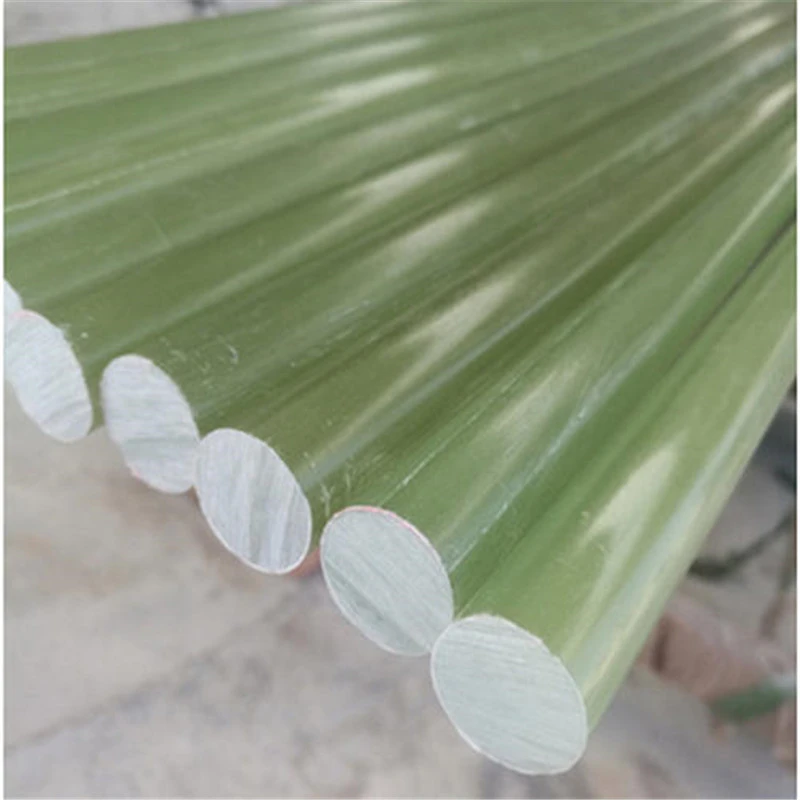
Understanding FR4 Epoxy Fiberglass Rod: Composition and Key Properties
What Makes This Composite Different?
The rod starts out as a continuous weave of glass fiber cloth that is then filled with an epoxy resin system that has flame retardants based on bromine. This layered structure turns into a dense, void-free sphere when heat and pressure are managed. Therefore, a substance with more than 80% fiber content is created, which directly leads to excellent structural performance in both wet and dry conditions.
Core Technical Profile
The green epoxy fiberglass rod from Jinghong has a clear set of proven properties that procurement engineers can rely on:
- Tensile strength ≥1200 MPa — This exceeds the load tolerance of most phenolic or nylon-based insulation rods, making it viable for load-bearing structural components in motors and switchgear.
- Flexural strength ≥900 MPa and compressive strength of 950 MPa — These figures reflect its resistance to bending and crushing under sustained mechanical stress, critical for spacers and insulator core rods.
- Volume resistivity ≥10¹⁰ Ω·m, power frequency voltage ≥50 kV, and full-wave impulse voltage ≥100 kV — These electrical benchmarks confirm reliable isolation even in high-voltage environments.
- Flame retardancy rated UL94 V-0 — The self-extinguishing characteristic is a non-negotiable requirement for enclosed electrical cabinets and transformer housings.
- Stress corrosion resistance ≥96 hours — This validates durability in chemically aggressive or humid operating conditions.
All of these qualities make it different from G10 rods, which have similar mechanical properties but don't have the flame-resistant formula that UL94 V-0 certification needs. On the other hand, phenolic rods tend to soak up more water and have less dielectric integrity when they are under constant load.
Why FR4 Epoxy Fiberglass Rod Excels in Structural Insulation Applications?
Electrical Isolation Under Real-World Stress
In real life, voltage surges, thermal cycling, humidity infiltration, and mechanical vibration are all things that can put a lot of stress on insulation materials. In all of these situations, FR4 Epoxy Fiberglass Rod keeps its insulating performance the same. Its hydrophobic epoxy matrix keeps water out, and the silane-treated glass fiber reinforcement keeps the insulation's strength even after being in wet places or transformer oil for a long time.
Mechanical Durability Where It Counts
This rod is great for heavy-duty jobs because of its structural benefits, which are listed below:
- High tensile and compressive ratings enable use as insulator core rods in lightning arresters and as mechanical spacers in motor assemblies without risk of creep or dimensional shift.
- Thermal flexural strength ≥300 MPa confirms that the rod retains structural rigidity at elevated operating temperatures, an essential attribute for components positioned near heat-generating coils or power electronics.
- Low density combined with high strength reduces overall assembly weight compared to ceramic or metal alternatives, benefiting automotive battery pack barrier designs and appliance motor brackets alike.
High tensile and compressive strengths let these rods be used as insulators in lightning arresters and as spacers in motor assemblies without worrying about creep or changing size.
Comparing Market Solutions: How FR4 Stands Out
When procurement experts look at different material options, they will see that each competing product has important pros and cons. Ceramic rods are very stable at high temperatures, but they are fragile, hard to machine precisely, and too expensive to buy in large quantities. Carbon fiber rods are very stiff, but they also carry electricity, so they can't be used as insulation at all. Phenolic cotton rods are less dielectric and absorb water more easily, so they can't be used in high-humidity or high-voltage installations.
Epoxy fiberglass rod is in a good middle ground because it can be machined smoothly with carbide tools, has tight size limits that make it good for CNC collet uses, and meets foreign standards like NEMA FR-4 and ASTM D709 requirements. This compliance profile makes approval paperwork a lot easier for B2B buyers who are in charge of supply lines that span multiple regions.
Jinghong makes FR4 Epoxy Fiberglass Rod with a standard length of 1 meter and outer diameters ranging from ʆ5mm to φ2000mm. This means that it can be customized to fit almost any industrial need. With the ability to produce 100 tons per year and shipping options by ocean, land, and air, supply continuity is built into the relationship from the start.
Procurement Guide: Sourcing FR4 Epoxy Fiberglass Rod Efficiently
Evaluating Suppliers With Confidence
Jinghong has been making and selling insulation materials for more than 20 years and trading with other countries for over 10 years. This gives them institutional knowledge that suppliers with shorter tenures can't match. The company runs its own transportation network, which lets it offer a true "one-stop service" that includes production, quality control, paperwork, and coordinating deliveries all under one responsible party.
Quality Verification Practices
Technically sound buying means confirming before taking any batch:
- Dimensional tolerance verified by centerless grinding records, ensuring compatibility with CNC collets
- Dielectric breakdown voltage tested per ASTM D149 to confirm rated voltage compliance
- Moisture absorption confirmed below 0.2% per ASTM D570 for humid-environment suitability
- UL94 V-0 flammability verification as a non-negotiable safety checkpoint for enclosed electrical assemblies
Partnering with a manufacturer that provides FR4 Epoxy Fiberglass Rod test documentation that can be tracked against these parameters gets rid of qualification risk and speeds up project timelines.
Practical Applications and Case Studies of FR4 Epoxy Fiberglass Rod
This material's flexibility is clear in a lot of different areas. Epoxy fiberglass rods are used as arc barrier supports and busbar spacers in electrical circuits, where both dielectric stability and exact measurements are very important. They are used to make transformers and can handle both voltage stress and thermal cycling without warping. They are used as coil insulation mandrels and structural tie rods.
They are used by machine builders as mechanical spacers and guide pins in machines that work with a steady load of shaking. Tier 1 automotive suppliers use them in battery pack barrier systems and heat-resistant mounting devices, where stable batch quality across production runs is needed. Appliance makers depend on them to make motor bracket insulation parts that can handle being heated and cooled many times in small spaces.
When engineering teams talk about all of these use cases, they always talk about two results: fewer rework requests and longer service intervals for parts. The long-term cost benefits of an insulation rod that keeps its dielectric grade, shape, and surface consistency over thousands of hours of use add up to a lot.
Conclusion
It's not a good idea to use cheap materials when it comes to structural insulation. Using the wrong rod—one that soaks up water, bends under pressure, or doesn't meet flame-retardancy standards—can make whole assemblies less safe. The FR4 Epoxy Fiberglass Rod fixes all of these problems because it has a tested technical profile, comes in a wide range of sizes, and comes with compliance paperwork that helps with global buying processes. This is a well-thought-out and evidence-based choice for engineering teams and buying workers who need a material that works reliably from the first installation through long-term use.
FAQ
How does an FR4 rod differ from a G10 rod in practice?
Both materials have about the same level of mechanical strength, but FR4 is UL94 V-0 certified because it contains flame retardants based on bromine. G10 doesn't have this flame protection, so it shouldn't be used in covered electrical cabinets or other places where fire safety rules apply.
What machining approach works best for epoxy fiberglass rods?
The glass fiber content is very rough. To keep measurements accurate and stop tools from wearing out too quickly, you need tools with carbide or diamond tips. To deal with the small particles that are made when cutting or drilling, you need to use the right dust extraction or wet machining methods.
What is the maximum continuous operating temperature?
Standard material works reliably at temperatures up to 130°C (Class B insulation) for long periods of time. Depending on the plastic system chosen, specialized high-Tg versions take this range up to 170°C or higher.
Can the rod maintain its insulating properties in humid conditions?
Yes. The hydrophobic epoxy matrix and silane-treated glass fibers work together to keep moisture absorption to less than 0.2%. This means that the dielectric performance stays stable even in humid workplaces or situations where transformer oil is immersed.
What size range is available for custom applications?
The outside diameters that Jinghong offers range from ʆ5mm to φ2000mm, and the standard length of a rod is 1 meter. To meet OEM standards and CNC machining needs, custom measurements can be made.
Partner With J&Q for Reliable Epoxy Fiberglass Rod Supply
You can get in touch with Jinghong's factory directly through J&Q. Every FR4 Epoxy Fiberglass Rod sourcing relationship is backed by more than 20 years of production experience and dedicated transportation support. Our MOQ agreements are flexible, the quality of each batch is always the same, and we ship everything by sea, land, and air. You can email our technical team at info@jhd-material.com or go to blog.jhd-material.com to ask for specifications, samples, or a consultation on how to buy something.
References
1. NEMA Standards Publication LI 1-1998 — Industrial Laminated Thermosetting Products, National Electrical Manufacturers Association, 1998.
2. ASTM International — ASTM D709: Standard Specification for Laminated Thermosetting Materials, ASTM International, 2017.
3. UL Standards — UL 94: Standard for Tests for Flammability of Plastic Materials for Parts in Devices and Appliances, Underwriters Laboratories, 2018.
4. ASTM International — ASTM D149: Standard Test Method for Dielectric Breakdown Voltage and Dielectric Strength of Solid Electrical Insulating Materials, ASTM International, 2020.
5. Harper, C.A. — Handbook of Plastics Technologies, McGraw-Hill, 2006.
6. Mazumdar, S.K. — Composites Manufacturing: Materials, Product, and Process Engineering, CRC Press, 2002.

Get a complete product list and quotation

J&Q New Composite Materials Company



