FR4 Epoxy Fiberglass Rod for Custom Industrial Insulation Parts
When engineers and procurement teams search for reliable insulation materials, the FR4 Epoxy Fiberglass Rod consistently surfaces as a top-tier solution. Composed of woven fiberglass fabric bonded with flame-retardant epoxy resin, this composite rod delivers exceptional dielectric strength, mechanical rigidity, and thermal stability. Whether the application involves motor insulation, transformer components, or precision-machined spacers, epoxy fiberglass rods meet the demands that conventional materials often cannot. This guide walks through everything B2B buyers need to know—from material properties to supplier selection—so you can make confident procurement decisions.

Understanding FR4 Epoxy Fiberglass Rod and Its Industrial Significance
What Makes This Material Stand Out?
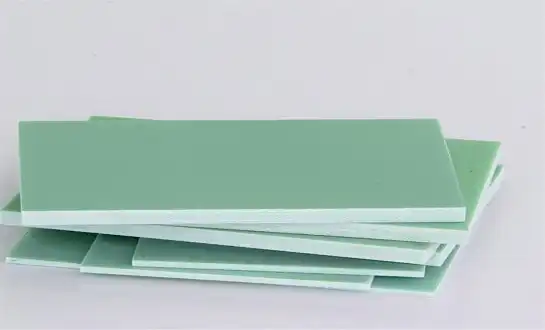
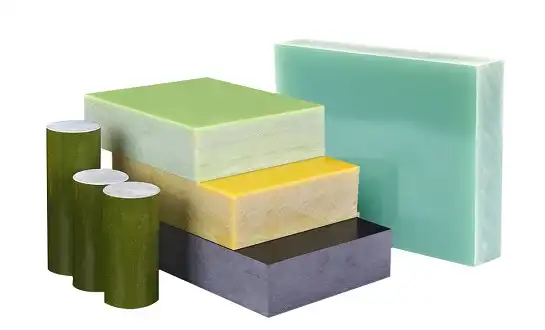
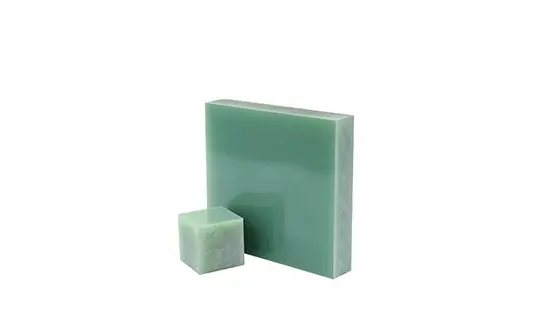
The name "FR4" comes from NEMA guidelines that were made in 1968. "FR" stands for flame retardancy, which is achieved by adding bromine-based chemicals to the epoxy matrix. The end result is a UL94 V-0 material that goes out on its own when it gets lit. Jinghong's FR4 Epoxy Fiberglass Rod comes in a natural green color and can be made with outer sizes ranging from φ5mm to φ2000mm. A typical rod length is 1 meter. At an industrial scale, where 100 tons can be made per year, uniform batch quality is possible.
The technical information about the material backs it up: its tensile strength is over 1200 MPa, its flexural strength is over 900 MPa, and its volume resistivity is over 10²⁰ Ω·m. Power-frequency voltage tolerance is more than 50 kV, and full-wave impulse voltage tolerance is more than 100 kV. These numbers aren't just marketing hype; they've been checked against GB/T standards to make sure they're correct. This gives procurement experts a solid starting point for making engineering decisions.
Comparing FR4 Epoxy Fiberglass Rod with Alternative Materials
How Does It Measure Against G10, Phenolic, and Other Options?
Understanding trade-offs is important for choosing materials. This is how the FR4 Epoxy Fiberglass Rod stacks up against other options that are often thought of:
- G10 vs. FR4: Both have about the same dielectric and mechanical strength, but G10 doesn't have any flame-retardant additives. When fire safety rules must be followed, FR4 is the only choice for sealed electrical cabinets or switches because G10 will continue to burn.
- Phenolic cotton rod: Phenolic laminates have good compression strength, but they soak up more water and have lower dielectric strength when heated up. They work well in mechanical applications with lower voltage, but not so well in places with high frequency or high humidity.
- PVC rod: PVC is cheap and good for light-duty insulation, but it gets very soft above 60°C to 70°C. When motor brackets or transformer parts are heated to 130°C or more, the PVC breaks structurally. The glass transition temperature (Tg) of regular FR4 is between 130°C and 140°C. High-Tg versions go over 170°C.
- Carbon fiber rod: Carbon fiber has a higher strength-to-weight ratio, but it conducts electricity, so it can't be used for insulation.
The FR4 Epoxy Fiberglass Rod has a performance range that no other material can match in terms of all of these areas at the same time. It is strong, doesn't conduct electricity, doesn't melt, and doesn't catch fire.
How to Choose and Procure FR4 Epoxy Fiberglass Rod for Custom Insulation Parts?
Key Specifications and Supplier Criteria
To choose the right FR4 Epoxy Fiberglass Rod, you must first be clear about what you need it for. For CNC-machined parts, the tolerance for diameter is very important. Make sure that providers follow ISO h8/h9 centerless grinding standards to make sure that the parts will work with collets. Make sure the fiber content is at least 80% by weight, since fiber content directly affects how well the material works when it's loaded.
Before accepting a shipment, a quality inspection should cover five important points:
- Dimensional tolerance verification: Make sure that the ovality and width are the same across the batch to avoid problems with the cutting.
- Dielectric breakdown voltage (per ASTM D149): This shows that the rod can withstand its maximum voltage without conducting.
- Moisture absorption (per ASTM D570): According to ASTM D570, moisture uptake below 0.2% keeps dielectric function in damp places.
- Internal integrity screening: Nondestructive tests find internal holes or delamination that cause the electrical system to fail when it's loaded.
- UL94 V-0 flammability verification: UL94 V-0 flammability verification is an important step for use in the power and electronics sectors.
Together, these measures protect against failures in the field and expensive redo. Documented quality management systems, traceable raw material sourcing, and the ability to handle both sample orders and full production runs should be at the top of your list when looking for suppliers. Jinghong supports shipping by sea, land, and air, giving U.S. buyers a range of logistics options, no matter how quickly they need to complete a project.
Advantages of Using FR4 Epoxy Fiberglass Rod in Industrial Insulation Solutions
Why Engineers Keep Specifying This Material?
The FR4 Epoxy Fiberglass Rod meets specific requirements because it has a number of qualities that work well together in tough conditions. Here are the main benefits that make people decide to buy from the same company again:
- Stress corrosion resistance exceeding 96 hours: This proves chemical stability over time in settings with oils, coolants, and industrial solvents, which is important for generator and motor uses.
- High compressive strength of 950 MPa: Insulating bushings and structural spacers keep their shape even when they are under constant mechanical load without sliding.
- UL94 V-0 flame retardancy combined with volume resistivity above 10¹⁰ Ω·m: UL94 V-0 flame retardancy and volume resistivity above 10³⁰ Ω·m: This combination provides both fire safety and electrical isolation in a single material, cutting down on the number of parts needed.
- CNC machinability with carbide or diamond tooling: The rod can be cut into unique shapes like bushings, standoffs, and core rods without cracking or delaminating as long as the dust is properly extracted.
- Near-zero moisture absorption: The hydrophobic epoxy matrix keeps its dielectric strength even after immersion, so it can be used in settings with a lot of wetness, like transformer oil.
These benefits directly lead to fewer failures, fewer warranty claims, and longer service intervals, all of which are important to both engineering managers and OEM sourcing teams.
Case Studies and Practical Insights on FR4 Epoxy Fiberglass Rod Applications
Real Applications Across Industrial Sectors
The FR4 Epoxy Fiberglass Rod can fix issues in the electrical and industrial fields that metal and regular plastic parts can't. When engineers are making motors, they use these rods as insulation core shafts and structural spacers in places where they need to support weight and keep electricity from flowing. Using FR4 Epoxy Fiberglass Rods instead of metal parts in these places reduces the risk of conductivity while keeping the structure's performance.
The rod is used in power distribution as both a lightning arrester core and an insulation support element. It can work in transformer oil and keep out water (as shown by the Fuchsine penetration test result of ≥15 minutes), so it can be submerged in shielding fluids for a long time.
Automotive R&D teams use FR4 Epoxy Fiberglass Rods for battery pack barrier fixtures and heat-resistant mounting structures, where keeping the rods' shape over thermal cycles is very important. The rod's 300 MPa thermal flexural strength at high temperatures keeps fixtures from warping during battery charge and discharge cycles. These examples of how the material was used in the real world show that its technical specs are accurately reflected in its performance in the field.
Conclusion
The FR4 Epoxy Fiberglass Rod has a well-deserved place in the industrial insulation market because it meets a number of engineering requirements at once, including being resistant to chemicals, flames, and mechanical stress. This material works consistently well in a variety of settings, such as a switchgear gap, a transformer core rod, or a CNC-machined motor part. Its performance can be checked against standard tests. When compliance and long service life are important to procurement teams, choosing an epoxy fiberglass insulation rod is based on facts, not assumptions.
FAQ
Is the FR4 fiberglass rod suitable for high-humidity industrial environments?
Yes. The FR4 Epoxy Fiberglass Rod material doesn't absorb much water—below 0.2% per ASTM D570—and the glass fibers have been treated with silane, which ensures that the rod keeps more than half of its dielectric strength after being submerged. It works effectively in humid spaces and places with transformer oil.
What is the maximum continuous operating temperature?
Standard FR4 Epoxy Fiberglass Rods work all the time at 130°C to 140°C (Class B insulation), which is controlled by the epoxy resin's glass transition temperature. Specialized high-Tg versions allow continued use above 170°C.
Can these rods be machined into custom profiles?
Yes, but the fiberglass in the material makes it very rough. To get rid of dangerous particles, you need tools with carbide or diamond tips and either wet cutting or dust extraction.
What diameter range is available?
Jinghong has standard 1-meter lengths of outer diameters ranging from φ5mm to φ2000mm, which should meet most industrial custom insulation part needs.
Does UV exposure degrade performance?
Under UV light, the mechanical stability stays mostly the same, but over time, the epoxy surface may turn yellow or chalk. For permanent outdoor installations, it is best to use a coating that is resistant to UV light.
Source Your FR4 Epoxy Fiberglass Rod Supplier Through J&Q
J&Q has been making insulation materials for more than 20 years and has been doing business internationally for more than 10 years. As a reliable FR4 Epoxy Fiberglass Rod manufacturer, we offer Jinghong-branded rods with diameters ranging from φ5mm to φ2000mm. We can ship these rods to customers in the United States by ocean, land, or air. With our in-house logistics, you can get everything you need in one place. Send an email to info@jhd-material.com or go to blog.jhd-material.com to get examples or a quote right away.
References
1. NEMA Standards Publication LI 1-1998. Industrial Laminated Thermosetting Products. National Electrical Manufacturers Association, 1998.
2. ASTM International. ASTM D149: Standard Test Method for Dielectric Breakdown Voltage and Dielectric Strength of Solid Electrical Insulating Materials. ASTM International, 2020.
3. ASTM International. ASTM D570: Standard Test Method for Water Absorption of Plastics. ASTM International, 2018.
4. Underwriters Laboratories. UL 94: Standard for Tests for Flammability of Plastic Materials for Parts in Devices and Appliances. UL Standards & Engagement, 2013.
5. Harper, C. A. Handbook of Plastics Technologies. McGraw-Hill, 2006.
6. Goodman, S. H. Handbook of Thermoset Plastics. William Andrew Publishing, 1998.
Get a complete product list and quotation
J&Q New Composite Materials Company