Can FR4 G10 Epoxy Resin Rod Enhance Insulation in Precision Equipment Design?
Yes — the FR4 G10 epoxy resin rod genuinely improves insulation performance in precision equipment design. Built from woven fiberglass cloth bonded with epoxy resin under high heat and pressure, this composite rod delivers a dielectric strength of ≥40 kV/mm and flexural strength of ≥450 MPa. It maintains structural integrity from -50°C to 130°C for continuous use, with water absorption at ≤0.1%. For engineering managers and procurement teams sourcing insulation components for switchgear, PCB assemblies, or motor systems, these numbers translate directly into longer service life and fewer failure events.
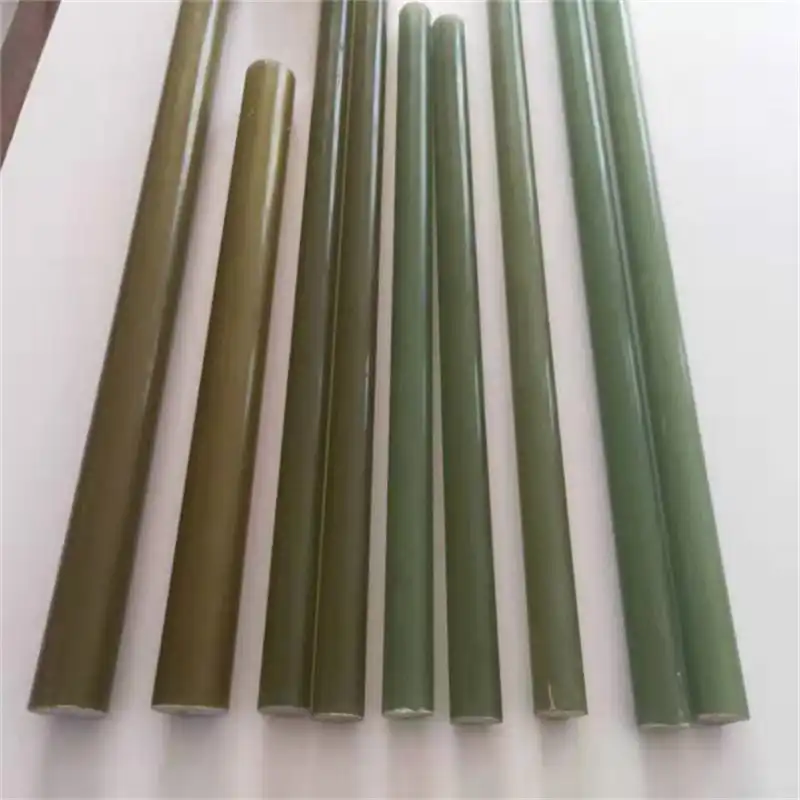
Understanding FR4 G10 Epoxy Resin Rod: Composition and Key Properties
What This Material Is Made Of
The rod is made from continuous-filament woven glass cloth that is then filled with an epoxy resin binder. The piece is squished together and hardened with controlled heat and pressure. This makes a thick, void-free rod that weighs 1.7–1.9 g/cm³ and has a Rockwell hardness of M100 to M110. This way of making things cuts down on internal gaps, which are what break down dielectrics in laminate insulators the most.
FR4 Versus G10: A Technical Distinction Worth Knowing
The basic mechanical and electrical requirements for fiberglass-epoxy laminates are set by G10. FR4 G10 Epoxy Resin Rod adds flame retardants based on bromine to get a UL94 V-0 grade, which means the material goes out on its own within 10 seconds of being lit. Most of the time, when businesses need to buy something, suppliers make dual-grade rods that meet both G10 mechanical requirements and FR4 fire-resistance standards at the same time. This way, buyers get the best of both worlds without having to pay more.
Key Material Properties at a Glance
Hebei Jinghong Electronic Technology Co., Ltd. is where J&Q gets its epoxy rod material. This company is certified by ISO 9001, ISO 14001, and ISO 45001 and can make 30,000 tons of insulating materials every year. The FR4 G10 rod line comes in standard 1-meter lengths and sizes ranging from φ5mm to φ2000mm. It is finished in a natural green color. Because of these features, it can be used directly with CNC tools that are carbide- or diamond-tipped for turning, cutting, and drilling.
Comparative Analysis: FR4 G10 Epoxy Resin Rod Versus Other Insulation Materials
How It Compares to Phenolic Rods
Phenolic cotton rods are cheap and have good mechanical strength, but they soak up more water—usually more than 0.5% water after 24 hours. This taking in of moisture lowers surface resistivity over time in places with a lot of humidity or electrical enclosures that are sealed off. The epoxy-fiberglass mix in FR4 G10 Epoxy Resin Rod keeps water absorption at less than 0.1%, so the electrical resistance stays the same in all climates and seasons.
FR5 and G11: When the Upgrade Is Justified
The FR5 and G11 grades both use fiberglass as their base, but they move to a resin system with a higher glass transition temperature (Tg). This makes them suitable for uses above 150°C. In exchange, the cost of the material goes up, and there are fewer options for unique sizes. Most precision equipment that works below 130°C uses standard FR4 G10 for insulation. This includes most PCB fixings, switchgear spacers, and motor insulation applications. It offers the same level of insulation performance at a lower cost.
Total Cost of Ownership Perspective
In addition to the purchase price, buyers should think about how easy it is to machine, how often it fails, and how often it needs to be replaced. When parts are machined from FR4 G10, they hold their shape longer because it doesn't creep (deform under extended mechanical load) and stays the same size across temperature changes. Buying information from businesses always shows that this type of insulation has lower yearly repair costs than other types of thermoplastic insulation.
How FR4 G10 Epoxy Resin Rod Enhances Precision Equipment Insulation
Electrical Isolation in High-Voltage Assemblies
In power distribution panels and switches, structural standoff insulators and phase barriers must stop arc tracking when there is a fault. The FR4 G10 Epoxy Resin Rod has a high dielectric strength of about 40–50 kV when measured perpendicular to the laminations. This makes it a reliable insulation barrier even when dust or condensation is on the surface. This lowers the risk of phase-to-phase faults in equipment that has already been put together.
Thermal Stability for Motor and Transformer Components
As equipment loads change, motor coil spacers and transformer barriers go through repeated thermal cycling. When a material grows and shrinks unevenly, it puts stress on the parts that are bonded together. This lowers fatigue cracking at joints, which is a common way for insulation systems in rotating machinery to fail in the field.
Dimensional Consistency in CNC-Machined Parts
Tight tolerances are needed for PCB drilling fixtures, guide pins, and precision spacers because FR4 G10 keeps its dimensions the same across its rated temperature range. The FR4 G10 rods that J&Q sells are made with a standard diameter tolerance of 0/-0.2mm for precise grades and a bow tolerance of no more than 1mm per meter. With these specs, machine shops and in-house fabrication teams can make parts with the same shape every time without having to do extra straightening work. This saves time during production for large batches.
Procuring FR4 G10 Epoxy Resin Rod: What Global B2B Clients Should Know
Certifications and Quality Verification
As a starting point for assessing a possible epoxy rod supplier, you should look at their ISO 9001 quality management certification, material test records that confirm the dielectric breakdown voltage according to ASTM D149, and flammability test results according to UL94 V-0. Buyers should also ask for water absorption test results according to ASTM D570 to make sure that the ≤0.1% requirement is met in all production runs, not just on sample certificates.
Logistics and Lead Time Considerations
When it comes to shipping, J&Q can use ocean freight for large orders, air freight for pressing samples, and land transport for local deliveries. Standard 1-meter rods with stock sizes usually ship within the agreed lead times. Custom widths up to ±2000mm, on the other hand, need to be planned for production. Handoff mistakes between manufacturing and freight forwarding are less likely to happen when your supplier has its own logistics department. These mistakes are a common cause of delivery delays for cross-border orders.
Customization and Bulk Order Benefits
Through J&Q's FR4 G10 Epoxy Resin Rod program, you can buy the following:
- Custom diameter range: Orders can be made for any diameter between φ5mm and φ2000mm. This lets engineers choose the exact stock size that is closest to the finished part, which cuts down on the waste of raw materials in CNC operations.
- Bulk volume pricing: With a production capacity of 100 tons per year for the rod line, J&Q can handle both small test orders and long-term blanket orders. This gives buying teams more options for keeping stocking costs low.
- Custom color options: The standard color is natural green, but custom colors can be made upon request for situations where quality control needs to use color coding to show the different levels of insulation.
These choices make it possible for OEM sourcing managers and technical procurement teams to easily add FR4 G10 rods to existing manufacturing processes without having to go through extra steps to prepare the materials.
Making the Right Choice: When and Why to Use FR4 G10 Epoxy Resin Rod
Matching Material Properties to Application Requirements
FR4 G10 Epoxy Resin Rod is the right standard for a job that needs electrical insulation above 40 kV/mm, a steady working temperature of up to 130°C, and the ability to be machined to very tight tolerances. If the temperature of operation goes above 150°C, a High-Tg version or G11 grade should be used. If flammability approval per UL94 V-0 is needed for the project, which it is for most UL-listed electrical equipment in the U.S. market, then FR4 grade must be chosen instead of plain G10.
Industry Trends Supporting Epoxy Laminate Adoption
As the number of electric car battery pack assemblies, green energy inverter housings, and high-density PCB designs grows, so does the need for insulation materials that can reliably handle mechanical loads. Epoxy fiberglass rods meet these needs better than older phenolic or thermoplastic options. This is shown by the steady growth of the market for glass-reinforced epoxy laminates in the North American manufacturing sector.
Selection Summary for Design Engineers
When design engineers are making material specs, FR4 G10 epoxy rod is usually what they use for precise shielding tasks below 130°C. Include the needed diameter, length, tolerance class, and any standards (NEMA FR-4/G-10, MIL-I-24768/27, or ASTM D709) in the purchase document to make sure that suppliers are on the same page and that the quality going in is always the same.
Conclusion
FR4 G10 Epoxy Resin Rod solves real insulation engineering issues like dielectric breakdown risk, dimensional creep, moisture-induced resistance loss, and machining variability by having properties that can be measured and tested. It is a well-known, low-cost insulation material for precision parts that is used by electrical and electronics manufacturers, industrial machinery builders, and power sector procurement teams. When bought from a certified maker that guarantees stable batch quality and full logistics support, it works well with other parts of the production process, and the results are always known.
FAQ
What is the difference between G10 and FR4 in rod form?
G10 sets the basic requirements for fiberglass-epoxy based on how well it works mechanically and electrically. To meet the needs of UL94 V-0, FR4 adds flame retardants based on bromine. Most production rods today meet both grades at the same time. If your use falls under a category of UL-listed equipment, be sure to specify FR4.
Can the rod be used in outdoor electrical installations?
Yes, both mechanically and electrically. But epoxy resin breaks down when it is exposed to UV light for a long time, and the surface starts to chalk over time. Apply a UV-resistant coating to the rod's surface if you want to keep it outside all the time.
What tooling does CNC machining of this rod require?
The glass threads are very rough. Use cutting tools with carbide or diamond tips, keep the spinning speed high, and make sure there is good dust clearance. Fiberglass dust is bad for your lungs and needs to be contained completely or have local exhaust ventilation.
Is this rod electrically conductive?
No, it doesn't conduct electricity at all. If a rod looks like it's electrical, it's either an ESD-grade version that has carbon added to it for use in static discharge applications, or the surface is coated with conductive metal particles.
What diameters are available from J&Q?
J&Q sells FR4 G10 Epoxy Resin Rods in regular 1-meter lengths that range from φ5mm to φ2000mm. With planned lead times, you can get diameters and widths that aren't listed.
Get FR4 G10 Epoxy Resin Rods from J&Q — Request a Quote Today
Trusted by electrical manufacturers, OEM machinery builders, and power sector procurement teams, J&Q is a source for FR4 G10 Epoxy Resin Rod. We can handle both sample sales and long-term supply contracts because our production is ISO-certified, we ship by multiple modes, and we offer full customization from φ5mm to φ2000mm. You can talk to our expert team about your needs and get a price quote by emailing info@jhd-material.com or visiting blog.jhd-material.com.
References
1. ASTM International. ASTM D709: Standard Specification for Laminated Thermosetting Materials. ASTM International, 2021.
2. National Electrical Manufacturers Association. NEMA LI 1: Industrial Laminating Thermosetting Products. NEMA, 2020.
3. Underwriters Laboratories. UL 94: Tests for Flammability of Plastic Materials for Parts in Devices and Appliances. UL Standards, 2018.
4. Harper, Charles A. Handbook of Plastics Technologies. McGraw-Hill, 2006.
5. Mohan, Ravi. Electrical Insulation Materials: Industrial Applications and Performance Standards. CRC Press, 2019.
6. IPC — Association Connecting Electronics Industries. IPC-4101: Specification for Base Materials for Rigid and Multilayer Printed Boards. IPC, 2017.

Get a complete product list and quotation

J&Q New Composite Materials Company



