CE Phenolic Sheet Helps Industrial Suppliers Build Durable Mechanical Components
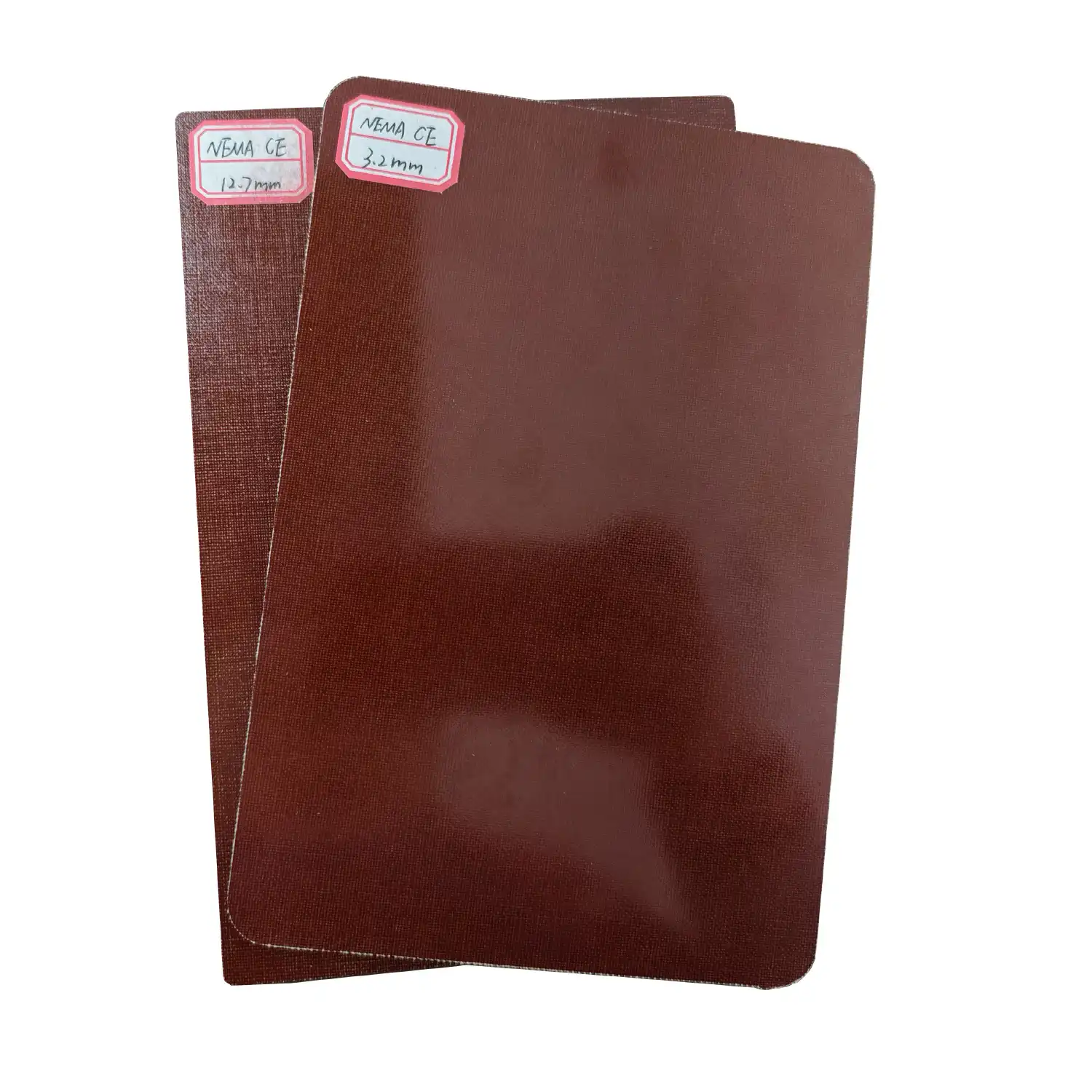
CE phenolic sheet is a high-pressure laminate engineered by impregnating medium-to-coarse cotton canvas with phenolic resin, then bonding the layers under heat and pressure. The result is a material with notable impact strength, thermal resistance, and chemical durability. For industrial suppliers who build mechanical components that must perform reliably under load, heat, and friction, canvas phenolic laminates offer a practical and proven solution. J&Q's Hongda-brand phenolic sheets are available from 0.5mm to 100mm thick, covering a wide range of structural and electrical insulation applications.
Understanding CE Phenolic Sheet and Its Role in Industrial Applications
What Is CE Phenolic Sheet?
CE phenolic sheet is NEMA Grade CE (Canvas Electrical), which is defined in NEMA LI-1 and ASTM D709. It's not the same as paper-based laminates because it's reinforced with a coarse-weave cotton canvas, which makes it stronger and more resistant to damage. ASTM data shows that CE grade laminates have an Izod impact strength of about 1.6 ft-lb/in notch and a tensile strength of over 15,000 psi. This makes them significantly stronger than paper-phenolic grades.
Core Physical Properties
It has a specific gravity of 1.34 to 1.37, a Rockwell M-scale hardness of 100 to 105, and a tensile strength of about 10,000 psi (68 MPa). It has a tensile strength of about 36,000 psi. The temperature stays between 115°C and 125°C (239°F and 257°F) all the time. Based on these numbers, canvas phenolic is definitely a material that can be used for heavy-duty mechanical and modest electrical insulation jobs.
Thickness and Size Availability
We sell Hongda CE phenolic sheets at J&Q. The sheets are 1220mm x 2020mm and come in thicknesses ranging from 0.5mm to 100mm. You can ask for custom sizes and colors; black or brown are the usual options. The factory can make 13,000 tons of goods every year, which means that high-volume industry users can always get what they need.
Why CE Phenolic Sheets Are Essential for Durable Mechanical Components
Addressing Real Wear and Noise Problems
Fire Resistance and Safety Certifications
There are ISO 9001, UL, and ASTM D578 marks on J&Q's phenolic sheets. The standard for products is that they meet UL 94HB flammability ratings. A flame-retardant version is offered for uses that need to meet UL 94 V-0 standards. Material compliance is a must for engineering managers in power distribution, transformer manufacturing, and switchgear production, so these certifications are very important.
Reducing Maintenance Costs Over Time
Canvas phenolic laminates can stand up to common solvents, mild acids, and oils, all of which can be found in most industrial machinery enclosures. The material doesn't rust, swell in oily environments, or gall against metal surfaces, so the service life of the part is greatly increased. When procurement teams move from metal or standard plastic parts to phenolic-based parts, they regularly report less downtime and fewer replacements.
Comparing CE Phenolic Sheet with Alternative Materials
CE Phenolic vs. PVC and Plywood
PVC sheet is resistant to chemicals, but it's not strong enough to be used for load-bearing structure parts. It's not as strong when bent as cloth phenolic, and it doesn't work well above 60°C. In industrial grades, plywood doesn't keep electricity from flowing or fight fire, so it can't be used to insulate switches or motors.
CE Phenolic vs. Melamine Board
Melamine boards are mostly decorative laminates. They are not as resistant to impact or heat stability as canvas phenolic. In gear and spacer uses, melamine surfaces break when they are put under repeated mechanical stress, but CE Phenolic Sheet can take hits without breaking
CE Phenolic vs. Other Phenolic Grades
Paper-based types of phenolic laminate have fine surface details and are cheaper, but they are not as strong against impact. When mechanical toughness is important, CE phenolic works better than them. Linen-based grades may be better for electrical insulation jobs that need tight tolerances and little water absorption. The right choice is directly related to the load and the working conditions.
How to Select and Procure CE Phenolic Sheets for Industrial Use
Checking Certifications and Standards
Make sure that your seller is ISO 9001 certified and that the product meets NEMA LI-1 Grade CE, ASTM D709, and MIL-I-24768 standards before you place an order. These standards make sure that mechanical and electrical performance stays the same across production runs. This is very important for OEM makers and supply chain managers who can't have variations between batches.
Understanding MOQ and Lead Times
J&Q's minimum order size is 500 kg, which works for both small businesses and big industrial buyers. Shipping can happen by sea, land, or air freight, and T/T is accepted as payment. Pallet packaging keeps the edges and surfaces of sheets safe while they are being shipped over long distances. Lead times change for custom sizes or thicknesses. The best way to check schedules is to call J&Q's sales team early in the project timeline.
OEM and Custom Options
J&Q offers OEM services to customers who need products that aren't the standard size or thickness, including CE Phenolic Sheet for specialized applications. The engineering team works directly with clients to make sure that the material requirements match the design of the part. This is especially important for unique gear profiles, transformer coil barriers, and car insulation pads where normal sheet sizes would make too much waste.
Maximizing CE Phenolic Sheet Performance in Mechanical Component Manufacturing
Machining Best Practices
CE phenolic laminates can be cut with standard CNC tools, but carbide-tipped tools are suggested because the phenolic resin matrix is rough. Cutting speeds should be mild, and coolant should be used to keep the surface from getting burned. Phenolic dust is both dangerous to breathe in and can catch fire, so it has to be extracted. Good air is also necessary for safety on any work floor.
Surface Finishing and Tolerances
Edges should be deburred and lightly cleaned after cutting to get rid of tiny cracks that can become stress points when the part is loaded. J&Q's sheets have accurate thickness tolerances from 0.5 mm to 100 mm, which cuts down on the time needed to fix precise parts like gear blanks and insulation spacers after they have been made.
Maintenance and Longevity Tips
Canvas phenolic parts don't need to be oiled in most situations because the material forms a smooth, low-friction surface while it's being used. In gear systems that use oil to grease them, the sheet soaks up a thin film of oil, which lowers friction even more. In most industrial settings, maintenance is limited to checking for delamination or surface cracks on a regular basis. Edge delamination-showing parts should be changed right away to avoid mechanical failure.
Conclusion
CE phenolic sheet gives industrial suppliers who make mechanical parts that are exposed to heat, load, and chemicals measurable performance benefits. Its structure is strengthened with canvas, which gives it impact resistance and self-lubricating wear properties that paper- or plastic-based options can't match. J&Q's Hongda phenolic sheets give procurement teams the consistency and traceability they need. They are certified to meet ISO 9001, UL, and ASTM standards, and they make 13,000 tons of them every year. Canvas phenolic laminates have been shown to work well for a long time, whether they are used as a quiet gear in a crusher, a coil insulation barrier in a transformer, or a structural gap in industrial machinery.
FAQ
What thickness options are available for CE phenolic sheets?
Hongda CE phenolic sheets from 0.5mm to 100mm can be bought at J&Q. The standard sizes are 1220mm × 2020mm, but you can ask for different widths or sizes. This range has everything from thin insulation barriers to thick blanks for structural gear.
How does fire resistance compare to alternative materials?
Standard CE phenolic meets the flammability grade of UL 94HB. In industrial grades, PVC and hardwood don't always meet this level. If you need UL 94 V-0, J&Q has a flame-retardant formula you can use. Customers should be clear about what level of flammability they need when they ask a question.
What is the minimum order quantity and lead time?
The minimum order quantity is 500 kg. How long it takes to get an order depends on whether it needs standard or custom specifications. J&Q ships by sea, land, or air, and accepts T/T payments. The most accurate lead time estimate for your needs comes from directly emailing info@jhd-material.com.
Can CE phenolic sheet be used in wet or submerged environments?
CE phenolic doesn't rust and works well in places with oil. But it soaks up more water than glass-epoxy laminates, so precise parts that will be fully buried in water may need a different grade of material. The engineering team at J&Q can help you figure out the right specification.
Partner with J&Q for Your CE Phenolic Sheet Requirements
J&Q New Composite Materials has been making things for more than 20 years and trading with other countries for more than 10 years. They have relationships all over North America and beyond. Our own transportation network lets us send Hongda CE phenolic sheet straight to your building, so you only have to deal with one company. For your next job, email us at info@jhd-material.com to get a technical data sheet, a custom price, or a sample. All of your questions about CE phenolic sheet suppliers are answered quickly by our team.
References
1. National Electrical Manufacturers Association. NEMA LI-1: Industrial Laminated Thermosetting Products. NEMA, 2020.
2. ASTM International. ASTM D709: Standard Specification for Laminated Thermosetting Materials. ASTM International, 2021.
3. Harper, Charles A. Handbook of Plastics Technologies. McGraw-Hill, 2006.
4. Rosato, Dominick V., and Marlene G. Rosato. Reinforced Plastics Handbook. Elsevier, 2004.
5. Brydson, J.A. Plastics Materials, 7th ed. Butterworth-Heinemann, 1999.
6. UL Standards & Engagement. UL 94: Standard for Tests for Flammability of Plastic Materials for Parts in Devices and Appliances. Underwriters Laboratories, 2018.

Get a complete product list and quotation

J&Q New Composite Materials Company