Why Choose EPGC308 Epoxy Sheet for Motor and Transformer Insulation?
When engineers and procurement teams search for a reliable insulation material that can handle the thermal, mechanical, and electrical demands of motors and transformers, the EPGC308 epoxy sheet consistently rises to the top. This high-performance laminate — built on woven glass fiber impregnated with a specialized epoxy resin system — is engineered under IEC 60893-3-2 standards for Class H thermal endurance, meaning it sustains continuous operation at up to 180°C. For electrical manufacturers, power companies, and industrial machinery builders across the United States, choosing the right epoxy laminate sheet is not a minor procurement detail. It directly affects equipment lifespan, safety margins, and long-term operating costs.
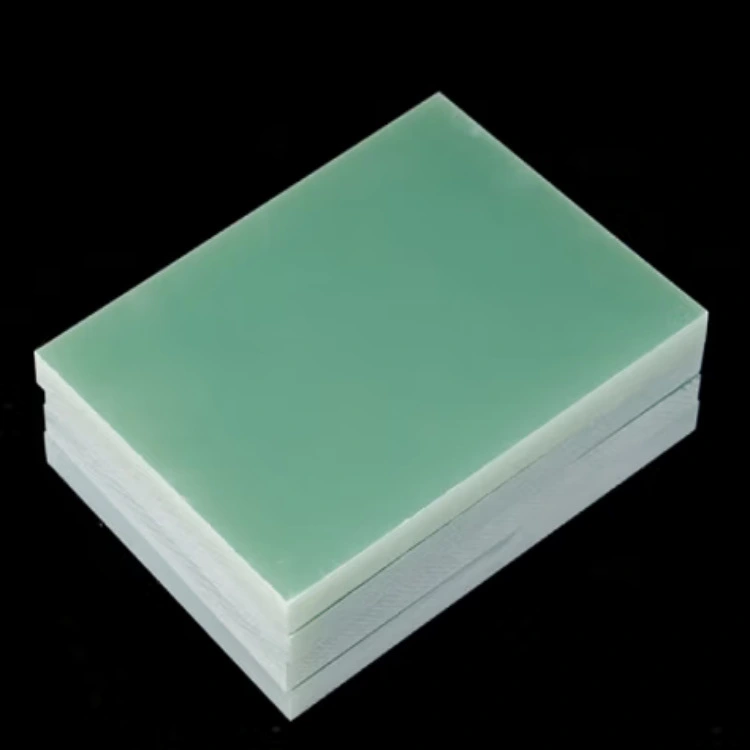
Understanding EPGC308 Epoxy Sheet and Its Key Properties
To manufacture the EPGC308 Epoxy Sheet, a high-temperature epoxy resin system is mixed with woven fiberglass fabric, and then layers are pressed together using controlled heat and pressure. Finally, a thick, void-free laminate is made that has a unique light green color and very even cross-sections.
Thermal and Electrical Performance
The Glass Transition Temperature (Tg) of the material is usually higher than 170°C, and its thermal index is Class H (180°C). When tested in oil perpendicular to the laminations, its dielectric strength is ≥10 kV/mm. Depending on the resin mixture, the Comparative Tracking Index (CTI) can reach up to 600V. Because of these features, it is a much more durable choice than regular FR4 or G10 sheets in places with a lot of heat and electricity.
Mechanical Strength and Chemical Resistance
Flexural strength is ≥340 MPa at room temperature. It's important to note that the material keeps more than half of its tensile strength even after being heated to 150°C for an hour, which is something that most phenolic-based alternatives can't do. It is also very resistant to transformer oils, solvents, and industrial cleaners, which makes it less likely that the material inside protected equipment housings will break down.
Available Specifications from J&Q (JingHong Brand)
EPGC308 Epoxy Sheets from J&Q's JingHong brand come in thicknesses from 0.3mm to 100mm, and the normal sheet size is 1030mm × 1230mm. On request, you can get it in any size you want, from 1220mm × 2440mm to 1030mm × 2030mm. J&Q can reliably meet both bulk buying needs and tight project deadlines, as the minimum order size is 500KG and the annual production capacity is 43,000 tons.
Why EPGC308 Is Ideal for Motor and Transformer Insulation?
When procurement teams are looking at EPGC308 Epoxy Sheet choices, they often compare it to FR4, G10, and phenolic cotton sheets. Each material has its uses, but EPGC308 Epoxy Sheet is better in motor and transformer environments because it can handle thermal cycling, vibration, and high-voltage stress.
Here are the core performance advantages that set this material apart in demanding electrical applications:
- Superior temperature endurance: While regular FR4 is only approved for continued use at about 130°C, the EPGC308 Epoxy Sheet laminate can handle Class H (180°C) temperatures without getting soft, warping, or losing its dielectric integrity. This extra space lowers the risk of insulation failure during peak load cycles inside big motors and oil-filled transformers.
- Stable mechanical performance under load: Vibration and electromagnetic forces inside machines that spin put constant mechanical stress on slot wedges, coil spacers, and phase barriers. When EPGC308 Epoxy Sheet is heated to high temperatures, its high preserved bending strength stops creep deformation, which is a documented failure mode in phenolic laminates operating above 120°C.
- Reliable dielectric strength in oil environments: Transformer applications often require materials submerged in hot insulating oil at elevated temperatures. EPGC308 Epoxy Sheet is a good choice for phase barriers and arc chutes in oil-filled switchgear because it doesn't absorb much water (usually less than 0.2%) and its dielectric breakdown voltage stays stable in oil.
These advantages translate directly into fewer unplanned maintenance shutdowns, longer mean time between replacements, and reduced total cost of ownership — which procurement managers in the power and energy sector always look for when they are evaluating options.
Documented applications include stator slot wedges in large turbine generators, structural supports in SF6 and oil-filled switchgear, arc chute barriers in medium-voltage contactors, and insulation components in rail traction motors. In all of these settings, the material is under both thermal and dynamic stress at the same time, precisely the conditions where EPGC308 Epoxy Sheet's IEC-rated performance becomes a measurable advantage.
How to Select and Procure EPGC308 Epoxy Sheet for Your Business Needs?
Before you can choose the right grade and specification, you need to know the application's operating temperature class, voltage rating, and mechanical load profile. The EPGC308 Epoxy Sheet meets the standards for both IEC 60893-3-2 and NEMA G11 equivalency for most motor insulation and transformer barrier uses in the US, simplifying the approval process with engineering sign-off teams.
When looking for something, buyers should make sure that the seller has certified batch test results that cover bending strength at 150°C (ISO 178), dielectric breakdown voltage (IEC 60243-1), and water absorption (ISO 62). Manufacturers with a good reputation will gladly provide these.
J&Q can ship goods by ocean, land, or air, and their packaging is pallet-protected to keep the laminate edges from getting damaged during transit. The usual way to pay is by T/T. J&Q makes it easier for OEM sourcing managers and technical procurement teams to manage their suppliers because they have been in business for more than 20 years, have been trading internationally for more than 10 years, and have their own logistics company that handles all aspects of shipping.
Practical Guidance: Working with EPGC308 Epoxy Sheet
Handling and machining this EPGC308 Epoxy Sheet the right way protects its performance properties and makes combined parts last longer.
Machining: The woven glass fiber content makes EPGC308 Epoxy Sheet abrasive on cutting tools. For grinding, drilling, and cutting, you need tools with solid carbide or diamond tips. Standard high-speed steel tools lose their edges quickly and don't make good cuts. Fine glass fiber particles are dangerous to breathe in, so enough dust extraction is needed.
Surface preparation and bonding: Use isopropyl alcohol to clean the surface before sticking things together. The strongest bond is made by structural sealants that work with epoxy. For bigger pieces, mechanical fastening with stainless steel works well.
Storage conditions: Keep sheets flat on pallets in a dry place that is about 20°C and has a relative humidity below 50%. Keep them away from direct UV light. In these situations, the mechanical properties stay the same forever, but the surface may change color over time without affecting the structure's strength.
Routine inspection of installed components should check for edge delamination, surface crazing, or tracking marks — any of which warrants immediate replacement before the next planned maintenance window.
Conclusion
The EPGC308 Epoxy Sheet laminate is a well-known and approved solution for motor and transformer uses that cannot tolerate thermal failure, insulation breakdown, or mechanical creep. It can withstand temperatures up to Class H, keeps its flexural strength at high temperatures, and keeps its dielectric performance stable in oily environments. These are the kinds of failures that engineers in the electrical, power, and industrial machinery sectors work to get rid of. J&Q's JingHong-branded products give procurement professionals the technical confidence and operational dependability they need because they have been tested for quality and come from a reliable supply chain.
FAQ
What is the maximum operating temperature for EPGC308?
The EPGC308 Epoxy Sheet carries a Class H thermal index, which means it can work continuously at 180°C. Its Glass Transition Temperature is usually higher than 170°C, which is a big temperature margin above regular FR4 laminates, which are only rated at 130°C.
How does EPGC308 compare to FR4 for transformer insulation?
FR4 works fine for printed circuit boards, but it doesn't have the long-lasting mechanical and heat performance that transformers need. At 150°C, EPGC308 Epoxy Sheet still has more than half of its flexural strength at room temperature. FR4, on the other hand, softens a lot above 130°C, which means it can't be used for oil-immersed transformer parts.
Can J&Q supply custom sizes and thicknesses?
Yes. J&Q can make custom sizes, such as 1220mm × 2440mm and 1030mm × 2030mm, and thicknesses from 0.3mm to 100mm. If you ask, OEM color and standard changes are possible.
What certifications does the product carry?
J&Q's EPGC308 Epoxy Sheets meet standards like IEC 60893-3-2, ISO, UL, and ASTM. Each batch is quality-assured by checking its insulation and mechanical features.
What is the MOQ and lead time?
The least amount that can be ordered is 500KG. Lead times depend on the size of the order, and J&Q's own operations team plans shipping by sea, land, and air to keep projects on schedule.
Partner with J&Q for Reliable EPGC308 Epoxy Sheet Supply
For more than 20 years, J&Q New Composite Materials — operating under the JingHong name — has sold high-performance insulation laminates to electrical makers, power companies, and industrial OEMs. As a reliable EPGC308 Epoxy Sheet seller, we offer easy buying support and can produce 43,000 tons of material each year. Our quality systems are certified, and our logistics operation is fully integrated. You can email our technical team at info@jhd-material.com or visit blog.jhd-material.com to get more information about our products, place bulk orders, or ask for custom sizes.
References
1. International Electrotechnical Commission. IEC 60893-3-2: Industrial Rigid Laminated Sheets Based on Thermosetting Resins for Electrical Purposes. IEC, 2003.
2. ASTM International. ASTM D709: Standard Specification for Laminated Thermosetting Materials. ASTM International, 2017.
3. IEEE. IEEE 117: Standard Test Procedure for Thermal Evaluation of Systems of Insulating Materials for AC Electric Machinery. IEEE, 2015.
4. DIN German Institute for Standardization. DIN 7735: Hot-Pressed Laminates — Glass Fabric Base with Epoxy Resin Binder (HGW 2372). DIN, 1993.
5. National Electrical Manufacturers Association. NEMA LI 1: Industrial Laminating Thermosetting Products. NEMA, 2020.
6. International Organization for Standardization. ISO 178: Plastics — Determination of Flexural Properties. ISO, 2019.

Get a complete product list and quotation

J&Q New Composite Materials Company



