What Makes NEMA Grade FR4 Epoxy Sheet Suitable for Electronics?
If you work in electronics manufacturing or industrial procurement, you have likely encountered FR4 epoxy laminate at some point. But what exactly separates a NEMA-grade designation from a standard sheet, and why does that distinction matter so much in real-world applications? This article breaks down the composition, performance benchmarks, and procurement considerations that make the NEMA Grade FR4 epoxy sheet a trusted material across PCB fabrication, switchgear insulation, and beyond.
Understanding NEMA Grade FR4 Epoxy Sheet
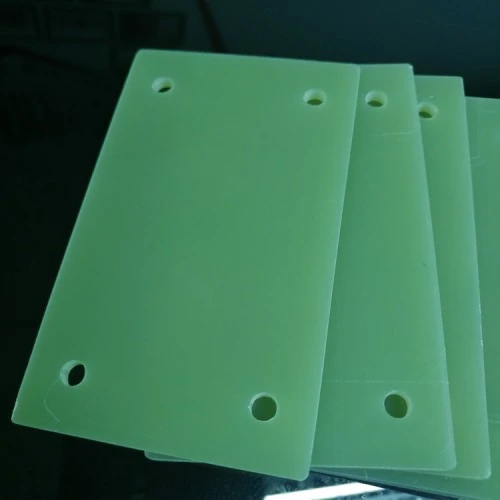
Nema Grade Fr4 Epoxy Sheet is an epoxy laminate with glass reinforcement that meets the NEMA LI-1 standard. Flame retardancy is shown by the "FR" name, and the material has a UL 94 V-0 grade, which means it quickly goes out on its own when it catches fire. To make the base, flame-resistant epoxy glue is mixed with woven 7628 E-glass cloth and then heated and pressed at specific temperatures and pressures to create a stable laminate.
What the NEMA LI-1 Standard Actually Requires?
The NEMA LI-1 standard sets the minimum requirements for dielectric breakdown voltage, flexural strength, and water absorption for industrial laminates. A sheet that says "Nema Grade Fr4 Epoxy Sheet" must actually meet those limits, not just have the name "FR4" on it. When engineers choose materials for high-reliability circuits or power isolation parts, this difference is important because off-spec laminate can introduce failure modes that are hard to trace after the parts have been put together.
JingHong FR4 Sheet Specifications
Hebei Jinghong Electronic Technology Co., Ltd., which was founded in 2018, makes Nema Grade Fr4 Epoxy Sheets from 7628 E-glass cloth and epoxy resin. The color of the material is a very light green, and it comes in thicknesses ranging from 0.3 mm to 100 mm. Custom sizes are offered at 1030 mm × 2030 mm, 1220 mm × 2440 mm, 1030 mm × 1030 mm, and 1030 mm × 2070 mm. The normal sheet size is 1030 mm × 1230 mm. The factory is certified by ISO 9001, ISO 14001, and ISO 45001 and can make up to 43,000 tons of goods each year. International shipments can be made by sea, land, or air freight, and the minimum order size is 500 kg.
Why NEMA Grade FR4 Epoxy Sheet Is Ideal for Electronics Applications?
Engineers look at four main areas of performance when they test insulation laminates: chemical, electrical, thermal, and mechanical. Nema Grade Fr4 Epoxy Sheet has good numbers in all four areas, which is why it is used so often in industrial electronics.
Here are the main things about this material's performance that make it stable in harsh electrical environments:
- Dielectric breakdown voltage exceeding 40 kV (parallel to laminations): This figure supports strong isolation between conductors in switchgear, bus bar supports, and multi-layer circuit boards with a dielectric breakdown voltage greater than 40 kV (parallel to laminations). When there is a surge, a high dielectric strength lowers the risk of arc discharge and leakage current.
- Flexural strength above 415 MPa (lengthwise): The fiberglass support makes the laminate structurally stiff, so it can be used as a load-bearing part in terminal boards, standoff insulators, and mechanical spacers without losing its shape when under long-term stress.
- Glass transition temperature (Tg) of 130°C–140°C for standard grades, up to 170°C–180°C for high-Tg variants: This temperature range covers most lead-free soldering processes and the steady temperatures found in power distribution equipment and motor assemblies.
- Water absorption below 0.10%: Low moisture uptake keeps surface insulation resistance high in damp workplaces, which is a quality that has a direct effect on how reliable outdoor switchgear and transformer coil insulation is over time.
All of these features work together to protect against the most common reasons why electronic insulation fails: electrical tracking, heat deformation, mechanical fracture, and moisture degradation. When buying insulation laminates for high-cycle production lines, procurement teams can rest easy knowing that Nema Grade Fr4 Epoxy Sheet certification links these values to a documented standard instead of a manufacturer's claim that can't be proven.
Comparing NEMA Grade FR4 with Other Epoxy Laminates
Knowing where Nema Grade Fr4 Epoxy Sheet fits in relation to materials next to it helps buying experts set budgets without giving too many details.
FR4 vs. G10
G10 is made of the same fiberglass-epoxy mix as Nema Grade Fr4 Epoxy Sheet, but it doesn't have the flame-retardant package of additives. G10 works well in mechanical or structural roles, but for electronics and power uses, the self-extinguishing behavior that only the FR4 label guarantees is what is needed. When following the rules requires UL 94 V-0, G10 is not an acceptable alternative.
FR4 vs. FR5/G11
The glass transition temperatures for FR5 and G11 laminates are higher, and they have better thermal performance. They work well in places with very high temperatures, like high-power inverter boards or aircraft electronics bays, but they cost a lot more. The normal or high-Tg Nema Grade Fr4 Epoxy Sheet offers better performance at a lower cost for most industrial electronics uses that work below 150°C.
Thickness selection also shapes procurement cost. Sheets that are between 0.3 mm and 1 mm thick are used for PCB boards and thin insulation films. Cuts that are 10 mm to 100 mm thick are made into structural parts and arc barriers. Finding a single source that can provide the full range of thicknesses makes managing vendors easier and makes sure that the materials used on all tasks are the same.
Best Practices for Working with NEMA Grade FR4 Epoxy Sheets
When you machine epoxy fiberglass laminates, you need to pay attention to the tools you use and the environment. High-speed steel tools don't work as well as carbide-tipped drill bits and end mills because the glass fiber content in high-speed steel tools speeds up edge wear. To get rid of glass dust, operators should use compressed air or vacuum extraction, and people who work with cut sheets should wear the right safety gear for their lungs.
Storage and Handling Recommendations
Lay Nema Grade Fr4 Epoxy Sheets out flat on pallets and store them in a dry, temperature-controlled area. Even though this material doesn't absorb a lot of moisture, this can change if sheets are stored in open, damp places for a long time. When JingHong sends sheets, they put them in standard protected packaging that is held in place by a pallet. This keeps the sheets safe while they travel by sea, land, and air. Before you can use glue to join Nema Grade Fr4 Epoxy Sheet parts together, you need to prepare the surface. Light scuff sanding gets rid of any leftover release agent and makes the adhesive stick better, which makes sure that bonded joints stay strong even when they are heated and cooled many times.
How to Procure NEMA Grade FR4 Epoxy Sheets?
Making sure a seller has the right quality certifications is the first step in reliable buying. An ISO 9001 certification means that the quality management system is organized. ISO 14001 and ISO 45001 certifications mean that the environmental and workplace safety rules are followed. All three of these certifications make it less likely that batches will be inconsistent, which can throw off production plans. For people who buy a lot, being able to get custom sizes is important. When procurement teams need to find materials for specific fixture geometries or big panel forms, they need sources who can work with non-standard sheet sizes without having to wait a long time for delivery. With JingHong's OEM service, buyers can choose the size, color, and finish of the surface to meet the needs of their project. Ask the company that sells Nema Grade Fr4 Epoxy Sheet for mill test results or third-party confirmation of the dielectric breakdown voltage, bending strength, and water absorption. These three measurements are the best ways to tell if a sheet really meets the requirements of NEMA LI-1.
Conclusion
Nema Grade Fr4 Epoxy Sheet is the standard shielding material for electronics because it has been tested and proven to work well with electricity, heat, mechanical forces, and chemicals. It is made of fiberglass and epoxy, which allows for precise CNC machining, and its UL 94 V-0 rating meets safety standards in most global markets. When engineering managers and procurement specialists look at insulation substrates, the NEMA designation gives them a quality standard that they can follow, which makes it easier to make specifications and qualify suppliers. FR4 laminate is still a practical and well-known choice, whether it's used as a PCB substrate, an arc barrier in switchgear, or a structural spacer in industrial machinery.
FAQ
What distinguishes NEMA Grade FR4 from standard FR4?
Nema Grade Fr4 Epoxy Sheet meets the basic requirements set by NEMA LI-1 for dielectric strength, bending strength, and water absorption. Standard FR4 may have the same base construction, but it hasn't been officially checked by a third party against those standards. For uses that need to follow certain rules, the NEMA designation gives procurement teams the quality guarantee they need.
Can FR4 epoxy sheets handle lead-free soldering temperatures?
Standard grades of Nema Grade Fr4 Epoxy Sheet with a Tg of 130°C–140°C can handle short contact to lead-free reflow temperatures. However, high-Tg versions rated at 170°C–180°C are better for regular thermal cycling in production settings.
What is the minimum order quantity for JingHong FR4 sheets?
The minimum order quantity is 500 kg. You can ask for custom sizes and thicknesses ranging from 0.3 mm to 100 mm, and you can choose from different sheet formats to cut down on material waste.
How do I verify a supplier's compliance with NEMA LI-1?
Ask the seller for either a mill test report or a third-party laboratory test certificate that verifies the dielectric breakdown voltage, bending strength, and water absorption values against the limits set by NEMA LI-1.
Partner with J&Q for Certified NEMA Grade FR4 Epoxy Sheet Supply
With over 20 years of experience in insulation materials and 10 years of experience in foreign trade, J&Q can handle any order. We sell Nema Grade Fr4 Epoxy Sheets in thicknesses ranging from 0.3 mm to 100 mm. We can make it to any size you need, and our production is ISO-certified. We also offer direct logistics support. You can reach our technical team at info@jhd-material.com or blog.jhd-material.com to talk about your project's unique needs, pricing for large orders, and shipping dates.
References
1. National Electrical Manufacturers Association. NEMA LI 1: Industrial Laminating Thermosetting Products. NEMA, 2020.
2. Coombs, Clyde F. Printed Circuits Handbook, 7th ed. McGraw-Hill Education, 2016.
3. Harper, Charles A. Electronic Materials and Processes Handbook, 3rd ed. McGraw-Hill, 2004.
4. IPC. IPC-4101: Specification for Base Materials for Rigid and Multilayer Printed Boards. IPC, 2017.
5. Underwriters Laboratories. UL 94: Tests for Flammability of Plastic Materials for Parts in Devices and Appliances. UL, 2013.
6. Ullett, John S., and Richard P. Chartoff. "Unsaturated Polyester and Phenolic Resins." Handbook of Thermoset Plastics, William Andrew Publishing, 2014.

Get a complete product list and quotation

J&Q New Composite Materials Company



