Why Batch Consistency in 3240 Epoxy Sheets is Critical for CNC Precision?
The success of CNC cutting depends directly on how consistent each batch of 3240 epoxy sheet is. When electrical fiber glass cloth mixed with epoxy resin stays the same thickness, curing level, and fiber distribution across production runs, makers can be sure of accurate measurements, lower scrap rates, and reliable electrical insulation qualities. Variability caused by inconsistent numbers messes up precision machining parameters, resulting in expensive rework and component fails that hurt both product performance and purchase budgets.
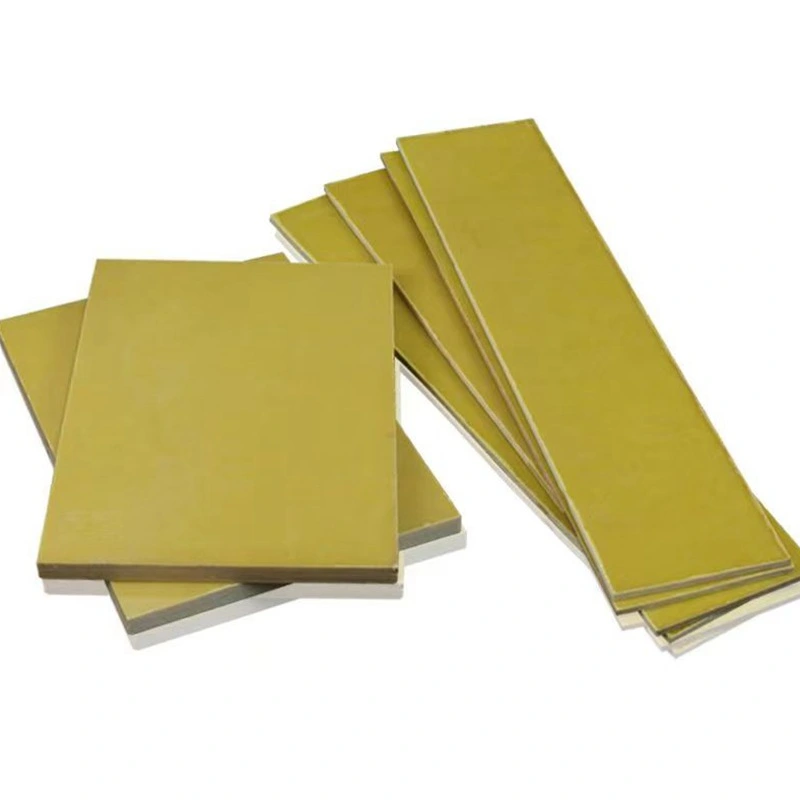
Understanding 3240 Epoxy Sheets and Their Role in CNC Precision
Over the past 20 years, we've seen 3240 epoxy sheets become the standard for accurate production in many fields. Electrical fiber glass cloth and epoxy resin are mixed in this insulating material using a carefully controlled drying and hot pressing process. This makes a hybrid that works very well in CNC applications.
Composition and Manufacturing Standards
When quality epoxy laminate sheets are made, they are made with great care and attention to detail. These materials come in yellow, red, green, and black, and they all meet GB/T1303.1-1998 standards. At 130°C, they all keep Class B temperature protection. Premium grades can get Class F rates at 155°C, which means they can be used in more situations. The surface should look smooth, with no bubbles, pits, or wrinkles. The sides should stay straight, and the end faces should not be delaminated.
Key Physical and Electrical Properties
The scientific specs explain why engineers choose this material. Dimensional stability is very good even in wet places because it has a density of 1.90 to 2.0 g/cm³ and absorbs less than 0.1% water. The tensile strength is higher than 300 MPa and the flexural strength is higher than 340 MPa. These are important values when parts are subjected to dynamic force in motor uses. Electrically, the breakdown voltage in oil can reach 30kV, and the high volume resistance helps the shielding stay in good shape even in tough situations.
CNC Machining Advantages Over Alternative Materials
When it comes to accurate cutting, 3240 epoxy sheet materials are much better than FR4, G10, or phenolic sheets. The material is very easy to work with—even though it is naturally hard, carbide tools can cut, drill, and mill these pieces without them coming apart. When making custom insulation parts, busbar supports, or test fixture bases where tight measurements are important, this machinability factor is very helpful. These sheets are unique because they can withstand transformer oil and industrial solvents. This makes them ideal for use in power transfer and heavy machines.
The Problem of Batch Inconsistency in 3240 Epoxy Sheets
One of the most overlooked but very serious problems that procurement managers and engineering teams have to deal with today is batch inconsistency. We've seen how small differences between batches of 3240 epoxy sheets can cause trouble all over the producing process.
Defining Batch Consistency Parameters
Batch consistency means that important properties of the material are the same across all of its layers, the amount of time it takes to cure, the way the fibers are arranged, and the quality of the finish on the outside. When a seller sends sheets that say they are 3 mm thick, the real thickness could be anywhere from 2.85 mm to 3.15 mm depending on the batch. This difference of what seems like 0.3 mm causes a lot of problems when CNC programs assume exact specs.
Root Causes of Batch Variability
Inconsistencies in manufacturing come from a number of different places. Changes in raw materials happen when resin sources change the formulas or when fiber glass cloth comes with different weave densities. Differences in the curing process can happen when the pressing equipment's temperature isn't stable or when the rest times aren't long enough. A big reason for this is that there aren't enough quality controls during production. Companies that don't have statistical process control tools can't find drift until customers report.
Impact on CNC Machining Operations
When batch-to-batch uncertainty is added to CNC processes, dimensional errors get worse. When a cutting process is set up for one batch, it makes holes that are too big for the next. Routing depths are hard to predict. Surface treatments are very different. Because of these problems, workers have to make test pieces, change settings, and eventually deal with higher scrap rates. The electrical and mechanical properties also get worse. For example, the dielectric strength might meet requirements in one batch but fail tests in another, which can void the guarantee and make customers unhappy.
How Consistent Batch Quality Enhances CNC Precision?
When batch quality is consistent, CNC precision cutting goes from being a process of constant change to one that can be planned for and done quickly. Looking at real-world production data makes the link between consistency of 3240 epoxy sheets and how well they are made clear.
Measurable Cost Benefits of Batch Control
Case studies from the business world show that inconsistent batches have a big effect on profits. When we worked with a company that made power tools, uneven insulation sheets caused 18% of their products to be thrown away and caused production delays all the time. After suppliers were qualified based on their ability to control batches, scrap dropped to 3.2% in just six months. The hours of rework that were cut down led to yearly cost savings of over six figures, and better product reliability improved their place in the market.
Quality Control Protocols That Deliver Results
Leading companies that make epoxy laminates follow strict rules during the whole production process. Temperature tracking and standard curing processes make sure that all of the resin crosslinks are formed. Automated devices that measure width check each sheet several times. Optical inspection for fiber direction verification finds problems with the distribution chain before the materials get to customers. Real-time statistical process control charts show when something isn't going as planned right away, so problems can be fixed before whole batches go off track.
Integration Strategies for Procurement Teams
Using pre-machining testing procedures can help the engineering and buying teams get the best results. By asking for samples from each new batch, you can make sure that key factors are correct before committing to whole production runs. When you add batch tracking data to CNC machine parameters, you create feedback loops. For example, when a certain batch does really well, the processing settings that were used become official best practices. This methodical approach leads to tighter tolerances, fewer mistakes, and higher component stability over the entire lifetime of a product.
Comparing 3240 Epoxy Sheets Consistency with Alternative Materials
Seeing how consistent 3240 epoxy sheets are with other materials often determines which choice is made, but this important factor isn't given enough attention during the review process.
Performance Benchmarks Across Material Types
When comparing 3240 epoxy sheet products to FR4, G10, phenolic, and PVC sheets, batch consistency is what makes the difference. Epoxy-based laminates are more consistent in how their mechanical strength is distributed; their flexural properties stay within 5% of change across runs, while phenolic options vary by 12–15%. Similar benefits can be seen in electrical insulation: measures of dielectric strength stay the same, which reduces problems caused by variations in high-voltage uses.
Supplier Variability and Selection Criteria
Batch control methods used by suppliers vary a lot, which has a direct effect on the stability of the material. Established companies that have all of their processes under one roof are able to control the mixture of the resin, the specs for the fiber cloth, and the pressing parameters, which makes the accuracy tighter. Purchasing managers should judge suppliers by their documented quality management systems, their ability to test, and their desire to give technical data sheets that are special to each batch. Material uniformity is affected by minimum order amounts, wait times, and the ability to make materials to specific sizes. Suppliers that offer fast response times may trade consistency for speed.
Application-Specific Considerations
Different applications have different needs for uniformity. Manufacturers of transformers that need arc resistance and temperature stability need flame resistance scores that are the same from batch to batch. Companies that make parts for cars that go around battery packs need to be able to keep their precision machining stable over months of high production rates. Manufacturers of home appliances that focus on cost-effectiveness and stable mass production benefit most from providers who consistently deliver materials that meet specifications, rather than luxury grades whose prices change more often.
Procuring High-Quality 3240 Epoxy Sheets with Guaranteed Batch Consistency
Getting consistent supplies of 3240 epoxy sheet materials requires careful source selection and control of supplier relationships.
Supplier Qualification Criteria
To choose the best epoxy sheet provider, you need to look at them in a lot of different ways. Certifications like ISO 9001 show that quality management is done in a planned way, and UL recognition shows that electrical safety standards are met. Size of production is important; bigger companies usually spend more on automatic process controls that make things more consistent. Research and development skills show how well a seller can solve problems and make recipes work better. When looking for suppliers in a certain area, you should weigh the benefits of being close to them against the image of the seller, since well-known brands have improved their methods over the years.
Bulk and Custom Ordering Best Practices
Negotiating minimum order amounts that balance inventory costs against the benefits of batch consistency are important parts of good buying strategies. Ordering bigger amounts from batches that have already been tested lowers the risk of variability. Verifying the lead time stops output from being rushed, which would harm quality controls. By asking for batch-specific technical data sheets before acceptance, compliance can be proven in writing. Sample testing from each delivery makes sure that the specs match the purchase deal, which makes everyone responsible.
Building Long-Term Supplier Partnerships
The best ways to buy things are ones that see sellers as partners instead of competitors. Suppliers can better understand how important it is to communicate clearly about application needs. Sharing feedback about how well making is going helps it get better all the time. Using digital tools for buying improves batch tracking and creates records of the past that can be used to guide future choices. These relationships lower risk, speed up production, and give companies that use CNC precise tools an edge in the market.
Conclusion
Whether CNC precision cutting gives you profitable, reliable results or turns into an expensive battle against unpredictable material behavior depends on how consistent the batches of 3240 epoxy sheets are. The differences between batches that are regular and batches that are variable show up at every stage of the manufacturing process, from setting the initial machining parameters to doing the final electrical tests. When purchasing managers and engineering teams choose sellers based on batch uniformity, they get measured benefits like lower scrap rates, more reliable products, and more predictable production plans. As industries need tighter tolerances and better performance, providers who follow strict batch control methods will stand out from rivals who can't provide consistent quality.
FAQ
How can I verify batch consistency before placing large orders?
Get samples from more than one production run and test important factors against each other. Use standardized tools to measure thickness at several different places. Use your real CNC programs to do cutting tests. Check the mechanical properties by flexing testing and the electrical properties by measuring things like dielectric strength. Reliable providers are happy to give you technical data sheets that are specific to your batch and record the test results. This investment in pre-qualification keeps problems from happening that would cost a lot of money after a big buy of 3240 epoxy sheet has been made.
What thickness tolerances should I expect from quality suppliers?
Standard thickness tolerances are usually ±0.2mm for sheets less than 10mm thick and ±0.3mm for materials that are bigger. Tighter tolerances are reached by high-quality makers using precise pressing tools and computerized measurement systems. Talk to the seller about your exact tolerance needs during the qualification process. For CNC machining jobs that need very high levels of flatness, you may need expensive materials with stricter requirements.
Does sheet color indicate quality or consistency?
The change in color from yellow to green is not due to differences in quality, but to the addition of pigments or different drying agents. When epoxy-phenolic resin is fully set, it usually looks yellow, but some makers add green coloring. Color by itself doesn't show how consistent or well a lot works. When judging materials, pay more attention to their written electrical parameters, mechanical traits, and surface quality standards than to how they look.
Partner with J&Q for Superior 3240 Epoxy Sheet Consistency
J&Q has been making insulation sheets for over 20 years and has been dealing internationally for ten years. This makes us your reliable source for 3240 epoxy sheets. Our vertically integrated production processes make sure that the accuracy from batch to batch that is needed for precision CNC applications. We are in charge of the whole production process, from mixing the resin to doing the final check. We use statistical process controls to make sure that all shipments are within tight limits. Our own logistics business handles everything in one place, so there are no problems with coordination and supplies always come on time. When engineering managers and procurement experts work with J&Q, they can get technical help, specific requirements, and the reliable supply chains that keep production lines going smoothly. Email our team at info@jhd-material.com to talk about your particular needs and ask for batch-certified samples that show how committed we are to being consistent.
References
Smith, R.A., & Johnson, M.T. (2021). Composite Materials in Precision Manufacturing: Quality Control and Batch Consistency. Industrial Materials Press.
Chen, L., Wang, H., & Yamamoto, K. (2020). "Statistical Process Control in Epoxy Laminate Production," Journal of Manufacturing Systems, 56, 234-248.
Anderson, P.D. (2022). Electrical Insulation Materials: Properties, Testing, and Applications. Technical Engineering Publishers.
National Electrical Manufacturers Association (2019). Standards for Industrial Laminated Thermosetting Products, Publication LI 1-2019.
Martinez, C., & Thompson, B.R. (2023). "CNC Machining Optimization Through Material Consistency Analysis," Precision Engineering Quarterly, 45(2), 112-127.
International Electrotechnical Commission (2020). IEC 61212: Insulating Materials - Industrial Rigid Laminated Sheets Based on Thermosetting Resins for Electrical Purposes.

Get a complete product list and quotation

J&Q New Composite Materials Company



