Which CNC Machines Are Suitable for Phenolic Laminate Cutting?
When working with phenolic paper laminate in industrial manufacturing, selecting the right CNC machine becomes critical for achieving clean edges, dimensional accuracy, and optimal production efficiency. Phenolic paper laminate—a composite material built from paper layers bonded with phenolic resin—requires specific machining approaches due to its unique hardness, abrasiveness, and dust generation characteristics. CNC routers with high-speed spindles and carbide tooling typically deliver the best results for most applications, though milling machines and specialized cutting systems also play important roles depending on your production volume, part complexity, and tolerance requirements.
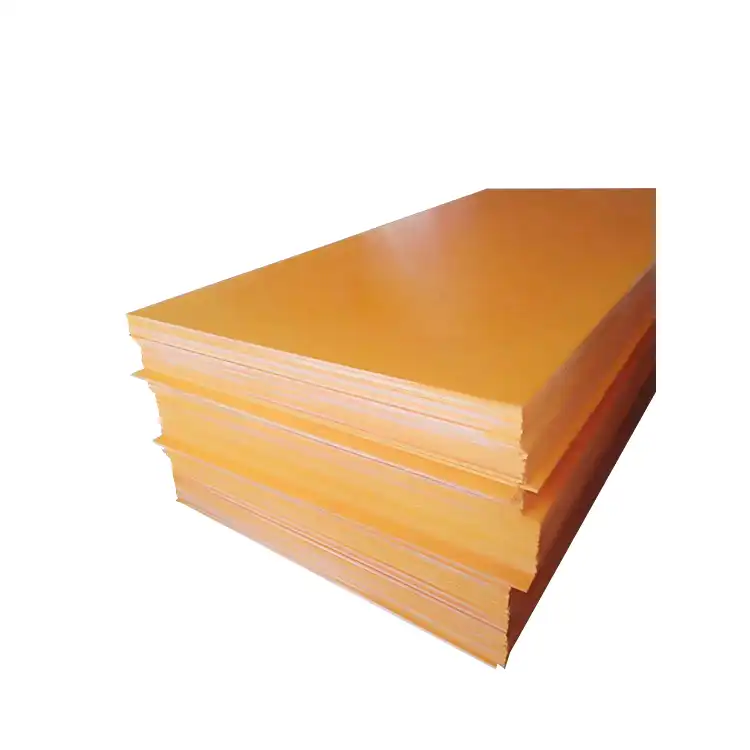
Introduction
Phenolic Paper Laminate is used by manufacturers in the electrical, automotive, and power industries to protect against electricity, support structures, and keep heat out. In tough situations, this thermosetting composite material has great dielectric strength, chemical resistance, and mechanical stability. But buying teams and production experts really struggle to make precise cuts without delamination, edge chipping, or too much tool wear.
Choosing the right CNC tools has a direct effect on the quality of the product, the cost of production, and the safety of the workers. When engineering managers look at machining options, they have to weigh the costs, output rate, and spindle power against dust control systems, tooling compatibility, and the ability to use different types of tools. Knowing how different kinds of CNC machines work with phenolic laminates helps expert buyers buy the right tools to meet strict quality standards like NEMA LI-1 and IEC 60893 while also supporting long-term manufacturing goals.
Understanding Phenolic Paper Laminate and Its Cutting Requirements
Material Composition and Industrial Applications
Phenolic Paper Laminate is made up of several layers of kraft paper that have been soaked with phenolic resin binders and then heated and pressed together to make rigid sheets. This way of making things makes a substance that has a specific gravity of 1.30 to 1.45 g/cm³ and a bending strength of more than 100 MPa in the best grades. The fully cured phenolic resin matrix is very resistant to mineral oils, weak acids, and chlorinated hydrocarbons. Because of this, it is essential for making motor brackets, transformer insulation, and switchgear components.
There are different NEMA grades (X, XX, XXX, XP, XXP, and XXXP) with different amounts of resin and performance traits. Grade XXX is the best electrical insulation because it doesn't absorb water more than 1.0%, so it can be used in damp places. Plasticizers are added to modified "P" grades so they can be cold punched without cracking. This is an important property for making a lot of parts for the household and car industries.
Machining Challenges and Material Behavior
The qualities that make phenolic laminates useful in electrical applications also make them hard to machine. The hardness of the material speeds up the wear of carbide tools, especially when cutting through layers of resinous material. Fine particles made by abrasive paper fibers can be harmful to your health if you don't have the right dust cleaning systems. Also, because the material tends to delaminate when the cutting conditions aren't right, feed rates and tool speeds need to be carefully controlled.
When cutting, heat can soften the plastic and bend the material, especially in sheets that aren't very thick. Because of this, some cutting technologies can't be used and specific cooling strategies are needed. By understanding these behavioral traits, you can choose equipment that has good dust collection, the right spindle speed ranges, and rigid construction that keeps edge quality problems to a minimum.
Criteria for Selecting CNC Machines for Phenolic Laminate Cutting
Spindle Performance and Tooling Compatibility
For clean edge ends, spindles that can go between 18,000 and 24,000 RPM are needed to cut Phenolic Paper Laminate well. Higher spinning speeds lower the cutting forces per tooth, which lowers the risk of delamination and raises the quality of the surface. Most sheet thicknesses from 0.5 mm to 25 mm can be handled by spindle power between 3 and 7.5 kW. However, higher power ratings may be needed for thicker industrial-grade laminates.
Carbide-tipped router bits, compression spiral cutters, and diamond-coated tools made for rough materials must all be able to fit in with the other tools. Machines with automatic tool changers can quickly switch between roughing and finishing tasks so that production doesn't stop. The cooling system for the spindle is also very important. Spindles that are cooled by air work best for intermittent operations, while spindles that are cooled by water work best for ongoing production settings that are common in electrical manufacturing facilities.
Precision, Rigidity, and Dust Management
In industrial settings, positioning must be accurate to within ±0.05mm and repeatability must be better than ±0.02mm across the cutting envelope. Heavy-duty machine frames made of welded steel or cast iron are strong enough to meet these limits when cutting rough phenolic materials that are rough. When it comes to dusty environments, linear guide systems and ball screw drives last longer and are more accurate than rack-and-pinion options.
Integrated dust extraction is no longer a choice; it's a must. At the cutting point, effective systems should be able to catch at least 95% of the particulate matter that is made, with filters rated for particles as small as 0.3 microns. The machine's maximum material removal rate must match the amount of dust it can collect. For industrial routers that work with phenolic laminates, this is usually between 800 and 1,200 CFM. Proper extraction protects the health of the user, stops material growth that can affect accuracy, and makes all of the machine's parts last longer.
Material Handling and Production Throughput
Sheet size and production volume have a direct effect on the size of the machine bed and how it handles materials. Standard phenolic sheets are 1020mm x 1220mm (4' x 4'), 1220mm x 2440mm (4' x 8'), or can be made to order in larger sizes. For secure clamping, machines must have enough table space with 100–150 mm of extra space around the edges of the material. Vacuum table systems work really well with flat phenolic sheets because they spread the holding force out evenly so the sheets don't warp when they're being cut.
Automatic loading systems, stacked part programs, and conveyor integration all help to make production settings better by reducing the amount of work that needs to be done by hand. It's not just the cutting speed that needs to be thought about when it comes to throughput; the tool change times, vacuum activation cycles, and part removal processes are also important. For machines that are meant to work when the lights are off, sensors keep an eye on things like tool wear, vacuum pressure, and the performance of the dust collection. These features keep quality problems from happening during production runs that aren't being watched.
Overview of Suitable CNC Machine Types for Phenolic Laminate Cutting
CNC Router Systems
In all industrial areas, CNC cutters are the most common way to work with phenolic laminates. These machines are set up in ways that make them best for processing sheet materials. They have fast spindles, a lot of Z-axis travel, and good chip evacuation. Three-axis routers can do most flat cutting tasks, like profiling, drilling, and pocketing. Five-axis routers, on the other hand, can make beveled edges and complex three-dimensional shapes that are needed in some electrical parts.
Industrial-grade CNC cutters made for composite materials usually have a gantry design and two Y-axis motors that make sure the motion is accurate and aligned. There are different kinds of spindles, from 3 kW air-cooled units for light work to 9 kW automatic tool change spindles for continuous production. The open table design makes it easier to load materials and has modular vacuum zones that can be adjusted to fit different sheet sizes. This gives distributors the freedom to meet the needs of a wide range of customers.
Performance benefits for Phenolic Paper Laminate go beyond cutting speed and include lower equipment costs compared to machining centers, easier programming that can be done by techs who don't have a lot of experience with CNC, and quick switching between different types of phenolic. Access to tools and easy upkeep lower operational costs throughout the lifetime of the equipment. This makes routers a good investment for both factories that make a lot of products and shops that only make a few at a time.
CNC Milling Machines
Vertical machining centers are more accurate and flexible, which makes them better for jobs that need small details, tight tolerances (less than ±0.03mm), or combining cutting of metal parts. The covered working area keeps dust better than open router designs, but this means that cleaning processes need to be done more often when working with phenolic materials. Milling machines are great at making complicated electrical insulators with precise slot sizes, threaded mounting holes that are threaded, and smooth surfaces.
Milling machines are built to be heavy and sealed, which reduces vibration and heat expansion effects. This helps keep the accuracy of the dimensions throughout long production runs. Automatic pallet changers let you set up workpieces offline, which makes the most of spindles in high-mix manufacturing environments. Most tool magazines are bigger than router magazines, so they can hold specialized cutters for drilling, threading, and finishing without any help from a person.
However, milling machines aren't always useful for processing large sheets. Smaller table sizes limit the size of the materials that can be used, and sealed designs make it harder to work with full phenolic sheets. For simple profile cutting, cycle times are usually longer than router-based alternatives, and capital costs are much higher. Because of these factors, they can only be used in situations where precision and the ability to do more than one operation are worth the investment.
Laser and Specialty Cutting Systems
Because of the way the material reacts to heat and what it is made of, laser cutting Phenolic Paper Laminate is very difficult. The phenolic resin matrix tends to char instead of vaporize cleanly, leaving behind discolored edges and fumes that could be harmful. When carbonization happens on a paper substrate, it makes the edges rough, which is not good for electrical insulation applications that need smooth dielectric surfaces. Because of these problems, laser systems can only be used in certain situations where edge quality needs allow for some color and pattern differences on the surface.
Waterjet cutting is now a good option for cutting thicker phenolic laminates when mechanical cutting forces could cause the laminates to separate. The cold cutting method gets rid of heat-affected zones and can handle materials up to 100 mm thick, but it costs more because it uses more abrasives and cuts more slowly. Usually, extra steps are needed to finish the edges, and when materials are cut while they are still wet, they need to dry before they can be further processed or put together.
Die-cutting tools are used by companies that make a lot of the same composite parts over and over again. Custom steel rule dies or hardened punch tools make it possible to make parts quickly and consistently, especially smaller sheets that are used in battery barriers for cars and device insulation frames. Because of the high cost of the dies, this method can only be used for jobs that require more than a thousand parts, at which point the cost per unit is comparable to CNC options.
Best Practices and Maintenance for CNC Machines Cutting Phenolic Laminates
Optimizing Cutting Parameters
To get good cuts in Phenolic Paper Laminate, you have to balance a number of factors that are all connected. Spindle speeds of 18,000 to 24,000 RPM and feed rates of 3 to 8 meters per minute usually produce clean edges without putting too much stress on the tools. If you don't want delamination, the depth of cut per pass should stay below 3 mm for single-flute tools and 5 mm for multi-flute cutters. These factors change depending on the type of material, the thickness of the sheet, and the shape of the tool being used. This is why test cuts are so important when working with new types of phenolics.
When compared to regular milling, climb milling (down-cut) usually makes better edges because it cuts into the material instead of pulling layers apart. Compression spiral bits, which have opposing helix directions that meet in the middle, keep the top and bottom surfaces from delaminating, which makes them perfect for through-cutting tasks. Tool makers give detailed advice on how to make phenolic composites, which can be used as a good starting point for improvement.
The right choice of tool includes coating technologies as well as geometry. When cutting abrasive phenolic materials, diamond-coated carbide tools last 5–10 times longer than untreated options. This means that tools don't need to be changed as often, and the quality of the parts stays the same across production runs. The higher starting cost per tool is spread out over a lot more parts, which lowers the total cost of tooling per part while making the dimensions more consistent.
Dust Control and Workplace Safety
During phenolic laminate processing, both equipment and people are kept safe by good dust management. Particles of phenolic dust contain formaldehyde residues that can irritate the lungs and could be harmful to your health in the long term if you are exposed to them often. OSHA rules say that workers can't be too close to phenolic dust, so strong filtering systems are now required by law and can't be extra.
To collect dust, systems should either be built right into CNC machine enclosures or use localized capture hoods placed within 150 mm of the cutting points. Filter media must catch sub-micron particles while keeping enough movement to do its job—usually MERV 15 or HEPA filtration guidelines. Regularly checking and replacing filters keeps their performance from going down, which hurts both the efficiency of the capture and the performance of the machine because of less suction.
Not only do operating methods limit dust exposure, but they also extract it. Machine designs that are better enclosed keep flying particles out than designs that are open. Regular cleaning keeps dust from building up on machine parts and computer parts, which extends the time between repair visits and keeps accuracy from dropping. Personal protective equipment, like dust masks with an N95 rating or higher, gives you extra protection while setting up and maintaining machines.
Preventive Maintenance and Equipment Longevity
When processing phenolic laminates, some wear patterns happen faster than when cutting wood or plastic, so preventative maintenance is important for long-term performance. When dust gets into linear guides and ball screws, it makes setting less accurate and increases friction, which means that they need to be oiled more often, usually once a week instead of once a month. Using abrasive-environment-formulated lubricants that don't stick to dust makes parts last longer between rebuilds.
Because of the cutting pressure used in phenolic processing, it is very important to check the tool holder. Regular checks must be made on the pull stud torque specifications and the cleanliness of the taper interface to stop tool runout, which leads to poor edge quality and faster wear. Monitoring the condition of spindle bearings through vibration analysis or thermal imaging can spot problems as they arise, stopping them from becoming catastrophic and causing production to stop.
As part of vacuum system upkeep, the pump seals must be checked, any blockages must be cleared, and the table surface seals must be confirmed. Loss of vacuum performance lowers the force that holds the material in place, letting the sheet move, which can lead to mistakes in the measurements or the need to throw away the whole part. Setting baselines for vacuum pressure and checking them before every production run helps find system degradation that needs to be fixed before it affects the quality of the parts.
Conclusion
For making Phenolic Paper Laminate, choosing the right CNC equipment means matching the machine's skills to the production needs, material grades, and quality standards. CNC cutters are flexible and affordable options for most industrial tasks, while milling machines are used to make parts that need to be very precise and have tighter tolerances. Understanding how materials behave, finding the best cutting parameters, and following strict maintenance procedures will guarantee consistent part quality while extending the life of equipment and keeping operators safe. Choosing the right machine and running it correctly have a direct effect on how well and reliably products are made in the automobile, electrical, and industrial sectors.
FAQ
What tooling provides the longest life when cutting phenolic paper laminate?
When working with phenolic materials, diamond-coated compression spiral cutter bits give you the best mix of edge quality and tool life. The diamond coating stops paper fibers from wearing it down, and the compression geometry keeps the top and bottom surfaces from coming apart. Without a covering, carbide tools wear out a lot faster, but they can still be used for low-volume jobs or prototypes where the cost per part is still reasonable.
Can standard woodworking CNC routers effectively cut phenolic laminates?
With the right tools and dust collection upgrades, woodworking CNC cutters can work with phenolic materials. However, industrial composite-rated machines will perform better in the long run. Standard spindles and control systems for woodworking can handle phenolic cutting forces well, but filtration systems made for wood dust may need to be upgraded to catch smaller phenolic particles. When machines work with phenolic materials, they often benefit from sealed bearing assemblies and better way protection against abrasive dust getting in.
How does phenolic laminate machinability compare to FR4 epoxy-glass composites?
Phenolic Paper Laminate is easier to work with in a machine than FR4 epoxy-glass products because it has smaller cutting forces and much less tool wear. The glass fiber support in FR4 makes it very rough, which makes carbide tools last a lot less time than paper-based phenolics. Because they are easier to work with, phenolic laminates are cheaper alternatives to FR4 when its better mechanical properties are not enough for the job, like when standard frequency electrical insulation is needed.
Partner with J&Q for Premium Phenolic Paper Laminate and Expert Machining Support
J&Q has been making Phenolic Paper Laminate for more than 20 years and has helped companies in the electrical, automotive, and industrial machinery industries get consistent quality in their insulation and structural parts. Our expert team knows the exact machining problems you're having and can help you solve them by giving you grade suggestions, cutting parameter advice, and material certifications that make your production processes run more smoothly from the initial request to the final delivery.
We keep a large stock of NEMA grades X through XXXP in both standard and custom sheet sizes, so we can meet the needs of both small prototype orders and large production runs. Our integrated logistics make sure that delivery times are reliable and work with your production schedules. At the same time, our quality systems meet the UL and ROHS standards that are needed in global markets. Our technical support team can be reached at info@jhd-material.com by engineering managers and procurement experts who need help choosing the right materials for a job, asking for samples, or getting full product specs. Go to blog.jhd-material.com to find more detailed information about common problems with making phenolic laminates and things to think about when choosing materials.
References
1. NEMA Standards Publication LI 1-2018: Industrial Laminating Thermosetting Products, National Electrical Manufacturers Association, Rosslyn, Virginia.
2. International Electrotechnical Commission (2019): IEC 60893-3-1 Insulating Materials—Industrial Rigid Laminated Sheets Based on Thermosetting Resins for Electrical Purposes, Part 3-1: Specifications for Individual Materials.
3. American Society for Testing and Materials (2020): ASTM D709-20 Standard Specification for Laminated Thermosetting Materials, ASTM International, West Conshohocken, Pennsylvania.
4. Sharma, R. and Singh, K. (2021): "Machining Characteristics of Phenolic Composite Laminates: Tool Wear and Surface Quality Analysis," Journal of Manufacturing Processes, Vol. 68, pp. 234-247.
5. Thompson, M.J. (2018): CNC Router Technology for Composite Materials: Equipment Selection and Process Optimization, Industrial Press Inc., New York.
6. Occupational Safety and Health Administration (2020): Safety and Health Topics: Formaldehyde—Wood Products Industry, United States Department of Labor, Washington, D.C.

Get a complete product list and quotation

J&Q New Composite Materials Company



