FR4 94V0 Epoxy Board CNC Processing for High-Voltage Insulation Parts
When electrical engineers face the challenge of selecting materials for high-voltage applications, the Fr4 94v0 Epoxy Board consistently emerges as the gold standard. This flame-retardant composite combines exceptional dielectric strength with precise CNC machinability, delivering critical safety and performance in power distribution systems, industrial switchgear, and electronic assemblies. Understanding its processing requirements and procurement considerations empowers engineering managers and purchasing teams to make decisions that balance cost, quality, and long-term reliability.
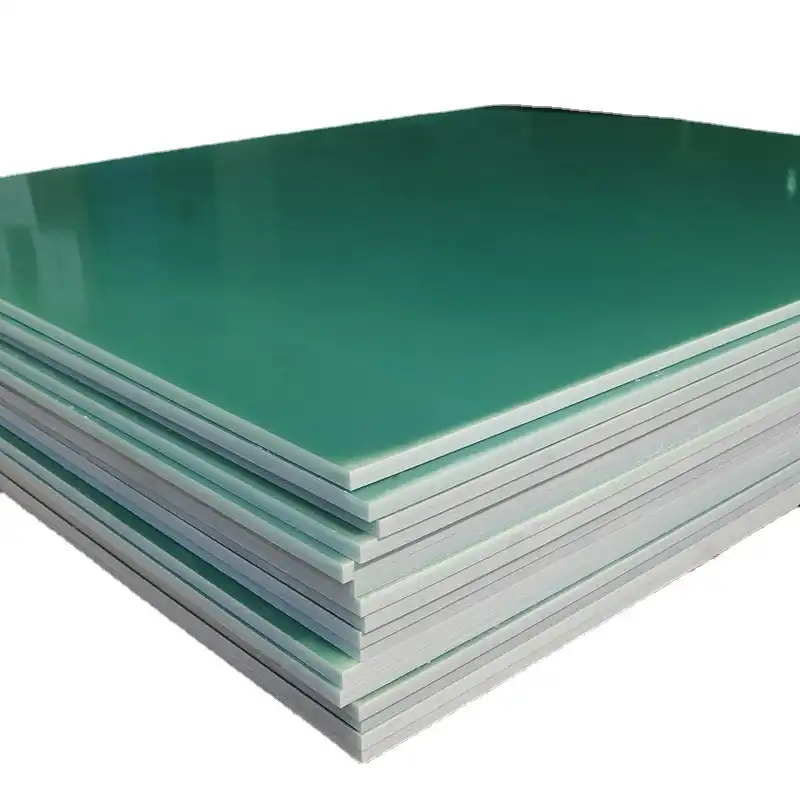
Understanding FR4 94V0 Epoxy Board and Its Role in High-Voltage Insulation
For places where electrical protection can't fail, the Fr4 94v0 Epoxy Board is a well-thought-out option. According to NEMA standards, this glass-reinforced epoxy laminate has UL94V-0 fire resistance, which means it puts out the fire itself in 10 seconds and doesn't drip flaming particles while it's burning. This fire-retardant quality comes from brominated compounds that are mixed into the epoxy resin matrix. These compounds react chemically to stop the flame from spreading.
Composition and Material Science
The material is made of woven fiberglass cloth that has been mixed with epoxy glue to make a hybrid structure that is both electrically and mechanically durable. Unlike older G-10 materials, the epoxy mix in flame-retardant boards is better at resisting moisture and keeping the structure strong even when temperatures change. Standard grades usually have a glass transition temperature between 130°C and 140°C. High-Tg versions can go above 170°C for uses that need to be exposed to heat for a long time.
Electrical Performance Characteristics
The electrical feature that defines high-voltage shielding parts is their dielectric strength. These epoxy boards keep breakdown voltages above 40kV, giving strong protection even in small designs with little space between conductors. At normal frequencies, the dielectric constant stays between 4.4 and 4.8, which makes it easy to predict how impedance-controlled circuits and transformer shielding will work. The high Comparative Tracking Index (CTI) also stops conductive paths from forming on surfaces that are wet and under electrical stress at the same time. This is a very important benefit for power distribution equipment that works in damp industrial settings.
Mechanical Strength for Structural Applications
In addition to its electrical qualities, the woven glass support has a lengthwise flexural strength of more than 400 MPa. Because it is so strong mechanically, the material can do two things: it can keep electricity from flowing and it can also support structures in switchgear assemblies, busbar mountings, and motor housings. The material doesn't show measling, which are those white spots that show up on cheap laminates after being heated and cooled many times. This means that the product's look and performance will stay the same throughout its lifetime.
CNC Processing Techniques for FR4 94V0: Ensuring Precision and Safety
You need to know a lot about CNC machining to turn raw epoxy laminate sheets into precise insulation parts. Because glass fibers are rough, they quickly dull cutting tools. Also, using too much heat during processing can damage the epoxy matrix and make it less effective as insulation. To get through these problems, you need to know how the material acts and what machining parameters will keep its electrical and mechanical integrity.
Optimal Cutting Parameters and Tool Selection
When cutting glass-reinforced materials like Fr4 94v0 Epoxy Board, tools that are covered with carbide or diamond last longer. Cutting speeds should be set so that they produce as little heat as possible. For milling tasks, these speeds are usually between 300 and 600 meters per minute and are changed based on the width of the tool and the depth of the cut. It's important to find a balance between efficiency and surface finish needs. For example, slower feeds make edges smoother, which lowers the risk of electrical tracking along polished surfaces. Climb milling is often used instead of regular milling to cut down on fiber pullout and delamination at cut edges.
Thermal Management During Machining
The biggest danger of CNC processing epoxy boards is that heat builds up. When temperatures get too high, the resin can soften, which can lead to errors in measurements and even localized charring that forms conductive carbon tracks. Focused airstreams are sent by compressed air cooling systems to the cutting surface to remove chips and get rid of contact heat. When tolerances are less than 0.05mm, some precision applications use mist cooling or even refrigerated air systems. For deep drilling or complicated pocketing jobs, intermittent cutting strategies work well. In these methods, the tool is pulled back every so often to let it cool down.
Quality Verification and Post-Processing
Using coordinate measuring machines to check the sizes of machined parts makes sure they match the specs on the drawings. This is especially important for parts like test fixtures and soldering pallets that need to be the same from one production batch to the next in order for the assembly to go smoothly. Delamination or fiber fraying at cut edges can be seen with the naked eye. Electrical testing shows that the cutting processes haven't damaged the insulation resistance; megohmmeter readings show that the values are higher than the minimums that were set. Edge finishing steps, like light sanding or spinning, get rid of tiny glass threads that could get caught on things and hurt people or make clean assembly areas dirty.
Comparing FR4 94V0 with Alternative Epoxy Boards for High-Voltage Use
When choosing a material, you have to weigh the performance needs against the cost concerns. Flame-retardant epoxy boards are most often used for high-voltage insulation, but knowing about other materials helps buying teams figure out when it might be better to use something else or when the extra features make it worth the extra cost.
FR1 and CEM-1 Paper-Based Laminates
Paper substrates are used in FR1 materials instead of glass cloth, which makes them less mechanically strong and less able to handle changes in temperature. These phenolic paper laminates are much cheaper, but they aren't as good at resisting arcs or absorbing water. CEM-1 composites have paper cores and glass surface layers, which makes them a good choice for market uses that need to save money. Neither material is as stable in size or as good at conducting electricity as fiberglass-reinforced boards. This means that they can't be used for precise CNC work or high-voltage settings where insulation failure could be dangerous.
Polyimide and High-Performance Alternatives
Polyimide substrates work great in applications that need to withstand high temperatures; they keep their electrical properties even at constant operating temperatures close to 260°C. This ability to withstand high temperatures comes with much more expensive materials and harder CNC cutting because the materials are tougher. These higher prices are reasonable for military and aerospace electronics, but industrial power equipment and auto parts rarely have to deal with temperatures that require polyimide's performance ceiling. When temperatures are less than 180°C, cost-benefit analysis usually points to glass-reinforced epoxy boards as the better choice.
Metal Core PCB Substrates
Metal-backed laminates have base layers made of metal or copper to help power gadgets get rid of heat more efficiently, but they are not the same as pure insulation materials like Fr4 94v0 Epoxy Board. Even though these substrates are good at getting rid of heat from high-current parts, they are not the same as pure insulation materials. To keep electrical routes from going in the wrong direction, the conductive metal layer needs to be carefully planned out during creation. Metal core construction isn't very useful for things like transformer barriers or switchgear gaps that need to keep electricity from getting to other parts of the circuit and also support the structure.
The decision matrix is based on matching the properties of the material to the needs of the application. For the vast majority of high-voltage insulation parts used in power distribution, industrial machinery, and electronic assemblies, glass-reinforced flame-retardant epoxy boards are the best choice for fire safety, electrical performance, mechanical strength, and being able to be machined on a CNC machine.
Procurement Insights: Buying FR4 94V0 Epoxy Boards for Industrial Applications
To do B2B procurement right, you need to do more than just find good providers. You also need to coordinate logistics, check quality systems, and handle relationships to make sure the supply chain works consistently. Managers of engineering projects and people who buy things should know about both the technical details and business rules that apply to getting materials from other countries.
Minimum Order Quantities and Pricing Models
Unit economics are greatly affected by volume thresholds. Manufacturers usually set minimum order quantities based on standard sheet sizes and how efficiently they can make a run. Orders that are full pallet quantities, which are usually several hundred kilograms, can get better prices. Instead of making purchases on the spot, buyers should ask for quotes that include annual volume commitments. This is because suppliers offer better terms when they can plan production more accurately. Different thicknesses are taken into account in pricing, with thinner sheets needing more accurate production control and therefore requiring small price increases. Custom dimensions machined to specific rectangular blanks cost more to process, but they get rid of waste when the shape of a component doesn't fit well on a standard sheet.
Lead Time Considerations and Inventory Strategies
Standard thickness options in common sizes ship within days from reputable suppliers who keep stock on hand. When standards aren't standard, manufacturing cycles start, which makes wait times several weeks longer. For just-in-time production models to work, procurement teams should make framework deals that cover expected standards. This will let suppliers keep extra stock for customers whose expected consumption is still unknown. This method finds a balance between the costs of keeping inventory and the need to keep making things. International shipping adds to the time it takes to get from one place to another, so buyers who are trying to meet tight production schedules need to think carefully about which logistics provider to use and how quickly they can clear customs.
Supplier Evaluation and Certification Requirements
Technical data sheets give basic information about what is needed, but buying due diligence also looks at quality control systems to make sure that production is always the same. UL recognition shows that ongoing agreement with flammability standards is met, while ISO 9001 approval shows that process control is done in a disciplined way. When buying from foreign manufacturers, buyers should ask for third-party test results that confirm the electrical and mechanical properties. This is especially important when the finished goods need to be approved by an agency or certified by the customer. Audits of manufacturing facilities, which can be done in-house or by a third-party service, show how much can be produced, how often equipment is maintained, and what technical support resources are available to answer application engineering questions during the product development stages.
Building relationships with suppliers that offer full after-sales support for Fr4 94v0 Epoxy Board is helpful when trying to figure out problems with machining or choosing the best materials for new uses. Technical service teams that know about CNC processing settings can suggest changes that will keep tools from breaking or cause problems with the surface finish, lowering the total cost of ownership in a way that goes beyond the price of the raw materials.
Best Practices and Case Studies in Using FR4 94V0 for High-Voltage Insulation Parts
Implementation experience in the real world shows useful things that data sheets alone can't show. Looking at examples of successful applications and learning the right way to handle materials can help engineering teams avoid common mistakes and make sure that parts are reliable and that manufacturing runs smoothly.
High-Voltage Switchgear Component Manufacturing
As a replacement for ceramic insulators that broke during shipping and assembly, a big company that makes power distribution equipment remade busbar support insulators using CNC-machined flame-retardant epoxy boards. The glass-reinforced hybrid had the same dielectric strength as ceramic, but it could handle impact loads that would break pottery. Precision CNC machining made mounting holes and conductor channels that fit with the existing architecture of the switchgear, which saved money on redesign costs. The high CTI rating of the material kept tracking from failing in outdoor installations that got wet in the morning. This example shows how epoxy boards can be used as drop-in replacements for traditional insulation materials, offering better durability and easier production.
Automotive Battery Pack Insulation
A company that makes parts for electric vehicles used precision-machined epoxy laminate to make heat shields for lithium-ion battery modules. For this job, flame resistance was needed to keep possible heat events under control, and the dimensions had to stay the same at temperatures ranging from -40°C to 85°C. CNC routing made complex shapes that could fit cooling lines and cell interconnects. When choosing materials, the goal was to keep the width as low as possible to save space inside and meet electricity clearance standards. The supplier's quality system made sure that every production batch was visually inspected and electrically tested as a sample. This way, problems with delamination were caught before the parts got to the assembly lines.
Test Fixture Production Optimization
By improving CNC code for epoxy board machining, a contract maker that made bed-of-nails test fixtures cut down on the time it took to make the fixtures. Using peck drilling cycles for the thousands of probe holes in each fixture stopped bits from breaking and kept the accuracy of the hole positions to within 0.025mm. The fixtures don't warp even after being heated and cooled many times during in-circuit testing. They keep the probes aligned throughout their service life. When materials were stored correctly in climate-controlled areas, they didn't absorb water, which could have caused changes in size that would have affected the accuracy of probe registration.
Some things that all of these applications have in common are matching the properties of the material to the stresses of the application, using the right CNC processing methods, and setting up quality control routines to make sure that the results are the same across all output volumes.
Conclusion
Flame-retardant epoxy boards like Fr4 94v0 Epoxy Board for high-voltage insulation parts need to be chosen by balancing their electrical performance, mechanical properties, fire safety requirements, and manufacturing needs. Power distribution, industrial equipment, car systems, and electronic parts have all used this material successfully in the past. This is because it has a unique mix of dielectric strength, thermal stability, and CNC machinability. To be successful at procurement, you need to find suppliers who can offer not only competitive prices, but also technical support, consistent quality systems, and logistics that can keep production going. It's helpful for engineering teams to know the processing parameters that keep the material's properties while still getting the required tolerances and surface finishes.
FAQ
Is FR4 94V0 suitable for outdoor high-voltage applications?
When it is designed correctly, the material works reliably outside. The high CTI grade stops tracking when electrical stress and moisture are present at the same time. UV light, on the other hand, can break down surface properties over time. For longer outdoor service life in direct sunlight, conformal coatings or protective housings are recommended.
How does CNC processing affect electrical insulation properties?
When done right, CNC cutting keeps the electrical performance while temperature control keeps the resin from breaking down. It is important to check machined edges for delamination or visible glass threads that could lower the surface insulation resistance. Cleaning after machining gets rid of conductive dust, and finishing the edges gets rid of tiny flaws that could cause an electrical breakdown under high-voltage stress.
What factors matter most when selecting suppliers for large orders?
In addition to price, you should look at certifications in quality management, technical support, and the dependability of the logistics. Ask for test reports on the materials that confirm the specifications. When internal machining capacity limits the ability to make more, look for providers that offer personalized CNC processing services. Set up clear ways for people to talk about technology issues during the development stages of a product.
Partner with J&Q for Your High-Voltage Insulation Requirements
Every time J&Q works with a Fr4 94v0 Epoxy Board supplier, they bring more than 20 years of experience in production and more than 10 years of experience in foreign trade. Our quality management systems make sure that each batch meets UL and ROHS standards for consistency, and our in-house logistics company offers streamlined shipping options that take away the stress of coordinating. Engineering managers can talk to technical support teams that know how to deal with problems that come up with CNC processing and how to meet the unique needs of industries like electronics, power distribution, and industrial machines.
We keep stock of standard sizes so that orders can be filled quickly. We also offer custom dimensioning and precision cutting services that are made to fit the needs of your component. Sample projects let buying teams check how well materials work before committing to large amounts of production. You can talk to our team at info@jhd-material.com about your high-voltage insulation needs, get technical data sheets, or set up samples of our products. You can find more information about choosing the right insulation material, how to process it, and real-life examples of how it has been used on the blog.jhd-material.com.
References
1. National Electrical Manufacturers Association. (2020). NEMA Standards Publication LI 1-1998: Industrial Laminating Thermosetting Products. Rosslyn: NEMA.
2. Underwriters Laboratories. (2019). UL 94: Standard for Safety of Flammability of Plastic Materials for Parts in Devices and Appliances. Northbrook: UL Standards.
3. Coombs, C.F. (2018). Printed Circuits Handbook: Seventh Edition. New York: McGraw-Hill Education.
4. Harper, C.A. (2017). Electronic Materials and Processes Handbook: Fourth Edition. New York: McGraw-Hill Professional.
5. Wassink, R.J.K. & Verguld, M.M. (2016). Manufacturing Techniques for Printed Circuit Boards and Surface Mounted Assemblies. Ayr: Electrochemical Publications.
6. American Society for Testing and Materials. (2021). ASTM D3638-21: Standard Test Method for Comparative Tracking Index of Electrical Insulating Materials. West Conshohocken: ASTM International.

Get a complete product list and quotation

J&Q New Composite Materials Company



