Where Are FR4 Epoxy Fiberglass Rods Used in Electrical Systems?
FR4 epoxy fiberglass rods are used across a wide range of electrical systems — from PCB support structures and switchgear assemblies to transformer insulation and high-voltage equipment. Built from woven fiberglass cloth bonded with epoxy resin, the FR4 epoxy fiberglass rod delivers exceptional dielectric strength, thermal stability, and mechanical resilience. Whether you are sourcing insulation components for industrial machinery or power distribution assemblies, these rods consistently outperform conventional materials in demanding electrical environments. This guide walks through where they are applied, how they compare to alternatives, and what to consider when procuring them.
Understanding FR4 Epoxy Fiberglass Rods in Electrical Systems
What Makes FR4 a Distinctive Insulation Material?
The "FR" in FR4 means "flame retardant," which is a term that was created by NEMA in 1968. Unlike regular G10 rods, FR4 Epoxy Fiberglass Rods incorporate flame retardants based on bromine that make them meet UL94 V-0 requirements for flammability. The material has a volume resistance of ≥10³⁰ Ω·m, a power frequency withstand voltage of ≥50 kV, and a full-wave impulse voltage tolerance of ≥100 kV. These are scientific standards that have been proven through standard testing methods.
The hydrophobic epoxy matrix of this material makes it perfect for use in electrical environments. It doesn't absorb more than 0.2% water, so its insulating qualities stay stable even when it's wet outside. Engineers like that these rods keep their mechanical strength and insulating performance in both dry and wet conditions.
Core Physical and Mechanical Properties
The fiberglass insulation bars made by Jinghong have a fiber content of at least 80%, which makes them stiff and able to hold weight. Important values that were measured are:
- Tensile Strength: ≥1200 MPa — much higher than many thermoplastics and aluminum alloys used in similar situations, meaning that the structure of this material is strong enough to withstand long-term mechanical loads.
- Flexural Strength: ≥900 MPa — very stiff and can be used as a structural insulating part in places like switches, bus bar supports, and motor housings where bending forces are constant.
- Compressive Strength: 950 MPa — the rod doesn't break when clamped and put together, which is popular in transformer coil winding and making electrical panels.
- Stress Corrosion Resistance: ≥96 hours — tests show that the rod can withstand being in chemically active settings, such as transformer oil and industrial coolants.
Because of these features, FR4 Epoxy Fiberglass Rod is better than ceramics, phenolic cotton laminates, and regular engineering plastics as a structural insulation material in situations where there is both mechanical stress and electrical risk.
Typical Applications of FR4 Epoxy Fiberglass Rods in Electrical Systems
When procurement teams know where these rods are actually used, they can make more targeted buying decisions instead of ones that are too broad or too narrow.
Electrical Insulation in PCB Support and Switchgear
FR4 Epoxy Fiberglass Rods are used as spacers, support columns, and standoffs in PCB designs to physically separate electrical layers and keep the circuit's integrity. Inside switchgear panels, they act as arc barriers and insulating tie rods that keep live parts far enough apart to be safe. Their high dielectric strength—tested at ≥50 kV under power frequency conditions—makes sure that these rods don't become unintended current paths, even when there is a fault.
Transformer and High-Voltage Equipment
Manufacturers of power distribution equipment use cylinder-shaped epoxy insulation rods a lot for supporting coil formers, core clamping systems, and winding spacers inside transformers. These parts have to be able to handle long-term temperature stress while keeping the electricity separate between windings that are working at different voltage levels. With a thermal flexural strength of 300 MPa or more, Jinghong's rods keep their shape even at high temperatures, without warping or creeping.
Motor Components and Industrial Machinery
Insulating rods support wedges, line slots, and separate bearings in motors and other rotating electrical equipment. When epoxy fiberglass rods are CNC machined, they make clean, exact cuts that don't crack or splinter. This is something that phenolic materials don't always do at the same sizes, which is why machinery builders like epoxy fiberglass rods.
FR4 Epoxy Fiberglass Rod vs. Alternative Materials
FR4 vs. G10: The Flame Retardancy Gap
G10 and FR4 Epoxy Fiberglass Rods have similar base chemistry and mechanical properties, but in safety-controlled environments, the difference is very important. G10 doesn't have a flame-retardant rating, so if you light it, it will keep burning. FR4, which has been tested at UL94 V-0, goes out on its own in seconds. FR4 is the right material for any job that needs to be done inside electrical cabinets, power panels, or battery pack walls.
FR4 vs. Carbon Fiber and Engineering Plastics
Carbon fiber rods are very strong for their weight, but they also conduct electricity, which means they can't be used in systems that need to be insulated. Engineering plastics like nylon and PEEK are easier to machine, but they move more when they are loaded mechanically over time and don't have the same dielectric strength as epoxy fiberglass composites. When it comes to electrical separation, mechanical strength, and machinability, FR4 is in a class by itself that most other materials can't fully match.
Procurement Guide: Sourcing Epoxy Fiberglass Insulation Rods
When buying these parts for production, there are a number of factors that affect whether a relationship with a dealer is good in the short term and bad in the long term.
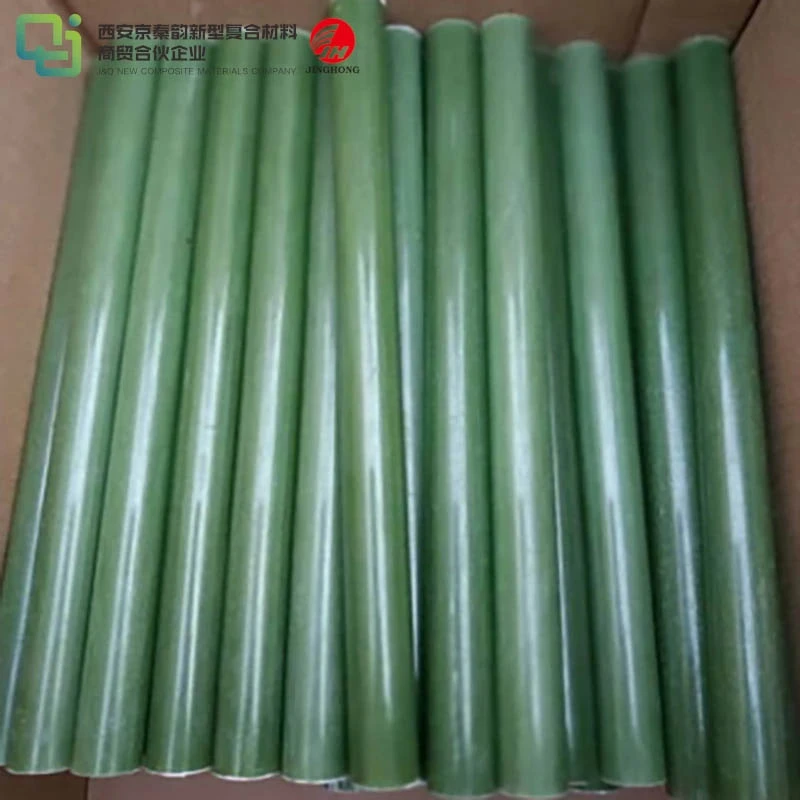
Jinghong makes FR4 Epoxy Fiberglass Rods with outside diameters between φ5 mm and φ2000 mm and a standard rod length of 1 meter. They can make 100 tons of rods every year. Precision PCB standoffs and large-diameter structural insulators used in power generation equipment can both fit in this size range. Shipping can be done by sea, land, or air, and because the logistics department is in-house, lead time planning is done by them instead of hiring outside freight agents.
With more than 20 years of experience making insulation materials and more than 10 years of experience trading internationally, Jinghong has built supply chains with companies on several continents. Before placing large orders, buyers who are thinking about a new provider should ask for technical datasheets, sample rods for incoming quality inspection, and written proof of UL94 V-0 flame classification.
Conclusion
FR4 Epoxy Fiberglass Rods have a well-deserved place in the design of electrical systems because they solve a specific and long-standing issue: keeping structures stable without affecting electrical separation. Their high dielectric strength, flame retardancy, and ability to be machined make them ideal for use in a wide range of applications, from switchgear systems to transformer coil supports and motor insulation parts. FR4 epoxy rods are a reliable standard choice for procurement teams and engineers looking at insulation materials because they have a track record of good performance in harsh electrical settings.
FAQ
What is the maximum operating temperature for these rods?
What determines the continuous operating temperature is the Glass Transition Temperature (Tg) of the epoxy resin system. Up to 130°C (thermal Class B), standard FR4 Epoxy Fiberglass Rods work reliably. This can go up to 170°C or higher with special high-Tg versions. Before specifying for high-temperature areas, you should always check with your supplier to make sure the Tg rating is correct.
Can FR4 rods be used outdoors?
FR4 is strong enough to be used outside, but long-term UV exposure can make the epoxy resin surface chalk or turn yellow. For long-term installs outside, it's best to use a UV-resistant coating or protection housing.
How does FR4 differ from G10 in chemical resistance?
Both materials can stand up to weak acids and most industrial oils. The main difference is that FR4 meets UL94 V-0 for flammability while G10 does not. In transformer oil settings, both work well, but FR4 is safer for electrical assemblies that are closed off or controlled.
Is carbide tooling required for machining?
Yes. The woven fiberglass in it is very rough. To keep measurements accurate and stop tools from wearing out too quickly, you need tools with carbide or diamond tips. To safely handle particles, you also need to use wet machining or make sure there is enough dust extraction.
What certifications should I verify before purchasing?
Check that the product meets the UL94 V-0 flammability grade, volume resistivity requirements, and applicable size requirements. Before approving a supplier for production, make sure you get test reports that can be tracked for tensile, flexural, and dielectric properties.
Get a Custom Quote for FR4 Epoxy Fiberglass Rods from J&Q
J&Q sells approved FR4 Epoxy Fiberglass Rods in sizes ranging from φ5 mm to φ2000 mm. You can choose to have the rod shipped by ocean, land, or air. With over 20 years of experience in manufacturing and our own logistics team, we can help you with your purchases from the time you ask for a sample until the time you receive the bulk order. To get a brochure or quote right away, email our expert team at info@jhd-material.com or visit blog.jhd-material.com.
References
1. NEMA LI 1-1998 — Industrial Laminated Thermosetting Products, National Electrical Manufacturers Association, 1998.
2. ASTM D709 — Standard Specification for Laminated Thermosetting Materials, ASTM International, 2017.
3. UL 94 — Standard for Tests for Flammability of Plastic Materials for Parts in Devices and Appliances, Underwriters Laboratories, 2013.
4. ASTM D149 — Standard Test Method for Dielectric Breakdown Voltage and Dielectric Strength of Solid Electrical Insulating Materials, ASTM International, 2020.
5. IEC 60893 — Insulating Materials: Industrial Rigid Laminated Sheets Based on Thermosetting Resins for Electrical Purposes, International Electrotechnical Commission, 2019.
6. Harper, C.A. — Handbook of Plastics Technologies, McGraw-Hill, 2006.

Get a complete product list and quotation
J&Q New Composite Materials Company