FR4 Epoxy Fiberglass Rod for High Strength Insulation Supports
When engineers and procurement managers need a reliable structural insulation material, the FR4 epoxy fiberglass rod consistently rises to the top of the shortlist. Built from woven fiberglass cloth impregnated with epoxy resin, this composite rod delivers a rare combination of mechanical toughness and electrical insulation that most alternative materials simply cannot match. Whether you're managing a transformer assembly line, building industrial switchgear, or sourcing insulation components for motor hardware, this guide gives you a grounded, practical look at what makes these rods worth specifying—and how to source them without the usual headaches.
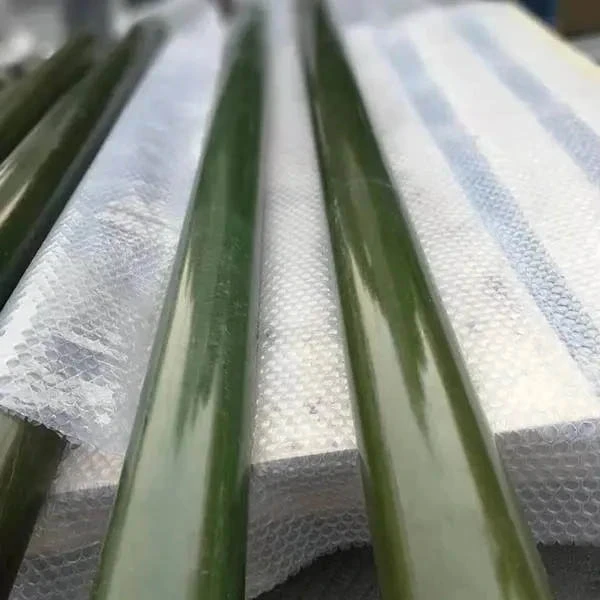
Understanding FR4 Epoxy Fiberglass Rod – Properties and Manufacturing Process
What Makes FR4 Stand Apart From Generic Fiberglass Composites?
The number "FR4" comes from NEMA's classification system from 1968. "FR" stands for "flame retardant." This material is different from regular G10 or normal fiberglass bars because it has bromine-based flame retardants mixed in with the epoxy. This is what makes it UL94 V-0 certified as not being flammable. This means that the FR4 Epoxy Fiberglass Rod goes out on its own when the source of ignition is removed. This is a must for electrical enclosures and high-voltage assemblies that are sealed off.
Jinghong's epoxy insulation rod has a tensile strength of more than 1200 MPa, a bending strength of more than 900 MPa, and a compression strength of up to 950 MPa. A lot of fiber is used—at least 80%—which immediately helps meet these functional standards. The volume resistance is at or above 10³⁰ Ω·m, and the power frequency voltage withstand is more than 50 kV. These numbers make it clear to engineers that the dielectric works as it should.
How the Rod Is Manufactured and Quality-Controlled?
To make it, precise dies are used for hot-press molding, and the fiberglass-epoxy composite is cured under controlled temperature and pressure to get rid of any air pockets. Each batch that Jinghong's factory makes is checked against GB/T standards for tensile strength, thermal bending strength, stress corrosion resistance (≥96 hours), and fuchsine penetration. The factory can keep making 100 tons of steel every year. Rods come in diameters ranging from φ5mm to φ2000mm, and their standard length is 1 meter. This gives engineers a lot of options for how to set up assemblies in different ways.
Comparing FR4 Epoxy Fiberglass Rod with Alternative Materials
FR4 vs. G10, Plain Fiberglass, and Metal Rods
Picking the correct insulated rod isn't just a matter of opinion; it's also a matter of figuring out the risk of buying the FR4 Epoxy Fiberglass Rod. In real life, here's how the big choices stack up:
- FR4 vs. G10: Both have similar mechanical and insulating properties, but G10 doesn't have any chemicals that stop fires. For example, G10 doesn't meet the fire safety standards for control panels, motor housings, or power distribution boards. In most regulated markets, the UL94 V-0 rating of FR4 is what makes the difference.
- FR4 Epoxy Fiberglass Rods vs. plain fiberglass rods: Generic fiberglass rods often have lower mechanical limits and fiber-to-resin ratios that aren't reliable. Since FR4 Epoxy Fiberglass Rods have fiber content fixed at ≥80% and are tested according to GB/T standards, procurement teams get stable performance across batches instead of performance that changes from supplier to supplier.
- FR4 vs. metal rods: The problem with using metal rods to support insulation is that they conduct electricity. Steel and metal also rust, add a lot of weight, and can combine galvanically with parts that are close to each other. All three problems are solved by FR4, which has strength-to-weight ratios that metals rarely match for structural insulation jobs.
In real life, this means that FR4 is the only material that can meet all three requirements: it must be able to support structural loads, be electrically insulated, and be fire resistant.
Key Applications and Advantages of FR4 Epoxy Fiberglass Rod
A lot of different businesses use FR4 Epoxy Fiberglass Rods for a lot of different tough jobs. Because the material is stable in size and doesn't react to humidity, it works well in both transformer oil immersion and high-moisture industrial settings.
Here are the core application areas where this rod consistently performs:
- Electrical & Electronics Manufacturing: For support columns that hold insulation in place in switchgear systems, motor component spacers, and PCB support structures. Engineers can make parts with tight tolerances without cracking or delaminating because the rod is dielectrically strong and can be machined on a CNC machine.
- Power & Energy Sector: Manufacturers of transformers say that epoxy insulation rods are important parts of coil insulation stacks and arc barrier assemblies. This material is safe in surge situations because it can handle full-wave impulse energy of up to 100 kV.
- Industrial Machinery: These rods are used as mechanical spacers, insulating guide rods, and strong structural members that don't wear down easily. With a tensile strength of 950 MPa and a stress corrosion resistance of more than 96 hours, the material can handle long-term loads without giving way.
- Automotive & Transportation: The rod's thermal flexural strength (≥300 MPa) and low moisture absorption make it useful for battery pack insulation barriers and heat-resistant fixture components. Both of these properties are important in vehicle environments where temperatures and humidity change quickly.
These application benefits of the FR4 Epoxy Fiberglass Rod directly lead to shorter repair intervals, fewer failures in the field, and longer service life. These are the things that buying teams look at when they calculate the total cost of ownership (TCO), not just the unit price.
Procurement Guide: How to Source Quality FR4 Epoxy Fiberglass Rods?
What to Verify Before Placing an Order?
Getting FR4 Epoxy Fiberglass Rods from a seller you don't know is a big risk. Poor fiber content, uneven curing, or unknown flame-retardant chemistry can all lead to failures in the field that cost a lot more than the savings on the material itself. Before making a deal with a seller, buying teams should ask for proof of at least five quality checkpoints:
- Checking the tolerances for width and ovality to make sure the CNC will work with the part
- The results of the dielectric breakdown voltage test, preferably according to ASTM D149 or a similar GB/T standard
- Data on how much moisture FR4 absorbs—it should stay well below 0.2% to keep its dielectric integrity in damp places
- A UL94 V-0 certificate of flammability or a similar test record
- Checking the amount of fiber in a batch, with values at or above 80%
Logistics and Ordering Considerations for US-Based Buyers
Jinghong offers freight services by water, land, and air, so US buyers can choose arrival times that work with their project plans. The company handles all of its own logistics, so it can handle everything from confirming an order to filing paperwork for customs. The standard length of a rod is 1 meter, and the diameter ranges from φ5mm to φ2000mm. This means that most projects won't need custom extrusion. Before committing to full production orders, buyers who need a lot of items can talk to the team directly about MOQs, lead times, and sample requests.
Why Choose FR4 Epoxy Fiberglass Rod for Your Insulation Support Needs?
Jinghong has been making and providing insulating materials for more than 20 years and has been trading internationally for over ten years. This gives them a lot of manufacturing knowledge and a reliable supply chain. The company's long-term relationships with trading companies in both the United States and other countries have helped it better understand what engineering managers and technical procurement teams really need: clear specifications, honest lead times, and quick communication.
The need for improved electrical insulation materials keeps rising around the world. This is because power infrastructure is growing, transportation is becoming more electric, and fire safety rules are getting stricter. FR4 Epoxy Fiberglass Rods are a good choice for this direction because they have certified flame resistance, proven dielectric performance, and machining flexibility that newer thermoplastic alternatives haven't been able to match for structural insulation uses yet.
Conclusion
When engineers and procurement professionals have to deal with strict insulation requirements, FR4 Epoxy Fiberglass Rods are a reliable option backed by data on how well they work. This material is useful in the electrical manufacturing, power infrastructure, industrial machinery, and automotive sectors because it has high mechanical strength, is certified to be flame retardant, and has stable dielectric properties. Buying from a company whose production standards have been checked and whose shipping help you can count on greatly lowers the risk of buying something. This material should be carefully looked over in the specifications if your project needs solid insulation that works well under pressure, both physically and electrically.
FAQ
What is the key difference between FR4 and G10 epoxy rods?
The bromine-based flame retardants in FR4 Epoxy Fiberglass Rod give it a UL94 V-0 rating, which means that it goes out on its own when the source of the flame is taken away. G10 has similar electrical and mechanical qualities, but it doesn't have any of this flame-retardant chemistry, so it can't be used in places where fire safety rules apply.
Can FR4 rods be machined using standard shop tools?
Because they are made of fiberglass, these rods are very rough. It needs tools with carbide or diamond tips, and the right amount of dust extraction or wet cutting should be used to protect the safety of the user and the tools. Standard metalworking bits will wear out quickly and leave a bad edge.
How does humidity affect the rod's insulating performance?
The hydrophobic resin binder and silane-treated glass fibers in FR4 keep the amount of water that can be absorbed well below 0.2%. The material keeps its good electrical properties in damp places and can be used in transformer oil, which makes it good for industrial setups that are likely to get wet.
What diameter and length options are available?
Rods made by Jinghong have a diameter of φ5mm to φ2000mm, and their usual length is 1 meter. The technical team can talk about custom sizes based on the needs of the project and the amount of the order.
Get a Custom Quote From J&Q – Your Trusted FR4 Epoxy Fiberglass Rod Supplier
J&Q has direct access to certified FR4 Epoxy Fiberglass Rod with diameters ranging from φ5mm to φ2000mm, UL94 V-0 flame ratings, and mechanical specifications that are the same from batch to batch. We make it easy to buy things because we've been making them for more than 20 years, handle all of our own operations, and help US buyers with their exports. To find out more about our products, request samples, or get bulk pricing, email our technical team at info@jhd-material.com or visit our blog at blog.jhd-material.com.
References
1. NEMA LI 1-1998 – Industrial Laminated Thermosetting Products, National Electrical Manufacturers Association, 1998.
2. Harper, C.A. – Handbook of Plastics Technologies, McGraw-Hill, 2006.
3. Bhowmik, S. & Ray, B.C. – Processing and Characterization of Epoxy/Glass Fiber Laminates, Journal of Applied Polymer Science, 2011.
4. UL 94 Standard – Tests for Flammability of Plastic Materials for Parts in Devices and Appliances, Underwriters Laboratories, 2013.
5. ASTM D709 – Standard Specification for Laminated Thermosetting Materials, ASTM International, 2017.
6. Deans, J. & Turner, R. – Electrical Insulation in Power Engineering: Materials and Applications, Institution of Engineering and Technology, 2019.

Get a complete product list and quotation

J&Q New Composite Materials Company



