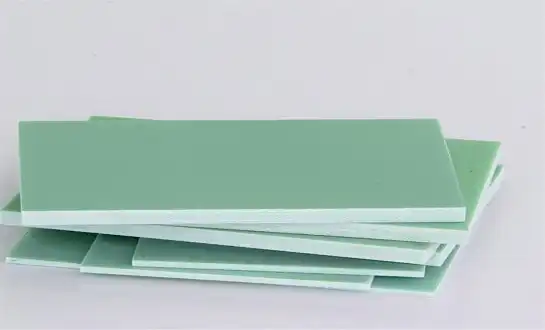
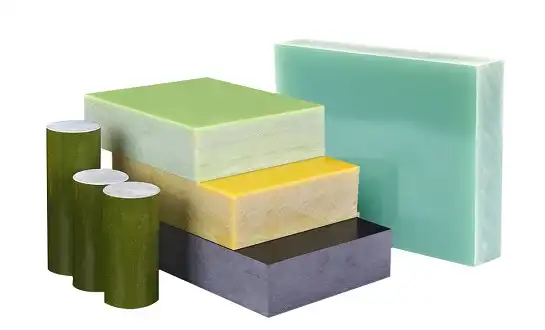
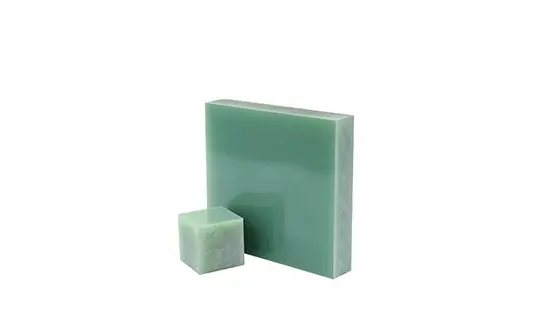
Phenolic Paper Sheet for Electrical Panels and Insulation Structures
When engineers and procurement teams search for a reliable insulation laminate that balances performance with cost, phenolic paper sheet consistently rises to the top of the list. This rigid composite material has served electrical panels and insulation structures across industries for decades — and for good reason. Its combination of dielectric stability, mechanical workability, and thermal endurance makes it a practical backbone for applications ranging from switchgear components to transformer supports.
Understanding Phenolic Paper Sheets and Their Key Properties
To make a Phenolic Paper Sheet, phenolic resin is continuously soaked into cellulose kraft paper, and the stack is then cured under controlled heat and pressure. In the end, there are no holes or soft spots in the dense, rigid laminate that has consistent cross-sectional properties.
Core Technical Properties Worth Knowing
Engineering teams need hard numbers before they can choose an insulation material. These scientific standards set the bar for normal phenolic paper laminates:
- Density: 1.30–1.45 g/cm³, giving it a satisfying rigidity without excessive weight in panel assemblies.
- Flexural strength: ≥120 MPa perpendicular to laminations — sufficient for structural insulation spacers and busbar supports.
- Dielectric strength: Typically exceeding 10 kV/mm when tested in oil, meeting the requirements of most low- and medium-voltage applications.
- Continuous operating temperature: Rated at Class E (120°C), appropriate for most indoor electrical environments.
- Chemical resistance: Excellent against oils, solvents, and weak acids — though prolonged contact with strong alkalis should be avoided.
Based on these numbers, phenolic paper laminates meet the needs of NEMA types X, XX, and XXX, as well as IEC classification PF CP 201. When buying something, the NEMA grade order is important. X grades are the most important for mechanical properties, XX grades add some electrical performance, and XXX grades have the most resin for the best protection against humidity and dielectric integrity.
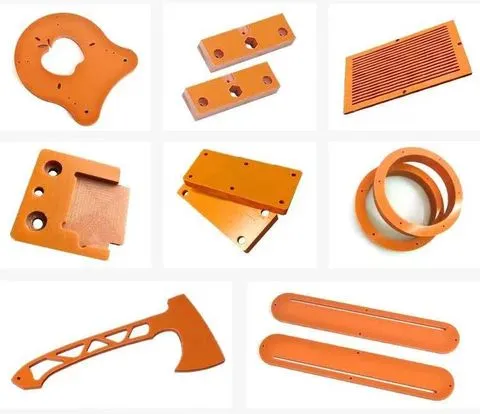
One thing that makes Phenolic Paper Sheet different from glass-based laminates is that it is not rough. It makes cutting tools last a lot longer when CNC routing, drilling, or punching, which saves money in high-volume fabrication settings.
Applications of Phenolic Paper Sheets in Electrical Panels and Insulation Structures
The fact that phenolic paper laminates can be used in a lot of different industries shows how well their qualities match up with real-world needs.
Where This Material Works Best
These sheets are used to build electrical panels. They keep live wires from touching each other, support terminal blocks, and act as mechanical separators inside cages. Because they don't catch fire, they meet panel safety standards, and because they don't change size when they're loaded, tight tolerances are kept over time.
These laminates are used by companies that make power distribution devices to support busbars and block arcs inside switches. Phenolic paper laminates stay dielectrically stable for a long time when submerged in transformer oil. This makes them a reliable choice for insulating coils in transformers that use oil.
The material is used as a PCB cutting backup board in the electronics industry. Because it's not as hard as drill bits, it doesn't cause burring on copper-clad laminates and keeps the integrity of micro-drill bits, which is very important in high-volume PCB production lines.
Plasticizer-modified grades are useful for cold-punching, which is important for auto and gadget makers. It's cheaper to make a lot of insulating washers, terminal strips, and motor covers when the material can be pressed without breaking, which means that each part doesn't need to be machined again.
These use examples show that phenolic paper laminates are not a one-size-fits-all answer. Instead, they are a carefully selected material that works best in situations where cost-effectiveness and stable insulation are needed at the same time.
Comparing Phenolic Paper Sheets with Other Insulation Materials
To choose between insulation laminates, you need to compare them fairly. Here is how Phenolic Paper Sheets compare to other options:
Fiberglass-reinforced epoxy laminates, like FR4, are stronger and better at resisting humidity, but they cost more and wear out tools faster when they are being made. Upgrading to FR4 is overkill for situations that don't need FR4-level performance, like low-voltage panels, oil-filled settings, or sacrificial fastener boards. It raises material costs without providing any real benefit.
When it comes to tensile strength and moisture absorption, epoxy glass boards are better than phenolic paper. However, because they are hard, they can't be cold punched. When large quantities of stamped parts are needed for production, phenolic grades are the most cost-effective way to do it.
Plain plastic laminates don't hold up as well against heat as phenolic materials do. Many vinyl insulators soften or change shape when temperatures get close to 120°C. Phenolic paper laminates, on the other hand, keep their shape.
For buying teams looking for materials for indoor electrical panels, transformer parts, and cut insulation parts, it's easy to see that phenolic paper laminates offer the best value for money in their category.
Procurement Guide for Phenolic Paper Sheets in B2B Context
What Separates a Reliable Supplier from a Risk?
It takes more than comparing prices per sheet to find insulation laminates for large-scale production uses. These are the standards that buying managers with a lot of knowledge use:
- Certifications: Confirm UL recognition and ISO quality management compliance. These credentials are non-negotiable for components destined for UL-listed electrical panels.
- Grade consistency: Request traceable mill test reports for each batch. Thickness tolerance, dielectric strength, and flexural values should fall within published specification ranges.
- Custom sizing capability: Production schedules rarely align with standard sheet sizes. Suppliers who offer custom slitting, cutting, and CNC machining reduce downstream fabrication costs.
- Lead time transparency: For just-in-time assembly lines, confirmed lead times matter as much as price. Suppliers with integrated logistics control deliver more predictably.
- Bulk order terms: Volume commitments typically unlock better pricing structures. Establishing a blanket order arrangement with a certified supplier reduces per-unit cost and administrative overhead.
At J&Q, we've been making Phenolic Paper Sheet insulating sheet materials for more than 20 years and trading with other countries for more than 10 years. Because we offer integrated logistics, we can handle the whole supply chain, from manufacturing to delivery. This cuts down on the number of variables that cause engineering and purchasing teams to have trouble with procurement.
Best Practices for Using Phenolic Paper Sheets in Your Electrical Panels
Installation, Handling, and Longevity
When used correctly, phenolic paper laminates work reliably. To keep the edges from coming apart, cutting should be done with carbide-tipped tools and controlled feed rates. When mounting holes are drilled close to the edges of a sheet, the space between the edges must be at least 1.5 times the hole width in order for the structure to stay strong when the sheet is vibrating.
Placement in the environment is important. These sheets are designed to be used inside or in oil. Over time, UV light from the sun breaks down the phenolic glue, which can lead to surface darkening and even delamination. This breakdown happens faster in open areas that aren't protected from moisture cycles.
During service, checking the insulation parts visually on a regular basis for carbonization, cracks, or surface tracking can help find Class E temperature limit violations before they lead to panel failures. When the paper base gets carbonized at temperatures above 120°C, the insulator changes into a conducting path. This is a critical failure mode that can be avoided with preventive monitoring.
These ways of treating laminate stock protect the investment made in high-quality laminate stock and make it last longer.
Conclusion
When it comes to electrical insulation materials, Phenolic Paper Sheet phenolic paper laminates have a clear and important place. Because they are dielectrically stable, can withstand temperatures up to Class E, can be cold-punched, and can't be worn down by grinding, they are the best material for electrical panels, transformer parts, and punched insulation parts in the electronics, power, automobile, and industry sectors. They give long-lasting performance at a price that keeps production costs low if they are ordered properly and from a certified provider.
FAQ
What thickness is appropriate for electrical panel insulation?
Panel insulation typically ranges from 1.5 mm to 6 mm depending on voltage class and mechanical load. Low-voltage barriers commonly use 2–3 mm sheets, while structural supports may require 4–6 mm stock. Always verify with your panel design specifications.
Can phenolic paper laminates handle outdoor installation?
No. UV exposure degrades the resin matrix, and humidity cycling causes delamination. These materials are rated for indoor or oil-immersed environments only.
What do NEMA grade designations mean?
X grades emphasize mechanical properties. XX grades add moderate electrical performance. XXX grades carry the highest resin content, providing the best dielectric properties and humidity resistance — preferred for precision electrical insulation.
Are punching operations supported?
Yes. Grades formulated with plasticizers support cold punching, enabling high-volume stamped part production without cracking. Standard grades require hot punching to avoid edge fracturing.
How does this material compare to FR4 for PCB applications?
FR4 uses woven glass fiber and epoxy resin, offering higher strength and moisture resistance at greater cost and tool wear. Phenolic paper laminates are preferred for drilling backup boards and cost-sensitive insulation where FR4-level performance is unnecessary.
Partner with J&Q for Certified Phenolic Paper Sheet Supply
J&Q brings 20+ years of insulating sheet manufacturing expertise and a decade of international trade experience to every order. As a trusted phenolic paper sheet supplier, we offer certified grades, custom sizing, and integrated logistics for seamless delivery to your facility. Contact our technical team for a custom quote or sample order. Reach us at info@jhd-material.com or visit blog.jhd-material.com.
References
1. NEMA Standards Publication LI 1 — Industrial Laminated Thermosetting Products, National Electrical Manufacturers Association, 2020.
2. IEC 60893-3-4 — Industrial Rigid Laminated Sheets Based on Thermosetting Resins for Electrical Purposes, International Electrotechnical Commission, 2003.
3. Harper, C. A. — Handbook of Plastics Technologies, McGraw-Hill, 2006.
4. Kroschwitz, J. I. — Electrical and Electronic Properties of Polymers: A State-of-the-Art Compendium, Wiley-Interscience, 1988.
5. IEEE Std 1-2000 — IEEE Recommended Practice: General Principles for Temperature Limits in the Rating of Electrical Equipment, Institute of Electrical and Electronics Engineers, 2000.
6. Brydson, J. A. — Plastics Materials, 7th Edition, Butterworth-Heinemann, 1999.

Get a complete product list and quotation
J&Q New Composite Materials Company