FR4 Epoxy Fiberglass Rod Improves Stability in Electrical Equipment
When electrical equipment fails, the consequences ripple far beyond a single component. Downtime, safety hazards, and costly replacements stack up fast. One material that consistently proves its worth in preventing those failures is the FR4 epoxy fiberglass rod. Composed of woven fiberglass fabric bonded with flame-retardant epoxy resin, this rod delivers high dielectric strength, thermal stability, and mechanical rigidity in a single, machinable format. Whether you are engineering motor components, switchgear assemblies, or transformer insulation structures, this material addresses the core challenge of maintaining electrical integrity under sustained stress.
Understanding FR4 Epoxy Fiberglass Rod: Composition and Core Properties
What Makes This Material Structurally Reliable?
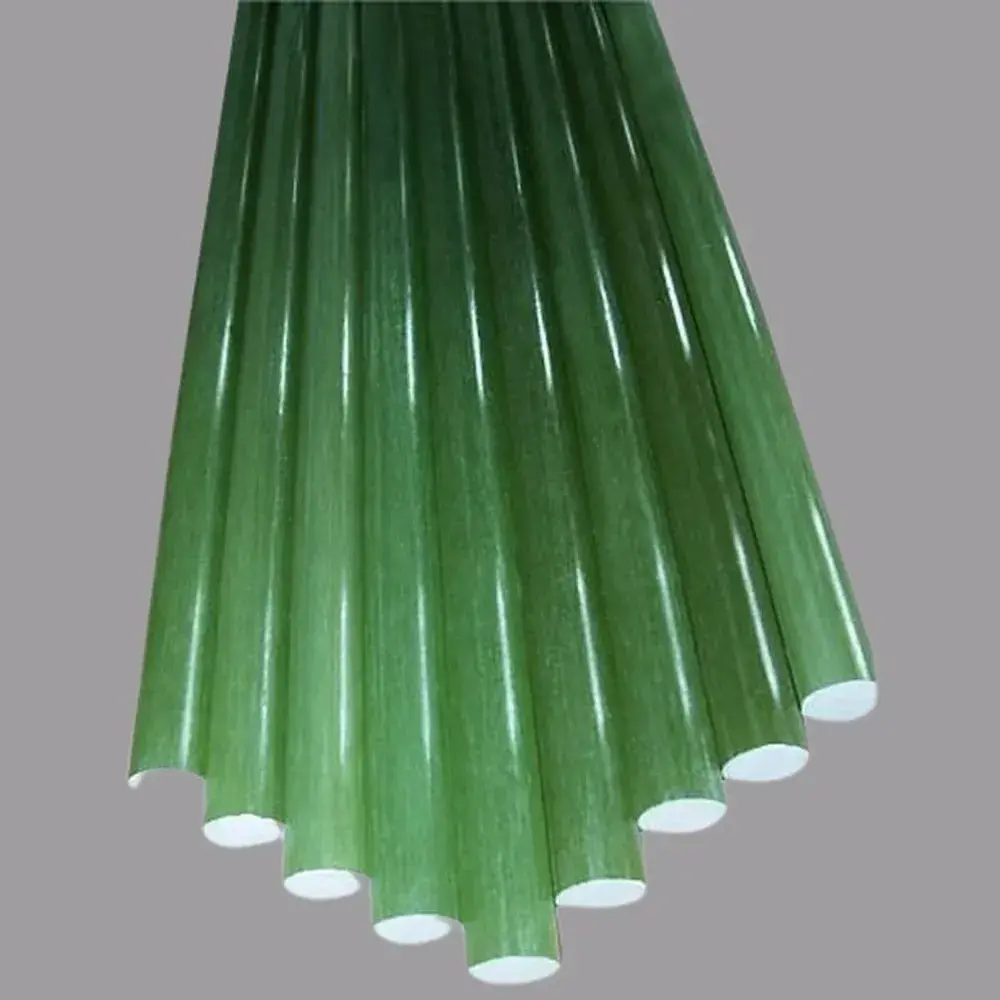
FR4 Epoxy Fiberglass Rod is a high-pressure thermosetting polymer that is made by mixing an epoxy resin binder with a continuous woven fiberglass fabric. The amount of fibers in Jinghong's rods is over 80%, which directly affects their tensile strength of over 1200 MPa, which is higher than many plastic options. The natural green color, which comes in outer sizes from φ5mm to φ2000mm, lets you know that it is made of epoxy-glass and sets it apart from materials that are based on phenolics.
The "FR" in NEMA stands for "flame retardant," which means that the material meets the UL94 V-0 rating for flammability. Bromine-based flame-retardant ingredients are mixed into the epoxy matrix to make this possible. This lets the rod go out on its own instead of spreading the flame, which is an important feature for electrical cabinets and motor housings that are closed off.
How FR4 Compares to G10 and Phenolic Alternatives?
A lot of buyers want to know if G10 or phenolic rods can be used instead of FR4 epoxy fiberglass rods. Being honest, the answer is that it depends on the application. G10 has some of the same mechanical and electrical qualities as FR4, but it doesn't have any flame-retardant properties, so if you light it, it will keep burning. Phenolic cotton rods have good mechanical strength, but they soak up more water, which makes them less effective as insulation over time. Because it doesn't absorb much water (less than 0.15%), FR4 is still the best choice for wet areas, transformer oil immersion, and situations where dielectric consistency is essential.
How FR4 Epoxy Fiberglass Rod Enhances Stability in Electrical Equipment?
Stability of electrical equipment depends on more than just how the circuits are designed. The structural insulation parts that hold assemblies together have to be able to handle heat, vibration, chemical exposure, and voltage stress all at the same time. There is one material that can be used for all four: FR4 epoxy fiberglass rods.
These are the main performance factors that directly make tools more stable:
- High dielectric strength: The rod can handle power frequencies of up to 50 kV and full-wave impulse voltages of up to 100 kV, so it effectively separates live components electrically. This makes arc-over much less likely to happen in switchgear and transformer assemblies.
- Thermal endurance: The rod's bending strength is at least 900 MPa at room temperature and at least 300 MPa under thermal load. This means that it keeps its shape when the temperature changes. Standard FR4 can work constantly at temperatures up to 130°C (Class B insulation), which means it can be used in most industrial motor settings.
- Chemical and moisture resistance: The volume resistivity of ≥10¹⁰ Ω·m stays the same even when it is exposed to transformer oil or when it is used in wet circumstances. Stress-rust resistance is higher than 96 hours, which proves that the dimensions and electrical properties will stay stable over time.
These qualities directly lead to shorter repair processes and fewer shutdowns that weren't planned. If a transformer maker uses epoxy fiberglass rods as coil support structures, for example, the dielectric performance will stay the same for the full rated lifespan of the winding. This is because FR4 epoxy fiberglass rods don't break down when they come in contact with water like older phenolic alternatives do.
Comparing FR4 Epoxy Fiberglass Rod Solutions for Different Procurement Needs
Matching Grade Selection to Application Demands
Different uses don't always need the same rod specifications. Different electrical and mechanical loads are put on motor insulation spacers, lightning arrester core rods, and PCB support structures. With a standard rod length of 1 meter, Jinghong's FR4 epoxy fiberglass rods have outer diameters ranging from φ5mm to φ2000mm. This is a wide enough range to handle both precision electronic components and heavy industrial structural applications. This variety cuts down on the number of approved sources that procurement teams that are in charge of multiple product lines need.
Bulk Procurement, Custom Sizing, and Lead Time Considerations
Performance alone doesn't usually determine where to source something. For people in charge of buying for OEMs, supply chain reliability, batch consistency, and wait times are all equally important. It is possible for Jinghong to produce 100 tons of goods per year, and they can be shipped by sea, land, or air freight. This is useful when project schedules change. The company has been making things for more than 20 years and trading with other countries for more than 10 years. During that time, it has built ties with suppliers that can handle both normal and custom-sized orders. Having a transportation company in-house makes the buying process even easier because you only have to deal with one company instead of a bunch of different ones.
Practical Guide to Using and Maintaining FR4 Epoxy Fiberglass Rod in Industrial Settings
Cutting, Machining, and Installation Best Practices
Fiberglass is rough. When cutting FR4 epoxy fiberglass rods, standard high-speed steel tools wear out very quickly. The right choice is to use either wet machining or good dust extraction with carbide or diamond-tipped tools. The fiberglass dust that is made when you dry-cut is dangerous to your health and should never be handled carelessly. Due to the rod's stable dimensions, CNC cutting works well with FR4. Tolerances in the rod's width that meet ISO h8/h9 standards make sure that it fits reliably in precision collet systems.
During installation, don't put horizontal loads on the FR4 Epoxy Fiberglass Rod that are greater than its flexural strength. ≥900 MPa is a good safety margin for most assemblies, but if you don't mount the cantilever correctly, stress can build up at the mechanical joints.
Routine Inspection to Prolong Service Life
Three things are checked on a regular basis: the condition of the surface, changes in size, and the dielectric performance. Check the surface for chalking or staining, which could mean that UV damage has happened to installations that are out in the sun. To find out if a rod is creeping or deforming under a sustained compressive load, measure its diameter at several different points. When dielectric performance is very important, hi-pot testing against the rated power frequency voltage on a regular basis makes sure that the insulation stays strong. Regular inspections keep things in good shape and find small problems early on, before they get worse and cause the tools to break.
Why Choose Jinghong's Certified Epoxy Fiberglass Rods for Your Electrical Equipment?
The scientific information behind each stick shows that Jinghong has been making insulating materials for more than twenty years. These claims—that the FR4 epoxy fiberglass rod has a tensile strength of at least 1200 MPa, a flexural strength of at least 900 MPa, and a volume resistance of at least 10¹⁰ Ω·m—are not just marketing speak. They are based on test results that can be checked against GB/T standards. Before being sent out, each batch is checked for dimensions and electrical safety.
The fact that Jinghong has bought things in both North American and international markets means that the company knows what engineering managers and technical procurement teams really need: consistent quality, clear documentation, flexible sizing, and on-time delivery. With a production capacity of 100 tons per year and multiple shipping choices, the company can meet both short-term project needs and long-term blanket orders.
Conclusion
Stability in electrical equipment is not a coincidence; it is designed by carefully choosing the materials that are used. FR4 epoxy fiberglass rods are flame retardant, have a high dielectric strength, are mechanically resilient, and can be machined. They come in a shape that works for both small electronic assemblies and large industrial structures. Jinghong's rods are strong enough to meet the needs of engineering teams and buying experts in real production settings. They have a fiber content of at least 80%, a tensile strength of at least 1200 MPa, and a diameter range from φ5mm to φ2000mm.
FAQ
What is the difference between FR4 and G10 epoxy fiberglass rods?
The mechanical strength and electrical insulation of both materials are about the same. Flame retardancy is the most important difference. UL94 V-0 requires that FR4 epoxy fiberglass rod contain bromine-based additives that allow them to put out fires on their own. G10, on the other hand, does not contain these additives and will continue to burn when lit, making it unsuitable for electrical boxes where fire safety is required.
Can FR4 epoxy fiberglass rods be used in transformer oil environments?
Yes. The hydrophobic epoxy matrix and silane-treated glass fibers keep oil from getting into the material, so it can still work as a dielectric when it's submerged. Because of this, the rod can be used to support generator coils and as a lightning arrester core.
What tooling should be used to machine FR4 rods?
Tools with carbide or diamond tips are needed. The fiberglass is very rough, and regular high-speed steel tools will wear down very quickly. To deal with dangerous fiberglass particles, you also need to use wet cutting or proper dust extraction.
How does moisture affect the insulating performance of these rods?
FR4 maintains water absorption below 0.15%, which is a lot less than phenolic alternatives. Even in humid factory settings, this low absorption rate maintains the volume resistance and dielectric strength.
What diameters and lengths are available for standard orders?
The top width of the rods that Jinghong sells ranges from φ5mm to φ2000mm, and each rod is usually 1 meter long. To meet special technical needs, custom dimensions can be made.
Partner with J&Q for Your FR4 Epoxy Fiberglass Rod Supply
J&Q puts you in touch with Jinghong's certified FR4 epoxy fiberglass rod manufacturer supply chain. They have over 20 years of production experience and handle all of their own operations, so they can send goods all over the world easily. We offer competitive wholesale prices, stable batch quality, and dedicated technical support, whether you need standard diameters or insulation parts that are cut to your exact specifications. To get specs and a price right away, email our buying team at info@jhd-material.com or go to blog.jhd-material.com.
References
1. NEMA LI 1-1998 — Industrial Laminated Thermosetting Products, National Electrical Manufacturers Association, 1998.
2. Harper, C. A. — Handbook of Plastics Technologies, McGraw-Hill, 2006.
3. ASTM D149-09 — Standard Test Method for Dielectric Breakdown Voltage and Dielectric Strength of Solid Electrical Insulating Materials, ASTM International, 2013.
4. UL 94 — Tests for Flammability of Plastic Materials for Parts in Devices and Appliances, Underwriters Laboratories, 2013.
5. Brydson, J. A. — Plastics Materials, 7th Edition, Butterworth-Heinemann, 1999.
6. Mazumdar, S. K. — Composites Manufacturing: Materials, Product, and Process Engineering, CRC Press, 2002.

Get a complete product list and quotation

J&Q New Composite Materials Company



