What Industrial Applications Require High-Strength Phenolic Cotton Sheet Materials?
If you work in electrical manufacturing, industrial machinery, or power distribution, you already know how much the right insulation material matters. High-strength phenolic cotton sheet materials are some of the most reliable options available for demanding industrial environments. These laminated sheets appear across a wide range of sectors — and for good reason. This article walks through where they're used, how they compare to alternatives, and what to look for when sourcing them.
Understanding Phenolic Cotton Sheets and Their Core Properties
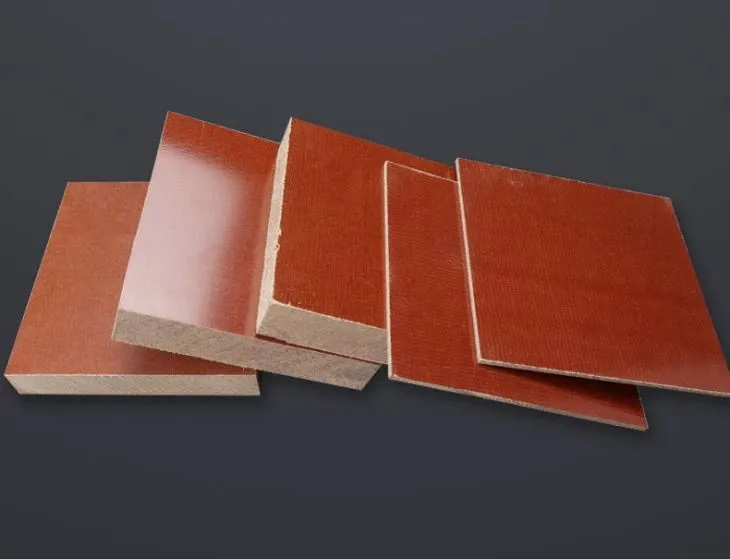
Phenolic Cotton Sheet, also known as Phenolic Cotton Cloth Laminated Sheet, is created by applying phenolic resin to layers of knitted cotton fabric and then drying the stack under high pressure and temperature (above 150°C). This creates a thick, hard layer that acts as a link between metals that are only mechanical and those that are only electrically insulating.
Mechanical Strength That Holds Up Under Load
This material is different from paper-based laminates because it can take a beating. Because it is reinforced with woven cotton fibers, it won't crack or break even when put under a lot of mechanical stress. It can handle shocks that would damage more fragile materials in gear and bearing uses.
Electrical Insulation With Structural Integrity
In low- to medium voltage settings, phenolic cotton laminates are more reliable than metals when it comes to dielectric strength. Because of this, they are a good choice for terminal boards, busbar supports, and switchgear panels that need to be strong and work well with electricity at the same time.
Heat and Chemical Resistance
The material works well at high temperatures and doesn't react with many popular commercial chemicals. Because it doesn't absorb much water, it stays the same size even in wet or fluid-filled places, which is important for naval and hydraulic uses.
Because of these features, phenolic cotton laminates are a useful and long-lasting material for uses where there is mechanical load, electrical demand, and exposure to the environment all at the same time.
Industrial Applications That Demand High-Strength Phenolic Cotton Sheets
The United States has a number of important industries that use phenolic cotton laminates in important parts. Here are some of the most common places they're used and why each one needs them.
Electrical and Electronics Manufacturing
Phenolic cotton boards are used by engineers to make motor insulation parts, control panels, and terminal boards. Because the material is both dielectrically strong and easy to machine, it can be used to make precise parts. In high-frequency PCB uses, it's not a good replacement for FR4, but it works well in structural electrical systems that need both insulation and mechanical strength.
Industrial Machinery and Mechanical Transmission
This is where Phenolic Cotton Sheet really shines. It is used by machinery builders to make gears, pinions, bushings, and mechanical spacers that are quiet. When phenolic cotton gears connect with metal drive gears, they greatly reduce noise and protect the steel shaft in case of a jam. This "fail-safe" behavior has been seen a lot in the cloth and paper industries.
Power and Energy Sector
Companies that make transformers and distribute electricity use phenolic cotton laminates to insulate coils, block arcs, and separate heat. Because it doesn't catch fire and stays the same temperature under long-term load, the material is a good choice for long-term energy infrastructure parts that can't be replaced and can't have any downtime.
Automotive and Transportation
Phenolic cotton boards are used by companies that make parts for cars for insulation pads, battery pack shields, and heat-resistant fixings. Tier-1 supply chain managers want uniform batch quality and the freedom to change sheet sizes and thickness tolerances to meet the needs of the assembly.
Home Appliances Manufacturing
Phenolic laminates are used by appliance makers in motor brackets, insulation frames, and parts that separate heat from the motor. The material is reliable for high-volume manufacturing cycles where delivery speed and consistency are important. It is also cost-effective and stable during production.
In all of these situations, the material needs to be able to handle mechanical stress, electrical separation, and high temperatures without breaking down too soon.
Comparing Phenolic Cotton Sheets with Alternative Materials for Informed Procurement
A lot of the time, procurement engineers want to know how phenolic cotton laminates compare to other types of insulation. Here is a simple comparison to help you make your choice.
Phenolic Cotton vs. Epoxy Glass Laminates
Epoxy glass laminates are better for high-frequency PCB uses because they have a higher dielectric strength. Phenolic Cotton Sheet materials, on the other hand, are more resistant to pressure and easier to shape into gears, bushings, and structural parts. When it comes to mechanical uses, cotton-reinforced options usually last longer than glass-reinforced options.
Phenolic Cotton vs. Phenolic Paper Sheet
When they get hit, phenolic paper laminates break more easily. They're good for flat electrical insulation, but not for gear or bearing uses that need to hold weight. Phenolic cotton laminates can handle changing mechanical loads that paper-based boards can't handle without breaking.
Total Cost of Ownership Perspective
The initial cost of phenolic cotton laminates may be higher than that of some plastic or wood-based options, but their success over time tells a different story. A better long-term return on investment comes from fewer replacements, less maintenance downtime, and stable dimensional stability under load. This is something that experienced OEM buying managers carefully consider.
Procurement Considerations: How to Source High-Quality Phenolic Cotton Sheets
It takes more than just comparing prices to find the right phenolic cotton laminate. It's just as important to have consistent quality and a reliable provider.
Certifications and Quality Standards to Check
When looking for suppliers, make sure they can show proof that they follow the appropriate foreign standards. For parts that go into electrical systems or safety-critical machinery, it is necessary to have material approvals, records that show where the parts came from, and thickness tolerances that stay the same across batches.
Custom Sizing, MOQ, and Lead Times
For many uses, sheets need to be non-standard sizes or within certain thickness ranges. A good Phenolic Cotton Sheet maker should let you choose your own sizes and have clear wait times and minimum order amounts. A supplier with in-house logistics support cuts down on delays and makes coordination easier for global supply chains.
OEM Partnerships and Supplier Audits
For long-term purchasing ties, it's easier to see how consistent output is when you work directly with a manufacturer instead of going through a number of middlemen. It is common for technical procurement teams to ask for factory audits or sample testing before committing to large orders.
Ensuring Maximum Value Through Application and Usage Best Practices
No matter how well the material is made, if it's not installed or handled correctly, it won't work well.
Proper Storage and Handling Before Installation
Phenolic Cotton Sheets should be kept flat, dry, and away from direct heat. Precision assemblies can lose their accuracy in measurements if they warp or absorb water before they are installed. Before using sheets, they should be checked for tears or damage to the surface.
Machining and Fabrication Guidelines
If you use the right tools, CNC routing, drilling, and milling work well with phenolic cotton laminates. Sharp carbide tools keep tolerances tight and stop edges from breaking. Care should be taken when applying coolant, because too much water during cutting can lower the quality of the cut surface.
Routine Inspection During Operation
For parts that are always in use, like gears or bearing bushings, plan regular visual checks to look for surface wear, cracks, or changes in size. When wear is found early, it can be replaced before it causes emergency downtime, which saves money in production settings.
By doing these things, you can make parts last longer and protect the money you spent on buying good phenolic cotton laminated sheet materials.
Conclusion
Electrical manufacturing, industrial machinery, power distribution, automobile, and gadget industries all have a real need for High-Strength Phenolic Cotton Sheet materials. Because they are tough mechanically, stable at high temperatures, and easy to machine, they are a good choice when other laminates don't work. Choosing the right grade, getting them from a reputable manufacturer, and handling them the right way are all important parts of getting the full performance these materials can offer. Phenolic cotton laminate is something you should think about if your next project needs to handle a lot of weight, heat, or electricity.
FAQ
What temperature range can phenolic cotton sheet handle?
Depending on the grade, phenolic cotton laminates can usually be used nonstop at temperatures of up to 120°C to 130°C. Higher temperatures may be okay for short periods of peak exposure. Before choosing material for high-temperature areas, you should always check with your provider to make sure you have the right thermal grade.
Can phenolic cotton sheets be custom cut and machined?
Yes. Cutting these laminates is easy with regular CNC machines. It is possible to get custom sheet sizes, drilled holes, and components with different profiles. Giving the seller your technical drawings early on in the buying process helps them confirm that the project is possible and that they can meet your wait times.
How does phenolic cotton laminate compare to fiberglass in chemical resistance?
In general, fiberglass epoxy laminates are better at withstanding acidic and basic environments. Phenolic cotton laminates work well with some chemicals, but they are best used in situations where mechanical and heat performance are more important than chemical protection.
Is phenolic cotton sheet suitable for outdoor applications?
It is not recommended to be exposed to direct sunlight for a long time. Over time, UV light and wetness that stays on the surface can make it less effective. Encapsulated or coated forms should be considered for outdoor electrical enclosures or parts of structures that will be seen by the public.
Partner With J&Q for Your Phenolic Cotton Sheet Needs
J&Q has been making insulated sheets for more than 20 years and has been trading internationally for more than 10 years. As a reliable Phenolic Cotton Sheet provider, we offer custom sizes, quality that is the same from batch to batch, and in-house transportation support for fast delivery. Our team is ready to help you find machinery parts, electrical assemblies, or projects that build power infrastructure. You can email us at info@jhd-material.com or go to blog.jhd-material.com to get samples or talk about your application.
References
1. Harper, C. A. (Ed.). Handbook of Plastics Technologies. McGraw-Hill, 2006.
2. Brydson, J. A. Plastics Materials (7th ed.). Butterworth-Heinemann, 1999.
3. IEC 60893-3-2. Specification for Industrial Rigid Laminated Sheets Based on Thermosetting Resins. International Electrotechnical Commission, 2003.
4. ASTM D709. Standard Specification for Laminated Thermosetting Materials. ASTM International, 2017.
5. Ku, H., & Cardona, F. "Mechanical Properties of Phenolic-Cotton Fabric Composites." Journal of Composite Materials, 2010.
6. Strong, A. B. Plastics: Materials and Processing (3rd ed.). Pearson Education, 2005.

Get a complete product list and quotation
J&Q New Composite Materials Company