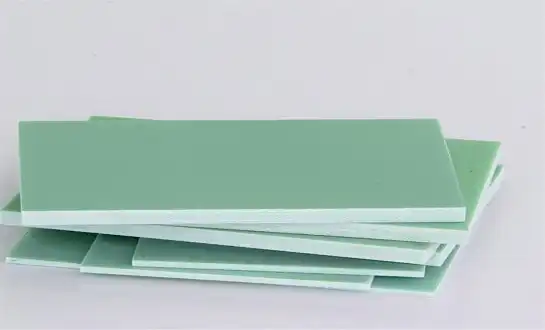
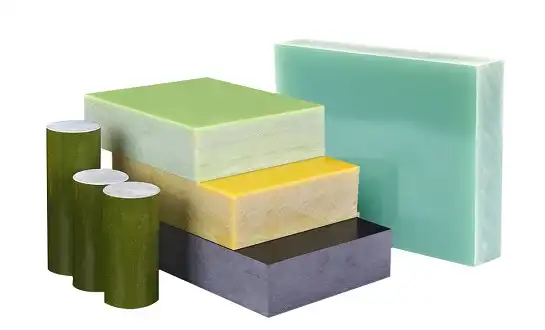
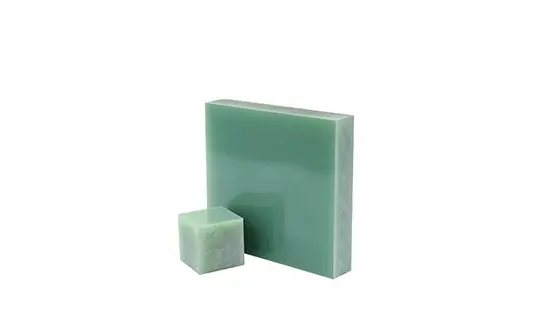
Can G11 Sheet Maintain Electrical Insulation in High-Temperature Industrial Equipment?
Yes — G11 Sheet can maintain reliable electrical insulation in high-temperature industrial equipment. This fiberglass-reinforced epoxy laminate is engineered under NEMA LI 1 standards with a Glass Transition Temperature (Tg) between 155°C and 180°C, placing it in Class F insulation territory. Its tightly woven glass fabric and high-temperature epoxy resin matrix deliver a dielectric breakdown voltage exceeding 50kV perpendicular to laminations. Compared to standard G10 or FR4, this material retains mechanical integrity and insulating performance at elevated temperatures where conventional laminates begin to soften or delaminate.
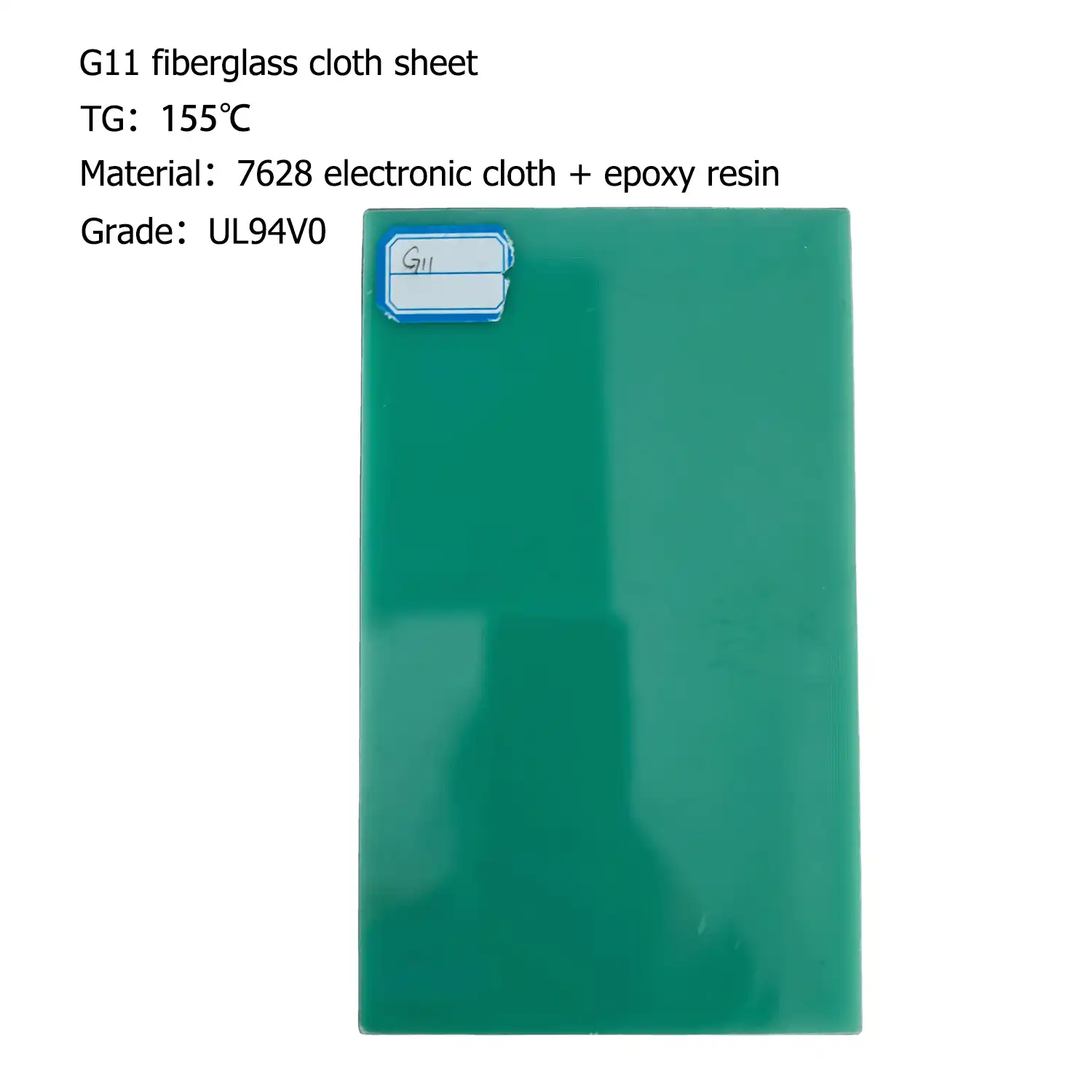
Understanding G11 Sheet and Its Electrical Insulation Properties
What Is G11 Sheet Made Of?
G11 Sheet is a material made of continuous-filament woven glass cloth that is glued together with a special high-temperature epoxy resin. It has a density of about 1.85 g/cm³ and a water absorption rate of less than 0.15%. This means that it keeps its shape even in humid industrial settings. Because of its unique makeup, it's not like other glass-epoxy boards and works well for precise insulation parts in tough machinery.
Key Electrical Properties
It has a high dielectric breakdown voltage (usually more than 50kV), a low dissipation factor, and a high volume resistivity. These numbers show that electrical separation can last for a long time under both constant heat and repeated thermal stress. These values are in line with what IEC 60893-3-2 Type EP GC 203 and MIL-I-24768/3 Type GEB certifications say they should be for engineers choosing parts for switchgear, transformer coil insulation, or arc barriers.
Industry Standards That Apply
G11 Sheet meets NEMA LI 1 standards and is recognized by IEC 60893 classifications. Procurement teams care about these certifications because they show that the resin mixture and laminate construction met certain standards for electrical and heat performance. In regulated industries, it is normal practice for buyers in the U.S. to check compliance paperwork from suppliers before making large orders.
Challenges of Maintaining Electrical Insulation in High-Temperature Environments
Common Thermal Stressors in Industrial Equipment
Insulation materials are often put through repeated thermal cycling, sustained high temperatures, and sudden thermal shock events in industrial equipment. The plastic core of a laminate is stressed by all of these things. The molecular structure of weaker resins breaks down over time because of these stressors. This makes the resins less dielectrically strong and less rigid.
Failure Modes to Watch For
Insulation laminates that are thermally stressed usually break down in three ways: the layers separate, the surface cracks, and the dielectric properties are lost. When used with high voltage, G11 Sheet delamination is especially dangerous because it leaves air holes where electrical arcing can happen. When operating temperatures get close to or pass their limits, these failures are more likely to happen with materials that have lower Tg ratings, like standard FR4 at around 130°C.
Why Material Selection Matters More Than People Realize
If you pick the wrong laminate grade for a high-heat job, you risk more than just parts breaking. You also risk unexpected machine downtime and safety incidents. When G11 is put under thermal stress, it keeps at least half of its structural properties at 155°C, while G10 loses a lot of those qualities above 130°C. Power distribution panels, motor housings, and generator units are all affected by this performance gap in real ways.
Evaluating G11 Sheet Performance in High-Temperature Settings
Thermal Stability and Tg Range
The Tg of G11 Sheet is usually between 155°C and 180°C. This means that the resin matrix stays hard and works well for a long time after normal epoxy laminates break down. This thermal stability directly supports the accuracy of dimensions in precisely made insulation parts. Even small warps can lead to assembly failures or electrical contact risks.
Mechanical Strength Under Heat
Under normal conditions, the material's flexural strength is more than 65,000 psi along its length, and its modulus values stay high even as the temperature rises. G11 is a good choice for structural insulation spacers, slot wedges in generators, and phase barriers in heavy-duty transformers because it can withstand rounds of heat expansion and contraction.
Honest Limitations
The G11 Sheet does have some limits; that much is clear. Long-term contact above 180°C will eventually break down the resin. Also, it's harder to work with than G10 or FR4, so you need carbide or diamond-coated tools for clean CNC cuts. If you need flame retardancy along with these thermal qualities, FR-5, which is a flame-retardant version of G11, is the better standard.
How to Select the Best G11 Sheet for Your Industrial Application
Temperature Rating and Thickness Selection
Start by plotting the Tg of the laminate against the equipment's constant operating temperature and its largest thermal excursion. For uses that stay between 130°C and 155°C all the time, G11 is the better option than FR4. Choosing the right thickness depends on how much mechanical load you need and how much space you have for installation. Suppliers with good technical support can help you choose the right dimensional tolerances for your assembly design.
Here are the main things that buying teams should look at before putting in an order for G11 Sheets:
- Tg confirmation: Request supplier documentation showing Tg values tested per ASTM E1356 or IEC 60893.
- Dielectric strength verification: Confirm perpendicular breakdown voltage test results per ASTM D149 to rule out laminate voids.
- Dimensional tolerance: Precision sheets typically hold thickness tolerances within ±0.05mm; verify this against your design requirements.
- Certification records: Ask for MIL-I-24768/3 Type GEB or IEC 60893-3-2 Type EP GC 203 compliance documentation.
By going over these data points before you place an order, you can protect the quality of your production and lower the risk of mistakes in the field in the future.
G11 vs. G10 vs. FR4 — A Clear Comparison
G10 and FR4 are based on the same structure as G11 Sheet, but they use lower-quality plastic systems. Because FR4 adds UL94 V-0 flame retardancy, it is often used in PCB uses. G11 gives up some of its machinability in exchange for much better heat retention. If your equipment works continuously at temperatures above 130°C and doesn't need to be UL94 flame-retardant, G11 is a better choice than G10 or FR4.
Supplier Qualification Matters
As important as the material standard is, how well the provider can provide batch-consistent material with proof of quality control. Any trustworthy company that makes G11 Sheets should do thermal stress testing according to ASTM D790, check the integrity of the surface, and provide documented compliance records as normal.
Best Practices for Installation, Maintenance, and Procurement of G11 Sheets
Handling and Machining Guidelines
Because G11 Sheet contains abrasive glass reinforcement, always use tungsten carbide or diamond-coated tooling for cutting and routing. High-speed CNC routing with adequate dust extraction prevents delamination at cut edges and protects operators from fine glass particles. Store sheets flat in a dry, room-temperature environment — as a fully cured thermoset, G11 has an indefinite shelf life under proper storage conditions.
Routine Inspection for Long-Term Safety
Periodic visual inspection of installed G11 components should look for surface discoloration, edge cracking, or signs of delamination. These early indicators allow maintenance teams to schedule replacements before electrical performance degrades. Avoid cleaning G11 surfaces with aggressive solvents; mild isopropyl alcohol is generally compatible, but always verify chemical compatibility before use.
Procurement Tips for B2B Buyers
When sourcing, request certified test reports alongside each batch shipment. Confirm that the supplier performs thermal stress testing per ASTM D790 standards to verify the G11 formulation — not a cheaper G10 substitute. Working with suppliers who offer customization and consistent batch tolerances reduces rework costs and protects your production schedule.
Conclusion
G11 Sheet consistently insulates electricity in high-temperature industrial equipment. It has a Tg range of 155°C–180°C, a dielectric breakdown voltage above 50kV, and it meets the standards for NEMA LI 1 and IEC 60893. It works better than G10 and FR4 in settings with long-term heat while keeping the exact dimensions needed for precise insulation parts. If the material works as well as it's supposed to in your application, you need to choose the right grade, check the supplier's certifications, and follow the right cutting steps.
FAQ
What is the maximum temperature G11 Sheet can handle?
Depending on the plastic mixture, G11 Sheet will keep working reliably up to about 155°C to 180°C (Class F insulation range).
Is G11 Sheet suitable for outdoor or humid environments?
Yes. It usually absorbs less than 0.15% water, which means it stays stable in terms of size and electrical properties even when it's wet. For UV exposure outside, it's best to use extra protective coatings.
How does G11 compare to FR4 in thermal performance?
FR4 has a flame retardancy rating of UL94 V-0 and works well up to about 130°C. G11 doesn't have a standard flame retardancy rating but works better mechanically than FR4 above 130°C. Which one is best for your purpose depends on whether flame resistance or thermal stability is more important.
Can G11 Sheet be used in cryogenic applications?
Yes, G11 Sheet can withstand being pulled apart and bent even at temperatures as low as liquid helium. This makes it a well-known choice for insulating superconducting magnets in research and aerospace settings.
Does G11 Sheet require special machining equipment?
Yes. Diamond-coated or tungsten carbide tools are needed to work with its hard resin and glass reinforcement. Normal high-speed steel tools will wear out quickly and might separate the edges.
Request a Quote from J&Q — Trusted G11 Sheet Supplier
J&Q has been making insulation sheets for more than 20 years and has been trading with other countries for more than 10 years. We can handle your order from start to finish because we are a direct producer of G11 Sheet and have our own shipping network. You can email our expert team at info@jhd-material.com or go to blog.jhd-material.com to get a bulk quote, ask for a datasheet, or talk about your unique thickness needs.
References
1. National Electrical Manufacturers Association (NEMA). NEMA LI 1: Industrial Laminating Thermosetting Products. NEMA, 2020.
2. American Society for Testing and Materials. ASTM D149: Standard Test Method for Dielectric Breakdown Voltage and Dielectric Strength of Solid Electrical Insulating Materials. ASTM International, 2020.
3. American Society for Testing and Materials. ASTM D790: Standard Test Methods for Flexural Properties of Unreinforced and Reinforced Plastics and Electrical Insulating Materials. ASTM International, 2017.
4. International Electrotechnical Commission. IEC 60893-3-2: Specification for Industrial Rigid Laminated Sheets Based on Thermosetting Resins — Epoxy Woven Glass Fabric Laminates. IEC, 2003.
5. U.S. Department of Defense. MIL-I-24768/3: Insulating Material, Plastic, Laminated Thermosetting, Glass Cloth, Epoxy Resin, Type GEB. DoD, 1992.
6. Mazur, K. Electrical Insulating Materials: Properties and Applications in Power Equipment. CRC Press, 2019.

Get a complete product list and quotation
J&Q New Composite Materials Company