What Equipment Is Required for Precision G10 ESD Epoxy Board Cutting?
Precision cutting of G10 ESD epoxy boards demands specialized equipment capable of handling dense composite structures while preserving electrostatic discharge protection. The essential machinery includes CNC routers with diamond-tipped tooling, laser cutting systems configured for controlled thermal management, and water jet cutters that eliminate heat-affected zones. Each method requires ESD-compliant workstations, proper vacuum collection systems to manage fiberglass dust, and calibrated fixtures that prevent material shifting during operations. Selecting appropriate equipment directly impacts dimensional accuracy, surface finish quality, and the preservation of anti-static properties critical for electronics manufacturing applications.
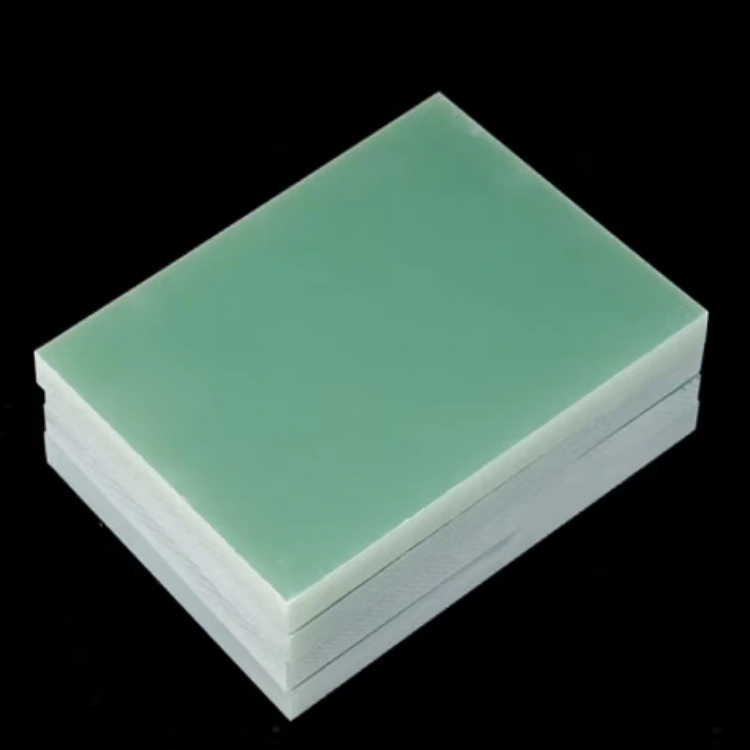
Introduction
Electronics makers are under more and more pressure to meet tighter standards while also keeping sensitive parts safe from static damage. G10 ESD Epoxy Boards have become the standard in the industry for uses that need both mechanical strength and static elimination. These glass fiber-reinforced laminates are made of epoxy resin matrices and conductive additives. They can withstand temperatures of up to 155°C and keep their stable dielectric properties even when they are wet. The problem is not with what the material can do, but with how to work with it without changing how it was engineered.
A lot of the time, procurement managers and tech teams find that regular cutting tools don't work with these plastic boards. The fiberglass makes the material rough, which speeds up tool wear, and cutting too slowly hurts the resin matrix by creating heat. Even small amounts of edge fraying or delamination can make precision parts useless in situations like PCB assembly stands or semiconductor handling boxes. Figuring out which pieces of equipment are best for a certain job is the difference between efficient operations and expensive trial-and-error methods. This guide gives you the basic information you need to buy equipment that meets quality standards and meets your business needs.
Understanding the Challenges of Cutting G10 ESD Epoxy Boards
Material Composition and Its Impact on Machinability
G10 ESD Epoxy Boards are made of woven fiberglass cloth that has been saturated with thermosetting epoxy resin. The surface resistance is adjusted with carbon or other conductive fillers to be between 10^6 and 10^9 ohms per square. This particular density reaches about 1.82 g/cm³, making the material much harder than regular plastics but rougher than metals. At 130°C, the glass transition temperature, too much cutting pressure can cause heat to build up and soften the resin, which means that the material smears instead of cleanly splitting. Depending on the cutting direction, the braided structure adds directional grain patterns that change how chips form and how good the edges are.
Common Defects from Improper Cutting Techniques
The most common type of failure is delamination, which happens when cutting forces separate the layers of glass fiber from the resin core. This usually happens when tools get dull or when feed rates are too high for the material to handle. Edge chipping happens when exit cuts don't have enough support, which makes the last fibers break instead of shearing cleanly. If there isn't enough cooling or the spinning speed is too high, heat can build up and change the color of the material and possibly make ESD work less well. Microcracks that can't be seen with the naked eye may get bigger during thermal cycling in end-use environments, which could make critical uses less reliable in the long run.
Why Precision Matters in ESD-Sensitive Applications?
Places where electronics are put together can't have parts that pose a static discharge risk. One electrostatic event with more than 100 volts can damage sensitive integrated circuits or change the way measurement equipment is calibrated. For proper contact with pogo pins, G10 ESD boards used in test fixtures must keep their dimensions stable within ±0.05 mm. Surface roughness, on the other hand, affects how consistently electrical connections work. Manufacturers of transformers need arc shields with smooth edges that stop corona discharge starting places. Cutting quality has an effect that goes beyond just the immediate size issues. It also has an effect on how well the finished electrical equipment works and whether it is safe to use.
Essential Equipment for Precision Cutting of G10 ESD Epoxy Boards
CNC Routers and Milling Machines
Computer numerical control routers are what make handling a lot of G10 ESD Epoxy Board possible. These machines have strong gantry structures and high-speed wheels that can go from 18,000 to 24,000 RPM. This lets smaller cutting tools be used, which lowers the cutting forces on the sides. Linear guide systems with ball screw drives provide positioning accuracy of within 0.02 mm across the working area. Servo motor control keeps feed rates constant even when material resistance changes. Because it is programmable, complicated shapes like pockets, chamfers, and counterbores can be done in a single setup. This cuts down on handling and makes sure that all output runs have the same dimensions.
Modern CNC systems have automatic tool changers and tool length adjustment, which lets drill bits, end mills, and finishing tools work in a certain order without any help from a user. This feature is very helpful when making boards that need both through-holes for mounting hardware and precise slots for component clearance. Closed-loop feedback systems keep an eye on the spindle load and change the feed rates automatically when they find differences in the density of the composite material. This keeps the cut quality high and stops tools from breaking. It's important to include dust collection because fiberglass particles can be harmful to your lungs and can contaminate sensitive electronic parts if they are allowed to spread in manufacturing environments.
Laser Cutting Systems for Clean Edge Finishing
Laser technology has clear benefits for tasks that need edges without burrs and don't need mechanical contact forces. CO2 lasers with wavelengths of 10.6 microns can successfully vaporize the epoxy resin, and when set up correctly, the focused beam width of 0.1 to 0.3 mm causes very few heat-affected zones. Because it doesn't touch anything, it doesn't cause stress from clamping, and it can cut delicate parts that might bend when the router bit presses on them. Nitrogen or compressed air helps gas jets blow away melted material and stop char buildup that would ruin the look of the edges and the accuracy of the measurements.
The speed at which thicker materials can be cut is what limits it. Boards that are thicker than 3 mm need to be fed through more than once or at a slower rate, which slows down production. Laser processing also needs careful setting optimization because adding too much energy can damage the conductive chemicals that make ESD work. For proper use, the laser's power, cutting speed, and focal point must be calibrated for different board thicknesses and types. Even with these things in mind, laser cutting is great for making prototypes and small batches of products where setup flexibility is more important than processing time per part.
Specialized Cutting Tools and Blade Requirements
When working with abrasive composites, diamond-coated tools are now the norm because they last longer. When diamond particles are bonded to carbide substrates, they don't get worn down by glass fibers like regular high-speed steel cutters would. Compression router bits with spiral flutes that face each other cut both down and up at the same time. This traps fibers between the opposing forces, which stops the top and bottom surfaces from delaminating. When compared to multi-flute designs, two-flute designs with a smooth flute shape have less chip packing and heat buildup.
By controlling the temperature at the cutting edge, coolant supply devices make tools last longer and make cuts that look better. Through-spindle cooling or external mist systems keep the cutting zone smooth and get rid of swarf before it can be cut again and make more heat. When choosing a tool's shape, the thickness of the material must be taken into account. For thin sheets, shorter flute lengths give them more strength, while longer flutes can handle thicker boards. Regular inspection and replacement schedules for tools stop the quality from slowly getting worse over time as cutting edges lose their initial sharpness.
Static Control Accessories and Grounding Systems
Making sure the cutting area is ESD-safe throughout the process saves both the piece being cut and the tools around it. Connecting conductive work surfaces to earth ground stops static electricity from building up on the surfaces of materials while they are being cut. Ionizing air fans remove charges from the surfaces of materials before and after they are cut. This is especially important when working with single cut pieces. When operators physically add materials or remove finished parts, they should wear wrist straps that are grounded. This completes the electrical path and safely releases any built-up charge.
The machinery itself needs to be grounded when working with G10 ESD Epoxy Board. For example, CNC routers and laser cutters need to be properly connected to the earth so they don't become charge sources. Anti-static vacuums pick up dust particles without creating triboelectric charging, which would make cleaned surfaces more likely to get dirty. Monitoring tools for the environment make sure that the relative humidity stays between 30% and 70%, which is the lowest amount at which static electricity can be generated. These built-in static control measures work together to keep the ESD qualities that were designed into the board material all the way through the manufacturing process.
Comparison of Cutting Methods for G10 ESD Epoxy Boards
CNC Routing Advantages and Limitations
CNC routing gives you the most options for working with complicated shapes and increasing the size of your output. Using vacuum table fixturing or dedicated nest patterns, machines can work on multiple boards at once, which greatly increases throughput for large orders. When you can store cutting programs, you can make sure that complicated designs are always made the same way over production runs that last months or years. Most jobs can be done with three-axis machines, but five-axis machines can make compound angles and undercuts that can't be done any other way. As technology has improved, the cost of equipment has gone down, making CNC routing available to medium-sized manufacturing businesses.
There are costs for tool wear and the need for skilled programmers who know the best way to use toolpaths for composite materials as trade-offs. Cutting speeds are slower than laser systems for simple shapes, averaging 3 to 6 meters per minute depending on the thickness of the material and the quality of the edge that is wanted. The mechanical cutting action causes vibrations that need strong material binding, which could limit the smallest feature sizes. Regular maintenance, like checking the spindle bearings and lubricating the ball screws, adds to the costs of doing business, but it can still be done if you plan ahead.
Laser Cutting Performance Characteristics
Laser systems work best when the quality of the edge finish is more important than how fast they cut. When laser cutting is used, the sides are free of tool marks and usually don't need any extra work to be finished. Once the cutting parameters are set, setup time is almost zero. This makes laser technology perfect for prototyping and making custom parts that are only made once. Modern fiber lasers use less energy than their CO2 predecessors while cutting just as well or better, which lowers the overall cost of operations.
Because lasers can only cut thinner materials in production settings, they can only cut certain types of materials. Boards that are thicker than 6 mm are not useful because they need a lot of energy and could get damaged by heat. The narrow kerf width saves material compared to mechanical cutting, but it makes it harder for debris to escape from thick sections, which can contaminate the edges. Investing in industrial laser systems usually costs more than buying a CNC cutter, but technology costs are going down, which makes the economic case for using lasers stronger.
Manual Cutting and Its Appropriate Applications
Handheld rotary tools and rough cutting wheels can still be used to make changes in the field and test prototypes when it's not worth the cost to buy new tools. Skilled operators can make simple straight cuts that look good by using guides and a steady hand. The cost of materials stays low because mistakes only affect single pieces and not whole production batches. This method works well when the size differences are somewhat large, like ±0.5 mm or more.
In production settings, limitations become clear very quickly. Manual methods can't provide the precision needed for parts that can be switched out or for integrating them into an assembly line. Even in short production runs, variations happen because operators get tired. Because dust isn't being collected, workers are exposed to dangerous particles without having to buy expensive extra gear. The quality of the edge relies only on how skilled the user is and can't be matched by machine-based processes. Because of these things, manual cutting is only useful for emergency repairs and testing ideas early on, not for regular manufacturing tasks.
Best Practices and Operational Tips for Optimal G10 ESD Board Cutting
Pre-Cutting Material Inspection and Preparation
Before cutting G10 ESD Epoxy Board, the material needs to be checked to make sure it is good quality. Visual inspection should find surface flaws, damage from moisture, or delamination in raw materials that could make finished parts less reliable. By measuring the real thickness of the board in more than one place, you can be sure that it meets the requirements, since changes in thickness affect the cutting depth setting. By letting materials get used to the temperature and humidity of the shop for 24 hours before they are machined, changes in size that would invalidate programmed toolpaths are avoided during processing.
Cleaning the surface gets rid of dust and oils that can damage cutting tools or make vacuums less effective. When cutting, protective covering films are put on the sides of the boards to keep them from getting scratched and make cleanup easier. Putting materials in order by lot number makes it possible to find them if there are quality problems later on during assembly. This method of preparation is directly linked to the number of first-pass passes and the level of customer satisfaction.
Machine Setup and Calibration Procedures
It's important to make sure that the total spindle runout number stays below 0.01 mm, since too much runout speeds up tool wear and lowers the quality of the cut. For cutting loads to stay put, cutting tools must be fully seated in collets, and the draw bar torque must be just right. When zeroing the Z-axis, accuracy is important because depth mistakes of as little as 0.1 mm can lead to cuts that aren't finished or too much material removal, which weakens the final parts. Feed rate and spindle speed settings should be written down and used the same way for all materials with the same specs.
Before committing production stock, test cuts on scrap material are used to make sure the code is correct. These tests find problems with choosing the right tools, the speed of the feed, or the setup of the workpieces that would waste time and material otherwise. To make sure the process stays within control limits, operators should keep a close eye on the first pieces of production and check their sizes and edges. Changes to parameters made because of worn tools or differences in batches of materials should be written down so that the institution can learn from them and make future setups more efficient.
Post-Cutting Quality Control and Finishing
Using calibrated measuring tools to check the dimensions of finished parts makes sure they match the requirements in the drawing. Because composite materials can vary in different places, important features should be checked more than once. Visual inspection in well-lit areas finds delamination, chipping, or surface flaws that need to be fixed, or the part is thrown away. Surface resistivity meters are used for ESD resistance testing to make sure that the cutting process hasn't damaged the conductive properties that are needed for static protection.
Using fine abrasive pads to finish the edges gets rid of small flaws and slightly softens sharp corners that could hurt people handling the parts or damage them when they are put together. Prior to entering controlled assembly environments, parts are cleaned with ultrasonic waves or compressed air to get rid of any remaining dust. Final inspection based on written quality criteria sets concrete standards for acceptance that make it less likely for inspectors to make different decisions based on their own opinions. Parts should be packed in anti-static cases that keep them safe while they are being shipped or stored.
Procurement Considerations for G10 ESD Epoxy Board Cutting Equipment
Evaluating Supplier Technical Capabilities
Instead of giving general cutting solutions, equipment providers for G10 ESD Epoxy Board should show that they are very familiar with the problems that come up when working with composite materials. How quickly production problems can be fixed depends on how quickly technical support is available. This is why having a local service presence or responsive remote assistance is an important evaluation criterion. Application testing services from suppliers let potential buyers check how well equipment works with real production materials before they buy it. This lowers the risk of implementation.
The quality of the machine paperwork shows how committed the seller is to the success of the customer. Complete troubleshooting guides, maintenance manuals, and training materials for operators shorten the learning curve and make it less necessary to get help from outside sources. When spare parts are available, long periods of downtime are avoided when worn-out parts need to be replaced. Suppliers with large installed bases in the electronics manufacturing sector bring useful knowledge that leads to better application suggestions.
Scalability and Future Production Needs
The equipment that is chosen should be able to handle the expected increase in number without having to be completely replaced. Modular machine designs let you increase their capacity by adding more axes, making the work area bigger, or integrating automated material handling. As processes get more established, software features that support connecting to networks and collecting data on production can be used to connect to factory execution systems. Buying a little more potential than you need at the moment gives you headroom that keeps your equipment from becoming obsolete too soon.
Standardizing on equipment platforms across multiple production lines makes it easier to train operators and keep extra parts on hand. But keeping some process flexibility by using different cutting methods gives you a backup plan in case your main equipment breaks down or needs maintenance. To find the right balance between the benefits of standardization and the need for operational resilience, production workflows and risk tolerance need to be carefully looked at.
Total Cost of Ownership Analysis
The initial purchase price is only one part of the total cost of ownership for a piece of equipment. Different types of machines use very different amounts of energy. Despite costing more to buy, laser systems often have lower operating costs. In production settings, prices for things like cutting tools, laser optics, and filter media that are used up quickly can sometimes be higher than the costs of replacing old equipment. Labor needs are very different between automated CNC systems and manual processes, so throughput per operator is an important way to compare them.
Maintenance schedules and prices affect when things get made and how well the equipment works overall. When machines need to be calibrated every day or have parts replaced often, they add to the complexity of operations, which cuts down on the time that can be used for production. It's important to compare and contrast the candidate systems' warranty coverage and service costs after the warranty period. For investments in capital-intensive equipment, financing options like leasing may help with managing cash flow. Full total cost modeling often shows that high-end equipment is more valuable because it has longer uptime and lowers the cost of processing each part.
Conclusion
Precision cutting of G10 ESD Epoxy Boards necessitates matching equipment capabilities to particular application requirements while preserving static-safe working conditions. CNC routing systems can handle complex shapes and large amounts of work, and they can be expanded as needed. Laser cutting, on the other hand, gives edges a better finish in situations where heat can be controlled. Specialized diamond tools and the right cutting parameters protect the properties of the material and make the equipment last longer. Picking the right technical tools and following the rules of operation, like getting the materials ready, making sure the machines are calibrated, and checking the quality, are both important for success. When factories spend money on the right cutting tools and strong process controls, they set themselves up to consistently produce high-quality goods that meet the high standards of the electronics and industrial equipment markets.
FAQ
What thickness ranges work best with CNC cutting for G10 ESD boards?
CNC routing works well with G10 ESD materials that are 0.5 mm thick up to 25 mm thick. Fixturing thin sheets (less than 2 mm) carefully is needed to keep them from shaking and bending while they are being cut. The best width range is from 3 to 12 mm, where cutting speeds, tool life, and edge quality are all at their best. For boards that are thicker than 15 mm, feed rates need to be slowed down and more than one depth pass needs to be made to control cutting forces and heat production. However, quality results can still be achieved by choosing the right parameters.
How can ESD properties be protected during the cutting process?
Controlling both mechanical and thermal stress during cutting operations is needed to keep the ESD integrity. When you use sharp tools and the right feed rates, you keep heat from building up, which could damage conductive additives. Ionizing equipment and work surfaces that are grounded keep material surfaces from building up static electricity. By not sanding or finishing too rough, you can protect the top layer where the conductive properties are concentrated. Post-cutting resistance testing makes sure that the processing hasn't hurt the ability to get rid of static electricity.
Is laser cutting viable for high-volume G10 board production?
Laser cutting works well for mass production when the thickness of the material is less than 4 mm, and the shape of the parts is pretty simple. The non-contact process makes it easy to switch between different part designs quickly and without using tools. This is useful in production environments that use a lot of different models. However, CNC routing usually has a higher output for thick materials or complicated three-dimensional shapes that need more than one process. When you combine laser cutting for outer shapes with CNC routing for internal features, you get the best of both technologies.
Partner with J&Q for Superior G10 ESD Epoxy Board Solutions
For manufacturing to be at its best, it needs trusted material providers that know how to meet the needs of precise processing. Our 20 years of experience making high-performance insulation materials at J&Q directly translates into G10 ESD Epoxy Board quality that meets the strict standards of the electronics industry. We have full control over our supply chain, from choosing the raw materials to making sure the finished product is of high quality. This way, we can be sure that each batch will work the same way. Our in-house logistics make international shipping easier and get rid of the coordination problems that come up when you buy from more than one vendor.
When it comes to engineering teams, our technical consulting services help match the right materials to the right cutting tools and applications. We can make any kind of order, from small prototypes to full production runs. Whether you need normal sheet stock or blanks that are precisely cut to fit your production nest designs, we can do it. As a well-known company that makes G10 ESD Epoxy Board, we can help you meet your procurement goals by giving you clear pricing, quality certifications that can be seen, and quick communication that doesn't miss your project deadlines. Talk to our team at info@jhd-material.com or on blog.jhd-material.com about how our products and knowledge can help your manufacturing process.
References
1. National Electrical Manufacturers Association. (2019). Industrial Laminating Thermosetting Products - NEMA LI 1-2019 Standards Publication. Rosslyn, VA: NEMA Publications.
2. Anderson, K.R. & Thompson, J.M. (2021). "Machining Characteristics of Glass Fiber Reinforced Epoxy Composites." Journal of Manufacturing Processes, 68, 432-447.
3. Electronics Industries Alliance. (2020). ESD Association Standard for the Development of an Electrostatic Discharge Control Program - ANSI/ESD S20.20-2020. Rome, NY: ESD Association.
4. Chen, W. & Liu, P. (2022). "Tool Wear Mechanisms in High-Speed Milling of Polymer Matrix Composites." International Journal of Advanced Manufacturing Technology, 119(5-6), 3421-3438.
5. Industrial Fabrics Association International. (2021). Technical Guide to High-Performance Composite Laminates in Electronics Manufacturing. Roseville, MN: IFAI Publications.
6. Mitchell, S.R. (2023). "Thermal Effects in Laser Processing of Reinforced Polymer Composites." Composites Manufacturing Engineering, 41(2), 156-171.

Get a complete product list and quotation

J&Q New Composite Materials Company



