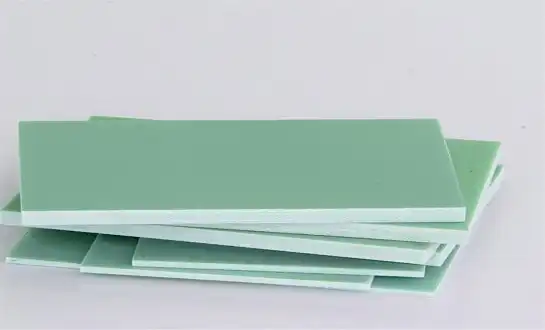
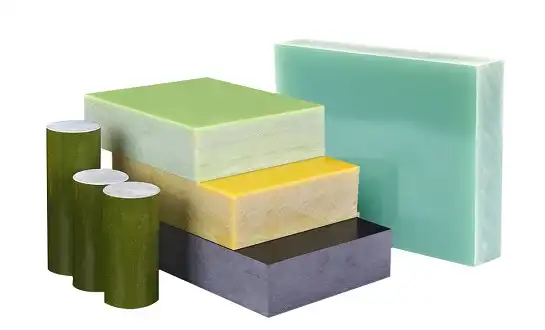
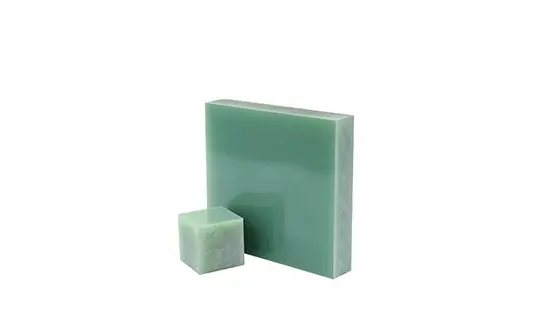
What CNC Machines Are Used to Process FR4 Epoxy Sheet for Industrial Parts?
Processing FR4 epoxy sheets into precision industrial components requires specialized CNC equipment capable of handling this flame-retardant glass-fiber-reinforced laminate. The primary machines used include CNC milling centers for intricate profile cutting, CNC routers optimized for high-volume batch production, and precision laser cutting systems for non-contact processing. Each machine type delivers distinct advantages depending on sheet thickness, tolerance requirements, and production volumes. Selecting the appropriate CNC solution ensures optimal mechanical properties, preserved dielectric strength, and compliance with UL94 V-0 standards critical to electrical insulation applications.
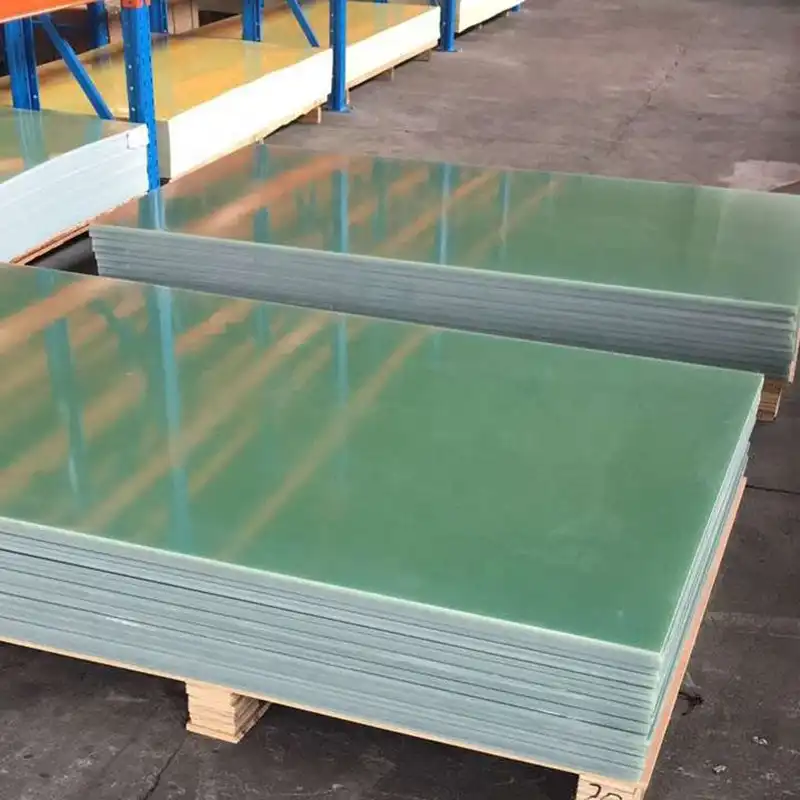
Understanding FR4 Epoxy Sheet and Its Manufacturing Challenges
Composition and Core Properties
We've been working with FR4 Epoxy Sheets for more than 20 years and have seen how this material has become the standard for electrical shielding. The structure is made up of a thick, uniform sheet of continuously woven glass-fiber cloth that has been fully saturated with brominated epoxy resin glue and then pushed together using controlled heat and pressure. This building has a very high dielectric strength—usually over 500 V/mil—and is also flame retardant, meeting the UL94 V-0 standard. Most normal grades have a glass transition temperature between 130°C and 140°C. High-Tg versions, on the other hand, can hit 170°C for lead-free soldering environments.
The material's density is between 1.85 and 2.10 g/cm³, which means it has a great amount of strength-to-weight. Water absorption stays very low, at less than 0.2% per ASTM D570. This keeps the electrical qualities stable in damp places where phenolic paper laminates would fail. The bending strength is more than 340 MPa along the length of the material, and the breakdown voltage is more than 40 kV across the layers.
Material Differentiation
Knowing how FR4 Epoxy Sheet stacks up against other laminates helps buying teams make smart decisions about where to buy things. G10 has some of the same mechanical properties as FR4 Epoxy Sheet, but it doesn't have the flame-retardant brominated additives that make FR4 Epoxy Sheet safer. Paper, not glass cloth, is used to strengthen CEM-1 boards, which makes them less resistant to moisture and less stable mechanically. Phenolic cotton laminates are less expensive, but they don't have the electrical properties or temperature performance that electronics manufacturers need today.
Common Machining Obstacles
Due to its rough texture, glass-fiber support is hard to work with when CNC cutting. When machining plastics that aren't strengthened, tool wear happens much faster, so bits need to be replaced often to keep within physical limits. Because hardened epoxy resin is brittle, it can chip along cut edges, especially if exit strategies aren't used correctly. When too much heat builds up during cutting or drilling, it can cause delamination between layers of glass-cloth, which weakens both the structure and the insulation's ability to keep electricity out.
Because of heat sensitivity, it is important to choose the parameters carefully during cutting processes. As epoxy resin gets closer to its glass transition temperature, it starts to soften. This changes the shape and quality of the surface. When specifying machining needs and judging a supplier's abilities, engineers and technical procurement specialists need to be aware of these material properties.
Types of CNC Machines Used for FR4 Epoxy Sheet Processing
CNC Milling Centers
CNC milling centers are great at making precise cuts and complicated shapes in FR4 Epoxy Sheets. The multi-flute carbide or diamond-coated end mills on these vertical or horizontal machining centers rotate and cut through material along controlled cutting paths. Tough tolerances of only ±0.05 mm are possible thanks to the rigid construction and precise linear motion systems. This is important for switchgear parts and motor insulation frames that need to fit perfectly.
To find the best milling parameters, you have to find a balance between cutting speed and heat production. We suggest that the spindle speed be between 12,000 and 18,000 RPM, and that the feed rate be changed based on the cutter width and depth of cut. Coolant systems or delivering compressed air are good ways to get rid of heat and abrasive dust that would otherwise speed up tool wear. Most flat sheet processing is done by three-axis machines. Five-axis machines can make electrical parts with compound angles and complicated three-dimensional shapes.
CNC Router Systems
When large amounts of work need to be done quickly in batches, CNC routers are the best way to make FR4 Epoxy Sheets. Compared to standard milling centers, these gantry-style machines have bigger work areas and faster rotation speeds. This makes them perfect for cutting multiple parts from full sheets at the same time. Vacuum hold-down tables keep the material flat while it's being cut, which stops chattering caused by vibrations that hurt the quality of the edge.
Spindle speeds in router systems are usually between 18,000 and 24,000 RPM, and they use special bits called compression bits that cut down on the top surface while pulling up on the bottom face at the same time. The form of this tooling keeps delamination to a minimum and makes lines that are smooth on both sides of the material. Routers are very cost-effective for making a lot of insulation spacers, mounting brackets, and PCB support structures because they remove a lot of material quickly.
Laser Technology for Cutting
Laser cutting systems use focused thermal energy instead of mechanical force to cut FR4 Epoxy Sheets, so there is no tool wear at all. At a frequency of 10.6 microns, carbon dioxide lasers melt epoxy resin and glass fibers along predetermined cutting routes. This makes edges with little mechanical stress. This non-contact processing method works well for jobs that need complex internal holes or very tight nesting patterns that make the best use of the material.
When laser cutting glass-fiber composites, parameter adjustment is very important. When there isn't enough power density, the edges get rough and charred, and the dielectric properties are lost. When there is too much energy, wide heat-affected zones form that change the color of the surrounding material. When it comes to thicker laminates, we've found that pulsed laser modes with controlled duty cycles give better results than continuous-wave operation. Compressed air or nitrogen-based assist gas devices blow away melted material and cool the cutting zone at the same time.
The main benefit of laser technology shows up in fast testing situations where design changes happen a lot. Programming changes only need to be made to updated CAD files, not to actual tools. This speeds up the development process for battery barriers and special electrical enclosures for cars. Batch processing is still a cheap way to make things in amounts ranging from one sample to a medium-sized production run.
Selecting CNC Machines Based on FR4 Sheet Applications and Specifications
Matching Technology to Part Complexity
Component geometry is a big part of how equipment is chosen. On cutting systems where speed is more important than fine detail, simple rectangular blocks or round discs cut well. Accuracy and precision are good for milling centers that make parts with small slots, precise hole patterns, or complicated perimeter profiles. When designs have internal pockets or radius transitions, the choice changes depending on the tolerances and surface finish requirements shown in the engineering drawings.
Sheet thickness has a big effect on how well a machine works with it. All three technologies can easily cut through FR4 Epoxy Sheets less than 3 mm thick, though laser cutting speeds become less useful as thickness increases. The best width for CNC routers is somewhere in the middle, between 3 mm and 10 mm. This is where cut quality and production speed are best balanced. Laser systems can't focus on laminates that are thicker than 10 mm, so mechanical cutting methods like milling or routing are better, even though they take longer to do.
Preserving Material Performance
When machining, there is always localized burning that raises the temperature of FR4 Epoxy Sheet near the cutting areas for a short time. The flame-retardant properties that electrical engineers specify for arc barriers and coil insulation could be damaged by this thermal input. Keeping the material's temperature below the glass transition point during processing keeps its shape and stops the degradation of the resin that would make it non-compliant with UL94 V-0 standards.
When mechanical cutting methods are used with sharp carbide tools and enough cooling, heat-affected zones are kept to a minimum compared to when dull bits are used alone. Depending on which way you cut the fabric, the orientation of the glass fibers in the laminate structure changes the quality of the edges. When dielectric strength and mechanical properties near cut edges are important to the performance of a product, engineers should describe machining methods that take these uneven qualities into account.
Controlling the dust level during CNC processing keeps the part clean and saves both the tools and the people using it. Small glass fiber particles (less than 10 microns) are easily carried through the air, where they can hurt your lungs and contaminate precision machine parts. Industrial vacuum systems with HEPA filters catch particles at the cutting point. This keeps them from building up on linear guides and ball screws, which would speed up wear and make placement less accurate over time.
Procurement Considerations for CNC Machining of FR4 Epoxy Sheets
Verifying Material Quality
Finding good FR4 Epoxy Sheets starts with making sure the seller has the right certifications and material safety paperwork. Reliable makers give thorough data sheets that list the electrical properties, mechanical performance, and flame resistance test results that meet the requirements of NEMA LI 1-1998 and IEC 60893. When we send parts to companies that make electrical equipment that has to follow strict rules, we always make sure that the lots of materials that come in have certificates of conformity that say they are UL recognized and RoHS compliant.
Consistency in thickness tolerance has a direct effect on how well CNC machines work and the quality of the parts they make. Premium FR4 Epoxy Sheet providers keep thickness differences between full sheets to within ±10% of the nominal measurement. This makes it possible to use tools reliably and finish the surfaces evenly. Material from sources that aren't as closely watched can vary too much, requiring frequent program changes or making parts that don't meet specifications and need expensive rework or being thrown away.
Evaluating CNC Service Providers
When outsourcing the production of FR4 Epoxy Sheet parts instead of doing the work in-house, you need to look at a number of skill factors when evaluating possible manufacturing partners. The age of the equipment and how it is managed can show how consistent the handling could be. For example, well-kept late-model CNC machines are more accurate and reliable than old, worn-out systems. Environmental controls that keep the temperature and humidity fixed stop dimensional shift during long production runs of precision electrical insulation parts.
Lead time commitments and minimum order quantities have a big effect on how flexible you can be when buying things and how much it costs to keep inventory on hand. Some machining shops are great at rapid prototyping and can turn around small orders quickly, while others are better at production volumes, which means they need more time to set up but charge less per unit. When procurement professionals understand these operational models, they can choose suppliers based on how industrial demand really works, rather than causing orders to be sent in groups that don't make sense.
Having access to technical help during the entire product creation cycle adds a lot of value on top of basic machining skills. FR4 Epoxy Sheet processors with a lot of experience give design-for-manufacturability feedback during quoting, which finds problems before expensive tools are made or production starts. Post-delivery help that fixes quality issues or works with design changes is what sets real manufacturing partners apart from transactional vendors whose only job is to cut parts to print.
Enhancing Production Efficiency and Quality Control in FR4 CNC Machining
Reducing Operational Bottlenecks
When cutting large amounts of rough glass-reinforced laminates, tool life management is a big part of how efficiently the work gets done. Dimensional drift and surface finish degradation can be avoided across production batches by replacing tools on a regular basis based on actual cutting time instead of waiting for performance to clearly start to fail. Tougher types of carbide and special coatings make service times longer, which saves money on materials and cuts down on the downtime that comes with changing tools often for FR4 Epoxy Sheets.
Automation integration speeds up tasks like moving materials and taking out parts that would normally take a lot of time from operators. Automatic loading systems put full sheets of FR4 Epoxy Sheet onto machine tables without any help from a person, and robotic unloading takes finished parts off the tables and stacks them for inspection. In lights-out production situations, where CNC equipment runs unsupervised during second and third shifts, these productivity boosts are especially useful because they make the best use of assets.
Real-time process monitoring systems find cutting conditions that aren't normal before they cause broken parts or damage to expensive tools. Spindle load sensors find cutting forces that are too high, which could mean that the tool is wearing out or the feed rates aren't right. This sets off alarms that let you fix the problem. Thermal cameras keep an eye on the temperatures in the cutting zone to make sure that the amount of heat generated stays within safe limits that protect the material's features during the grinding process.
Quality Assurance Protocols
Coordinate measuring tools are used to make sure that the finished parts are the right size and shape before they are sent to customers. Statistical process control methods take regular samples of parts to find small changes in size caused by tool wear or temperature changes. This lets process adjustments keep capability indices within acceptable limits. When mechanical engineers specify FR4 Epoxy Sheet parts, they like getting inspection reports with actual measurements instead of just "pass/fail" certificates.
Electrical property testing shows that the dielectric performance needed for shielding uses has not been affected by the machining processes. Breakdown voltage testing puts a lot of electrical stress on two metallic wires that are placed on opposite sides of the material. This makes sure that the insulation resistance is higher than the minimum requirements. Surface resistivity tests find dirt or debris from cutting fluids or handling that could cause high-voltage equipment units to leak.
Visual inspection finds flaws in the way something looks and how it was processed that machines might miss. Quality control staff check cut edges for delamination, surface finishes for burn marks or discoloration, and through-holes to make sure the wall quality is right. If you use first-article inspection protocols before sending out full production batches, you can avoid sending out whole lots that have problems that can be traced back to setup mistakes or program problems.
Conclusion
Selecting appropriate CNC equipment for processing FR4 Epoxy Sheets requires understanding both material characteristics and machining technology capabilities. When it comes to complicated shapes, CNC milling centers are very accurate, routers are great for mass production, and laser systems let you make quick prototypes while keeping your design options open. For implementation to go well, technical factors like flame retardancy and dielectric strength must be balanced against practical factors like tool wear, production efficiency, and quality control protocols. When procurement professionals work with experienced material sellers and qualified machine services, they can build reliable supply chains that make parts that meet strict electrical and mechanical performance standards in a wide range of industrial settings.
FAQ
Why choose FR4 over other insulation materials for machined industrial parts?
FR4 Epoxy Sheet combines flame retardancy meeting UL94 V-0 standards with exceptional dielectric strength exceeding 500 V/mil, mechanical durability, and thermal stability up to 130°C continuously. This one-of-a-kind set of properties is very important for electrical equipment uses where phenolic materials don't offer enough flame protection and unreinforced plastics can't handle thermal cycles. When the structure is loaded, the glass-fiber support keeps its shape in a way that pure plastic systems can't.
Does laser cutting damage the electrical properties of FR4 sheets?
Laser processing creates areas that are affected by heat, and too much heat can weaken both the dielectric strength and the flame retardancy. Using burst laser modes with controlled energy density to optimize the parameters in the right way keeps electrical performance high and harm to a minimum. In general, mechanical cutting methods keep the properties of the material more consistent. This makes them better for situations where electrical stability near the cut edges is important for the safety and dependability of the product.
What CNC machine works best for thick FR4 sheets above 10 mm?
CNC milling centers or router systems with high-torque spindles and rigid tool holders are the best ways to work with laminates that are thicker than 10 mm. These tools make enough cutting force to remove material quickly while keeping the dimensions of the sheet accurate all the way through. Instead of trying to make full-thickness cuts in a single operation, manufacturers should use compression-style tools and multiple depth passes. This will lower the risks of heat buildup and delamination.
Partner with J&Q for Expert FR4 Epoxy Sheet Machining Solutions
Because we've been making and selling insulation materials for 20 years, we are the best company to work with for precise FR4 Epoxy Sheets. At J&Q, we use our deep knowledge of materials and advanced CNC skills to make sure that the parts we send you are exactly what you want. Our in-house logistics business handles everything from choosing the materials to delivering them. This saves us the trouble of coordinating with multiple providers, which can be annoying. Our engineering team helps make designs more practical for production, and our well-established quality systems make sure that results are the same from batch to batch. Get in touch with us at info@jhd-material.com to talk about your unique FR4 Epoxy Sheet machining needs with a reputable maker and provider.
References
1. NEMA Standards Publication LI 1-1998, Industrial Laminated Thermosetting Products, National Electrical Manufacturers Association, Rosslyn, Virginia.
2. IEC 60893-3-2:2003, Insulating Materials – Industrial Rigid Laminated Sheets Based on Thermosetting Resins for Electrical Purposes – Part 3-2: Specifications for Individual Materials – Requirements for Rigid Laminated Sheets Based on Epoxy Resins, International Electrotechnical Commission, Geneva, Switzerland.
3. Handbook of Plastics Joining: A Practical Guide, Second Edition, Chapter 8: Machining of Thermosetting Composites, William Andrew Publishing, Norwich, New York.
4. CNC Machining Handbook: Building, Programming, and Implementation, Chapter 12: Processing Composite Materials and Laminates, Industrial Press, South Norwalk, Connecticut.
5. ASTM D709-01, Standard Specification for Laminated Thermosetting Materials, American Society for Testing and Materials, West Conshohocken, Pennsylvania.
6. Electrical Insulation Materials: Molecular Structure, Properties and Applications, Chapter 5: Glass Fiber Reinforced Epoxy Laminates in High-Voltage Equipment, Springer Publishing, Boston, Massachusetts.

Get a complete product list and quotation
J&Q New Composite Materials Company