What CNC Equipment Is Required for G10 Epoxy Sheet Fabrication?
When fabricating G10 epoxy sheet components, specialized CNC equipment becomes essential to achieving precision and consistency. The primary machinery required includes CNC milling machines with high spindle speeds, CNC routers equipped with robust dust extraction systems, and CNC drilling machines using carbide or diamond-coated tooling. These machines must handle the material's abrasive nature while maintaining tight tolerances. Proper auxiliary equipment—including advanced dust collection systems, cooling mechanisms, and specialized cutting tools—ensures safe, efficient processing that meets the demanding standards of electrical, automotive, and industrial applications.
Introduction
More and more, the manufacturing world needs materials that are both very strong mechanically and very good at insulating electrically. G10 epoxy sheet, which is made of woven fiberglass and epoxy resin, has become an important material in the automobile, electrical, and industrial fields. This material has been useful for many things since it was first made in the 1950s as the first glass epoxy laminate for printed circuits. It is now used for everything from supporting PCBs to insulating transformers and making precise mechanical parts.
CNC machining is a key part of turning raw sheets into precision-engineered parts. It can be hard for engineering managers and procurement specialists to choose tools that can handle this difficult material while also keeping production safe and efficient. When you mix the brittleness and dust production of the material with the abrasive glass fibers that are in it, you get special fabrication problems that normal metalworking tools can't handle.
This complete guide goes over the exact CNC equipment needed, tooling issues to think about, and workflow improvements that are needed to make G10 epoxy sheets. We use our decades of experience in the field to give procurement teams and manufacturing engineers useful information that helps them make smart decisions about buying tools and improve business efficiency.
Understanding G10 Epoxy Sheet and Its Fabrication Challenges
Material Composition and Performance Characteristics
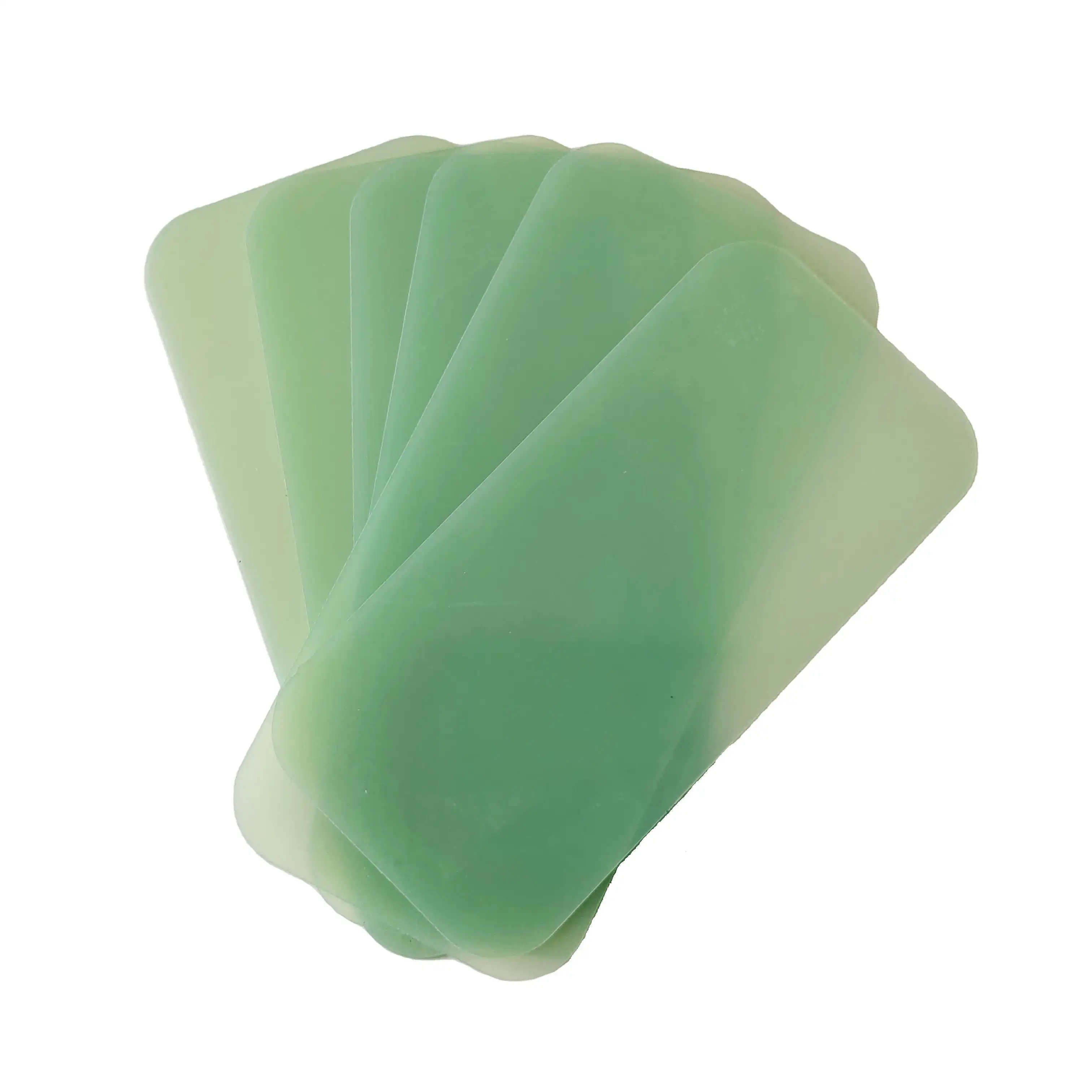
G10 epoxy sheet is made of fiberglass cloth that is stitched together continuously and then heated and pressed to mix with an epoxy resin binding. The tensile strength of this design can reach 40,000 psi, the compression strength can reach 65,000 psi, and the flexural strength can reach 75,000 psi. While the material's highest constant working temperature is about 130°C (266°F), its dimensions stay the same across a wide range of temperatures. Some grades can handle higher temperatures.
Being 1.8 on the specific gravity scale means that the material is relatively light while still being strong. Water absorption rates stay very low—usually less than 0.11% after 24 hours of immersion—which makes G10 epoxy sheets perfect for damp places and even underwater uses where stability is important. Because of these qualities, this material is being used more and more in electrical insulation, mechanical spacers, and precision fixtures.
Primary Machining Challenges
Although the qualities that make G10 epoxy sheet useful also make it very hard to make. The woven glass reinforcement is very rough, and standard tools made for metals or plastics without reinforcements quickly become dull. When you don't choose the right tools, they will break down often and have to be replaced, which drives up costs.
Another problem is that some materials are very fragile. When machined with the wrong parameters, fiberglass epoxy composites can chip, delaminate, and crack along the edges. This is different from ductile materials that can bend before they break. These flaws hurt both the way something looks and how well it works, especially in electrical uses where the consistency of the surface affects the dielectric properties.
Making dust during machining is very bad for your health and the machine itself. As a result of cutting, drilling, and turning, fiberglass particles are released into the air, irritating the lungs. These particles can damage equipment, taint finished goods, and make working conditions dangerous if they are not contained and filtered properly. Class-H vacuum extraction devices and the right personal safety tools are needed for professional fabrication.
During machining, heat buildup can also change the surface finish and accuracy of the dimensions. When temperatures get too high, the epoxy resin matrix breaks, which causes the material to smear and the edges to be poorly finished. Thermal expansion during cutting can make parts that don't fit the specifications when they cool down to room temperature if it's not handled properly.
Essential CNC Equipment Types for G10 Epoxy Sheet Fabrication
CNC Milling Machines for Precision Cutting
CNC milling machines are the most important tools for making precise G10 epoxy sheets. For these tools to work well with composite materials, they need to have a few important features. Rigid machine design reduces vibrations that can lead to surface flaws and chipping. High spindle speeds—usually between 15,000 and 24,000 RPM—allow for cutting speeds that leave clean edges without tearing the material.
Three-axis and multi-axis milling centers can work with a wide range of complicated shapes. The machine bed should have strong clamping choices so that the material doesn't move, which could cause mistakes in the measurements or even breakage. Integrated coolant delivery systems help keep the temperature from rising too high, but many fabricators prefer dry machining with strong dust extraction to avoid problems that come up with water.
Cutting speeds and feed rates can be precisely controlled with servo-driven feed systems. This accuracy is very important when trying to balance the needs for fast production with the needs for long tool life and good surface quality. Programmable acceleration and deceleration keep the material from being hit by sudden forces that could break or chip it when the direction changes.
CNC Router Systems for Complex Profiling
CNC routers are great at cutting G10 epoxy sheets with complicated profiles, stacked part patterns, and through-cutting processes. These machines usually have bigger work areas than milling machines, so they can handle full-size sheets and make good use of the material. The gantry-style design makes it easy to get to the work surface, which makes loading materials and taking parts off even easier.
For composite machining, router systems have strong spindles that can be controlled electronically. Changing tools, either by hand or automatically, increases productivity by getting rid of the need to set up before each operation. The open design makes it easy to add advanced dust collection hoods that catch particles where they start, which is very important for keeping the work area clean when working with fiberglass-reinforced materials.
These days, CNC cutters have vacuum table hold-down systems that keep sheet materials in place without using mechanical clamps that could damage surfaces or block cutting paths. This method works especially well for thin sheets that tend to chatter when they are vibrated. Software that works with CAD/CAM systems lets you use efficient nesting algorithms that get the most out of your materials and waste the least.
Specialized CNC Drilling Equipment
Making exact holes in G10 epoxy sheets is hard, but CNC drilling tools are made to do it. High-speed precision spindles with little runout are used in these machines to keep the holes in the right place and stop tool deflection from making holes that are too big or too long. The control system sets up peck drilling processes that let chips fall off. This keeps the tool from sticking and prevents heat buildup.
Positioning accuracy of the drill—often within ±0.025 mm—makes it work with tight-tolerance applications like PCB mounting holes or alignment features for assembly fixtures. Some systems have multiple separate spindles that let multiple drilling processes happen at the same time. This greatly increases throughput for high-volume output.
Advanced drilling machines have built-in vision systems that check the locations of holes before they are machined and check the quality of holes that have already been machined. This closed-loop method lowers the amount of waste and supports the zero-defect manufacturing ideas that supply chains in the auto and aerospace industries are asking for more and more.
CNC Tooling and Auxiliary Equipment Needed for Optimal G10 Processing
Cutting Tool Selection and Geometry
Carbide equipment is the bare minimum for working with G10 epoxy sheet composites. Solid carbide end mills, drills, and router bits have long enough tool lives for most industrial settings. Diamond-coated cutting tools last a lot longer—often by tens of times or more—which makes up for their higher initial cost by lowering the number of times they need to be replaced and improving the quality of the parts they make.
Tool shape needs to be thought through carefully. Cutting forces are lessened when the rake angle is positive. This lowers the risk of delamination and chipping. Fibers are cut neatly by sharp edges instead of being torn apart. Spiral or spiral flute shapes are good at getting rid of chips and spreading cutting forces out to lower vibration. When you do a through-cut, compression router bits use both upcut and downcut geometries to make clean edges on both the top and bottom surfaces.
Coating methods make things work better. Titanium aluminum nitride and diamond-like carbon layers make tools last longer by reducing friction and heat. When cutting epoxy-rich materials, these coats are especially helpful because resin buildup on the cutting edges can cause a bad surface finish and faster tool wear.
Dust Extraction and Air Filtration Systems
For professional G10 epoxy sheet manufacturing, you need industrial-grade dust collection systems that can catch fiberglass bits as they are being made. Systems need to have enough airflow, which is usually measured in cubic feet per minute, to keep up with the speed of the bits that are thrown by high-speed cutting processes. When collection hoods are placed close to cutting tools, they capture more material while keeping the size and cost of the extraction system as low as possible.
Multistage filtering keeps both people and tools safe. The primary cyclonic separators get rid of the bulk material, which makes the filter less loaded. Fine particles that can hurt your lungs are caught by high-efficiency particulate air filters. Some more advanced systems have mechanisms that clean the filters all the time, so the suction works the same way throughout all shifts.
Getting rid of dust correctly is important for more than just health and safety. Fiberglass dust that settles on machine paths, ballscrews, and linear guides speeds up wear and makes it harder to place things accurately. Finished parts that are contaminated lead to quality problems and customer complaints. Investing in strong extraction systems pays off in the form of lower maintenance costs and more reliable operations.
Cooling and Lubrication Strategies
Many fabricators like to use dry machining and aggressive dust extraction, but cooling strategies can help with some tasks. Mist lubrication systems only send out small amounts of cutting fluid—just enough to cut down on heat and friction without making a slurry of fiberglass bits mixed with liquid coolant. This method takes the best parts of both wet and dry processing: the ability to control temperature and the cleanliness of dry processing.
Another choice is compressed air blast cooling, which uses directed air streams to get rid of heat and chips in the cutting zone. With this method, no liquid is used because it could soak into the cloth or make it harder to catch the dust. Monitoring temperature with infrared sensors or built-in thermocouples lets process changes be made in real time, which keeps sensitive parts from getting damaged by heat.
Which cooling method to use relies on the shape of the part, the thickness of the G10 epoxy sheet, the amount of production, and the quality of the surface finish that is needed. Active cooling works better on thicker materials because they produce more heat during long cutting processes. Thin sheets with a lot of surface area naturally get rid of heat, so dry machining is often fine.
Workflow Integration and Process Optimization with CNC for G10 Epoxy Fabrication
Pre-Machining Preparation and Material Handling
Making something well starts before the first cut. Upon arrival, the G10 epoxy sheet is inspected to make sure that the thickness is uniform, that there are no surface defects, and that the material meets the requirements for certification. Many quality problems can be avoided by rejecting material that doesn't meet specifications before the resources for machining are used up. Conditions of storage are important. To keep fiberglass laminates from breaking, they should be kept flat in climate-controlled areas.
Using the right fixturing and workholding stops the part from moving while it is being machined. For full sheets, vacuum systems work well. For smaller blanks, precision vises and mechanical clamps work well. When through-cutting, putting protective backing boards under the workpieces stops damage from happening at the edges and supports the material to lower vibration. The choice of backing material (often MDF or phenolic) affects both the quality of the part and the life of the tool.
The way the material is oriented in relation to the fiberglass weave pattern can change how well it machines. Cutting across the weave diagonally isn't always better for getting cleaner edges than cutting straight to the fiber bundles. Process engineers can improve both material economy and quality by understanding these connections and nesting parts in the best way possible.
Advanced CNC Programming and Automation
Modern CAD/CAM programs have toolpaths that are designed for composite materials and can be used for cutting G10 epoxy sheets. Based on the properties of the material and the shape of the tool, these programs figure out the right feed rates, spindle speeds, and depth of cut. Simulation tools find possible crashes or bad toolpaths before any material is cut, which cuts down on setup time and waste.
When customer needs change or when moving between material types, parametric programming lets you make quick changes. Common tasks are standardized by macros and subroutines, which makes sure that all operators and shifts can do the same thing. Customization in the post-processor makes machine code that works best with certain CNC controllers and makes the most of all their features.
Automation includes more than just scripting. It also includes adding parts, measuring parts while they are being made, and moving finished parts. Even though it requires a big investment in capital, robotic integration makes lights-out production possible, which makes the best use of all the equipment. Automation, even simple ones like customizable part tapping and automatic tool length measurement, makes things more consistent and makes it easier for operators to do their jobs.
Quality Control and Process Monitoring
During machining, real-time tracking tools keep an eye on important factors. Spindle load tracking finds broken or worn-out tools and changes them automatically before quality goes down. Using touch probes or laser scanning to measure dimensions checks the geometry of a part during production, so problems can be fixed right away instead of being found during final inspection.
Statistical process control methods find patterns before they lead to parts that aren't within limit. Tracking data over multiple production runs shows connections between process parameters and quality results, which helps with efforts to make things better all the time. Digital record-keeping meets the needs of quality systems and gives us the information we need to figure out what went wrong when problems happen.
Using profilometers or optical systems to measure surface finish lets you figure out how good the edges are and how rough the surface is. These objective numbers take the place of subjective eye inspection, which cuts down on customer complaints and makes process improvement possible. Setting clear acceptance standards that are in line with the needs of the end use stops over-processing that wastes time and money without offering anything of value.
Selecting CNC Equipment Suppliers and Considerations for Procurement
Evaluation Criteria for CNC Machinery
When evaluating tools for G10 epoxy sheet processing, machine precision specs should be looked at very carefully. Positioning accuracy, repeatability, and straightness tolerances all have a direct effect on the quality of the part that can be made. Knowing how machine specs relate to part tolerance needs can help you avoid mistakes that cost a lot of money. Rigidity standards, which are often given in terms of machine weight or structural materials, show how well something can keep its accuracy when cutting forces are applied.
Metrics for reliability, such as the average time between failures and uptime statistics from the vendor, help figure out how much operational costs will be. When equipment breaks down, it affects more than just direct production capacity. It also affects how reliably deliveries are made and how happy customers are. Using machines that have been used before in composite cutting settings lowers risk compared to using general-purpose tools for specific tasks.
Infrastructure for service and support is very important. Operational continuity is affected by how close support techs are, how many parts are available, and how long it takes to respond. Suppliers with training programs help operators and maintenance workers get the most out of their equipment. In-house technical teams are helped by detailed paperwork like repair plans and troubleshooting tools.
Supplier Reputation and Industry Experience
CNC manufacturers that have been around for a while and have experience with G10 epoxy sheet machining can help with this application. These providers know the specific problems that come with working with fiberglass-reinforced materials and can suggest the best machine setups, equipment packages, and processing conditions. Reference installations in related industries let you see how well equipment works and talk about real-life experiences.
Certification to the right quality standards shows that the supplier is dedicated to using consistent production methods. ISO 9001 certification is the basic level of quality management. Certifications specific to a field show that the person has more knowledge. You should think about how financially stable your suppliers are. Buying important production tools from companies that are having trouble with their businesses causes long-term support risks.
Customization lets tools be made to fit the needs of a specific output. Suppliers who are ready to change standard machines by adding custom workholding, dust collection ports, or quality checking systems are more valuable than those who only offer machines in a catalog. This ability to adapt is becoming more important as product lines expand and customer needs change.
Total Cost of Ownership Analysis
The price of the equipment is only one part of its total cost for fabricating G10 epoxy sheet components. Total cost of ownership calculations need to take into account how much energy is used, how often it needs to be maintained, how much tools cost, and how much the operator has to pay. Spindle drives that use less energy and machines that are better designed mean that ongoing utility costs are lower. Machines that are easy to maintain and have parts that are easy to get to reduce downtime and expert work.
The price of tools varies a lot depending on the type of material being cut and the machine's capabilities. Tool life is extended by equipment that lets you set the best cutting settings. This lowers the cost of making each part. Being able to work with more than one tool provider keeps you from being locked into one seller and lets you compare prices. Scalability options, like the ability to add axes, improve controls, or make working areas bigger, protect investments in equipment as the needs of the business change.
Cash flow and return on investment estimates are changed by the terms of the loan and the plan for depreciation. Some suppliers offer lease plans or payment plans based on performance that make costs match up with making money. When making choices about what to buy, you should think about taxes, such as depreciation techniques and possible investment credits. Talking to financial advisors before buying equipment makes sure that it fits with the overall goals of the business and doesn't add extra costs.
Conclusion
To successfully make G10 epoxy sheets, you need CNC machines that are designed to work with this high-performance composite material's specific needs. From rigid milling machines with fast spindles to flexible routers that can also remove dust, each type of equipment has a specific job to do in the manufacturing process. Carbide and diamond tools, strong filtering systems, and the best ways to keep things cool protect both the health of the operators and the equipment's life.
Using advanced CAD/CAM programming, real-time quality monitoring, and strategic automation to connect workflows increases productivity while keeping the tight tolerances needed for electrical, automotive, and industrial applications. In addition to basic machine specs, it's helpful to look at the total cost of ownership, the knowledge of the supplier, and the ability to customize the machine when making a purchase choice. By buying the right CNC equipment and other systems that go with it, makers can gain a competitive edge through better quality, more efficient operations, and more manufacturing options for difficult composite material production.
FAQ
What makes CNC machining of G10 different from machining metals?
The fiberglass support in G10 epoxy sheet makes it very rough, so normal metal-cutting tools wear out very quickly. Composite materials are brittle and easily delaminate and chip along the edges, unlike metals that can be bent and formed into chips. The dust that is made has fiberglass particles in it, so it needs special extraction systems instead of just chip conveyors. Because of these big changes, normal metalworking tools don't have the carbide or diamond tooling, higher spindle speeds, changed feed rates, or strong dust collection systems that these machines need.
Can the same CNC equipment machine both G10 and FR4 materials?
Yes, machines that are set up to make G10 epoxy sheets can also handle FR4 because they have similar mechanical properties and cutting qualities. FR4 has flame-retardant bromine additives that G10 does not, but this chemistry difference does not have a big effect on how it is cut or what tools are needed. A lot of current materials are actually dual-rated as G10/FR4, which means they are strong and won't catch fire. Making sure that the equipment can work with both grades of material gives manufacturers more options to meet the needs of a wide range of customers.
What is typical lead time for procuring specialized CNC equipment?
Lead times depend on how complicated the equipment is and how much customization is needed for G10 epoxy sheet fabrication. Standard catalog machines from well-known sellers usually arrive in six to twelve weeks. Lead times may go up to four to six months for custom configurations that need special tools, more angles, or integrated automation systems. Delivery times are affected by the current state of the supply chain, the availability of parts, and the production schedules of manufacturers. Getting providers involved early in the planning stages of a project and keeping them informed about shipping needs helps keep expectations in check and prevents production delays.
Partner with J&Q for Your G10 Epoxy Sheet Requirements
When you work with J&Q, we know that you need both good tools and great materials to solve milling problems. We have been making and selling insulating sheets for more than 20 years and managing international trade partnerships for more than 10 years. The G10 epoxy sheets we offer are engineered to be as easy to machine as possible with a CNC. Consistent thickness tolerances, even resin distribution, and few internal voids are all things that our manufacturing processes make sure of. These are things that have a direct effect on how well your machine works and the quality of the part you end up with.
We keep a large inventory of sheets of different thicknesses and sizes, so we can deliver quickly to meet your production needs. Our in-house logistics business handles everything from placing an order to delivering it. This saves us time and effort by removing the need to coordinate multiple parties. No matter if you need standard sheets or specs that are made just for your purpose, our technical team has the knowledge to meet your needs.
As a well-known company that makes G10 epoxy sheets, we work with companies all over the United States that make electrical parts, tools, parts for cars, and industrial equipment. Email us at info@jhd-material.com right now to talk about the materials you need and find out how our quality, service, and expertise can help your fabrication work. For more technical information, go to blog.jhd-material.com.
References
1. National Electrical Manufacturers Association. (2020). Industrial Laminating Thermosetting Products: NEMA Standards Publication LI 1-1998. Rosslyn: National Electrical Manufacturers Association.
2. Schwartz, M.M. (2018). Composite Materials Handbook: Processing and Fabrication. Materials Park: ASM International.
3. Society of Manufacturing Engineers. (2019). CNC Machining of Composite Materials: Technical Guidelines for Production Engineering. Dearborn: Society of Manufacturing Engineers.
4. Kumar, S. & Singh, R. (2021). Machinability Analysis of Glass Fiber Reinforced Polymer Composites: Tool Wear and Surface Quality. Journal of Manufacturing Processes, 63, 189-201.
5. American Society for Testing and Materials. (2022). ASTM D709-20: Standard Specification for Laminated Thermosetting Materials. West Conshohocken: ASTM International.
6. Teti, R. (2020). Advanced Manufacturing Technologies for Precision Machining of Composite Materials. CIRP Annals - Manufacturing Technology, 69(2), 724-747.

Get a complete product list and quotation

J&Q New Composite Materials Company



