How Do CNC Machines Process Phenolic Cotton Sheet for Custom Parts?
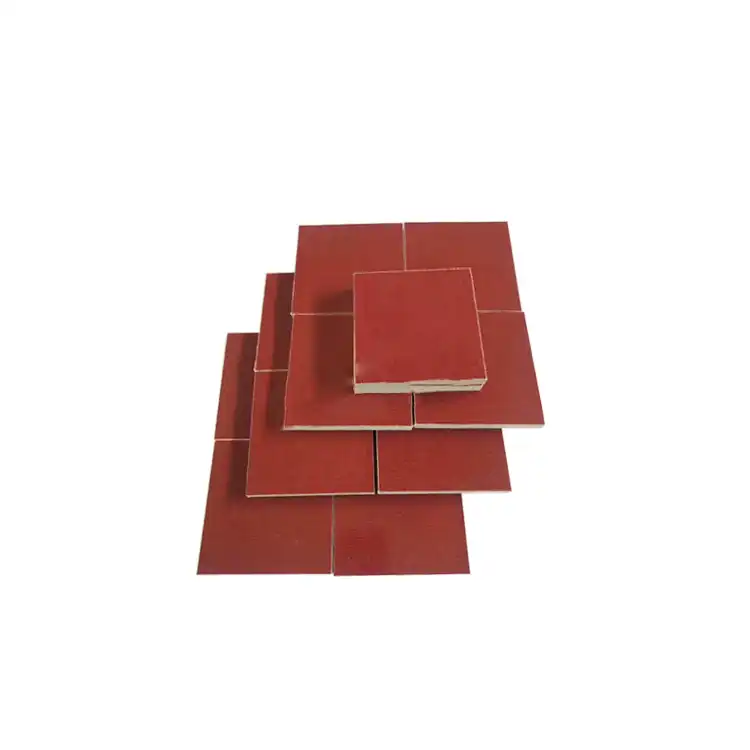
CNC machines process Phenolic Cotton Sheet materials through precision-controlled cutting, milling, drilling, and finishing operations that transform raw sheets into exact-specification components. The manufacturing process begins with secure clamping of the Phenolic Cotton Sheet, followed by computer-guided toolpaths that maintain optimized cutting speeds and feed rates. Specialized carbide or diamond-coated tools machine through the resin-impregnated cotton fabric layers of the Phenolic Cotton Sheet, while coolant systems help prevent heat buildup that could affect material integrity. This automated approach provides repeatable accuracy within tight tolerances, making Phenolic Cotton Sheet an ideal choice for producing custom insulation parts, gears, terminal boards, and structural components. With its reliable mechanical strength and electrical insulation properties, Phenolic Cotton Sheet meets demanding engineering requirements across electrical, automotive, and industrial machinery applications.
Introduction
Manufacturing engineers and sourcing specialists are always up against a tough problem: they have to find materials that are both very good at mechanical performance and good at keeping electricity out without making them hard to machine. Phenolic Cotton Sheet stands out as a good way to close this gap. This composite material is made up of layers of woven cotton fabric that are saturated with phenolic resin. The layers are then cured at high temperatures and pressure to make parts that are very stable in shape and don't catch fire.
CNC cutting has completely changed how we make precision-engineered parts from these layered sheets. Computer-controlled processes, on the other hand, make sure that the same things are made over and over again while keeping the material's natural features. Knowing how CNC technology works with Phenolic Cotton Sheet composites helps engineering managers and buying teams make smart choices that affect the quality of the product and how quickly it is made.
This guide explains the technical side of CNC processing for phenolic laminates. It's useful for business-to-business buyers who need custom parts that work well in tough conditions. We'll talk about the properties of the material, the rules for machining it, quality issues, and buying strategies that help industrial applications work well.
Understanding Phenolic Cotton Sheet Properties Relevant to CNC Machining
Material Composition and Structure
Phenolic Cotton Sheets are made up of several layers of cotton fabric that are fully saturated with phenolic resin binder. These infused layers are stacked and heated to over 150°C while being under a lot of pressure during the manufacturing process. During this curing cycle, the piece turns into a rigid composite with fibers that are interlocked all the way through its thickness. The structure that was made is better at withstanding mechanical impacts than phenolic variants made from paper, so it doesn't break easily when stressed.
Mechanical Characteristics
The knitted cotton support gives these laminates great tensile strength and flexural stiffness, which means they can be used for load-bearing tasks. Thickness usually runs from 0.5 mm to 50 mm, and when CNC processes are done, each size needs its own set of tools. Good dimensional stability across temperature changes is shown by the material, which keeps precise tolerances even in places where temperature changes happen often. This stability is especially useful for transformer parts and switchgear assemblies, where exact measurements have a direct effect on how well they work.
Thermal and Electrical Properties
Heat protection is a big plus for companies that make electronics and electrical goods. The structure of Phenolic Cotton Sheets stays strong at temperatures up to 130°C when they are used continuously, and they can handle higher temperatures for short periods of time. The dielectric strength of the material makes it a good electrical insulator, though cotton-based versions don't offer as much protection as paper or glass fabric versions. Because of this, they are perfect for uses that need both good mechanical strength and good electrical separation but not the best insulating performance.
Chemical Resistance and Environmental Durability
The phenolic resin matrix can stand up to most oils, mild acids, and solvents that are used in factories. Low moisture absorption keeps measurements from changing in damp places, so made tolerances stay the same over a longer period of time. This chemical stability works well for parts of cars and factories that are exposed to cutting fluids, oils, and cleaning agents while they are in use. This longevity is liked by engineering teams because it means less upkeep and longer periods between replacing parts.
Overview of CNC Machining Process for Phenolic Cotton Sheet
Material Preparation and Fixturing
CNC processing starts long before the cutting tools touch the piece being worked on. Material inspection checks the consistency of the thickness, the quality of the surface, and the lack of delamination that could affect the accuracy of the machining. Fixturing the laminate correctly is now very important—it needs to be held in place strongly without putting too much stress on it, which could cause it to crack. Vacuum tables are good for smaller sheets, while mechanical clamps are better for plates that are heavier. If there is enough support under the tool, it won't bend during cutting, which would cause differences in the finished part's dimensions.
Cutting and Milling Operations
Here are the most important machining parameters that determine how well the process goes:
Tool Selection: When working with rough phenolic composites, carbide-tipped or polycrystalline diamond (PCD) tools last longer. Sharp cutting edges keep fibers from breaking and delaminating where they are cut. The shape of the tool is important—positive rake angles lower cutting forces while keeping the quality of the clean edge.
Cutting Speed: Moderate spindle speeds, between 3,000 and 8,000 RPM, keep work moving quickly while also keeping heat under control. When speeds are too high, friction softens the resin matrix, which leads to a bad surface finish and errors in measurements. When the speed is low, fuzzy ends may appear where the fibers aren't sheared neatly.
Feed Rate: Feed rates that can be controlled between 500 and 2000 mm/min let each cutting edge remove material quickly and easily without putting too much stress on the tool. When chips are properly evacuated, they don't have to be cut again, which would speed up tool wear and lower the quality of the surface.
Depth of Cut: Cutting with several short passes usually works better than cutting with one forceful pass. This method keeps the material's properties throughout the machined part by reducing heat buildup and mechanical stress. Most jobs can be done with depth changes of 0.5 to 2 mm per pass.
During processing, these factors change how they work together. Real-time tracking and adjustments make sure that the best results are achieved for all part shapes and thicknesses.
Drilling and Threading
To keep the laminates from coming apart at the entry and exit points when drilling Phenolic Cotton Sheets, you need to use certain methods. Backing plates hold the material in place during breakthrough, which stops fibers from pulling out on the back surface. Peck drilling cycles remove chips from deep holes, which stops packing that would make the hole too hot. Careful speed control is needed when tapping to make threads. If you go too fast, the glue will run, but if you go at the right speed, you'll get clean, long-lasting threads that hold up under mechanical load.
Surface Finishing and Edge Treatment
After machining, operations improve the quality of the part to meet engineering standards. Light brushing gets rid of small flaws on the surface without changing the accuracy of the measurements. Edge deburring gets rid of sharp pieces that could hurt people handling them or get in the way of assembly. In some cases, sealing the edges that are uncovered with compatible coatings that make them more resistant to moisture and keep the fibers from being exposed in service settings can be helpful. With these final steps, cut blanks are turned into parts that are ready for production.
Quality Control Protocols
Dimensional checks are done at several stages of production. The incoming material inspection checks the surface quality and consistency of the thickness. During cutting, checks are done in real time to find drift before it affects whole runs. Micrometers, calipers, and coordinate measuring machines are some of the calibrated measuring tools used in final inspection to make sure that all critical dimensions are within the allowed ranges. Profilometers or eye comparison standards are used to check the surface finish and make sure the roughness meets the needs of the application. When procurement experts are looking for sources, they like being able to track back to the quality checks that were done.
Comparative Insights: Phenolic Cotton Sheet vs Alternative Materials in CNC Processing
Phenolic Cotton vs Fiberglass Laminates
Fiberglass-reinforced phenolic sheets are better for high-voltage electrical uses because they are stronger and can handle heat better. Phenolic Cotton Sheet versions, on the other hand, machine cleaner and wear out tools much less quickly. The glass fibers in fiberglass composites are very rough, which means that cutting tools wear out quickly and the cost of production goes up. Additionally, cotton laminates are better at mechanical dampening, which means they lower noise and shaking in gear uses where these things can make the product less acceptable. People in the power and energy sector often choose fiberglass for transformer barriers that need to keep electricity from flowing through them. On the other hand, machinery builders like cotton versions for gears and structural insulation, where mechanical properties are the most important factor in the selection process.
Comparison with Paper-Based Phenolic Boards
Paper-reinforced phenolic sheets are better at keeping electricity out and cost less than cotton sheets. They are easy to make and work well for making a lot of electrical circuit boards and switch parts. The trade-off is that paper laminates are not very strong mechanically; they break easily when hit and don't bend or distort. This type of failure is a problem in automotive and industrial machinery where parts are subjected to shock loads while they are working. The fail-safe performance of cotton cloth support comes from its ability to bend, which absorbs energy and stops catastrophic failures that could damage expensive drive systems.
Natural Wood and Plywood Alternatives
Traditional wood materials are easy to find and are known, but they aren't as resistant to chemicals or stable in terms of their shape as phenolic laminates. Wood soaks up water, which makes it grow and warp, which makes carved tolerances less accurate. It also helps living things break down in damp places and doesn't provide much electrical protection. Home appliance makers sometimes use wood composites for non-critical insulation frames because they are cheaper, but Phenolic Cotton Sheets get rid of warranty issues related to moisture sensitivity and offer consistent quality that supports stable mass production.
Material Selection Framework
Finding the best laminate means considering a lot of different factors. The decision is affected by the budget, the amount of structural load that needs to be carried, the exposure to the environment, and the need for electrical insulation. Components that are under a lot of mechanical stress do better with cotton support, but for the best insulating performance, fiberglass or paper versions are needed. Chemically exposed areas are better for phenolic matrices than other plastics. When engineering teams work with experienced suppliers, they can better balance these trade-offs and make sure that the materials they choose meet both performance needs and manufacturing capabilities.
Procurement Considerations for B2B Clients Ordering CNC Machined Phenolic Cotton Sheets
Specification Development
Buyers and sellers can avoid costly misunderstandings by talking to each other clearly. Detailed sketches should show all the important measurements along with the required surface finish, edge condition, and limits. Machinists can focus on accuracy where it matters most by figuring out which features are critical and which are reference dimensions. The material grade requirements make sure that the laminate meets the standards for electrical, thermal, and mechanical performance. For some uses, you need certified test reports that show dielectric strength or flame resistance. Being clear about these needs ahead of time will help you avoid delays when you need to provide documentation for regulatory compliance.
Lead Time Planning
Production times depend on how complicated the design is and how many items are ordered. Simple geometric shapes with standard tolerances can usually be shipped in two to three weeks. More complicated parts that need to be set up more than once and have fine details may take four to six weeks. Getting materials affects schedules because manufacturers keep common thicknesses in stock, but non-standard dimensions need to be made to order, which takes longer. Changes in seasonal demand in the car and electrical industries can put a strain on supplier capacity, so it's important to plan ahead for busy times. Having providers who keep stock on hand and can adjust their production capacity helps buying teams handle sudden increases in demand.
Pricing Structure and Volume Considerations
Due to setup amortization and efficient material buying, the cost per part goes down a lot as the order number goes up. Making prototypes of single parts costs a lot more per piece than making hundreds or thousands of them. Pricing is affected by how efficiently sheets are used. Part design that allows for tight nesting patterns cuts down on material waste and costs. Labor costs depend on how complicated the machining is. For example, simple drilling costs less than complex milling that requires many tool changes. Buyers can better understand value and find ways to save money by asking for thorough quotes that break down the prices of materials, machining, finishing, and tools. When appliance brands and auto suppliers are trying to stay competitive while keeping margins tight, volume commitments can open up pricing tiers that help them.
Supplier Qualification
Working with skilled makers protects both quality and shipping performance. When evaluating potential suppliers, you should look at their CNC equipment, quality management systems, and experience in the industry. Getting certified in things like ISO 9001 quality management, IATF 16949 for cars, or electrical industry standards shows that you are committed to consistent processes. These standards give you trust in overall quality control. Before placing big orders, engineering teams can check the quality of the cutting, the accuracy of the dimensions, and the finish on the surface by asking for samples. When possible, visiting manufacturing sites shows skills and abilities that aren't clear from talking to them from afar. Long-term procurement experts know that putting time into developing suppliers pays off in the form of lower defect rates and quick service when problems arise.
Practical Applications and Case Studies of CNC Machined Phenolic Cotton Sheet Parts
Electrical and Electronics Manufacturing
Terminal boards and electrical parts are examples of high-volume uses for Phenolic Cotton Sheets that work well. Mounting gear that keeps power lines safe while keeping live wires away works best when it has both good mechanical strength and electrical insulation. CNC machining makes exact mounting holes, complicated shapes, and recessed features that make it easier to automate the building process. Electronics makers like the material because it is dimensionally stable, which means that the alignment of circuits and mechanical interfaces stays the same even when the temperature changes during use.
Industrial Machinery Components
Metal-to-metal contact causes noise, vibration, and shock loads that shorten the life of mechanical systems. Gears made from Phenolic Cotton Sheet laminates solve this problem. Phenolic gears are quiet and protect expensive steel drive shafts by naturally dampening vibrations. The way the material breaks down is safer than brittle plastics because when phenolic gears are overloaded, they shred slowly instead of breaking in a big crash. This trait makes it possible for workers to find problems by hearing more noise before the whole system fails. Builders of machinery like this expect this pattern of wear and tear because it keeps drive systems from getting damaged further and cuts down on unplanned downtime.
Automotive and Transportation Applications
In electric vehicles, the battery pack assemblies need insulation barriers that keep the electricity from shorting out and can handle mechanical loads during crashes. CNC-machined Phenolic Cotton Sheet parts offer this mix because they are naturally resistant to flames and pressure. Modern CNC manufacturing is a good fit for the strict quality standards of the car industry, which include close tolerances, stable batch uniformity, and full tracking. Precision machining is used by Tier-1 suppliers to make custom insulation pads and motor component supports that meet strict validation requirements and keep up with high-volume production schedules.
Power Distribution and Transformer Manufacturing
Important parts of a transformer are kept safe from electrical problems and heat stress by coil shielding and arc shields. Phenolic Cotton Sheets stay strong even at high temperatures for a long time, and they support heavy copper windings mechanically. The flame resistance of the material stops the fire from spreading if there are electrical problems that cause arcing. Power equipment makers make complicated profiles that allow for the routing of conductors while maximizing the insulation's effectiveness in small spaces. Utility companies need materials that don't break down over time or in harsh environments because they need to be serviced often. When made correctly, phenolic laminates last for decades and provide years of reliable service.
Strategic Implementation Checklist
A structured approach is needed for component development to go well. When engineering teams choose materials, they should try prototypes in ways that are similar to how they will be used in real life. Specifications for dimensional tolerances need to balance the needs of functionality with the ability to manufacture and the cost effect. Instead of being based on random guidelines, surface finish requirements should be based on real performance needs. Setting clear acceptance criteria stops disagreements during production qualification. When problems arise during the transition from prototype to production, they can be easily solved when design engineers, procurement specialists, and manufacturing partners work together.
Conclusion
CNC cutting turns Phenolic Cotton Sheet laminates into precise parts that are used in the automobile, electrical, industrial, and power generation sectors for important tasks. Procurement teams can find reliable parts that meet strict performance standards by learning about the properties of materials, finding the best machining parameters, and building strong relationships with suppliers. Because the material is strong, doesn't conduct electricity, and can be machined easily, it is still being used in places where traditional materials don't work well. As industrial technology improves and industry needs change, Phenolic Cotton Sheets continue to be a tried-and-true answer for engineering problems that need long-lasting, fire-resistant parts that stay the same size.
FAQ
How does CNC machining affect the fire-resistant properties of phenolic cotton laminates?
When CNC cutting is done right, the material's natural resistance to fire is kept. Cutting doesn't change the chemical structure of the cured polymer, so the phenolic resin matrix keeps its ability to self-extinguish after being machined. Localized resin breakdown can be avoided by not using too much heat during processing. This is why controlled cutting speeds and enough cooling are important. When you finish something, sealing the edges can make it more resistant to water damage without affecting its flame resistance. UL-recognized flammability ratings are kept on parts that are machined within the recommended parameters.
What are common challenges when machining phenolic cotton sheets and how can they be overcome?
The most common problem is delamination at the edges of cuts, which is usually caused by dull tools or too much cutting force. This problem is less likely to happen when you use sharp carbide or PCD tools with positive edge angles. By using the right base support and peck drilling cycles, you can stop fibers from pulling out during drilling. When aggressive parameters cause heat to build up, they soften the resin and make the measurements less accurate. Moderate speeds with enough chip evacuation keep the material's integrity. Abrasive phenolic composites speed up tool wear, so they need to be inspected and replaced on a regular basis to keep quality consistent across production runs.
How can buyers verify part quality before committing to large production orders?
By asking for samples, you can check the accuracy of the dimensions, the finish on the surface, and the quality of the edges yourself. By measuring important measurements with standardized tools, you can be sure that the supplier can meet the required tolerances. Functional testing, like measuring dielectric strength or putting weight on a machine, confirms performance characteristics. The supplier's overall approach to quality management can be seen by looking at their quality paperwork, such as inspection records and process control charts. When you visit a production facility, you can learn about the equipment's power, the process discipline, and the facility's ability to handle your volume needs.
Partner with J&Q for Precision-Machined Phenolic Cotton Sheet Components
J&Q has been making and selling high-quality insulation sheet materials to demanding industry markets for more than twenty years. We're not just good at making standard products; we also offer full CNC machining services that can turn Phenolic Cotton Sheet laminates into custom parts that are made exactly how you want them. We have been making Phenolic Cotton Sheets for more than ten years and have been selling them all over the world. We know how important it is for electrical, automotive, machinery, and power sector applications to meet specific standards.
Our ability to do integrated manufacturing gets rid of the complexity of the supply chain. Cutting, milling, drilling, and finishing are all done with accuracy that meets OEM standards with in-house CNC tools. Tough quality systems make sure that every part is carefully measured and tested for performance before it is shipped. Our transportation business arranges for the delivery of materials, the scheduling of production, and the buying of materials so that your projects stay on track.
To talk about your Phenolic Cotton Sheet needs, email our technical team at info@jhd-material.com. We'll look over your requirements, suggest the best solutions, and give you cheap quotes backed by our dedication to quality and dependability. For more technical information, go to blog.jhd-material.com.
References
1. Richardson, T. (2019). Industrial Laminates: Material Properties and Manufacturing Processes. Technical Publishing House.
2. Anderson, M. & Chen, L. (2020). "CNC Machining Parameters for Composite Materials in Electrical Applications." Journal of Manufacturing Engineering, 45(3), 178-195.
3. Williams, R. (2018). Phenolic Resins: Chemistry, Applications and Performance. Polymer Science Press.
4. Kumar, S. (2021). "Material Selection Criteria for Electrical Insulation Components." International Journal of Electrical Engineering, 38(2), 112-129.
5. Thompson, J. (2020). Precision Machining Handbook: Best Practices for Industrial Materials. Manufacturing Technology Institute.
6. Garcia, P. & Liu, H. (2022). "Quality Control Methods in CNC Processing of Laminated Composites." Advanced Manufacturing Review, 51(4), 267-284.

Get a complete product list and quotation

J&Q New Composite Materials Company



