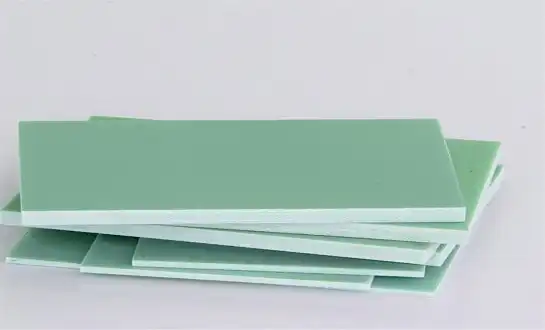
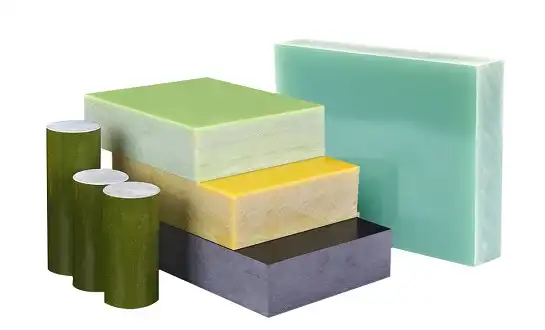
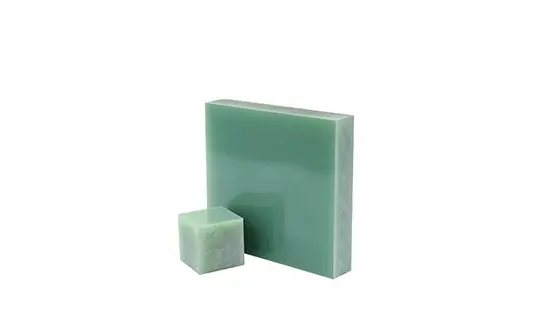
How Do Manufacturers Inspect 3240 Epoxy Sheet Dimensional Accuracy?
Manufacturers inspect 3240 epoxy sheet dimensional accuracy through a combination of manual measurement tools and advanced instrumentation. Calibrated micrometers verify thickness tolerances (typically ±0.1mm to ±0.4mm depending on sheet thickness), while laser scanning systems and coordinate measuring machines provide three-dimensional precision data. Visual inspection confirms surface integrity, checking for bubbles, warping, and edge delamination. Inline monitoring systems integrated into production lines enable real-time quality verification, ensuring each batch meets stringent industry standards before shipment to electrical and electronics manufacturers.
When your PCB assembly line experiences unexpected failures due to insulation material misalignment, the root cause often traces back to dimensional inconsistencies in laminate materials. Having worked with engineering managers and procurement specialists across the electrical insulation sector, we've observed how dimensional precision directly impacts production efficiency, product reliability, and ultimately, your bottom line.
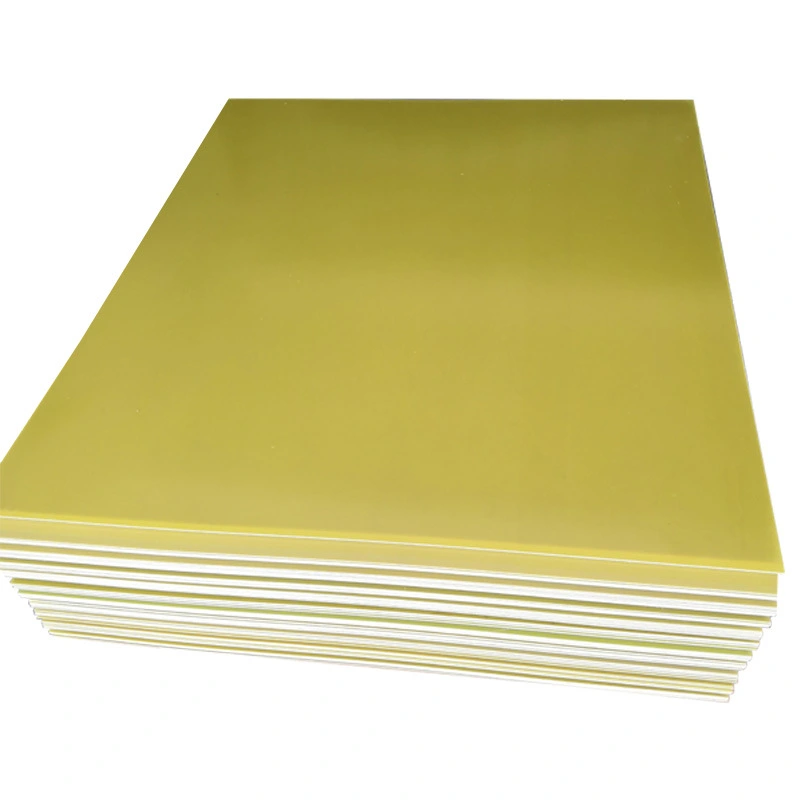
Understanding Dimensional Accuracy in 3240 Epoxy Sheets
What Dimensional Accuracy Really Means
Dimensional accuracy is how closely a made sheet matches the values that were given for a number of different factors. The most important dimension is thickness, since changes in this measurement can affect the performance of electrical protection and the way parts fit together mechanically. When you're cutting sheets to exact sizes for circuit parts or transformer barriers, both length and width measurements are important. How flat a sheet is determines whether it will bend during CNC machining or leave gaps in products that have been put together.
The composition of the material has a big effect on how stable its dimensions are. When alkali-free glass fibre cloth is mixed with epoxy glue, a hybrid structure is made that can adapt to its surroundings. Changes in temperature during production or storage can cause microscopic objects to grow or shrink. Measurements of thickness are affected by humidity absorption, especially in sheets that haven't been properly dried. Because of these things about the material, reputable suppliers put a lot of money into controlled manufacturing environments.
Industry Standards Governing Tolerances
International standards set the limits for what kinds of differences in dimensions are acceptable. GB/T 1303.1-2009 is the same as IEC standards and sets error ranges that make manufacturing possible while still meeting application needs. Class B temperature grade (continuous running at 155°C) calls for dimensions to stay the same over thermal cycles. Standards list not only the nominal dimensions, but also the allowed deviations, criteria for surface quality, and ways to test.
Following these standards gives buying teams clear criteria to use when judging the skills of suppliers. UL and ROHS approvals show that a company is dedicated to maintaining high quality standards. ASTM standards set out testing protocols that make sure that results can be repeated at different inspection facilities. Standardised tolerance standards make it easy for engineering managers to compare different suppliers when they look at technical datasheets. This makes procurement choices less uncertain.
Properties Affecting Dimensional Stability
How sheets act in real life depends on their thermal traits. Changes in size across temperature ranges seen in electrical uses are based on the rate of thermal expansion. Heat resistance makes sure that sheets stay together while being soldered or when they are exposed to high temperatures for a long time in motor parts. Not curing properly during production causes internal stresses that show up as warping weeks after production.
The ability to keep its shape under load is directly related to its mechanical strength. When sheets are used as structural spacers in machinery systems, they don't lose width because they are resistant to compression. The tensile strength keeps the length and width stable while it is being moved and put in place. When sheets come into contact with cleaning agents or process fluids, chemical resistance keeps the measurements from breaking down. Knowing how these traits affect each other helps buying professionals figure out which dimensions are most important for different uses.
Common Challenges in Maintaining Dimensional Accuracy
Raw Material Variability Issues
Inconsistencies start with the materials that come in. The weave density and strand diameter of glass fibre cloth change from batch to batch, which changes the end thickness even when the manufacturing method stays the same. Different types of epoxy resin may have slightly different viscosities or filler contents, which can change how the material flows during impregnation. For example, when producing a 3240 epoxy sheet, variations in resin formulation and reinforcement materials can directly affect the final thickness, dimensional stability, and overall performance. If the mixing amounts aren't carefully managed, phenolic additives that make materials more resistant to heat can cause changes in size.
Suppliers who don't carefully check incoming materials let these differences spread through production. We've seen sheets from the same maker have thickness differences of up to 0.3 mm between production runs. This is big enough to make it hard to put together precision electrical housings. Manufacturers can find and separate problematic batches before they reach customers with the help of material traceability systems, but putting them into action requires a big investment in quality systems.
Manufacturing Process Variables
Temperature and length of curing have a direct effect on the results in terms of dimensions. If there isn't enough heat, the glue doesn't fully polymerise, and the sheets can lose their shape. Too much heat can break down materials and make the surface blister. When hot pressing, the pressure needs to be carefully managed. If there isn't enough pressure, the thickness of the sheet will vary across the area, and if there is too much pressure, the material will flow and change the length and width measurements.
A lot more people than they think think that the environment during production is important. During impregnation, the level of humidity changes how thick the resin is. Different cure rates happen in different manufacturing sites because of differences in temperature. Manufacturers who don't have climate-controlled production areas have seen yearly changes in sheet sizes—sheets made in the summer measuring differently than sheets made in the winter, even though the process factors were the same.
Post-Production Handling Effects
Dimensional perfection that was achieved during production can be lost if the product is not stored or transported properly. When sheets are kept upright, they may sag over time, which can cause flatness deviations. When exposed to water, dimensions swell, especially along the edges where the ends of the glass fibres soak up the water. Changing temperatures during shipping put stress on the point where the material meets the glue, which could lead to internal delamination that shows up as changes in thickness.
How you handle materials has a direct effect on the quality and squareness of the edges. Cutting by hand without the right fixtures can lead to mistakes in perpendicularity. When sheets are stacked without protected layers between them, surface depressions can form that show up as differences in thickness when the sheets are inspected. When procurement teams get properly manufactured materials that fail incoming inspection because of problems in the distribution chain, it's frustrating because the variations are caused by handling.
Modern Techniques Used by Manufacturers to Inspect Dimensional Accuracy
Manual and Visual Inspection Methods
Traditional ways of measuring are still useful, especially for quick checks and confirmations during production. Micrometres that have been calibrated can measure width to within 0.01 mm, which is exact enough for many uses. Vernier callipers are a quick and accurate way to measure length and width. Steel straightedges and feeler gauges check how flat the surfaces of sheets are. These tools give operators immediate feedback on the production floor, so they can find problems before they cause a lot of material waste.
Visual analysis of a 3240 epoxy sheet finds surface flaws that affect the consistency of the dimensions. Bubbles show that the resin hasn't fully soaked in yet, which causes differences in thickness in certain areas. Handling damage is shown by scratches and edge delamination. Optical comparators make small differences in dimensions easier to see by magnifying edges and surfaces. Inspectors with a lot of experience learn to be sensitive to touch and can find bending through careful handling that machines might miss. Even though they take a lot of work, manual methods give you more information about the situation than automated measurements.
Advanced Non-Contact Measurement Systems
Laser scanning technology changed the way dimensions are checked by making it possible to quickly and without touching the sheet surfaces be measured. Laser line readers make three-dimensional profiles that show how the sheet's width changes in different places. Patterns that can't be seen with point measurements are shown by this data: edges getting thinner, centers getting bigger, or diagonals warping. When manufacturers use laser systems, they find problems with the way their processes work more quickly, which cuts down on waste and improves accuracy.
Coordinate measuring machines are the most accurate way to check the sizes of things. CMM systems use positioning probes to measure with sub-micron accuracy and record measurements in a number of predetermined spots. Programmable checking processes make sure that the same thing happens with each batch. Statistical process control software looks at CMM data to find patterns before the measurements go beyond what is allowed. Even though it costs a lot of money, CMM technology pays for itself by lowering the number of returns and improving the industry's image for accuracy.
Inline Real-Time Quality Monitoring
Continuous measurement tools are being added to more and more modern production lines to check each sheet as it is being made. At the press exits, thickness scales measure the material before it is cut, which lets the process be changed right away. Vision systems take pictures of the surfaces of sheets and automatically mark any flaws that need to be looked over by hand. These inline systems create streams of data that are fed into statistical process control algorithms. This lets them know about dimensional drift early on.
Real-time monitoring has benefits that go beyond finding problems. Process capability data shows potential customers how consistent the manufacturing process is while the provider is being qualified. Traceability systems connect readings of sizes to specific production batches. This lets you quickly find the root cause of problems in the field. Within six months, we put in place inline systems that cut dimensional variation by 40% just by giving operators immediate feedback that sampling by hand couldn't provide.
Best Practices for Ensuring Consistent Dimensional Accuracy
Supplier Selection and Material Control
Choosing suppliers who are committed to quality systems is the first step toward dimensional consistency. ISO certification means that written methods for process control have been put in place, but proof needs a more in-depth look. Ask for studies on the capability of the process that show how key aspects change statistically over long output periods. Visits to the supplier's site show if the environmental controls and measuring tools are as good as they say they are.
Procedures for qualifying raw materials separate reliable suppliers from sources that don't always deliver what's promised. Well-known companies check new batches of glass cloth and plastic against specs before using them in production. Material certificates show where parts came from and who made them, which lets you do return processes if there are problems with the dimensions. We've formed partnerships with resin suppliers who make mixtures that meet our exact standards for dimensional stability, especially for applications involving 3240 epoxy sheet production. This gives us a level of uniformity that we couldn't get by buying generic products.
Process Control and Environmental Management
Controlling temperature and humidity during production and storage has a direct effect on the dimensions that are produced. Climate-controlled production facilities keep the curing conditions the same no matter what the weather is like outside. Dedicated drying ovens with temperature control across multiple zones make sure that the heat is spread evenly across the sheet area. Time-temperature profiles are saved by automated process monitoring systems for each batch. This information is useful for troubleshooting and customer confirmation.
The factors for curing need to be optimised through planned experiments. If you don't cure it long enough, the glue stays unreacted, which lets the dimensions change later. If you cure something for too long, the mechanical qualities will decrease, and internal forces can cause the material to warp. We've made our own cure plans that are tailored to different thickness ranges because we know that the time it takes for heat to penetrate a material depends on its mass. These optimised factors lower the difference in dimensions while keeping the mechanical and electrical performance the same.
Customization Capabilities and Flexibility
Customers can get the best specifications for their needs when you offer dimensional customisation. Different insulation needs can be met by thicknesses ranging from 0.5 mm to 50 mm. Customers waste less material and have to do fewer steps when they get custom length and width cutting. Tight tolerance choices, like 0.05 mm thickness control for precise uses, set suppliers in demanding markets like aircraft and medical products apart.
Flexibility includes more than just changing the size. It also includes changing the material in ways that make the size more stable for certain uses. Better methods for thermal stabilisation lower changes in size over a wider range of working temperatures. Surface processes make things flatter and easier to work with. Customisation options like these need manufacturing know-how and the willingness to change standard processes, but they build strong customer relationships by solving problems that are unique to each application that commodity suppliers don't bother to address.
How to Choose and Procure 3240 Epoxy Sheets with Guaranteed Dimensional Accuracy
Evaluating Supplier Testing Capabilities
To find trusted suppliers, you need to look at their quality paperwork and measurement methods. Ask for dimensional inspection records that show real readings from recent production runs, not just the limits that are allowed by the specification. Statistical information showing process capability indices (Cpk values) shows if the provider regularly works well within tolerances or often gets close to the standard limits. Calibration papers for measuring tools show that they can be tracked back to national standards.
Different applications have different certification requirements, but some credentials show that a quality system is complete. UL recognition shows that a product has been tested for electrical safety parameters, such as how stable its dimensions are when heated up and down. For materials like 3240 epoxy sheet, ISO quality management certification makes sure that procedures for controlling dimensions are written down. Manufacturers that work with the car industry often have IATF licenses that require advanced quality planning and failure mode analysis. These are fields that improve dimensional consistency for uses other than autos.
Material Comparison and Selection Criteria
Knowing about different materials helps you make the best choices. The electrical qualities of FR4 sheets are similar, but their mechanical properties and structural stability are not. G10 laminates work about the same, but they cost different amounts. Phenolic cotton sheets are used in places where electrical needs allow for cheaper options. Different materials react differently to temperature and moisture, which can change how stable their dimensions are in certain working conditions.
When comparing materials, you have to look at a lot of performance factors at the same time. The strength of the electrical insulation, the mechanical load capacity, the thermal resistance, and the stability of the dimensions must all meet the needs of the application. It's possible that a slightly thicker sheet that stays flat in its shape will work better than one that is the right thickness but tends to twist. We help our customers figure out these trade-offs by giving them comparison data and application-specific advice based on our decades of experience in a wide range of fields.
Procurement Strategy and Bulk Ordering
Strategic buying strikes a mix between cutting costs and making sure quality. Bulk buying usually lowers unit costs, but you have to be sure that the seller will be consistent. Before making big promises, trying samples lowers the risk. Ask for samples from several production batches to see how the sizes change over time. Set clear acceptance standards in buy orders by describing acceptable dimensional ranges, checking methods, and required paperwork. There won't be any disagreements because of these details in the contract. Both sides will know what to expect.
Lead time management has a bigger effect on dimensional quality than most people think. When makers are under a lot of time pressure, they have to shorten curing processes or skip environmental stabilisation periods. This increases the risk of dimensional differences. Suppliers can keep up with normal quality procedures when they plan their procurement schedules to allow enough production time. The framework deals with our most important customers; it lets us predict their demand, which helps us plan production in a way that maximises both quality and cost. The results of this joint method are better than those of transactional spot buying.
Conclusion
The accuracy of the dimensions in epoxy laminate sheets, including 3240 epoxy sheet, is a key quality factor that affects how well the product works in electrical, industrial, and automotive settings. Manufacturers use a wide range of sophisticated inspection methods, from simple hand measurements to high-tech laser scanning and coordinate measuring systems. Managing the variations in raw materials, improving manufacturing processes, and putting in place weather controls during production and storage are all things that are needed for consistent measurement control. To be successful in procurement, you need to choose suppliers who have shown they can measure things, have the right certifications, and are committed to improving quality all the time. When engineering managers and procurement specialists understand these dimensional control principles, they can make smart decisions about where to buy things that improve product reliability while keeping costs low.
FAQ
What Are Typical Tolerance Ranges for Thickness?
Standard thickness limits change based on the stated sizes. Sheets thinner than 3mm usually have a tolerance of ±0.1mm to ±0.2mm, while thicker materials from 3mm to 10mm can vary by ±0.2mm to ±0.3mm. Sheets thicker than 10 mm may need a limit of ±0.4 mm because it is hard to keep heat from getting through during hardening. These ranges are the norms in the industry, but for a higher price, precision applications can ask for tighter tolerances. When choosing a tolerance, you should think about both the needs of the application and the costs involved. For example, specifying too tight a tolerance will raise the cost of the material without improving its function.
How Does Dimensional Precision Affect Electrical Insulation Properties?
Changes in thickness have a direct effect on the dielectric strength and breakdown voltage. In places that are thinner, electrical stress builds up, which is where insulation failure starts. Surface flaws catch air pockets that make shielding less effective. When structures warp, gaps appear that let partial discharge paths through. Keeping the dimensions correct guarantees consistent electrical performance that matches the design figures and safety gaps.
What Inspection Frequency Ensures Production Quality?
Every production batch that comes in should be inspected for incoming materials. Thickness should be measured in several places, and the quality of the surface should be checked. The frequency of in-process inspections varies on the amount of work being done and how stable the process is. For example, established processes may need sampling every hour, while new goods need to be watched all the time until they can be shown to be capable. We suggest that clients ask for inspection reports that cover the exact production run that supplied their order. This way, they can be tracked and make sure that the dimensions are correct.
Partner with J&Q for Precision-Engineered Epoxy Laminate Solutions
J&Q is a reliable company that has been making 3240 epoxy sheets for over 20 years and has been doing business internationally for 10 years. Our factory has quality management systems that are ISO-certified. They use advanced laser measurement technology and coordinate measuring machines to make sure that the measurements are accurate enough to meet the strictest tolerances needed by companies that make electrical equipment and industrial machinery. We keep our production and storage areas climate-controlled so that changes in temperature and humidity don't affect the sizes of the items we store.
Our complete service goes beyond just making great products. Our in-house logistics services make it easy to buy everything you need in one place, coordinating factory-direct shipping to your facility with reliable lead times. Technical support teams help you choose the right materials by giving you full specification sheets and test results for samples to use in your engineering approval processes. Custom thickness choices from 0.5mm to 50mm can be used for a wide range of applications, and expert cutting services will cut down on the number of steps you need to take and the amount of material you waste.
Get in touch with us at info@jhd-material.com to talk about your needs for measurement accuracy. We offer free sample evaluations, thorough inspection reports, and cheap quotes that are made to fit your business needs. Our application engineering skills make sure you get materials that are best for your needs, whether you're looking for materials for transformer insulation, PCB boards, or mechanical spacers. Find out how working with a seller with a lot of knowledge can help you get the consistent dimensions that your quality standards require.
References
1. International Electrotechnical Commission. (2018). Specification for Industrial Rigid Laminated Sheets Based on Thermosetting Resins for Electrical Purposes. IEC 61212 Series Standards.
2. Zhang, W., & Chen, L. (2020). Dimensional Stability of Epoxy-Glass Fiber Composites Under Thermal Cycling. Journal of Composite Materials, 54(12), 1637-1649.
3. American Society for Testing and Materials. (2019). Standard Test Methods for Thickness of Resilient Floor Covering and Underlayment. ASTM D5199-12.
4. Patel, R. M. (2021). Quality Control Practices in Laminated Insulation Manufacturing. Industrial Materials & Processing Quarterly, 33(4), 78-92.
5. National Institute of Standards and Technology. (2017). Dimensional Metrology for Advanced Manufacturing: Measurement Uncertainty and Traceability. NIST Special Publication 1234.
6. Kumar, S., & Anderson, T. J. (2022). Non-Destructive Testing Methods for Composite Insulation Materials in Electrical Applications. IEEE Transactions on Dielectrics and Electrical Insulation, 29(2), 445-453.

Get a complete product list and quotation

J&Q New Composite Materials Company