What CNC Equipment Is Used for 94V0 FR4 Sheet Insulation Parts?
When manufacturing insulation components for electrical systems, switchgear assemblies, or precision PCB substrates, selecting the right CNC equipment determines both quality outcomes and production efficiency. 94V0 FR4 Fiberglass Sheet stands out as a premier material choice due to its exceptional flame-retardant properties, electrical insulation capabilities, and mechanical durability. To produce reliable insulation parts from this material, manufacturers utilize specialized CNC routers, precision milling machines, and sometimes laser systems—each designed to handle the abrasive fiberglass content while maintaining dimensional accuracy and the material's critical UL 94 V-0 safety rating throughout the machining process.
Understanding 94V0 FR4 Fiberglass Sheet and Its Machining Challenges
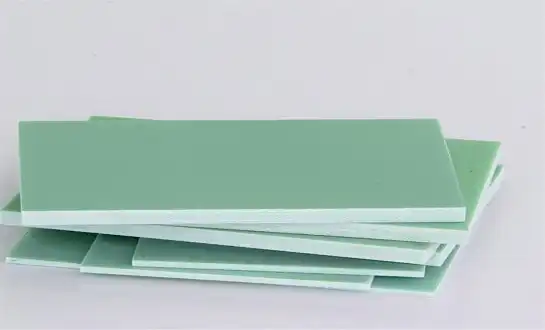
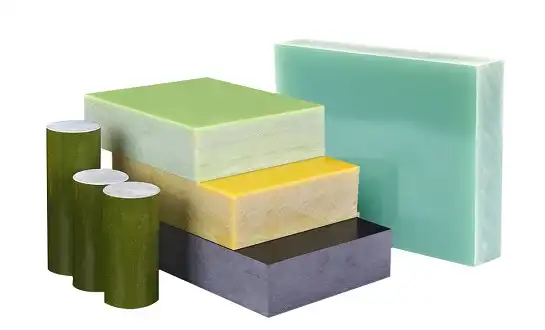
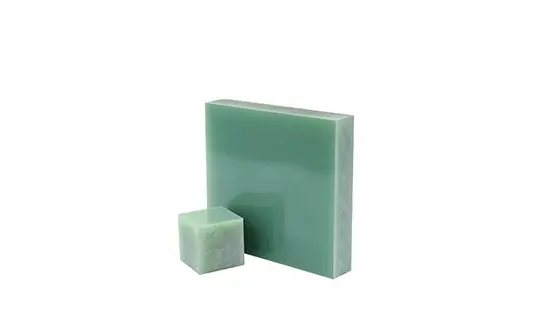
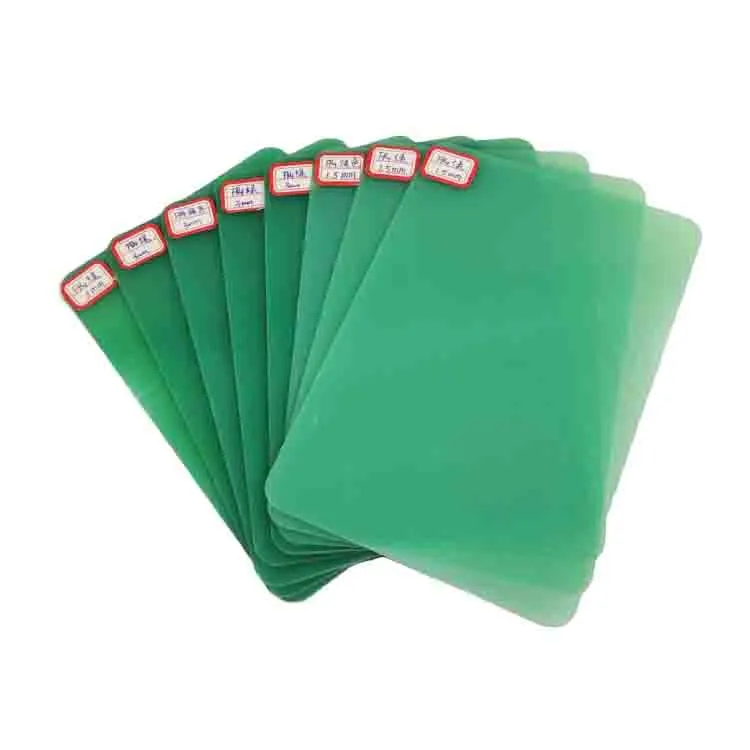
The FR4 grade is made of woven fiberglass cloth that is saturated with brominated epoxy resin. It is designed to meet the best UL 94 rating for vertical burns. This substance has a density of 1.85 to 2.08 g/cm³ and a flexural strength of more than 340 MPa, which makes it essential for use in electronics, power distribution, and industrial machinery.
Material Properties That Impact CNC Processing
94V0 FR4 Fiberglass Sheet has a dielectric strength of about 50 kV/mm and can work at temperatures up to 130°C continuously. High-Tg versions can handle temperatures between 170°C and 180°C. Because of these electrical and temperature properties, the material needs to be machined in a way that doesn't damage its structure or stop it from being flame-resistant.
During cutting activities, the glass fiber support wears down the tools a lot. Carbide- and diamond-coated bits are no longer nice-to-have upgrades; they are now necessities. While the epoxy glue matrix helps hold things together, it also creates tiny particles during cutting that can damage tools and make it dangerous to breathe.
Common Machining Obstacles
The most common quality problem when working with epoxy laminates is delamination. When the spinning speeds are too slow, or the cutting tools are too dull, they cause vertical stress that tears the fiberglass layers apart, making the parts useless. When feed rates are higher than the material's shear capacity, edge splitting happens. This is most likely to happen on complex shapes or holes with a small width.
During continuous cutting cycles, heat can build up and get close to the glass transition temperature threshold of 130°C–140°C. This could damage the resin matrix and the flame-retardant additives. For more than just crafts, dust extraction systems need to be able to filter out fiberglass particles smaller than 10 microns, which can get past normal collection methods and damage precision equipment.
Key CNC Equipment for Machining 94V0 FR4 Fiberglass Sheets
To make insulation parts, you need tools that can be accurate over and over again while also being able to handle the rough nature of the material. The following types of equipment have been used successfully in the past to work with flame-resistant laminates.
CNC Router Systems
CNC routers are now the standard way for electronics factories and industrial production shops to handle large amounts of FR4. These machines are usually built like gantries, and their spindle speeds range from 18,000 to 24,000 RPM. This lets them cut cleanly through sheets that are 0.5 mm to 25 mm thick.
Compression spiral bits are one type of tooling. They apply opposite forces to both sides of the sheet, which stops the top surface from tearing and the bottom edge from chipping all in one pass. When making PCB boards, switchgear insulation panels, and motor component blanks, where tight dimensional tolerances of within ±0.1mm are production standards rather than goals, these cutters really shine.
CNC Milling Machines
For complicated shapes that need to be shaped in three dimensions or have positional accuracy below ±0.05mm, milling centers are the best choice because they are more rigid and accurate. FR4 processing can be done with both 3-axis and 5-axis setups. The 5-axis arrangement allows for compound angle cuts and undercuts that can't be done with router systems.
Milling machines have an enclosed work envelope that keeps all the dust inside. This meets safety standards and keeps sensitive machine parts from getting abrasive contamination. Spindle power is usually between 3.5kW and 7.5kW, which gives enough strength to remove heavy stock while keeping the high RPM needed for clean fiberglass cutting.
Tool changers with 12 to 24 positions allow the production of complex insulation parts without using lights. They do this by automatically switching between roughing end mills, finishing tools, and drill bits based on pre-programmed sequences. This feature comes in handy for making battery barriers for cars and spacers between generator coils, where several cutting tasks can be done in a single setup.
Laser Cutting Systems
For thin-gauge FR4 sheets less than 3 mm thick, CO2 and fiber laser systems offer an alternative method that can produce kerf widths less than 0.3 mm without using mechanical tools. With thermal cutting, you don't have to worry about tool wear, and you can quickly change the direction of intricate patterns.
There are problems because of heat-affected zones that are 0.2 mm to 0.5 mm from the cut edges. These zones cause the resin to burn and may lose its flame-retardant qualities. Because of edge darkening and small changes in size caused by heat expansion, lasers can only be used on non-structural insulation parts where accuracy in size is more important than appearance.
In some production settings, hybrid manufacturing cells that use laser engraving for marking and identification and mechanical routing for structural cuts can speed up workflow, but they usually cost more to buy than dedicated router systems.
Selection Criteria for CNC Equipment Tailored to 94V0 FR4 Sheet Processing
To match the capabilities of equipment to the needs of production, more than just the initial purchase price needs to be looked at.
Machine Specifications and Material Compatibility
When working with glass-reinforced materials, spindle speed has a direct effect on the quality of the surface finish and the life of the tools. Router systems work best at speeds between 18,000 and 24,000 RPM, while milling tools work best at speeds between 12,000 and 18,000 RPM and have better torque. Variable frequency drives let you change the speed to fit different sheet thicknesses and tool sizes without affecting the cutting performance.
Monitoring tool wear with spindle load sensors or planned replacement times keeps the quality of the edges the same from one production run to the next. Diamond-coated carbide tools can usually cut FR4 continuously for 8 to 12 hours before the accuracy of the cuts starts to slip. This means that the cost of the tool is a factor that can be used to figure out how much a part costs.
Production Volume and Customization Needs
Three-axis milling tools are good for prototyping and small-batch production because they let you change part shapes quickly and with flexible programming. Because complex shapes can be machined from solid billet stock, less tooling is needed than for router processing, which needs special fixtures.
When making between 500 and 50,000 parts a year, medium- to high-volume CNC router investments are worth it because the optimized nesting methods make the best use of materials and the automatic tool paths cut down on code work. Multi-head router configurations that can handle two or four parts at the same time increase throughput while keeping track of each part.
If you make more than 50,000 units a year, you might want to look into specialized punching or stamping operations for simple geometries. However, CNC machining is still better for parts that need tight tolerances, custom dimensions, or the kind of frequent design changes that happen in R&D.
Compliance and Safety Standards
Manufacturing facilities that are ISO-certified need proof that their equipment meets all electrical safety standards, electromagnetic compatibility rules, and environmental controls. For CNC machines that work with fiberglass, they need to have dust collection systems that meet OSHA's standards of less than 5mg/m³ for respirable particles.
Quality management systems need machines that can make parts that meet specific size requirements and can be tracked using statistical process control. Machines that can automatically compensate for tool offset and measure while they are working support the continuous verification protocols that are needed by supply chains in the automotive and aerospace industries.
The flame-retardant properties of 94V0 FR4 Fiberglass Sheet must not be affected by machining. This means that the process must be validated to show that the cut edges still meet UL 94 V-0 standards. Keeping an eye on the temperature during the cutting stages makes sure that the heat production stays below the levels where the plastic could break down.
Comparison of CNC Machining Methods for 94V0 FR4 Insulation Parts
To evaluate machining methods, you have to find ways to measure performance differences across a number of operating factors that have an effect on both the total cost of ownership and the quality of the product.
CNC Routers Versus Milling Machines
When cutting simple shapes like rectangular panels and circular disks, router systems can cut 30% to 50% faster. This means that more standard parts can be made at once. The open gantry design can handle sheets up to 3000mm x 2000mm, which lets full-panel nesting happen, which increases material output and reduces the number of times it needs to be handled.
Milling machines can place things about twice as accurately as routers can; they can get tolerances of within ±0.03mm, while production routers usually get tolerances of within ±0.08mm. This precision advantage is very important for insulation parts that need to fit very tightly during assembly, like transformer barriers or precision spacers in high-voltage switchgear.
Different types of equipment have very different maintenance needs. Routers with belt-driven axes need to have the tightness adjusted and the belt replaced every 2,000 to 3,000 hours of use. Milling machines with ballscrew drives, on the other hand, need to be oiled every so often but can go 8,000 to 10,000 hours without needing major service.
When router processes are properly optimized, they produce surface finishes that are similar to those of milling tools on both straight cuts and large-radius curves. For 94V0 FR4 Fiberglass Sheet, this means achieving consistent edge quality and dimensional accuracy during machining. When it comes to small-radius internal corners and complicated three-dimensional surfaces, where cutter deflection becomes a problem, milling centers keep the edges more consistent.
Traditional Methods Versus CNC Automation
When you cut by hand with template-guided routers or band saws, the differences in size between parts are caused by human error. Standard errors for parts that were made by hand are 0.3mm to 0.8mm, while they are only 0.05mm to 0.15mm for parts that were made by CNC.
Material waste from manual operations is usually between 15% and 25% of the sheet area. This is because layout planning isn't as good and there are more safety margins around cutting paths. CNC nesting software uses algorithms to find the best places to put parts, cutting down on waste to 8% to 12% while still meeting the minimum spacing needs for structure stability.
When switching from manual to CNC production, the cost of labor per part drops by 60% to 75%. However, this benefit only applies if enough parts are made to cover the cost of the equipment. Break-even analysis usually shows that CNC automation gives a good return on investment over three to five years when it produces 200 to 500 units per year.
One of the best things about CNC cutting is that it can be used over and over again. Once a program has been validated, later parts will copy dimensions within the error ranges of coordinate measuring machines. This stability gets rid of the need to change fittings while putting the parts together and lowers the number of warranty claims caused by differences in size.
Procurement Guidelines: Buying CNC Equipment for 94V0 FR4 Sheet Insulation Parts
When deciding to invest in capital equipment, it's important to look at the capabilities of the supplier, the cost, and the long-term support infrastructure.
Evaluating Equipment Suppliers
Reputable CNC makers keep their ISO 9001 certification up to date, which shows that they follow the requirements of the quality management system. They also keep their ISO 14001 certification up to date, which shows that they use environmentally friendly production methods. For the European market, equipment documentation should include a CE mark, and for installations in North America, it should include a UL mark.
Technical standards need to be checked against more than just marketing materials. You can get real-world proof of a machine's abilities by visiting current installations or asking for sample cuts in real FR4 material. Talking to current customers gives you information about reliability and service responsiveness that you can't get from brochures.
Total cost of ownership is affected by after-sales support systems in a big way. When compared to foreign shipping delays, local service networks with parts available within 24 to 48 hours cause fewer production problems. Training programs that teach operation, basic maintenance, and troubleshooting make it less necessary to call outside service.
Financial Considerations and ROI
Production-grade CNC routers that can work with FR4 usually cost between a modest and substantial amount of money, based on the size of the work area, the power of the spindle, and the automation features. Milling machines have higher starting prices because they are more precise and have stronger structures.
Leasing tools, installment purchase agreements, and lease-to-own agreements are all financing choices that can help growing businesses manage their cash flow. Tax breaks like accelerated depreciation schedules and possible investment tax credits in some places make equipment costs more affordable.
When you buy more than one unit from a supplier, especially if you want to use the same brand in various locations, you can talk about getting a volume discount. Buying equipment, tools, and training as a package saves money on the whole project compared to buying each part separately.
When figuring out the return on investment, you should include things like less labor needed, better material output, lower quality-related scrap rates, and the ability to take on higher-margin special work that was previously outsourced. When equipment replaces human tasks in established production settings, it usually takes 18 to 36 months for the investment to pay for itself.
Customization and Technical Support
For best FR4 handling, standard CNC tools need to be changed. Common updates include better dust collection with HEPA filtering, tool holders that can hold compression bits, and table surfaces that don't let abrasive particles stick to them. Talking to suppliers about application-specific needs during the specification phase makes sure that the equipment supplied meets operating needs.
Training programs that cover CAD/CAM tools, G-code programming, and maintenance methods help operators get better faster and make the starting part easier. Three to five days of thorough training give students real-world practice turning engineering models into machined parts.
Maintenance contracts that include preventative service calls, priority access to parts, and endless technical support over the phone are very helpful for operational security, especially when production is ramping up. Contract prices are usually a small portion of the value of the tools per year, which gives you a lot of peace of mind.
Conclusion
When choosing the right CNC tools to machine 94V0 FR4 Fiberglass Sheet insulation parts, you have to weigh the need for accuracy, the number of parts you need to make, your budget, and the unique processing challenges of the material. CNC cutters are good for making a lot of the same-shaped parts quickly and efficiently, while milling machines are better for making complicated parts that need to be accurate and fit together tightly. Knowing about spindle specs, dust collection systems, and tooling needs makes sure that investments in equipment meet both short-term production needs and long-term manufacturing goals. Fiberglass-reinforced laminates are rough, and it's very important to keep their flame-retardant properties during machining. This means that choosing the right equipment is important for getting good results and making money.
FAQ
What type of CNC bits work best for cutting flame-retardant laminates?
When working with FR4 products, diamond-coated compression spiral bits work best. Because the compression geometry uses opposing cutting forces, it stops both top-surface fraying and bottom-edge tearout at the same time. Diamond coatings make tools last about three times longer than ones that aren't coated. Carbide surfaces give tools the strength they need to resist the abrasive glass fibers. Bit diameters usually range from 3mm to 8mm, depending on the size of the feature. Two-flute designs work best for chip evacuation.
Does the 94V0 flame rating affect CNC machining parameters?
When compared to normal FR4 grades, the brominated epoxy resin chemistry that gives UL 94 V-0 rating doesn't change the cutting speeds or feed rates directly. When cutting, the most important thing to keep in mind is not making too much heat, which could get close to the 130°C glass transition point and break down flame-retardant additives. Keeping the spindle speed above 18,000 RPM and the feed rate right keeps the cutting temperatures in a safe range and makes clean lines that still have the ability to put out fires on their own.
Can laser CNC machines damage the insulation properties of FR4 sheets?
Laser cutting creates heat-affected zones that are 0.2 mm to 0.5 mm from the edges of the cuts. These zones get resin charred and may lose some of their electrical insulation qualities. The heating process can weaken the dielectric in edge areas and create carbon paths that lower the tracking resistance. If you need full electrical performance to cut edges, you should use mechanical CNC machining instead of laser processing. Laser systems can still be used for non-structural parts where the shape of the edges doesn't affect how well they work.
Partner with J&Q for Your 94V0 FR4 Fiberglass Sheet Manufacturing Needs
J&Q has more than 20 years of experience making high-quality insulation materials and more than 10 years of experience handling agreements with suppliers in other countries. As a well-known provider of 94V0 FR4 Fiberglass Sheet, we know how important it is for CNC machining results to be in line with the quality of the material. Our expert team can help you figure out the best sheet grades, thickness limits, and surface treatments that make the material easier to work with while still meeting UL/ROHS standards. We get rid of the hassle of coordination and transport delays by providing one-stop logistics services from the plant to your production floor. Get in touch with our engineering experts at info@jhd-material.com to talk about your insulation component needs and get personalized suggestions that match the capabilities of your CNC machine with the material's specs to ensure consistent, reliable results.
References
1. National Electrical Manufacturers Association (NEMA). "Industrial Laminating Thermosetting Products LI 1-2020: Standards Publication for Electrical Grade Laminates." NEMA Standards Publication, 2020.
2. IPC - Association Connecting Electronics Industries. "IPC-4101E: Specification for Base Materials for Rigid and Multilayer Printed Boards." IPC Standards, 2022 Edition.
3. Underwriters Laboratories. "UL 94: Standard for Safety of Flammability of Plastic Materials for Parts in Devices and Appliances." UL Safety Standards, Current Edition.
4. American Society for Testing and Materials. "ASTM D709-20: Standard Specification for Laminated Thermosetting Materials." ASTM International Standards, 2020.
5. Society of Manufacturing Engineers. "CNC Machining Handbook: Advanced Techniques for Composite Materials Processing." SME Technical Publication Series, 2021.
6. Occupational Safety and Health Administration. "OSHA Technical Manual Section III Chapter 3: Fiberglass Dust Exposure Control in Manufacturing Environments." U.S. Department of Labor Guidelines, Current Revision.

Get a complete product list and quotation

J&Q New Composite Materials Company