Automated Production Lines Enhance FR4 94V0 Board Quality Control
In the competitive landscape of electrical insulation manufacturing, automated production lines have revolutionized how we approach Fr4 94v0 Epoxy Board quality assurance. These advanced systems integrate robotics, machine vision technology, and AI-driven inspection protocols to deliver consistent, certified flame-retardant boards that meet UL 94V0 standards. Through real-time monitoring and data traceability, automated processes eliminate human error while ensuring dimensional accuracy, thermal stability, and dielectric performance—critical factors for procurement teams sourcing reliable PCB substrates for demanding industrial applications.
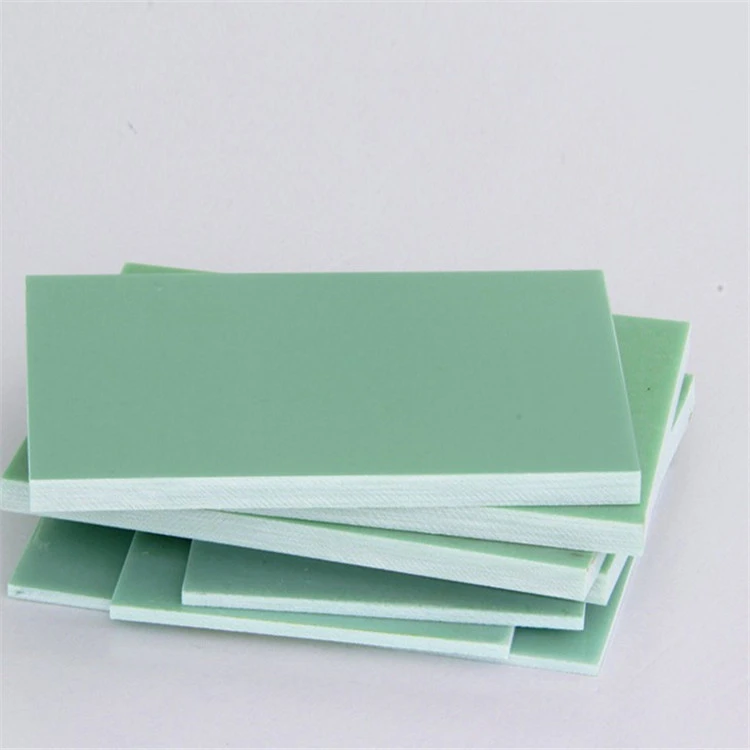
Understanding FR4 94V0 Epoxy Boards and Quality Challenges
What Makes FR4 94V0 a Critical Industrial Material
The National Electrical Manufacturers Association (NEMA) defines FR4 as a standard glass-reinforced epoxy resin laminate. The word "flame retardant" comes from bromine-based additives that meet UL94V-0 standards and put out fires on their own in ten seconds or less during vertical burn tests. The glass transition temperature for this composite material is between 115°C and 200°C, based on the resin formulation. This means it can be used in situations where heat cycling and mechanical stress happen at the same time.
The woven glass fabric reinforcement in the material gives it great mechanical strength while keeping water absorption rates low, usually below 0.1%. Because of this, it is widely used in high-voltage switchgear, multilayer PCB boards, and test devices that need to stay the same size even when humidity and temperature change.
Traditional Manufacturing Limitations
Traditional ways of making epoxy laminates have a number of ongoing problems that affect the dependability of the finished product. When resin is applied by hand, it is often spread out unevenly across the layers of glass fabric. This leaves weak spots where delamination can start when the temperature drops. When hydraulic press factors change without being fixed in real time, thickness changes that are bigger than the standard deviations (±10%) happen a lot. These issues can significantly impact the performance and consistency of Fr4 94v0 Epoxy Board, making precise manufacturing control essential for achieving reliable insulation, mechanical strength, and long-term durability.
Under-surface flaws like resin starvation or micro-voids that show up later as "measling" (white spots showing after thermal cycling) are hard for human workers to see with the naked eye. These differences in quality lead directly to failures in the field in important places like busbar supports and arc chutes, where dielectric breakdown is very dangerous. Purchasing professionals who are in charge of dealing with suppliers know that differences between batches make it harder to plan supplies and raise the number of warranty claims.
How Automated Production Lines Revolutionize FR4 94V0 Quality Control
Integration of Advanced Technologies Across Manufacturing Phases
Robotic handling systems have changed the way materials are prepared because they get rid of the risks of pollution that come with handling fibers by hand. Automated dispensing units use exact amounts of resin based on real-time measurements of viscosity to make sure that every layer of the glass fabric is wet evenly, which is essential for producing high-quality Fr4 94v0 Epoxy Board with consistent electrical insulation and mechanical strength. During lamination, computer-controlled hydraulic presses keep exact pressure profiles, and sensors built into the heating plates keep an eye on the temperature spread to make sure that no one area over- or under-cures.
Machine vision systems look at every square inch of finished laminates at levels of detail higher than 50 microns, finding flaws on the surface that people can't see without help. AI programs look at inspection data to find patterns that can tell them when something might go wrong. This lets them make changes to the process before any nonconforming products get to the shipping docks. This closed-loop feedback system achieves levels of statistical process control that were previously impossible to reach by hand.
Measurable Quality Improvements from Automation
When factories use automated production lines, the number of mistakes drops below 0.2%, which is five times better than with standard batch methods. When measuring thickness, the errors get smaller to ±5%, which is very important for CNC machining jobs where bed-of-nails test tools need to be placed precisely in the z-axis. Real-time data logging makes it possible to track everything from the lots of raw materials used to the final review. This meets the documentation standards of ISO 9001 and IPC-4101 without adding to the work of management.
Random samples of Fr4 94v0 Epoxy Board are put through automated solder float testing with molten solder at 288°C for twelve seconds. This checks the stability of the laminate under high assembly conditions. If there is delamination or blistering, the system will immediately mark the relevant production batches and start the steps for root cause analysis. This proactive method keeps questionable materials from being shipped, which protects both the supplier's image and the customer's production plans.
Within six months of implementing automation, one medium-sized company that works with power distribution saw a 34% rise in yield. Just cutting down on scrap alone paid for the new equipment in eighteen months, and overtime pay dropped by 40% when second and third shifts could be run without lights.
Comparing FR4 94V0 with Other PCB Substrate Materials in Quality and Cost
Technical Performance Across Substrate Options
When looking at different PCB substrate materials, FR1 phenolic paper composites have lower initial prices, but they don't have as good flame protection or thermal performance, so they can't be used in situations where the temperature goes above 105°C. Although CEM-1 has a paper core and glass fabric surfaces, it is not much better than FR1 when it comes to moisture protection and physical stability. It is still not as good as fully glass-reinforced constructions.
Flame-retardant glass epoxy laminates are the best choice for most industrial uses, including motor control switchgear, transformer coil insulation, and automotive battery pack barriers. They have the best mix of mechanical properties, electrical performance, and cost-effectiveness. They have a good track record in high-voltage situations because their CTI values are higher than 175V, which stops electrical paths from forming across dirty surfaces, which is a failure mode that makes power distribution equipment less safe.
Total Cost of Ownership Analysis
Unit costs go down when production lines are automated because they have stable return rates and lower costs for rework. The price per sheet may seem about the same for boards that are made by hand and boards that are made by machines, but the hidden costs of failures in the field and guarantee repairs heavily favor materials that are made by machines. When engineering teams are in charge of long product lifecycles, they know that using approved materials from quality-controlled sources lowers the total cost of ownership by cutting down on redesigns and delays caused by regulations.
Stability in mass production makes delivery schedules more predictable, which lowers the need for safety stock and the costs that come with it. Just-in-time inventory systems are managed by procurement teams, and they like providers who can show consistency from batch to batch, which can be checked with statistical sample plans. These organizational benefits give OEMs that serve demanding markets where product recalls can have terrible financial effects a better competitive edge.
Practical Guidance for Procuring High-Quality FR4 94V0 Epoxy Boards
Supplier Evaluation Criteria
Manufacturing has reached a mature stage when inspection protocols are clear. Suppliers who use automatic quality systems give thorough inspection reports with measurements, visible flaw labels, and data from thermal analysis. Your quality assurance team can use this information to make new inspection sampling plans that are based on statistical confidence levels instead of random percentage checks.
Consistency in lead times shows that production planning is done correctly. Facilities with automated lines keep a buffer stock of common specifications. This lets standard orders be filled in two weeks, while custom laminations usually take six to eight weeks. Make sure you understand the minimum order numbers right away, because some providers have volume limits that might not work with the needs of sample or pilot production.
Customization Capabilities and Logistics Considerations
When shipping fragile laminate sheets, you need to be careful about how you package them and which carrier you choose. If the boxes aren't properly stacked or cushioned during transport, the edges and corners can get chipped and damaged, making the material useless before it even gets to your receiving dock. Suppliers who have combined their shipping operations are aware of these weaknesses and take precautions that regular freight forwarders often forget about.
Setting up vendor-managed inventory plans with reliable providers will keep your supply chain stable and move the costs of carrying inventory to other suppliers. This setup works especially well for high-volume uses where consumption patterns can be predicted, and on-site inventory levels are limited by storage space.
Future Trends and Innovations in FR4 94V0 Board Manufacturing
Emerging Technologies Reshaping Production
Internet of Things sensors built into factory equipment create huge amounts of data streams that machine learning algorithms look at to figure out what repairs need to be done before they happen. With predictive maintenance, unplanned downtime drops from 12 to 15% of available production time to less than 3%. This makes sure that delivery promises are kept even when demand is high. These same data analytics find small patterns of process shift that can't be seen with standard statistical process control charts. This lets changes be made ahead of time that stop quality from going off track.
Next-generation flame retardant chemicals address environmental worries about halogenated compounds while still meeting UL 94V0 standards. Phosphorus-based alternatives are just as resistant to flames but don't produce harmful byproducts when they burn, which makes them appealing to companies that sell to places with strict environmental rules. As these formulations get better and reach the same level of cost as bromine-based systems, the industry will move faster to use them.
Better thermal management needs have led to the creation of hybrid laminates that use thermally conductive fillers in traditional epoxy matrices. These materials fill the performance gap between regular glass-reinforced composites and pricey metal core substrates. This lets smaller designs work in situations where heat dissipation used to need big heat sinks or forced air cooling.
Strategic Implications for Procurement Teams
Building relationships with makers that have combined production sites that do everything from combining raw materials to final machining makes the supply chain simpler and makes it easier to adapt to changes in specifications. When quality problems happen, single-source responsibility stops people from pointing fingers, which speeds up the implementation of corrective actions.
Cost optimization and supply chain resilience must be balanced in global buying plans. Diversifying your supplier base across different regions lowers your risk of being affected by problems in one area, but you'll need to spend time and money on auditing and managing your relationships with these different sources. This qualification process is made easier by automated production centers that use objective, data-driven quality checks that work across language and culture barriers.
Conclusion
FAQ
What distinguishes UL 94V0 rating from other flame retardancy classifications?
According to the Underwriters Laboratories vertical burn test technique, the UL 94V0 grade is the best flame protection classification for thin plastics. For materials to get this grade, they must put out their own fire within ten seconds of the fuel source being removed. Flaming drips are not allowed. This level of performance is better than V1 (extinguishment within 30 seconds) and V2 (extinguishment within 30 seconds but flaming drips are allowed) classifications. The V0 name is needed for use in sealed electrical equipment where an ignition could spread to nearby parts. This is why it is important for high-voltage barrier, switchgear insulation, and motor terminal blocks.
How does glass transition temperature affect laminate performance in real-world applications?
Glass transition temperature (Tg) is the temperature at which epoxy resin changes from a stiff to a flexible state. This changes the mechanical qualities and dimensional stability of the resin greatly. Standard grade materials with a Tg of around 130°C are enough for consumer electronics that work below 100°C. On the other hand, high Tg formulations topping 170°C are needed for under-the-hood uses in cars and industrial equipment that work at high temperatures for long periods of time. When you exceed a laminate's Tg during soldering or operation, the copper traces' coefficient of thermal expansion doesn't match up with the laminate's. This causes barrel cracking in plated through-holes and eventually circuit failure.
What thickness tolerances should procurement specifications require for precision applications?
The standard thickness tolerances in the industry are ±10%. These are fine for most insulation uses, but they make it hard to do precise machining and stack assemblies. ±5% tolerances are common in automated production facilities. This allows for tighter stack-up control in multilayer PCBs and less variation in CNC machined parts. If you need press-fit connectors or precise impedance control, you should specify ±0.05mm absolute tolerance instead of percentage-based specifications. This tighter control usually comes with a small price premium, though, because it requires more process control and could lead to higher scrap rates.
Partner with J&Q for Superior Fr4 94v0 Epoxy Board Solutions
J&Q has been making high-performance insulation materials for more than twenty years and has also worked with foreign sourcing teams in a number of different industries for more than ten years. Our fully automatic production lines have high-tech quality control systems that make sure every shipment from Fr4 94v0 Epoxy Board source meets the strict UL 94V0 and IPC-4101 standards. We can do a wide range of tests and give you detailed inspection reports that make your incoming quality processes easier. We offer one-stop service from placing an order to delivering it, thanks to our combined shipping operations. This means you don't have to worry about the coordination issues that come up with supply lines with multiple vendors. Get in touch with our technical team at info@jhd-material.com to talk about your unique needs and find out how our production skills fit with your procurement goals.
References
1. National Electrical Manufacturers Association. "Industrial Laminating Thermosetting Products Standard." NEMA LI 1-2019, Standards Publication Department, 2019.
2. Institute for Interconnecting and Packaging Electronic Circuits. "Specification for Base Materials for Rigid and Multilayer Printed Boards." IPC-4101D, IPC Technical Activities Committee, 2020.
3. Underwriters Laboratories. "Standard for Safety of Flammability of Plastic Materials for Parts in Devices and Appliances." UL 94, Eleventh Edition, Underwriters Laboratories Inc., 2018.
4. Chen, Wei and Harrison, David J. "Automation in Composite Manufacturing: Quality Control Perspectives." International Journal of Advanced Manufacturing Technology, Vol. 47, No. 9-12, March 2021, pp. 2847-2863.
5. Robertson, Alan K. "Epoxy Resin Chemistry and Processing for Electrical Applications." Society of Plastics Engineers Annual Technical Conference Proceedings, Vol. 66, May 2020, pp. 1124-1137.
6. Martinez, Carlos and Thompson, Jennifer L. "Machine Vision Systems in Laminate Inspection: Implementation and ROI Analysis." IEEE Transactions on Automation Science and Engineering, Vol. 18, No. 3, July 2021, pp. 1456-1468.

Get a complete product list and quotation

J&Q New Composite Materials Company



