Precision CNC Equipment Delivers Custom Bakelite Sheet Components
When engineering managers and procurement teams search for reliable insulation materials that combine electrical safety with mechanical durability, phenolic paper laminated sheets—commonly known as Bakelite Sheets—emerge as a proven solution. These thermoset composite materials offer dimensional stability during machining, exceptional dielectric strength, and cost-effectiveness compared to technical ceramics. Precision CNC equipment transforms standard Bakelite Sheets into custom components that meet exact specifications for electrical enclosures, motor brackets, and arc barriers, addressing the critical demands of modern manufacturing environments where performance and consistency cannot be compromised.
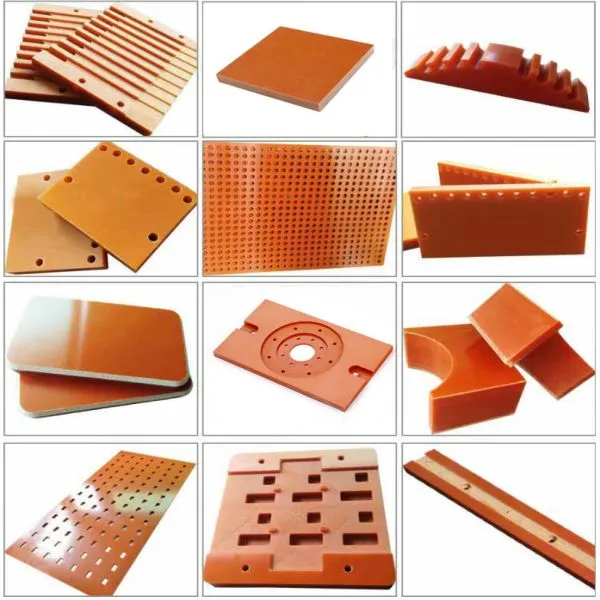
Understanding Bakelite Sheet and Its Applications
Because they have a special mix of qualities, phenolic resin-based laminates are used as building blocks in both the electrical and industrial sectors. These thermoset materials don't soften when heated as thermoplastics do. Instead, they keep their shape and ability to insulate even when they are exposed to high temperatures and electrical stress.
Composition and Material Science
A controlled method uses heat and pressure to cause phenol and formaldehyde to condense, which is how Bakelite Sheets are made. After phenolic resin is mixed with layers of paper or cellulose fiber, the layers are stacked and cured in hydraulic presses. This makes a stiff, thick material that is strong for its weight and doesn't absorb much water. The material's process of fixing is permanent, so it won't melt or change shape while it's being used. This makes it perfect for high-voltage areas where safety is very important.
Core Industrial Applications
Electrical and electronics companies use phenolic laminates for motor parts, switchgear panels, and PCB support structures because the material stops current leakage and can work at temperatures up to 120°C for long periods of time. These sheets are used by power distribution companies to protect coils and stop arcs in transformers, where they meet strict safety standards for flame protection. Machinery builders use phenolic cotton sheets as wear-resistant gears and mechanical spacers because the material can handle heavy loads without deforming. Automotive suppliers ask for these materials to be used for heat-resistant fixtures and barriers around battery packs. These materials need to be precisely machined and have stable batch quality to meet tier-1 production needs.
Performance Advantages Over Alternatives
There are clear benefits to using phenolic laminates over other materials. It costs more, but fiberglass-epoxy materials like FR4 have great electrical qualities. PVC is resistant to chemicals, but it's not strong enough or able to handle heat well enough for demanding uses. Acrylic materials are clear to the eye, but they are not as insulating or structurally strong as phenolic sheets. Because they have a good mix of properties, engineering teams keep choosing phenolic laminates when they need good protection, stable dimensions, and low costs all at the same time.
Precision CNC Machining: Enhancing Bakelite Sheet Component Quality
CNC Process Capabilities
With accurate tool path control and consistent cutting parameters, computer numerical control machining gets rid of these problems. Multi-axis CNC mills can work with complicated shapes and hold limits of just a few hundredths of a millimeter. Automated drilling centers, on the other hand, make clean holes without breaking the edges. The technology makes it possible to make complex shapes, precise slots, and cutouts that would not be possible with traditional methods.
Because they are rough, phenolic materials must be machined with carbide or diamond-tipped cutting tools. Controlled feed rates and high spinning speeds keep material stress to a minimum, and active dust extraction systems get rid of the irritating dust that is made during cutting. We follow these technical requirements as a matter of course, making sure that every part meets the requirements without any surface flaws or changes in size.
Production Efficiency Benefits
CNC automation changes the economics of manufacturing in a number of ways. Cutting down on setup time makes it easy to switch between different component designs quickly, without having to change the fixtures by hand. Repeatable accuracy gets rid of the need for changes during the process, and leaving the equipment to run by itself makes the most of its potential. When you add these things together, you get shorter lead times and uniform quality across production runs. This directly addresses the worries of OEM sourcing managers who have to weigh cost against dependability. Programmable efficiency helps with large orders because it makes sure that once-verified tool paths make similar parts in thousands of units without lowering the quality.
Custom Bakelite Sheet Components: Solutions for Diverse Industry Needs
If you choose the right phenolic grade, it will work best in your unique working conditions. The properties of the material must match the needs of the product so that it doesn't break down too soon or cost too much.
Grade Selection and Material Properties
Because they have less resin, Grade X phenolic laminates focus on mechanical strength, making them good for structural parts that are constantly loaded or vibrated. Higher resin concentrations in Grade XXX materials make them better at resisting moisture and improving dielectric properties, which are important for high-voltage or humid environments. When procurement teams know these differences, they can choose materials that meet performance needs and stay within budget.
Because the material is resistant to chemicals, it can be used to make machinery that comes into contact with oils, acids, and alcohols. But strong oxidizing acids and alkalis can break down phenolic glue, so it needs to be replaced in those chemical conditions. This tailored resistance profile lets engineers choose the best material based on the real-world conditions, instead of choosing expensive options that don't meet the needs.
Customization Parameters
CNC technology lets you precisely control important measurements. Tolerances for thickness can be kept within narrow ranges, which is important for uses where insulation spacing affects electrical clearance directly. Custom hole patterns can be made to fit specific mounting needs, and edge profiles and surface finishes help with the assembly process. CNC fabrication makes it possible to produce complex geometries with a Bakelite Sheet that would otherwise require expensive tooling for molding. This allows designers to develop solutions for limited production runs or specialized equipment while maintaining high dimensional accuracy and consistent performance.
Application Case Examples
Manufacturers of electrical equipment cut down on assembly time by using precision-cut phenolic insulators that had alignment features built in, so there were no need for separate steps to attach the parts. Custom-sized barriers that fit current packing limits helped automotive component makers protect battery systems from heat in a consistent way. Industrial machinery makers increased the time between service intervals by asking for phenolic gears with improved tooth shapes, which cut down on friction and wear compared to standard designs. These examples from real life show how precise manufacturing can turn technical requirements into real-world gains in operations.
Comparison and Procurement Guidance for Bakelite Sheet Components
To make smart buying choices, you need to know how different products compare on important measures and which supplier's skills are the most important.
Material Performance Analysis
When it comes to heat protection, phenolic laminates keep their shape and insulating qualities up to 120°C of continuous use, which is better than PVC but not as good as high-temperature epoxy systems that can handle 180°C. For most industrial voltages, phenolic materials are excellent at insulating against electricity, and their dielectric strength is high enough for use in switchgear and motors. The mechanical qualities are good enough for structural parts to hold enough weight, but they aren't as good as the impact protection of engineering thermoplastics. In terms of cost-effectiveness, phenolic laminates are a good middle-ground solution. They are cheaper than advanced composites and perform better than regular plastics.
Phenolic sheets are great for situations where more than one trait is needed, like when electrical protection and mechanical strength are both needed at the same time, or when heat resistance and cost are both important.
Supplier Evaluation Criteria
Checking certifications that are important to your business is the first step in reliable sourcing. UL certification makes sure that materials meet fire safety standards, and RoHS certification proves that electrical uses are environmentally friendly. ISO quality management certification means that the process is consistently controlled, which cuts down on variation from batch to batch that throws off production schedules.
Logistics of delivery have a significant impact on total cost and supply chain reliability. Suppliers with established shipping networks help minimize delays and damage during transportation. For Bakelite Sheet applications, quality assurance requirements can be supported by providing material certificates and test results with every shipment. Access to technical support also helps address application questions before they develop into production issues.
Volume Purchase Considerations
When you order in bulk, you usually get better prices, but you have to weigh those benefits against the costs of keeping supplies and the length of time that materials last. Phenolic laminates stay stable during storage as long as they are kept dry, but keeping extra inventory on hand may not fit with the principles of lean manufacturing. Price optimization and cash flow management are balanced when blanket orders with planned drops are negotiated. Clear specifications and testing of prototypes before committing to production amounts are good for custom orders because they lower the risk of expensive rework or wasted materials.
Sustainability and Lifecycle: Bakelite Sheet Recycling and Environmental Considerations
As companies work to meet sustainability goals and government regulations, environmental duty plays a bigger role in their buying choices.
Recycling Challenges and Innovations
It's hard to recycle thermoset materials like phenolic laminates because their molecular structure can't be remelted as thermoplastics can. At the moment, trash is usually thrown away in landfills or burned with energy recovered. New technologies focus on chemical recycling methods that break down the polymer network to get back phenolic compounds and cellulose fibers, but they are still not widely used in business. As a partial answer for dealing with industrial waste, mechanical grinding can turn scrap into filler material for new composite formulas.
Regulatory Compliance
Chemicals in industrial materials are being looked at more closely by European REACH rules and related U.S. systems. Current standards are met by phenolic resins that are made with the right controls, but buying teams must check that suppliers' compliance paperwork is correct. Flame retardant chemicals get a lot of attention, and some formulas are being phased out because they might stay in the environment for too long. If you only buy goods from sellers who are willing to adapt to new rules, there is less chance that the supply chain will be interrupted when standards change.
Corporate Responsibility Integration
To match material choices with green goals, you have to weigh the need for performance against the impact on the environment. Strategies include designing parts so that they use the least amount of material possible, reducing waste through precise CNC fabrication, and choosing suppliers who have clear environmental management systems in place. These methods help with reporting on corporate social responsibility while keeping up with the technical requirements of applications. We help our clients deal with these issues by giving them knowledge about the material's lifecycle and helping them optimize the design in a way that cuts down on waste without affecting the quality of the parts.
Conclusion
Phosphoric laminates can be turned into unique parts that meet the exact needs of electrical, industrial, and automobile uses through precise CNC machining. When you combine the electrical insulation, heat resistance, mechanical strength, and chemical stability of a material with the accuracy of its fabrication, you get solutions that balance cost and performance. When selecting these materials, engineering managers and procurement experts should know how to choose the right grade, what the seller can do, and how to think about sustainability. Bakelite Sheet, as a widely used phenolic laminate material, has been applied for a long time in tough situations, and modern CNC technology helps ensure that parts work reliably in important tasks where failure would have big effects.
FAQ
What temperature range can Bakelite Sheet withstand in continuous operation?
Standard phenolic paper laminates keep their electrical and mechanical features even after being exposed to temperatures of up to 120°C for a long time. If you go over this limit, the material starts to break down more and more, with surface darkening, resin carbonization, and lower dielectric strength. If you need to work with higher temperatures, you might want to look into other high-temperature phenolic grades or epoxy-glass composites that can handle 180°C.
How does CNC machining prevent chipping when cutting phenolic materials?
Because phenolic laminates are naturally brittle and rough, they need to be machined with certain parameters. The abrasive filler materials don't wear down tools that are coated in carbide or diamond, and high spindle speeds with controlled feed rates lower the cutting forces that break the edges. Sharp tool shape and good chip removal keep heat from building up near the cut edges, which weakens the material. This keeps the surfaces clean and chip-free.
Can phenolic sheets be used in outdoor applications?
Long-term direct exposure to ultraviolet radiation breaks down phenolic resin, leaving the surface chalky and the material losing its mechanical properties. UV-protective coatings or housings keep the material's integrity whether it's used indoors or outdoors. Because phenolic laminates don't absorb much water, they keep their shape well even when it's humid outside. This makes them a good choice for covered outdoor electrical boxes.
Partner with J&Q for Custom Bakelite Sheet Solutions
Every phenolic laminate project that J&Q works on is backed by more than 20 years of experience in manufacturing and 10 years of experience in international trade. As a well-known provider of Bakelite Sheet, we use our precise CNC skills and in-depth knowledge of the material to make parts that exactly match your needs. Our streamlined logistics operations make delivery easier, and our long-term partnerships with electrical manufacturers, machinery builders, and auto suppliers show that we are dedicated to quality and dependability. Technical support teams help you choose the right materials and make the best designs so that your parts work as they should in tough situations. Contact our team at info@jhd-material.com to talk about your unique needs, ask for material certifications, or set up model parts that show how precisely we can make things. You can find more technology tools and application tips at blog.jhd-material.com.
References
1. Harper, C.A. (2006). Handbook of Plastics Technologies: The Complete Guide to Properties and Performance. McGraw-Hill Professional.
2. Society of Plastics Engineers. (2018). Thermoset Materials: Processing and Applications in Modern Manufacturing. SPE Publications.
3. Chanda, M., & Roy, S.K. (2008). Plastics Technology Handbook, Fourth Edition. CRC Press.
4. ASTM International. (2020). Standard Specification for Industrial Laminated Thermosetting Products (ASTM D709). West Conshohocken, PA.
5. Nielsen, L.E., & Landel, R.F. (1994). Mechanical Properties of Polymers and Composites, Second Edition. Marcel Dekker.
6. Institute of Electrical and Electronics Engineers. (2019). Electrical Insulating Materials: Standards and Testing Methodologies. IEEE Press.

Get a complete product list and quotation

J&Q New Composite Materials Company



