Precision Drilling Machines Improve FR4 Epoxy Board Assembly Accuracy
Precision drilling machines have transformed how manufacturers work with FR4 94V0 epoxy boards, delivering unprecedented assembly accuracy through advanced spindle control and micro-positioning systems. These flame-retardant composite substrates demand exacting drilling tolerances to maintain their dielectric integrity and mechanical stability. By reducing thermal stress and vibration during machining, modern precision equipment minimizes common defects like delamination and burr formation that compromise electrical performance. The result is measurably improved yield rates and component reliability across electronics manufacturing applications where precision matters most.
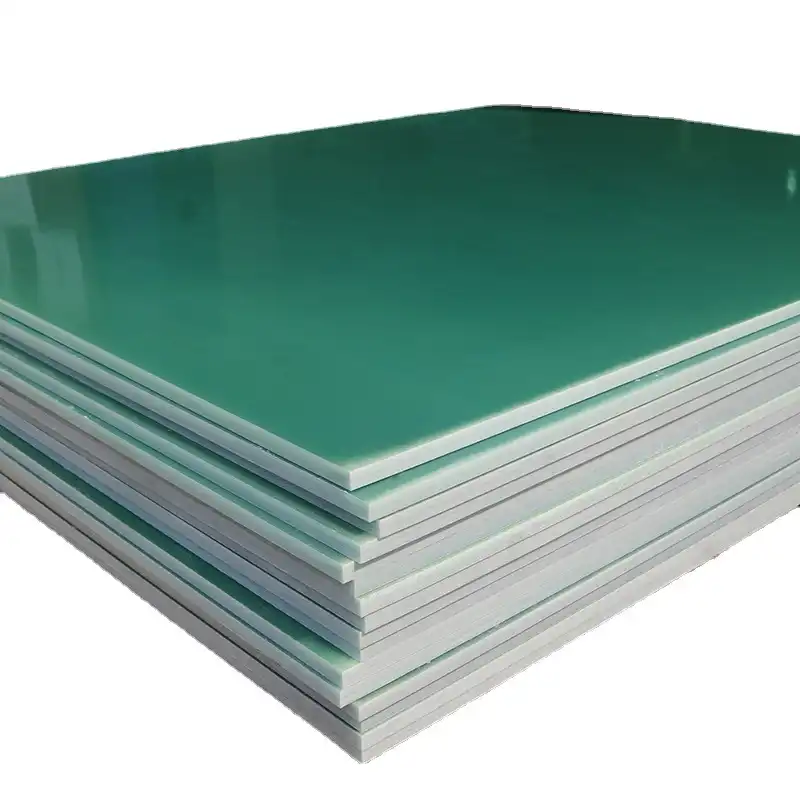
Understanding FR4 94V0 Epoxy Boards and Their Key Properties
Fr4 94v0 Epoxy Boards are the standard material for printed circuit board bases used in factories around the world. The name comes from guidelines set by the National Electrical Manufacturers Association. "FR" means that the product is flame retardant and meets UL 94V-0 approval. This rating promises that if the material is put near an open flame, it will go out on its own in ten seconds and won't make flaming drips that could ignite other materials nearby.
Composition and Material Structure
The composite construction uses layers of woven fiberglass cloth that are saturated with epoxy resin. This makes a rigid base that is very stable in terms of its shape. Depending on the resin formulation, glass transition temperatures are usually between 130°C and 180°C. High-TG versions can reach 200°C for harsh thermal environments. This temperature level controls how the material acts when bonding and when it is exposed to operating heat for a long time. The mechanical strength comes from the glass fiber support, and the electrical insulation and fire protection come from the bromine-based epoxy matrix.
Critical Performance Specifications
Standard tolerances are ±10%, and board thickness ranges from 0.4mm to 3.2mm. Precision grades, on the other hand, allow for even tighter control. Because the dielectric strength is higher than 20 kV/mm, these boards can be used for high-voltage isolation in power electronics. Comparative Tracking Index scores above 175 stop electrical paths from forming on surfaces that are wet or dirty. Water absorption stays below 0.15%, so electrical properties stay the same when used in wet circumstances. These qualities have a direct effect on how drilling operations must be handled so that the integrity of the material is not compromised.
Industrial Application Requirements
Electronics companies use these platforms to make multilayer circuit systems, and the accuracy of the layer registration affects the purity of the signals. Machined parts are used in power distribution equipment for things like busbar supports and arc barriers, where exact measurements keep electrical problems from happening. For battery management systems and inverter units, automotive electronics need uniform drilling quality. Because of the different board thicknesses, layer counts, and hole density requirements, each application has its own machining challenges that are hard for standard drilling tools to regularly meet.
Challenges in FR4 94V0 Epoxy Board Drilling and Impact on Assembly Accuracy
Material-Specific Drilling Complications
Because fiberglass epoxy laminates have a mixed structure, the cutting resistance changes as the drill bit moves from resin-rich areas to glass bundles. This difference causes side forces that bend small-diameter bits, which leads to location errors that are too big for fine-pitch components to handle. When the cutting factors don't match the hardness of the material, entry and exit burrs form. These need to be removed again, which takes more time and adds to the process. Delamination happens when too much mechanical stress or thermal cycling during drilling weakens the bond between layers. This creates hidden failures that show up during assembly or field operation.
Equipment Limitations and Process Variability
Older drilling systems don't have the range of spinning speeds needed to get the best cutting conditions for all types and sizes of boards. Positional mistakes are made worse by mechanical runout in worn spindles. This is especially a problem for drilling patterns with thousands of holes, where the total variation can lower the panel's usefulness. When testing is done by hand, there is variation that depends on the user, which means that the process can't be repeated between shifts. When chip drainage systems aren't working right, swarf can build up in flutes, which causes more friction and heat buildup that hurts hole walls and shortens the life of the tool.
Cost and Schedule Impacts
Bad drilling means that panels that are only partially processed have to be thrown away, which wastes material and capacity. For root cause analysis and corrective action execution, rework activities use up technical resources. Tool changes and machine adjustments cause cycle times to get longer, which slows down throughput and makes it harder to meet customer delivery promises. Quality holds while dimensional inspection results are awaited slow down the plating and imaging steps that follow, which shortens the schedules for later steps and raises the cost of speeding things up. These flaws in operations have a direct effect on how well you can compete with companies that use new drilling technology.
How Precision Drilling Machines Revolutionize FR4 Assembly Accuracy
Modern precision drilling equipment gets around the problems of the past by using mechatronic systems that are built to work with composite materials. High-frequency spindles that spin at 150,000 RPM or higher lower cutting forces and improve the quality of the surface finish. Closed-loop positioning systems can place things accurately to within 25 microns across their whole working range, and they can keep this level of accuracy no matter what size the panel is. Adaptive process control checks the spindle load in real time and changes feed rates automatically to account for changes in material and tool wear.
Advanced Technology Features
Built-in depth monitors make sure that through-holes go through backing materials without drilling too deeply, which can damage tools and support boards. With coordinated motion control, multi-spindle setups can drill more than one hole at the same time, increasing output without lowering accuracy. Quick-change tool systems cut down on the time needed to set up tools when switching between different types of products that need holes of different sizes. These features work together to let the machine run without any help from an operator, which increases work output while keeping quality standards.
Performance Improvements and Validation
When manufacturing companies switched from using regular tools to precision drilling platforms, they saw a drop in defects of more than 75%. Hole location accuracy goes from ±75 microns to ±25 microns, which lets designers use more components on a smaller board and save money on materials. Measuring the roughness of the walls shows that smoother areas help the plating stick and the wiring work. Tool consumption drops by 40–60% because cutting parameters are improved and replacement schedules are predicted. This lowers spending on consumables more than covers the cost of the equipment.
Independent testing labs have confirmed that boards processed on precision drilling machines have better peel strength and thermal stress resistance than samples that were drilled in the usual way. Cross-sectional analysis shows that there isn't much resin loss and the glass fiber is exposed without fraying, which are both signs of good cutting mechanics. These improvements can be measured and directly lead to higher assembly yield and better reliability for finished products in the field.
Comparing FR4 94V0 Epoxy Board Drilling Solutions: Precision Machines vs Traditional Methods
When procurement teams are looking at investments in drilling technology, they need clear criteria to compare different methods. The price of capital equipment is only one part of the total cost of ownership, which also includes running costs, upkeep needs, and quality-related savings over a number of years.
Performance and Quality Metrics
No matter how skilled the operator is or what the environment is like, precision drilling machines always meet the required positional accuracy standards. Traditional equipment has a bigger range of performance changes depending on how it is set up and how well it is maintained. Metrics for hole quality like cylindricity, surface roughness, and lack of flaws clearly favor precise systems by large amounts. Precision equipment usually has process capability values higher than 1.67, while common systems have them between 1.0 and 1.33. This means that precision equipment is more stable and predictable.
Economic Considerations
Integration and Scalability
Modern precision drilling machines talk to each other using standard industrial protocols. This makes it easier to connect them to manufacturing execution systems so that you can watch production in real time. Features for managing recipes let you quickly switch between different types of products without having to enter parameters by hand. With modular setups, you can add more spinning heads or improve the control systems without having to buy whole new machines. These things make it easier for production volumes to grow and product mixes to become more complicated than with fixed-configuration traditional equipment.
Procurement Guide: Sourcing FR4 94V0 Epoxy Boards and Precision Drilling Equipment
To make manufacturing processes that last, good procurement plans find a balance between the quality of the materials, the capabilities of the tools, and the dependability of the suppliers. The engineering and buying teams need to work together to make sure that technical needs are met with business terms that protect the company's interests and allow for operational excellence.
Selecting Material Suppliers
Checking standards like ISO 9001 quality management and UL recognition for flame retardancy claims are the first steps in finding qualified FR4 sources. Ask for material datasheets that list the glass transition temperature, dielectric constant, loss slope, and mechanical qualities that are important for your project. Sample testing should confirm the tolerances for size, the measurements for warp and twist, and the performance of the solder float in conditions that are similar to those in an assembly. Talk about minimum order quantities and lead times to make sure that the production schedules are met by the supply chain.
Check to see what kind of expert support the provider can offer to help with processing problems that involve materials. Well-known suppliers keep application engineers on staff who help with finding the best cutting settings and fixing quality issues. When standard grades don't fully meet design needs, long-term relationships let people work together to come up with custom specs. When dealing with sudden technical problems or market changes that need quick material qualification, these relationships come in handy.
Evaluating Drilling Equipment Providers
Precision drilling machine suppliers should show that their machines have been used successfully in similar situations in the past, with performance data that can be checked. Ask for references from people who work with similar kinds of boards and produce similar amounts. Check out the framework for after-sales support, such as the supply of spare parts, the time it takes for field service to respond, and the professional training programs. Software update rules change long-term capabilities as manufacturing needs change and new products come out.
Total cost modeling has to take into account the costs of installation, training for operators, and the time needed to get the process up to speed before it can reach full output rates. Talk about the need for preventative maintenance and the cost of consumables to get a good idea of what operating costs will be. Some providers offer process development services that help you find the best parameters for your unique material grades and design needs. This speeds up the process of getting to stable production. Most of the time, these value-added services are worth the extra cost because they help businesses make money faster and with less risk.
Implementation Considerations
For precision drilling to work, the placement of equipment needs to be coordinated with improvements to the building's power source, compressed air systems, and environmental controls. Before starting production, write down the process, including the accepted limits, inspection standards, and troubleshooting steps. Cross-train more than one user so that you don't have to rely on one person's knowledge. Before sending goods to customers, you should do baseline capability studies that measure how well the process is working. This will give you concrete proof that the quality system is working.
Conclusion
Through advanced control systems and improved cutting mechanics, precision drilling machines make Fr4 94v0 Epoxy Board assembly more accurate in ways that can be seen and felt. Manufacturing businesses get competitive benefits like higher yields, faster output, and more reliable products, which make the money spent on tools worth it. To switch from old-fashioned drilling methods to new ones, suppliers must be carefully chosen, processes must be carefully developed, and organizations must be willing to use their new skills. Professionals in engineering and purchasing who regularly study these technologies put their companies in a better position to meet rising quality standards while keeping costs low. The use of high-quality material substrates and precise processing tools builds a base for industrial success in electronics assembly operations.
FAQ
What distinguishes FR4 94V0 boards from standard FR4 materials?
The number "94V0" means that the product meets the UL flammability standards, which say that vertical samples must self-extinguish within ten seconds and not make burning particles. It's possible for standard FR4 materials to have lower flame resistance ratings or not be certified by UL at all. This difference is very important for goods that need to be approved by safety agencies or that work in places where there is a chance of fire that could put people at risk of being sued. Higher bromine content in the epoxy resin mixture usually makes it more flame retardant. This may slightly change its electrical qualities and ability to be machined compared to grades that aren't flame retardant.
How does precision drilling enhance long-term PCB reliability?
Placing holes correctly makes sure that component leads are lined up correctly, which lowers the mechanical stress on solder joints during heat cycles. If you clean the hole walls so that the resin doesn't delaminate or spread, the plating will stick better and stop the barrel cracking that leads to electrical opens. In high-frequency circuits, where changes in size can affect signal quality, consistent hole shape keeps impedance under control. All of these things work together to make operational lifetimes longer and failure rates lower in the field. This is especially important for products that are used in harsh environments or mission-critical applications where maintenance access is limited.
Partner with J&Q for Superior FR4 94V0 Epoxy Board Quality
We've spent more than twenty years perfecting the production of insulation sheets and have gained a lot of experience in international trade by working with electronics manufacturers, industrial equipment builders, and power system integrators. Our vertically integrated operations make materials and machine them precisely. This makes sure that the Fr4 94v0 Epoxy Board provider you choose knows both the features of the substrate and the processing needs. Our work on logistics infrastructure makes it possible to schedule deliveries in a way that keeps your assembly lines running smoothly and doesn't cause any problems with your inventory.
Contact our expert team at info@jhd-material.com to talk about the material and drilling accuracy needs that are unique to your project. We'll send you full datasheets, set up sample orders, and share case studies that show how well our materials work in precision drilling situations. Our application engineers work with your production team to find the best processing parameters. This makes sure that the new equipment or suppliers are easily integrated. You can find more technical information to help you make smart procurement decisions at blog.jhd-material.com.
References
1. Institute for Printed Circuits. "Advanced Drilling Technologies for High-Density Interconnect Substrates." IPC Technical Paper Series, 2021.
2. National Electrical Manufacturers Association. "NEMA LI 1-1998: Industrial Laminated Thermosetting Products Standard." NEMA Standards Publication, 2019.
3. Coombs, Clyde F. "Printed Circuits Handbook, Seventh Edition." McGraw-Hill Professional, 2016.
4. Underwriters Laboratories. "UL 94: Standard for Safety of Flammability of Plastic Materials for Parts in Devices and Appliances." UL Standards Catalog, 2020.
5. Journal of Electronic Materials. "Thermal and Mechanical Analysis of FR4 Composites Under High-Speed Drilling Conditions." Volume 48, Issue 7, 2019.
6. Society of Manufacturing Engineers. "Precision Machining of Advanced Composite Materials: Best Practices and Equipment Selection." SME Technical Publication, 2022.

Get a complete product list and quotation
J&Q New Composite Materials Company