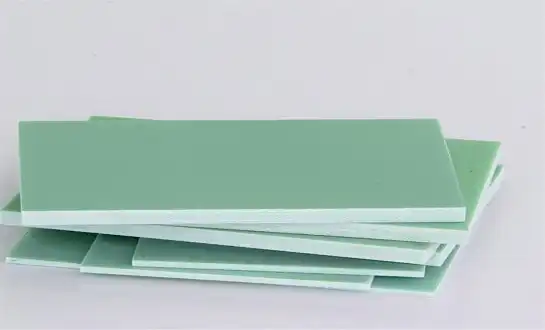
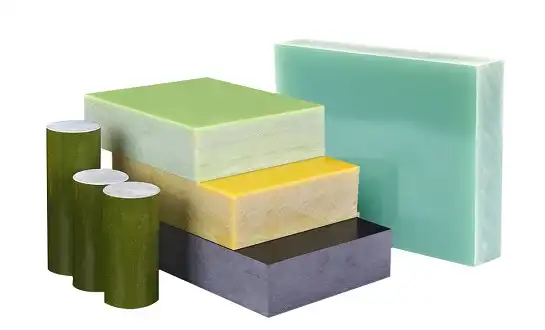
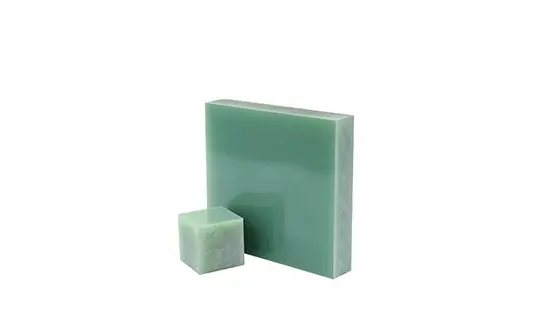
How Is FR4 94V0 Epoxy Board Machined for Electrical Components?
Machining an FR4 94V0 epoxy board for electrical components involves precision cutting, drilling, and routing using CNC equipment with carbide-tipped or diamond-coated tools. The process requires controlled feed rates and cooling systems to prevent delamination, heat damage, and excessive dust generation. Proper tool selection and calibrated parameters ensure clean edges, dimensional accuracy, and preserved dielectric properties critical for reliable insulation performance in demanding electrical applications.
Introduction
When making electrical parts, choosing the right insulation material affects how long the parts last, how safe they are, and how reliably they work. Modern electronics depend on Fr4 94v0 Epoxy Boards for everything from layered PCBs in data centers to high-voltage equipment parts in power distribution networks. This combination made of fiberglass is very strong, well-insulated from electricity, and approved to be flame-retardant according to UL 94V0 standards.
However, machining skills are very important for turning these material benefits into finished parts. How do you keep micro-cracks from appearing during drilling? This is a real problem for engineering managers and buying teams. Which tools keep heat buildup to a minimum? Which factors protect the purity of the surface while keeping production running smoothly? This guide answers these questions by giving you useful information based on more than 20 years of experience in the production industry. It will help you improve the quality of your parts and make your supply chain run more smoothly.
Understanding FR4 94V0 Epoxy Board: Composition and Properties
What Makes FR4 94V0 Different from Standard Laminates
"FR" stands for "flame retardant," and "FR4" is a standard set by NEMA for glass-reinforced epoxy resin laminates. The "94V0" label means that the material passed UL's strict flammability test, which means it had to put out its own fire within 10 seconds and not make any flaming drips. This approval is very important when making goods for medical equipment, aerospace controls, or household electronics that need to be safety-tested.
Key Material Properties Influencing Machinability
There are a number of factors that directly affect how these boards react to drilling and cutting. The fiberglass reinforcement gives the material great tensile strength, but it also makes the material rough, which speeds up tool wear. The amount of epoxy resin affects how heat is transferred. Cutting edges that have too much resin gum up, while areas that don't have enough resin become weak and easy to chip.
Tolerances for thickness are very important. Standard production keeps the difference at ±10%, but better control is needed for precision uses like test fixtures. Warp and twist percentages below 0.5% make sure that the material can be used with automated assembly equipment and stop mistakes from happening when parts are being put together. Comparative Tracking Index (CTI) values show how resistant a surface is to electrical tracking when it is contaminated. Higher CTI ratings are better for high-voltage uses where the insulation can't fail.
Machining Challenges and Considerations for FR4 94V0 Boards
Why Conventional Metalworking Approaches Fail
Making heat makes these problems worse. When epoxy resins get close to their glass transition temperature, they soften and change shape when they are machined. When drill bits cut metal at high speeds, they create areas with temperatures above 200°C, which breaks down resin and separates fibers from their core. The result is rings of different colors around the holes that were drilled. This is a clear sign that thermal damage has occurred, lowering the dielectric strength by 30% or more.
Dust and Debris Management Requirements
When fiberglass composites are machined, tiny particles with glass fibers and epoxy dust are released. These particles are harmful to the lungs and need to be collected and ventilated properly. In addition to putting workers at risk, dust in the air settles on machined surfaces, making it harder to bond later parts and possibly creating short-circuit paths in high-density PCB assemblies.
Electrostatic pull makes dust stick to board surfaces, so they need to be cleaned after they are machined. Many buying professionals don't pay attention to this detail when they're judging the skills of a supplier, but poor dust control is directly linked to mistakes in the field. Testing labs often find that contaminated insulation surfaces are the main reason why people return products under guarantee. This should be a quality control goal, not an aside.
Best Practices and Principles for Machining FR4 94V0 Epoxy Boards
To get good results with precision machining, you need to pay close attention to the tools, the factors, and the surroundings. Production teams have to find a mix between cutting speed and tool life while keeping thousands of parts' dimensions correct. Here are some tried-and-true ways to lower the amount of scrap metal and make equipment last longer between services.
Tool Selection and Geometry Optimization
When it comes to epoxy laminate cutting, carbide tools are the bare minimum. When cutting Fr4 94v0 Epoxy Board, standard high-speed steel gets dull in minutes due to the abrasive nature of rough fiberglass, while carbide grades maintain their sharp edges for long production runs. Although diamond-coated bits perform better in high-volume applications, they initially cost three to five times more than carbide alternatives. The investment can pay off through reduced downtime and improved hole quality.
Cutting shape is just as important as the material you use. Drill bits need higher helix angles (30 to 40 degrees) than metal-cutting bits so that chips can be pushed away more quickly. Between 118 and 135 degrees, point angles balance the penetration force against the risk of delamination on the exit side. Router bits need either upcut or compression shapes. Upcut spirals remove chips well, but they may lift surface layers. Compression shapes sandwich material between two cutting edges, reducing damage at both the entry and exit points.
Feed Rate and Speed Parameter Calibration
The best cutting settings rely on the thickness of the board, the direction of the fibers, and the width of the tool. For cutting tasks, spindle speeds are usually between 15,000 and 25,000 RPM, which is much faster than what is normal for machining. These high speeds lower the cutting forces per fiber, which makes it less likely that fibers will separate. But too much speed makes heat faster than the material can get rid of it, so it needs to be carefully calibrated.
Cooling and Dust Extraction Integration
Cooling tools properly keeps their qualities and extends their life. Directing compressed air blasts at the cutting zone is an easy way to cool it down without contaminating it. The air stream removes chips from the surface and lowers the temperature by 40 to 60°C compared to dry cutting. Mist coolant systems provide better cooling, but they need to be carefully chosen because water-based fluids may make it harder for glue to stick to parts in later steps of the building process.
Vacuum extraction systems pick up dust where it starts, keeping work areas clean and stopping particles from resettling. Integrated CNC systems filter the exhaust through HEPA filters and send clean air back to the work area. With this closed-loop method, operators' health is protected, and stricter environmental rules are met. Smart procurement teams check how well suppliers can extract information during facility audits because they see this investment in infrastructure as a sign of quality.
Post-Machining Treatment Protocols
Machined boards need to be cleaned before they can be put together. Wipes that contain isopropyl alcohol clear leftovers from surfaces without adding water, which could affect the dielectric's performance. Ultrasonic cleaning tanks can remove particles completely from complex shapes, but the right chemicals and processing time must be checked to make sure the plastic doesn't get damaged.
Comparative Analysis: FR4 94V0 Versus Other Epoxy Board Materials in Machining
Knowing how different types of laminate react to being machined helps buying teams choose the right materials. The best base choice is affected by performance needs, price limitations, and the ability to produce the material.
Mechanical and Thermal Performance Differences
For most electronics uses, standard FR4 94V0 grades are a good balance between price and performance. The mechanical bending strength is usually higher than 400 MPa, which is strong enough for PCB support structures and motor component frames. Glass transition temperatures between 130°C and 140°C are good for consumer electronics and industrial controls that work continuously below 100°C.
High-Tg versions improve thermal performance to 170-180°C continuous operation, which is important for car parts under the hood and power electronics that heat up a lot on their own. The changed epoxy formulas in these materials keep their shape during lead-free soldering processes that reach their highest temperature of 260°C. Sometimes, the improved resin systems are more brittle, so the machining settings need to be changed to stop micro-cracking.
Machinability and Surface Quality Outcomes
When compared to paper-based laminates, FR4 94V0 boards have better edge quality. Because the glass reinforcement is spread out evenly, the cutting forces are always the same, which lets the dimensions be more closely matched. When you use the right tools, drilled holes can vary in size by no more than 0.05 mm, which is important for press-fit connectors and precision alignment pins.
But the same aluminum content that keeps the shape stable also speeds up tool wear. For production runs with 10,000 holes, bits may need to be replaced three times more often than with phenolic materials of the same type. This wear rate changes the total cost study because lower material prices might not be there after factoring in the cost of tools and machine downtime.
Procurement and Customization: Sourcing Machined FR4 94V0 Boards
A successful buying process includes more than just comparing prices. It also looks at the skills, quality systems, and relationship opportunities of the suppliers. Because machining is so complicated, suppliers must have a track record of knowledge and strong process controls.
Evaluating Manufacturer Capabilities and Certifications
Infrastructure for manufacturing shows how mature operations are. Precision and efficiency have been improved by investing in CNC machine centers with automatic tool changes and in-process measurement systems. Temperature and humidity changes can't change the sizes of things that are made in climate-controlled settings. Dedicated dust collection systems show that you care about both the quality of your products and the safety of your workers.
Keeping records of the process helps maintain accuracy. Suppliers should provide comprehensive machining specifications, including the types of tools used, speed and feed rates, and inspection frequencies. Statistical process control charts that track how key dimensions vary over time demonstrate that tolerances can be consistently maintained across production runs. When manufacturing Fr4 94v0 Epoxy Board, this level of documentation ensures that material processing, machining parameters, and quality control procedures remain traceable and reliable. This transparency allows engineering teams to verify that supplier processes align with their specific requirements before signing purchase agreements.
Customization Options and Technical Support
Standard sheet stock is good for prototypes and small amounts, but unique options work better for production uses. Customer processing time and scrap risk are cut down by pre-machined blanks. When CNC-machined parts are finished to the right size, there is no need for any cutting to be done in-house. Instead, suppliers with the right tools are used.
Customizing thickness makes plans work better for certain uses. For high-voltage arc barriers, switchgear makers might ask for 6mm boards, but test fixture builders like 1.6mm material because it is a good balance between rigidity and weight. Reliable suppliers carry a range of thicknesses and can also find special grades to meet specific needs, such as high-CTI formulations for outdoor electrical equipment or halogen-free versions that are better for the environment.
Technical collaboration is what sets exceptional suppliers apart from average ones. When experienced makers look at customer plans, they may suggest changes to the design that make it easier to machine or lower the cost. When customers plan to do processing in-house, they give advice on machining and share parameter starting points that have been developed over years of production experience. This discussion method shortens the time it takes to build something and avoids costly trial-and-error testing.
Logistics and Supply Chain Considerations
Lead times are very different between suppliers. Stocked standard materials can be shipped within days, but custom machining can take up to three weeks, depending on how complicated the job is and how long the queue is. International shipping adds to the time it takes to get goods to customers, but it may save money on costs when buying in bulk. Smart procurement combines the costs of keeping inventory with the costs of fast shipping, setting smart stock amounts for key parts.
Good packaging keeps things safe while they're in transit. Moisture-barrier wrapping prevents humidity from being absorbed, which could affect the dimensional stability of Fr4 94v0 Epoxy Board. Stiff packaging or palletizing helps prevent twisting or damage during handling and transportation. Before accepting shipments, the packaging should be carefully inspected to ensure it is complete and intact. It is more difficult to file claims for concealed damage after signing the acceptance documents.
Getting in touch with suppliers that offer integrated logistics services makes things easier. When a company handles its own freight handling and customs clearance, it makes the buying process easier for customers. This one-stop service is especially helpful for smaller makers that don't have a lot of experience with importing and exporting. It lets them get materials from around the world without having to build their own infrastructure.
Conclusion
Understanding material behavior, choosing the right tooling, and fine-tuning factors are all necessary for efficient machining of Fr4 94v0 Epoxy Boards. These laminates are needed for electrical parts because they are flame-resistant and strong, but they are also hard to work with because they are brittle, which causes delamination and rough surfaces, which speeds up tool wear, and are thermally sensitive, which requires cooling systems. By using tried-and-true methods for tool shape, speed/feed optimization, and dust extraction, these problems can be turned into reasonable production processes. When buying from suppliers, teams should look at more than just price. They should look at things like manufacturing skills, quality certifications, and expert help. The right partnership gives you a reliable supply chain, consistent material performance, and the freedom to customize. This lowers your total cost of ownership and makes sure that the quality of your parts meets ever-higher safety and performance standards.
FAQ
What drilling techniques work best for FR4 94V0 boards?
Delamination is kept to a minimum by pecking drill cycles at 15,000 to 20,000 RPM with carbide or diamond-coated bits. Entry backup boards stop fibers from tearing out, and exit supports stop backside breakout. Using compressed air to cool takes away chips and keeps the temperature stable during entry.
How does UL 94V0 certification affect machining parameters?
The flame retardant additives that meet UL 94V0 standards don't change the way that FR4 grades are machined much compared to grades that aren't rated. To keep the approval, however, the processing must not be contaminated, and cutting fluids must not change the surface's flammability properties that were checked during testing.
Can FR4 94V0 boards be machined to tight tolerances?
With the right fixtures and sharp tools, good CNC cutting can get hole sizes within 0.05 mm and routed shapes within 0.1 mm of their true dimensions. Tighter limits are hard to achieve because materials' temperature expansion and moisture absorption properties affect their stability.
What thickness ranges are available for custom orders?
Standard widths range from 0.5 mm to 12 mm, with 1.6 mm and 2.4 mm being the most popular PCB thicknesses. Specialized providers can make custom widths between these standards, or they can laminate multiple sheets together for uses that need more stiffness, meeting specific mechanical and electrical design needs.
Partner with J&Q for Precision-Machined Epoxy Laminates
Every time J&Q works with a Fr4 94v0 Epoxy Board supplier, they bring more than 20 years of experience in manufacturing and ten years of experience in international trade. Our combined production and logistics skills, which include our own freight forwarding business, allow us to provide real one-stop service from choosing materials to delivering them. Our expert advice on how to make things, the different ways to customize them (from standard sheets to fully machined parts), and the quality systems that keep UL and RoHS compliance are all things that engineering teams can use. We have a lot of knowledge in electronics, power distribution, and industrial machinery, so we know exactly what you need when you're making switchgear insulation, PCB substrates, or precise test tools. We want buying managers and tech teams to talk about the projects you have coming up. Email info@jhd-material.com to get technical specs, a custom price, or a review of a sample. You can find more information on insulation materials and the best ways to make things at blog.jhd-material.com. This will help you with your product development.
References
1. Coombs, C.F. (2008). Printed Circuits Handbook, 6th Edition. McGraw-Hill Professional.
2. National Electrical Manufacturers Association (2018). NEMA Standards Publication LI 1-1998 (R2018): Industrial Laminated Thermosetting Products.
3. Harper, C.A. (2006). Electronic Materials and Processes Handbook, 3rd Edition. McGraw-Hill.
4. Underwriters Laboratories (2017). UL 94: Standard for Safety of Flammability of Plastic Materials for Parts in Devices and Appliances.
5. IPC Association (2016). IPC-4101: Specification for Base Materials for Rigid and Multilayer Printed Boards.
6. Tummala, R.R. (2001). Fundamentals of Microsystems Packaging. McGraw-Hill Professional.

Get a complete product list and quotation

J&Q New Composite Materials Company