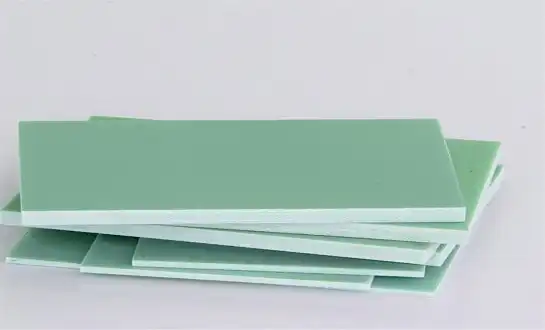
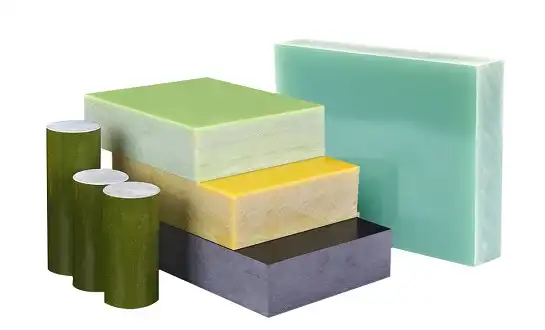
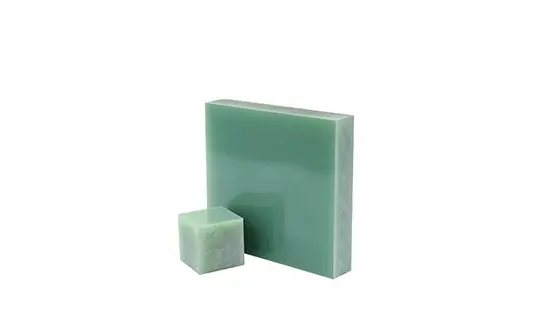
CNC Machined G10 ESD Epoxy Board for Semiconductor Equipment Fixtures
When semiconductor manufacturing demands both mechanical precision and electrostatic protection, G10 ESD Epoxy Board emerges as the essential material choice. This specialized composite combines woven fiberglass with epoxy resin and conductive carbon additives, creating a surface resistivity range of 10^5 to 10^9 Ohms—perfectly balanced to dissipate static charges without causing electrical shorts. CNC machining transforms these boards into custom fixture components that protect delicate microchips during assembly, testing, and handling operations throughout production lines.
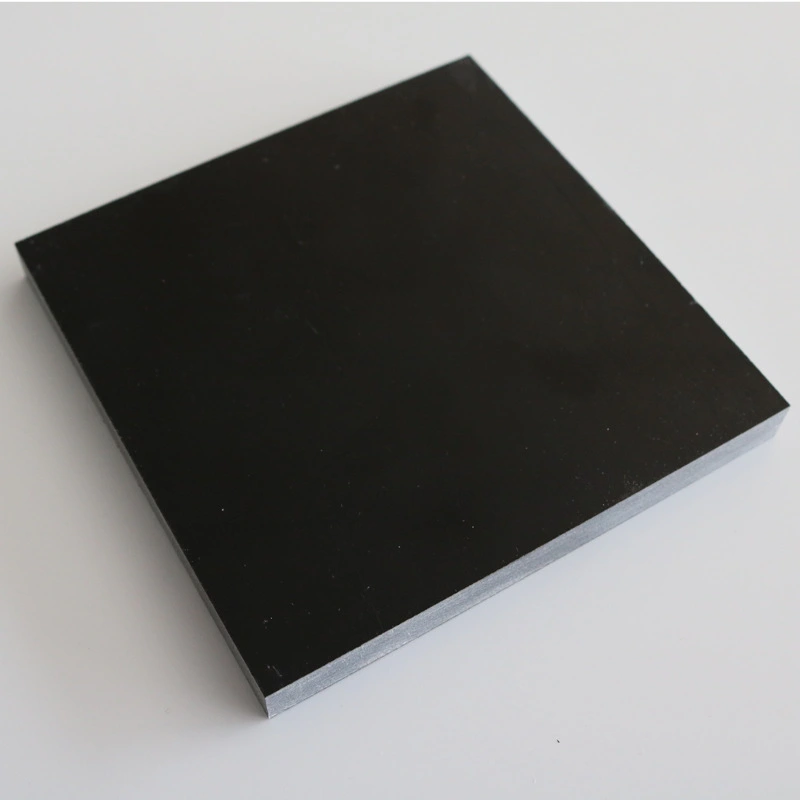
Understanding CNC Machined G10 ESD Epoxy Board
Material Composition and Structure
Electronic-grade non-alkali glass fiber cloth that is soaked with a carefully made epoxy resin forms the base of this high-performance material. During the production process, static-dissipative agents are added, which makes it different from regular G10 or FR4 boards. These electrical fillers are spread out evenly in the matrix, which means that the ESD safety is the same for the whole component and not just the surface.
Through decades of production experience, we've seen that this internal change lasts much longer than external coatings, which can wear off after being handled many times. The hot-pressing consolidation process joins several layers together at a controlled temperature and pressure. This gives the material a density of 1.82 g/cm³, which makes it very stable in size even when it is cut to very close standards.
Essential Technical Properties
Performance at high temperatures is one of the most important specs. With a glass transition temperature between 130°C and 140°C and the ability to operate continuously up to 155°C, these boards keep their shape even when they are heated and cooled many times during semiconductor processes. The material is very flexible and can be used in a wide range of temperatures, from -269°C in cold settings to high temperatures.
The dielectric strength stays the same even when there is a lot of wetness, which solves the problem of materials absorbing water that happen with lower quality materials. Chemical resistance includes flux residues, cleaning solvents, alcohols, and oils, which are all common fluids used in manufacturing. This makes it so that it doesn't break down when exposed to process chemicals for a long time, keeping its mechanical and electrical qualities over its entire operating life.
CNC Machining Precision Capabilities
Today's computer-controlled machining can take simple laminate sheets and turn them into complicated fixture shapes that can be repeated in a way that is not possible with human methods. It becomes normal for tolerances to be within ±0.05mm instead of just a goal. This makes it possible for semiconductor wafer cases, test sockets, and alignment jigs to fit properly.
The machining process can handle complicated features like counterbored holes for flush-mounted fasteners, precision-milled pockets for component placement, threaded inserts for flexible assembly, and shaped surfaces that match how equipment interfaces. CNC-machined ESD epoxy boards provide the exact useful balance that semiconductor fixture makers need, unlike metals that conduct heat and electricity or regular plastics that build up static.
Performance and Advantages of G10 ESD Epoxy Boards for Semiconductor Fixtures
Electrostatic Discharge Control
Visible damage to semiconductors happens when they are exposed to voltage differences as small as 100 volts, which humans can't even notice. Most insulating materials store charges and create kilovolt potentials by rubbing against each other or separating them. Fixtures made of metal make direct discharge paths that cut through thin gate oxides, while G10 ESD Epoxy Board fixtures help prevent electrostatic discharge by providing reliable insulation and ESD protection during semiconductor handling processes.
This problem can be solved by static-dissipative epoxy boards, which let you control how charges decay. It has been proven through surface resistance readings that charges disappear within 0.1 to 1 second, not forever or all at once. This slow loss of power saves both the semiconductors being worked on and the expensive test equipment that is connecting to them. Manufacturers' engineers always say that yield goes up when fixture materials are changed to the right ESD grades.
Mechanical Durability Under Operating Stress
Tensile strength greater than 300 MPa makes sure that fixture parts don't bend when clamping forces and thermal expansion stresses act on them. Even when mounting arrangements cause cantilever pressure conditions, geometric accuracy is kept by flexural strength. In contrast to phenolic materials that can separate or unreinforced plastics that stretch over time, the glass-epoxy matrix keeps its shape over millions of cycles of use.
We've been keeping an eye on equipment parts that are used in ongoing production for more than five years and haven't seen any wear or property loss. The material doesn't break apart when drilled or chip along polished edges, so the surfaces stay clean and don't get contaminated with particles. This mechanical toughness immediately leads to lower replacement costs and fewer breaks in production for upkeep.
Comparative Material Analysis
When compared to FR4 boards, ESD-modified versions have the same mechanical properties, but they also have extra static protection that FR4 boards don't have. Glass-epoxy composites are better at keeping their shape and temperature stability than carbon-filled plastics. Metal alternatives make grounding more difficult and add thermal mass that can mess up processes that need to be precise about temperature.
The cost-efficiency estimate is more than just unit price. A company that makes semiconductor equipment that we work with reported a 40% drop in device failures caused by ESD after switching test fixture boxes from regular FR4 to epoxy boards that dissipate static electricity. The big investment paid for itself in three months just through higher yields, not counting the time saved on fixing problems and guarantee claims.
How to Choose the Right G10 ESD Epoxy Board for Your Semiconductor Fixtures
Evaluating ESD Protection Requirements
The requirements for surface resistivity should match the level of sensitivity of the gadgets being worked on. Surface resistance for Class 1 components (which are the most sensitive) should be between 10^6 and 10^8 Ohms. Devices in Classes 2 and 3 can handle slightly wider ranges. Volume resistivity is just as important as surface resistivity because charges created by friction or pressure must be able to escape through the material as a whole, not just across its surfaces.
Following the testing procedures outlined in ANSI/ESD S20.20 standards makes sure that the qualities of the material meet the needs of the application. When working with suppliers, make sure you get certified test reports that show how the ASTM D257 standard was used to measure both surface and volume resistivity. The results of tests are affected by the temperature and humidity, so specifications should be based on real-world conditions.
Mechanical and Thermal Characteristic Balance
Fixture designs are put under a lot of different kinds of stress. Support structures that hold weight need to have high compressive strength, but extended arms need to have high flexural stiffness. Parts that are heated and cooled over and over again need to have coefficients of expansion that are the same as the materials around them so that stress doesn't build up at the joints. G10 ESD Epoxy Board is often selected for such demanding fixture applications because it combines excellent mechanical strength, dimensional stability, and reliable electrical insulation performance.
Standard grades work well for most uses, but there are also versions that are better for harsh circumstances. For processes that need longer cure times, high-temperature versions increase the continuous operating range to 180°C. When choosing a material, you should think about the fixture's worst possible mix of temperature, mechanical, and chemical inputs at the same time, rather than just one or two peak conditions.
Supplier Collaboration and Certification Verification
Quality stability starts with choosing the right provider. Manufacturers who keep their UL and RoHS certifications show that they are committed to controlled processes and being able to track materials. Although ISO 9001 approval means that quality management is systematic, semiconductor uses often need more proof.
We suggest starting technical conversations early on in the device design process. Suppliers can suggest the best material types and machining methods if you tell them about the application's working temperature ranges, chemical exposures, needed tolerances, and expected service life. Ask for sample parts to be machined to standard shapes so that testing can confirm performance before committing to large-scale production. This partnership lowers the risk of growth and speeds up the time it takes to get qualified.
Procurement Guide: Ordering CNC Machined G10 ESD Epoxy Boards
Understanding Pricing Factors and Order Logistics
Material costs include the price of the raw laminate plus the difficulty of the cutting. When it comes to processing costs, simple rectangular blanks with basic hole patterns don't cost much more than simple contours that need multi-axis machining and tight tolerances. When you buy more than 100 pieces, the unit price usually goes down by 15–25% compared to trial runs. This is called tiered discounting.
Minimum order amounts depend on what the supplier can do and how busy their production plan is right now. Many makers can take initial orders as low as 10 to 20 pieces to help with the testing and validation stages. Once designs are ready for mass production, orders can be cut down to more manageable levels. Custom machined parts usually have lead times of three to five weeks, but established sources with a wide range of stock can sometimes shorten plans for urgent needs.
Specifying Custom Machining Requirements
Lack of clear documentation leads to costly misunderstandings. All important dimensions should be shown on technical drawings, along with the required surface finish (usually Ra 3.2μm or better for ESD applications) and edge break specifications to get rid of any sharp corners that could hurt operators or parts. Callouts for materials must include both the base laminate grade and the ESD qualities that are needed.
If your tools need attaching hardware, be clear about whether threaded inserts, press-fit bushings, or adhesive bonding will be used. This is because the choice of hardware affects the machining processes. It's important to be clear about what chamfers, countersinks, and counterbores are, including their angles and depths. We've found that giving 2D drawings along with 3D models in STEP or IGES forms greatly cuts down on mistakes in reading and the number of times they need to be changed.
Logistics and After-Sales Support
Material flaws and physical issues that are found within 30 to 90 days of receipt are usually covered by warranties. Good suppliers stand behind their goods by offering replacement guaranties and technical support to look into any problems with how they work. Setting clear inspection methods upon arrival, such as measuring, looking at the surface, and doing spot checks for resistivity, protects both parties through written acceptance criteria.
Trusted G10 ESD Epoxy Board Suppliers and Brands for Semiconductor Equipment
Evaluating Supplier Credibility
Documentation for certification is the basis for evaluating suppliers. UL certification shows that the materials meet safety standards, and ISO certification shows that the company can control the production process. RoHS compliance approval is important for businesses that make products for the European market or that follow global material standards.
References from customers and case studies show that a supplier is reliable in ways other than certifications. What do they do when problems come up out of the blue? What kind of help do they offer during design optimization? In our business, long-term relations depend on providers who do more than just fill orders. They need to offer technical knowledge as well. We've built partnerships with companies that make tools and electronics by seeing each project as a chance to work together instead of just buying something.
OEM Partnership Opportunities
Co-development partnerships open up benefits that go beyond what's normally available in a store. Engineers can make material mixtures work better for certain uses by changing the chemistry of the glue to make it more resistant to chemicals or changing the amount of filler used to finetune the ESD properties. Custom thickness ranges, over-sized sheet sizes, and unique surface treatments are possible when order numbers are high enough to support the cost of making new tools.
Most of the time, volume agreements guaranty capacity allocation and keep prices stable. Manufacturers of semiconductor equipment that use just-in-time production plans can improve supply chain management with consignment inventory programs and planned releases. These partnerships go beyond the buyer-seller relationship and turn into strategic ties where both companies work together to succeed.
Conclusion
CNC-machined resin boards that dissipate static electricity, such as G10 ESD Epoxy Board, are now necessary for making semiconductors because they meet both mechanical and electrostatic safety needs. The choice of materials, the quality of the supplier partnership, and the accuracy of the specifications all have a direct effect on how well the fixture works and how much is produced. The money spent on well-designed parts pays off because they last longer, break less often, and cause fewer problems with production. When procurement workers and engineering teams know about these material skills and selection criteria, their companies can stay ahead of the competition when it comes to making semiconductor equipment.
FAQ
What makes G10 ESD Epoxy Board superior to standard FR4 for semiconductor fixtures?
Standard FR4 has great mechanical and insulating qualities, but it doesn't have any controlled static discharge. FR4's surface resistance is usually higher than 10^12 Ohms, which lets dangerous charges build up. ESD-modified versions keep the surface resistance between 10^5 and 10^9 Ohms by adding conductive additives. This lets charges escape safely without putting the system at risk of short-circuiting. This basic difference stops the voltage spikes that hurt sensitive semiconductors when they are being handled or tested.
Can CNC machining achieve the precision required for custom fixture components?
Modern CNC machines can hold tolerances of less than 0.05 mm on glass-epoxy laminates, which is good enough for the precise measurements needed for semiconductor fixtures. Multi-axis machining centers can make complicated shapes with undercuts, precise hole patterns, and curved surfaces that fit the interfaces of other machines. By choosing the right tools and cutting settings for composite materials, you can stop delamination and get clean lines without having to do any extra work.
How do I verify ESD properties meet application requirements?
Testing that meets the requirements of ANSI/ESD S20.20 and ASTM D257 gives measurable proof. To measure surface resistivity, 10 or 100 volts are applied through electrodes that are arranged in a circle, and current flow is measured. Parallel plate electrodes are used for volume resistance tests. The temperature and humidity should be controlled so that they are the same as the operating conditions. Reliable providers send approved test records with the materials they ship, but an incoming review checks the consistency of each batch.
Partner with J&Q for Your ESD Epoxy Board Requirements
At J&Q, our expert team has more than 20 years of experience making and shipping high-performance insulation materials, such as precision-machined static-dissipative epoxy boards designed for use in semiconductor equipment. We have a lot of experience with material science and combined logistics, which makes the whole buying process easier, from the initial meeting to the delivery of parts. We provide uniform quality and full technical support whether you need a small number of prototypes to test a fixture or a large number of production samples with planned releases.
Get in touch with our technical experts at info@jhd-material.com to talk about your unique fixture needs. We suggest materials, send you sample parts for testing, give you detailed quotes, and work with you throughout the whole design process. We have been a G10 ESD Epoxy Board supplier for a long time and work with electrical manufacturers, industrial equipment builders, and semiconductor companies all over North America. We know the performance needs and purchasing priorities that are important to your business.
References
1. National Electrical Manufacturers Association. "Industrial Laminating Thermosetting Products Standards Publication." NEMA LI 1-2018.
2. ANSI/ESD Association. "Protection of Electrical and Electronic Parts, Assemblies and Equipment." ANSI/ESD S20.20-2021.
3. ASTM International. "Standard Test Methods for DC Resistance or Conductance of Insulating Materials." ASTM D257-14.
4. IPC Association Connecting Electronics Industries. "Requirements for Handling Electrostatic Discharge Sensitive Devices." IPC-A-610H.
5. Underwriters Laboratories. "Standard for Safety Polymeric Materials - Industrial Laminates, Filament Wound Tubing, Vulcanized Fibre, and Materials Used in Printed-Wiring Boards." UL 746E.
6. Society of Plastics Engineers. "Thermoset Composite Material Properties and Processing Parameters for Precision Machining Applications." SPE Technical Papers Volume 64, 2019.

Get a complete product list and quotation
J&Q New Composite Materials Company