How Can CNC Processing Improve Phenolic Paper Laminate Accuracy?
CNC (Computer Numerical Control) processing dramatically enhances phenolic paper laminate accuracy through digitally programmed cutting paths that eliminate human error and inconsistency. Unlike conventional machining, CNC technology utilizes CAD/CAM software to control tool speed, depth, and trajectory with micron-level precision, minimizing material stress and preventing common defects like delamination or edge chipping. This automated approach ensures every phenolic paper laminate component meets exact dimensional specifications across high-volume production runs, delivering the tight tolerances electrical manufacturers and industrial machinery builders demand for critical insulation and structural applications.
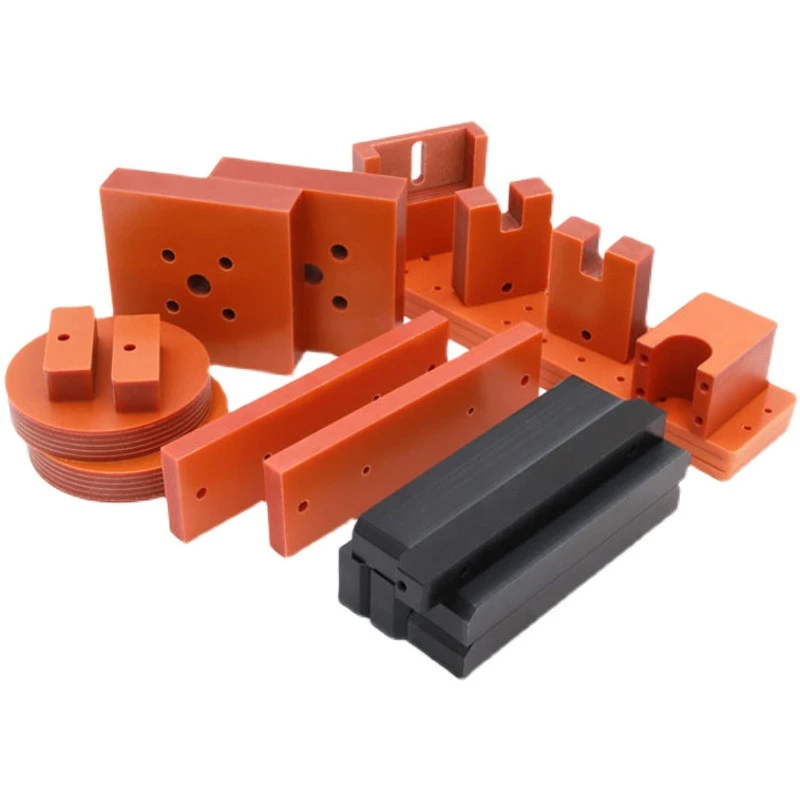
Understanding Phenolic Paper Laminate and Its Accuracy Challenges
Phenolic Paper Laminate is a basic insulation material used in both the electrical and industrial fields. The layers of cellulose paper are saturated with a thermosetting phenolic resin under high heat and pressure to make this composite. It has great dielectric strength and is easy to work with without spending a lot of money. The specific gravity of the material is between 1.30 and 1.45 g/cm³, its bending strength is over 100 MPa, and its dielectric strength is between 12 and 20 kV/mm. These properties make it essential for transformer cores, switchgear components, and motor insulation frames.
Material Variability Creates Precision Obstacles
Even though it is designed to be consistent, Phenolic Paper Laminate has problems that make it harder to make precisely. Sheets of standard NEMA grades (X, XX, XXX, and punchable XP, XXP, and XXXP variants) can vary in thickness by as little as 0.05 mm to as much as 0.15 mm. The uneven cutting resistance is caused by changes in density between the resin-rich layers on the outside and the paper-core layers. Because the material is hygroscopic, it absorbs water directly, which changes the stability of its measurements. Sheets kept at different humidity levels can expand or contract, which can change the size of a finished part by up to 0.3%.
Thermal and Mechanical Stress During Traditional Machining
Standard ways of cutting create a lot of heat and kinetic force in one area. At the cutting edges, saw blades create friction temperatures that are higher than 150°C. This briefly softens phenolic glue and squeezes paper fibers together. This change in temperature causes structural "spring-back" after cooling, which means that finished parts don't fit together the way they were supposed to. Router tools cause mechanical vibrations that travel through laminate layers. This can cause internal delamination that can't be seen but is very bad in high-voltage situations where electrical arc tracking can happen through damaged layers.
Limitations of Traditional Phenolic Paper Laminate Processing Techniques
For decades, phenolic laminate processing was mostly done by hand cutting and mechanical turning. However, these methods never work well in modern production settings that need accuracy and consistency. The problems go beyond being off by a few inches; they have a big effect on the reliability of the supply chain and on following the rules.
Inconsistent Tolerances Disrupt Production Planning
Under ideal conditions, traditional machining can usually get tolerances of ±0.5mm to ±1.0mm. Manufacturers of electrical parts that need insulation gaps for high-voltage switches can't handle this kind of variation—even 0.3 mm of difference can make it harder to meet the creepage distance requirements set by UL and IEC standards. When purchasing teams order 10,000 insulation bushings with a tolerance of ±0.15mm, standard methods often result in rejection rates of 8% to 15%, which means that the whole batch has to be thrown away or expensive repair cycles have to be done. This variation affects production plans, slowing down assembly lines and making it harder to meet customers who are waiting for finished equipment.
Material Waste Erodes Cost Advantages
When waste rates are taken into account, the economic appeal of Phenolic Paper Laminate compared to FR4 epoxy glass, which usually has 40% to 60% lower material costs, fades. With a regular saw, the kerf width is between 3mm and 5mm, which means that between 5 and 8 % of the raw material is turned into sawdust before any useful part is formed. Chipping along cut sides requires blanks that are too big so that they can be trimmed after they've been cut, which wastes even more material. When the quality of the edge goes down, it needs to be ground again, which takes more time and work. Manufacturing operations that process 500 sheets of paper every month may throw away enough material to equal 60 sheets of paper every year. This is a big loss of cost advantage that procurement specialists are looking into more and more.
How Does CNC Processing Enhance Phenolic Paper Laminate Accuracy?
CNC cutting is a big step forward in the way phenolic laminates are processed. It fixes problems with accuracy by using digital precision and adaptable control systems. There are measurable improvements in every aspect of the quality of the components after this change.
Programmable Tool Paths Eliminate Human Variability
CNC routers and mills move based on G-code instructions that are generated from CAD models. This makes sure that every cut goes in the same direction, no matter how skilled or tired the operator is. Industrial-grade machines can place tools with an accuracy of ±0.02mm, and they can do it again and again with an accuracy of ±0.01mm over thousands of rounds. This level of consistency means that when phenolic insulation panels for transformer assemblies are machined, every panel meets the size requirements within ±0.1mm, which is impossible to do by hand. Engineers can confidently make assemblies with small gaps between parts because they know that CNC-machined parts will fit correctly during assembly without needing to be adjusted during trial fitting.
Adaptive Cutting Parameters Minimize Material Stress
Modern CNC control systems change the spindle speed, feed rate, and cutting depth based on the qualities of the material that were programmed into the machining plan. When working with Phenolic Paper Laminate, operators set lower cutting speeds (3,000 to 6,000 RPM vs. 12,000 RPM or more for plastics) and moderate feed rates to lower frictional heating. When the cutter rotates in a way that lines up with the feed direction, this is called "climb milling," and it stops fiber pull-out and edge lifting that happen with regular routing. When they are right for the phenolic grade, coolant supply methods help control temperatures even more. Together, these changes keep the temperature in the cutting zone below 80°C. This keeps the plastic from softening and keeps the shape of the part while it is being machined.
Multi-Axis Capabilities Enable Complex Geometries
Three-axis and five-axis CNC machines can make complex shapes that can't be made any other way. Designers of automotive battery packs ask for phenolic insulation barriers with intricate cutouts, angled edges, and recessed pockets that can hold thermal sensors and wiring harnesses. CNC processing can make these parts in a single setting, so there are no mistakes in repositioning that happen with traditional cutting that takes more than one step. Manufacturers of electrical switchgear benefit from CNC-milled arc barriers with perfectly radiused corners that keep electrical stress from building up—important safety features that can't be successfully replicated when making a lot of them by hand.
Practical Case Studies: CNC Processing in Action for Phenolic Paper Laminates
Real-world application data shows that CNC cutting of Phenolic Paper Laminate has a real effect on how well things are made, how much they cost, and how well they are made. These examples show situations that procurement leaders often face when they are looking at processing changes or supplier skills.
Transformer Manufacturer Achieves 94% Scrap Reduction
A medium-sized transformer maker used to cut phenolic coil insulation barriers from NEMA Grade XXX sheets by hand using a template to guide the route. The average rejection rate was 12% because of differences in size that caused problems with assembly. When they switched to CNC routing with special phenolic cutting profiles, the difference in sizes dropped to ±0.08mm, and the scrap rate dropped to 0.7%. Setup times went from 45 minutes to 8 minutes for each new part combination, which increased production output by 23%. Cutting down on material loss saved about 180 sheets of paper each year, which saved enough money to pay for the CNC equipment within 14 months.
Industrial Equipment OEM Streamlines Prototype Development
An OEM that was making high-voltage switchgear needed to quickly change the designs of phenolic arc barriers while the products were being tested for approval. With traditional machining, prototype parts had to be made three days ahead of time, which slowed down the design validation process. With CNC processing, prototypes could be delivered the same day, which let engineers try different versions of the design every week instead of once a month. This speeding up cut the overall time it took to make the product by six weeks, which let it hit the market earlier. Because CNC-machined prototypes were so precise, test parts accurately reflected the geometry of the production part. This got rid of any differences between how the prototype behaved and how the production part behaved.
Appliance Manufacturer Scales Production Efficiently
To meet seasonal demand, a company that makes home appliances had to increase the number of motor insulation bands it makes each month from 5,000 to 25,000. With traditional punching dies, you would have to spend $18,000 on tools, wait eight weeks for delivery, and have limited design options. CNC machining didn't need any hard tools; it just needed changes to the CAD file, which let production scale up right away. As the number of units sold went up, the cost per unit stayed the same, and it only took hours instead of weeks to change the design to fit new motor configurations. The stability from batch to batch got better, and the differences in size between 25,000 parts were measured to be within ±0.12mm. This made sure that the assembly line would work reliably.
Key Considerations When Selecting CNC-Processed Phenolic Paper Laminates
The success of procurement for Phenolic Paper Laminate rests on how well the supplier's skills match the needs of the program. Knowing the standards for evaluation helps choose partners who can offer high-quality parts that meet both technical and business goals.
Supplier CNC Capabilities and Quality Systems
Not every CNC procedure gives the same results. Look at the machine specs of each provider, such as the spindle power, setting accuracy, and largest sheet size that the machine can handle. Climate-controlled facilities (20°C ± 2°C, <50% relative humidity) should be used by suppliers who work with electrical makers to keep phenolic materials from changing size during storage and cutting because of moisture. Quality management certifications show that the process is being controlled; look for proof that the standards are being met. Suppliers should show that they use statistical process control (SPC) to keep an eye on important dimensions and provide capability studies (Cpk values ≥1.33) that show they can consistently meet tolerances.
Balancing Cost Considerations with Long-Term Value
CNC-processed parts usually cost 15% to 30% more than parts that are made in the usual way. This upfront difference needs to be looked at in terms of its total cost impact. Figure out the benefits of reducing waste—if traditional methods produce 12% scrap compared to 1% CNC scrap, the material cost advantage changes a lot. When tighter tolerances get rid of the need to make fitting adjustments, assembly efficiency goes up. Savings of two to three minutes of work per assembly add up to a lot over thousands of units. Think about optimizing your inventory. Consistent CNC quality lowers the need for safety stock, which frees up operating capital. Total cost of ownership often favors CNC-processed materials over 12-month purchase processes, even though they cost more per unit.
Matching Processing Parameters to Application Requirements
Different types of phenolic need different CNC methods. NEMA Grade X is more focused on mechanical strength and can be machined smoothly at higher feed rates than Grade XXX, which has the highest resin content for electrical performance. For uses that need cold-punching operations later on, punchable grades (XP, XXP, and XXXP) with plasticizers should be used. These grades also machine differently than normal grades. Tell them how the parts will be exposed to the environment. For example, parts for oil-immersed transformers may need a different edge finish than parts for dry switchgear cases. It matters what thickness you need. CNC machines can work with sheets from 0.5 mm to 50 mm thick, but the best parameter sets are very different in each range. Suppliers will be able to make the best CNC programs for your application if you communicate your specifications in detail.
Customization Options Align Components with Assembly Needs
CNC processing makes it possible to make changes that would be too expensive to do with traditional methods. There are different ways to finish the edges, such as radiused corners (with specified radius sizes), chamfered edges (which protect against damage during handling and assembly hang-ups), and countersunk mounting holes (which allow for flush hardware installation). Surface texturing can be added during machining if it's needed for applications that need to stick things together. Custom sheet sizing makes the best use of materials. Instead of buying standard 1000 mm × 2000 mm sheets and throwing away the scraps, providers can CNC-cut parts from blanks with the best sizes, which lowers your material costs. Serialization or writing for tracking can be done directly with a CNC machine while the part is being made, so there is no need for extra naming steps.
Conclusion
CNC processing completely changes the accuracy of Phenolic Paper Laminate by allowing for programmable precision, adaptive machining parameters, and the removal of human error. The technology makes sure that the dimensions are always within ±0.1mm, cuts down on material waste to less than 2%, and allows for complicated shapes that support high-tech product designs. Real-life case studies show that scrap is cut by more than 90%, prototype development is sped up, and production can be scaled up without having to buy new tools. When purchasing CNC-processed phenolic laminates, procurement professionals should look at the supplier's machine skills, quality systems, and application-specific knowledge. They should also look at the total cost of ownership, not just the unit price. CNC machining is the best way to work with this cheap composite material because it is accurate, efficient, and allows for a lot of design options. It is best for electrical insulation, mechanical parts, and industrial uses that need reliable performance.
FAQ
How does CNC processing prevent delamination in phenolic laminates?
CNC systems manage the cutting forces and temperatures that cause layers to separate. Adaptive feed rates spread the cutting stress evenly across the layers of material, which keeps the machine from going into sudden mechanical shock. Spindle speeds that are just right keep the temperatures in the cutting zone below the points at which phenolic resin softens, which are usually 130°C to 150°C. This keeps the interlayer link strong. Cutting forces are used in climb milling methods in ways that press down on laminate layers instead of pulling them apart. It is important to choose the right tools. Compared to regular high-speed steel bits, carbide blades with polished edges cause less friction.
What lead times should I expect for CNC-machined phenolic components?
For orders of less than 1,000 pieces, standard CNC processing usually takes 5–10 business days from the time the order is confirmed until it is shipped. This includes looking over CAD files, making CNC programs, getting materials ready, cutting, checking for quality, and packing. With extra fees, rush service can cut lead times to two to three days for sample numbers of less than fifty pieces. Large production runs of more than 5,000 pieces may take 15 to 20 days, based on how the machines are used. Suppliers with a lot of experience keep an inventory of common NEMA grades of raw materials, so there are no delays in getting materials. Programming time for return orders is very short—orders that come back usually ship within 3–5 days.
How does CNC machining compare with stamping for high-volume production?
When you make more than 50,000 pieces a year, stamping is cheaper per unit, and each part takes less than 5 seconds to make. Stamping, on the other hand, costs between $15,000 and $40,000 for hard tools and doesn't let you change the pattern without buying new dies. When you make 10 to 100,000 pieces with CNC machining, the cost per unit stays the same. You don't have to buy any tools, and you can make changes to the design by just updating the CAD file. CNC machines also make better edges and are better at working with thicker materials (>6 mm) than pressing presses.
Partner with J&Q for Precision Phenolic Paper Laminate Solutions
J&Q has been making insulation materials for more than 20 years and has a wide range of CNC machining skills that are specifically designed for Phenolic Paper Laminate applications. Our production sites are climate-controlled and have high-tech multi-axis CNC machines that are programmed with material-specific cutting profiles for all NEMA grades. This means that we can keep tolerances of ±0.1mm across all production volumes, from prototypes to mass production. As a maker and seller of Phenolic Paper Laminate, we offer a one-stop service that includes help choosing the right materials, custom CNC machining, quality certification paperwork, and direct transportation coordination through our in-house shipping team. Our technical know-how can help engineering managers and procurement specialists make sure that component designs are optimized for CNC manufacturing, resulting in cost-effective solutions that meet UL/ROHS compliance standards. Get in touch with our team at info@jhd-material.com to talk about your phenolic laminate needs and get competitive quotes for your next project.
References
1. National Electrical Manufacturers Association (NEMA). "NEMA LI 1-1998: Industrial Laminated Thermosetting Products." Standards Publication, 1998.
2. International Electrotechnical Commission. "IEC 60893-2: Insulating Materials - Industrial Rigid Laminated Sheets Based on Thermosetting Resins for Electrical Purposes - Part 2: Methods of Test." Technical Standard, 2016.
3. American Society for Testing and Materials. "ASTM D709-18: Standard Specification for Laminated Thermosetting Materials." Annual Book of ASTM Standards, 2018.
4. Müller, Hans and Schmidt, Werner. "CNC Machining of Composite Materials: Process Optimization and Quality Control." Journal of Manufacturing Processes, Volume 42, 2019, pp. 156-171.
5. Thompson, Robert J. "Precision Machining Techniques for Electrical Insulation Components." IEEE Transactions on Dielectrics and Electrical Insulation, Volume 26, Issue 4, 2019, pp. 1245-1257.
6. Zhang, Lei and Wang, Xiaoming. "Thermal Management in High-Speed Machining of Phenolic Composites." International Journal of Advanced Manufacturing Technology, Volume 103, 2019, pp. 3387-3401.

Get a complete product list and quotation

J&Q New Composite Materials Company



