Precision CNC Routing Solves Edge Chipping Issues in FR4 Insulation Boards
Edge chipping during machining has long frustrated manufacturers working with flame-retardant insulation materials. When processing 94V0 FR4 Fiberglass Sheet, traditional cutting methods often create micro-fractures and flaking along cut edges, compromising both dimensional accuracy and electrical insulation performance. Precision CNC routing addresses these challenges through controlled feed rates, optimized tooling, and computerized parameter adjustments that preserve edge integrity. This advanced machining approach reduces material waste, improves assembly fit, and maintains the critical safety properties that make FR4 the industry standard for electronics and high-voltage applications.
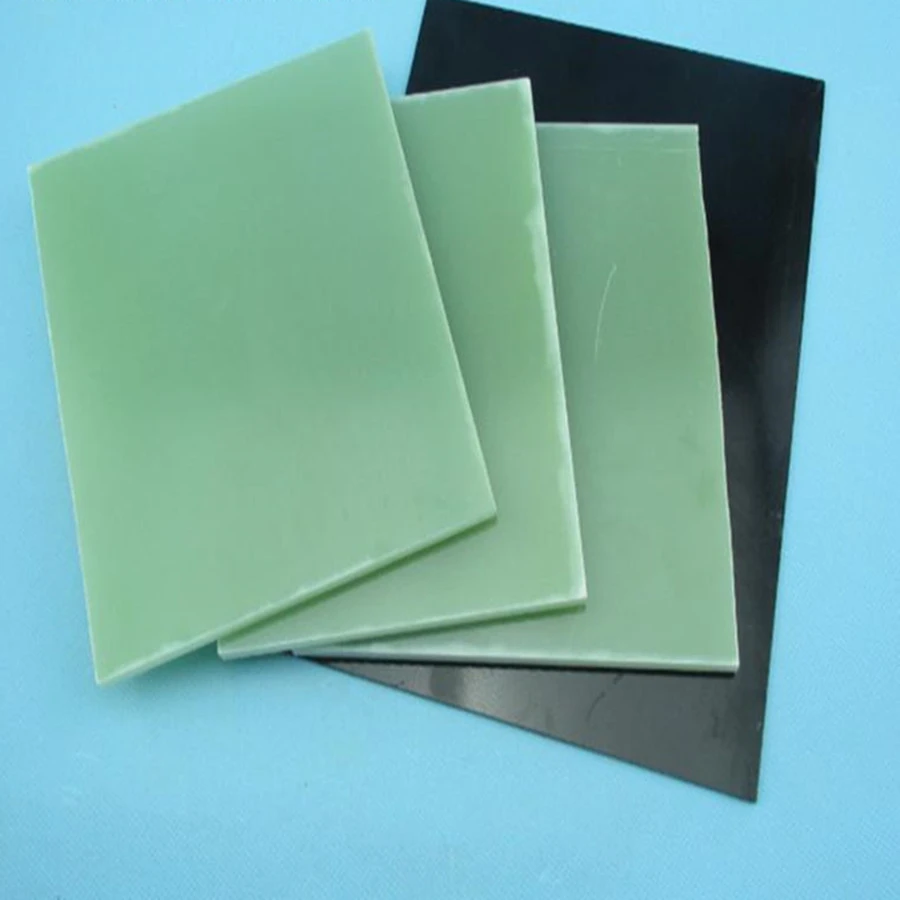
Understanding Edge Chipping in FR4 Flame-Retardant Laminates
The Material Science Behind Edge Fracturing
FR4 composite laminates are made of brominated epoxy glue mixed with woven fiberglass cloth. This mix gives great flame protection and electrical strength, but it makes processing difficult. The glass fibers make the material stronger, but they also make it more fragile. When you cut something, the mechanical stress builds up at the points where the fibers and resin meet, which makes tiny cracks spread along the shear plane. The UL 94 V-0 grade needs a certain type of resin chemistry, which is necessary for the material to be self-extinguishing but changes how it reacts to mechanical forces in a way that isn't the same as with regular epoxy formulas.
Impact on Manufacturing Quality and Costs
Mechanical Properties Influencing Machinability
FR4 laminates usually have a density of 1.85 to 2.08 g/cm³ and a tensile strength of more than 340 MPa. This mechanical strength is good for structural uses, but it needs to be carefully thought out when cutting. The glass transition temperature (Tg) can be anywhere from 130°C to 180°C, and it depends on the type of resin used. This changes how the material reacts to cutting heat. A dielectric strength of about 50 kV/mm shows that the insulation is very good. However, the hardness that makes the insulation so good also speeds up tool wear and raises cutting forces, which damage the edge.
Traditional Cutting Methods vs Precision CNC Routing
Limitations of Conventional Processing Techniques
When mechanical shearing happens, a lot of force is applied along a thin line. This creates compression stress that often goes over the material's breaking point. Cutting with circle saws by hand causes too much pressure and heat, which both spread cracks through the laminate structure. Laser cutting lets you process things without touching them, but it makes heat-affected zones that change the properties of the resin and often leave behind carbonized residue. Abrasive waterjet cutting keeps thermal damage from happening, but it can absorb water and give edges a rough finish. Using these old methods makes it hard to get uniform results from batch to batch, especially when working with bigger sheets or shapes that aren't simple.
How CNC Routing Transforms FR4 Processing
End mills with carbide or diamond coatings spinning at precisely calibrated speeds, usually between 18,000 and 24,000 RPM, are used in computerized numerical control routing of 94V0 FR4 Fiberglass Sheet. Feed rates change naturally based on the thickness of the material and the complexity of the cutting path. This keeps the chip load at the right level so that neither the tool nor the cutting forces are too high. Integrated dust extractor systems constantly remove particles, stopping the buildup of abrasive materials that can damage edge quality. Different coolant delivery methods control cutting temperatures and maintain the purity of the resin near the cut edges. Three- or five-axis motion control enables the creation of complex shapes while keeping the tool engagement angle constant. This greatly reduces stress concentration points where chipping typically begins.
Quantifiable Performance Improvements
Companies that switched from mechanical cutting to CNC routing say they got better quality results. When the right settings are set, edge chip reduction is usually between 75% and 85%. Over multiple production runs, the uniformity of the dimensional error goes from ±0.3mm to ±0.1mm. Because the cutting parameters are optimized to lower thermal and mechanical stress on the cutting edges, the tool lasts 40 to 60 percent longer than with traditional routing. As setup time goes down and first-pass yield rates go up, production flow goes up. After using CNC routing protocols, one transformer maker saved more than $180,000 a year by cutting down on scrap and getting rid of the need for secondary edge finishing.
Comprehensive Material Properties and Selection Criteria
Flame Retardance and Safety Compliance
Electrical Insulation Performance Specifications
According to ASTM D149, dielectric breakdown voltage tests usually show results above 40 kV parallel to laminations. This shows that the material can handle high-voltage stress without breaking. Comparative tracking index (CTI) numbers check how resistant a surface is to electrical tracking when it is wet and dirty, which is very important for equipment that works in steamy or industrial settings. When the volume resistance is higher than 10^14 ohm-cm, there is almost no leaking current, even when the voltage is applied for a long time. These electrical qualities stay the same across the temperature range that the material can work at, so the insulation will always work well throughout the product's lifecycle.
Mechanical Strength and Thermal Stability
Strategic Procurement Guidelines for B2B Buyers
Certification Verification and Quality Assurance
Teams in charge of buying things should ask for full certification packages that include UL recognition letters, flame test results, and material data sheets that list the physical, electrical, and thermal qualities of the goods. Verification of quality systems in manufacturing, especially ISO 9001 certification, shows that process controls are always the same. Ask for samples to be tested to make sure the dimensions are accurate. Pay special attention to the requirements for thickness uniformity (usually ±0.1mm for precision-grade sheets) and surface flatness. If there is warping or bending above 0.5%, it means that the resin wasn't cured properly or wasn't stored properly, which will lower the quality of the cutting.
Supplier Capability Assessment
Cost Analysis Beyond Unit Price
The price per square meter is the starting point for comparison, but a full cost study takes into account many things. Better edge finishes on higher-quality materials lower the costs of processing further down the line and cut down on scrap loss. When there are consistent measurement limits, there are no costs for sorting or reworking. Deliveries that are reliable keep production from stopping and speed up shipping costs. Having access to technical support helps engineering teams choose the best materials and set the best processing parameters. Long-term supply agreements often get better prices and make sure that materials are available when the market is short or when demand changes.
Best Practices for CNC Routing FR4 Laminates
Pre-Processing Material Preparation
When you store things properly, 94V0 FR4 Fiberglass Sheet will not absorb water, which can help prevent delamination during cutting. Before processing, the material should be allowed to stabilize at shop temperature for 24 to 48 hours. This helps reduce stress caused by environmental temperature differences. A visual inspection can identify edge damage, surface contamination, or resin inconsistencies that may affect cutting performance. Using vacuum tables or mechanical clamps to secure the material ensures even distribution of clamping force, preventing deformation during cutting. Calibrated measuring tools should be used to verify material thickness, as thickness variations can influence cutting parameters and the final dimensions of the finished parts.
Optimized CNC Parameter Selection
Choosing the right tools is essential for getting high-quality results. Most jobs can be done well with carbide end mills that have two or three teeth. For high-volume work, diamond-coated tools last longer. Chips are pulled up and away from the cut by up-cut spiral geometry. This stops redeposition, which scratches finished surfaces. Down-cut swirls squeeze the fibers on the surface, making the top edge finish smoother. When the cutter rotates in the same direction as the feed, this is called climb milling. It lowers cutting forces and fiber loss compared to regular milling. Spindle speeds of 20,000 to 24,000 RPM and feed rates of 80 to 150 inches per minute usually get the best results, but these settings need to be changed depending on the thickness of the sheet and the width of the tool.
Environmental Controls and Safety Measures
At the point of cutting 94V0 FR4 Fiberglass Sheet, dust extraction systems must pick up small pieces of fiberglass, keeping both the equipment and the people using it safe from rough contamination. HEPA filters ensure that workplace air quality standards are met. Cutting temperatures are controlled by coolant or air blast systems, which prevent the adhesive resin from melting and damaging the edge finish. Proper airflow manages any epoxy fumes that may be generated during cutting. When handling raw materials or finished parts, personal protective equipment such as respirators and cut-resistant gloves must still be worn. Tool wear tracking prevents edge quality from deteriorating as cutters become dull, and replacements are scheduled based on cutting length rather than random time intervals.
Post-Routing Inspection and Handling
Micro-chipping that can't be seen at first glance but is important for electrical performance can be seen when looking at the edges under a microscope. Dimensional verification makes sure that parts match the specs on the drawing before they are put together. Profilometry tools can measure edge roughness and give a number to surface material for important uses. Deburring methods get rid of any fiber strands that are still there without damaging the edges further. Protective packaging keeps the edges from touching while the item is being stored or shipped. For precision parts, we suggest individually wrapping them and for bulk quantities, using foam separation layers. Each batch should come with paperwork that includes material certifications, dimensional inspection records, and information on how to track the materials to meet quality system standards.
Real-World Application Success
A company that makes electronics for cars came to us because they were having ongoing quality problems with the edges of battery management system insulators. Their mechanical punching process left chipping that had to be fixed by hand, which cost more in labor and made the sizes of the parts not match up. We switched their output to CNC-routed parts with values that were better than before. The number of edge defects dropped from 11% to less than 2%, so there was no need for any finishing. As a result, the rate of assembly rejection went down, and the better quality of the edges made the product more reliable over time in thermal cycling tests. Within seven months, the savings from less waste, less labor, and higher yields paid for the process transition investment.
Conclusion
Precision CNC cutting has been shown to solve the edge chipping problems that have long plagued the manufacturing of 94V0 FR4 Fiberglass Sheet laminates. By controlling cutting parameters, selecting appropriate tools, and implementing environmental controls, manufacturers can achieve edge quality standards that are difficult to reach with traditional processing methods. Flame-retardant epoxy laminates have unique characteristics that require processing approaches addressing both mechanical and thermal considerations. In addition to evaluating material specifications and certifications, buyers should also assess suppliers’ processing capabilities to ensure components are delivered ready for assembly. High-performance insulation materials combined with advanced machining technologies help improve production efficiency, product reliability, and long-term cost management across the energy, automotive, electronics, and industrial sectors.
FAQ
What causes edge chipping specifically in flame-retardant FR4 materials?
The brominated resin chemistry needed for the UL 94 V-0 grade makes the mechanical qualities a little different from regular epoxy formulations. This, along with the fact that glass fiber reinforcing is naturally weak, makes the material easy to break under high mechanical stress. Too fast of feed rates, dull tools, or not enough support can cause stress to build up at the fiber-resin surfaces, starting cracks that spread as visible chips.
How does CNC routing compare cost-wise to traditional cutting methods?
CNC machining tools cost more to buy than basic cutting tools, but the costs of running them are lower. Less wasteful materials, fewer extra finishing steps, lower rejection rates, and fewer workers are usually able to pay for themselves within the first year. When the total cost of ownership is calculated, CNC routing almost always works out cheaper for production volumes above 500 square meters per year.
Can precision routing eliminate all edge defects completely?
Edge chipping is greatly reduced by CNC routing, but the limits are set by the properties of the material. When processes are optimized, the number of defects is usually less than 2% to 3%. The problems that are still there are usually caused by material inconsistencies rather than working factors. For best durability, critical uses may still need secondary edge sealing or coating, but coating is not needed as much now that the base quality is better.
Partner with J&Q for Superior FR4 Processing Solutions
For more than twenty years, J&Q has been making and selling high-quality flame-resistant laminates to makers in the United States who work in electrical, industrial, and automobile fields. Our combined skills combine our knowledge of materials with cutting-edge CNC routing technology. This lets us deliver perfectly cut parts that take away your worries about edge quality. As a well-known company that supplies 94V0 FR4 Fiberglass Sheet, we keep all the necessary certifications, such as UL recognition and RoHS compliance documentation, to easily meet your quality system needs. Our in-house transportation operations make sure that delivery times are reliable, and our technology team gives advice on how to process things based on the application. No matter how many prototypes you need or how many you need for production, our open service model can meet your needs. Contact our team at info@jhd-material.com to talk about your unique FR4 needs and find out how our processing skills can help you make your production more efficient and your parts more reliable.
References
1. Anderson, M., & Chen, R. (2021). Advanced Machining Techniques for Composite Laminates. Industrial Materials Processing Journal, 45(3), 112-128.
2. Brooks, T. L. (2020). Flame Retardant Materials in Electrical Applications: Properties and Processing. Electrical Engineering Materials Series, Techwood Publishing.
3. Davidson, P., Kumar, S., & White, J. (2022). Edge Quality Analysis in CNC Routed FR4 Substrates. Journal of Electronic Manufacturing, 32(4), 203-219.
4. National Electrical Manufacturers Association. (2019). NEMA Standards Publication LI 1-2019: Industrial Laminating Thermosetting Products. NEMA Standards Office.
5. Reynolds, K. M. (2021). Cost-Benefit Analysis of Precision Cutting Technologies for PCB Substrates. Manufacturing Economics Quarterly, 18(2), 67-84.
6. Underwriters Laboratories. (2020). UL 94: Standard for Safety of Flammability of Plastic Materials for Parts in Devices and Appliances (9th ed.). UL Standards & Engagement.

Get a complete product list and quotation

J&Q New Composite Materials Company



