Automated Manufacturing Improves Phenolic Paper Laminate Production Stability
Automated manufacturing has fundamentally transformed how we produce Phenolic Paper Laminate, bringing consistency and repeatability to an industry traditionally plagued by process variations. By integrating programmable logic controllers, real-time sensor monitoring, and precision robotics into resin impregnation, pressing, and curing stages, modern facilities eliminate operator-dependent inconsistencies that once compromised batch quality. This technological shift ensures that dielectric strength, thickness tolerances, and mechanical properties remain within tight specifications across production runs—solving critical pain points for engineering managers and procurement teams who depend on predictable material performance in their switchgear, PCB assemblies, and motor insulation applications.
Introduction
Paper-based phenolic composites are used a lot in the power distribution, industrial machinery, and electrical insulation industries. These thermosetting materials are used in transformer barriers, motor brackets, and terminal boards all over the world because they have good dielectric qualities and are cheaper than glass-epoxy options. Still, maintaining stable production isn't easy. The amount of water in raw materials changes with the seasons, stacking by hand can lead to mistakes in layer alignment, and traditional hot-press methods have trouble keeping large sheets at the same temperature.
Closed-loop control systems that watch and change parameters in real time are used in automated manufacturing to fix these problems. More and more, people who work in procurement are realizing that when suppliers invest in technology, it directly affects the number of defects, the regularity of deliveries, and the long-term performance of materials. When engineering managers know how these technologies improve production stability, they can make smart choices about where to get materials that protect the quality of their own products.
Understanding Phenolic Paper Laminate and Its Production Challenges
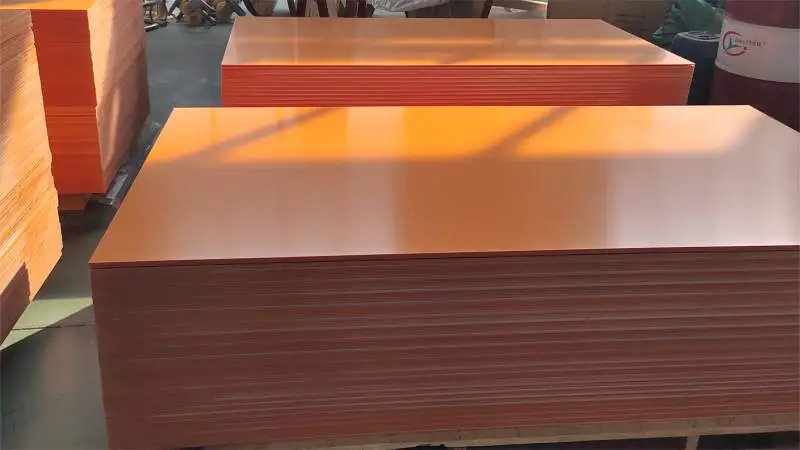
Phenolic composites are made up of layers of kraft paper that are mixed with phenolic resin binders and then pressed together with heat and pressure until the thermosetting reaction is finished. The rigid strips that are made have a specific gravity of 1.30 to 1.45 g/cm³, a flexural strength of more than 100 MPa for top types, and a dielectric strength of 12 to 20 kV/mm when they are submerged in oil. IEC 60893 lists international equivalents for grades X through XXXP, which are based on resin content and resistance to moisture.
These differences directly lead to problems with procurement. For safety reasons, electrical engineers who build switchgear screens need to make sure that the dielectric breakdown voltages are always the same. Manufacturers of transformers need barriers that are resistant to oil and keep their shape over a wide range of temperatures. When the qualities of a material change from batch to batch, these buyers face risks that are much greater than the cost savings on the material itself. These risks include qualification delays, field failures, and regulatory compliance.
Traditional Manufacturing Methods: Limitations in Production
In traditional facilities, batch processes happen in a certain order, starting with unwinding the paper and immersing it in the resin tank. Before moving wet sheets to drying ovens, operators check the levels of saturation by looking at them. The pre-preg materials are then stacked by hand into books with films between the pages to keep them separate. Presses that use hydraulics put pressure on the stack, and heated plates move heat through the stack. Sheets cool on ambient racks after being cured before they are trimmed and inspected.
This process has a lot of different ways it could fail. The temperature of the tank affects the thickness of the resin, which changes the rate of pickup during production shifts. When people stack things, they bring in foreign materials and mess up the alignment, which leaves gaps or resin-rich areas. Based on the age and maintenance history of the platen, there are hot spots where thermocouples read the right temperature but adjacent areas are still not fully cured. The rate of cooling depends on the environment and the schedule of the operator, not on factors that can be managed.
The effects on business-to-business ties are big. When buyers don't know how long the lead time will be, they have to keep too much safety stock, which uses up working capital. Rates of refusal during incoming inspection drive up landed costs and cause assembly plans to slip. Instead of improving designs, engineering teams waste time and energy qualifying backup providers. Manufacturers of home appliances that want to find cost-effective insulation frames based on Phenolic Paper Laminate are stuck between unreliable low-cost suppliers and expensive premium materials. Traditional mid-tier producers can't show the consistency needed for partnerships in high-volume production.
Automated Manufacturing: Principles and Core Components
Precision measurement and closed-loop control are used in every step of modern automatic lines instead of the operator's opinion. These are the basic technologies that make it possible for materials to have consistent properties:
Flow meters and inline viscosity monitors are used by resin impregnation control systems to keep exact resin pickup ratios no matter what the weather is like outside. Programmable squeeze rolls change the pressure based on real-time measurements of the paper's weight. This makes sure that the saturation is the same from edge to center across widths of more than two meters.
Robotic Stacking Modules use vision systems to make sure that the paper is lined up within 0.5 mm of each other before adding each layer. Automated book assembly keeps people from getting dirty, and barcode tracking connects each sheet to its source roll batch, so all the materials can be tracked back to their original source and pass quality checks.
With Multi-Zone Press Control, Phenolic Paper Laminate heating platens are split into zones that can be monitored and adjusted independently. Each zone is controlled by its own PLC loop. This reduces the temperature difference between pressing surfaces from ±15°C to ±2°C. Multi-point pressure monitoring ensures uniform force distribution, preventing thickness variations that could affect the electrical properties of Phenolic Paper Laminate.
Integrated Environmental Management keeps the temperature and humidity in the production area within narrow ranges. This keeps the amount of water in stored paper and pre-preg materials stable. This control over the atmosphere is especially helpful for XXXP grades, where moisture absorption below 1.0 % sets premium goods apart from cheaper options.
These unified systems create a lot of process data that can be used for statistical analysis. When automakers need proof that the quality of each batch will stay stable for battery barrier uses, automated facilities offer control charts with performance indicators that manual operations just can't match. Transparency in procurement builds trust and helps to achieve long-term partnerships that are hard for standard suppliers to get.
How Automation Transforms Production Outcomes
Consistency Across High-Volume Orders
Manufacturers of machinery parts that buy phenolic sheets for use in bearings need to know how much friction and wear the sheets will have. With automated pressing, the glue is spread out evenly across each sheet and stays the same between batches that are made at different times of the year. Statistical process control finds changes in parameters before they affect the features of the material. This keeps changes in mechanical strength to less than 3%, while human operations usually see changes of 15-20%.
Enhanced Dimensional Stability
When material warpage goes beyond tolerances, it costs a lot to fix the intricate insulation barriers that switchgear manufacturers make. Controlled cooling processes in automatic lines lower residual stress by letting sheets slowly balance out while conditions are watched. This means that variations in flatness stay below 0.5 mm per meter, while they usually are between 2 and 3 mm for sheets that are made the old-fashioned way. When CNC machines are used, they can go faster and with higher feeds without breaking, which makes production more efficient for the customer.
Validated Regulatory Compliance
Manufacturers of power transfer equipment have to follow strict safety rules, especially for designs that can withstand arcs. Documented process control in automated production is what procurement teams use to check that UL and RoHS compliance claims for Phenolic Paper Laminate are true during supplier qualification audits. Real-time data logging provides audit trails that link the properties of the finished sheet all the way back to the lot numbers of the raw materials. This meets the requirements for tracking that can't be met by keeping records by hand.
Rapid Customization Response
Buyers in the transportation sector are asking for more specialized types that combine certain thicknesses, punchability traits, and flame ratings for use as battery insulation. Automated systems save recipe parameters as software profiles, which lets them be quickly switched between custom specifications without losing knowledge or having setups that aren't always the same, which can happen with processes that depend on humans. This gives providers the freedom to service unique uses at a low cost, which opens up more market possibilities than just making commodity sheets.
These operational improvements address the main concerns of R&D engineers and procurement specialists who know that the consistency of materials affects the yield rates at which they make things. The fact that the supplier spent money on automation shows that they care about quality, which affects all technical buying decisions.
Real-World Evidence: Automation Delivers Measurable Value
A company that makes electrical parts for industrial control panels got a lot of quality complaints about terminal board materials that didn't have regular dielectric breakdown voltages. Traditional suppliers weren't able to explain the problems or show how to fix them. Incoming check rejection rates dropped from 8% to less than 0.5% in just three months after moving to an automatic producer. The buyer was able to lower safety margins in electrical spacing estimates, which led to smaller panels and lower material costs by 12% while safety margins got better.
Transformer makers who work with large-scale power distribution rely on paper-phenolic barriers that keep the structure strong in hot mineral oil settings. When production is done by hand, edge delamination happens because the glue doesn't go deep enough. Inline ultrasonic inspection was put in place in an automated facility to find incomplete impregnation before pressing. This way, problems were found at the pre-preg stage. Failure rates in the field dropped from the normal 2 to 3 percent for the industry to levels below 0.1 percent. This greatly reduced the buyer's warranty risk and improved their reputation with end customers.
Companies that make a lot of appliances have global supply chains where containers are shipped across oceans at set times. Because traditional suppliers of Phenolic Paper Laminate could not accurately predict lead times, they had to keep eight weeks of safety stock on hand, which tied up cash and warehouse space. An automated supplier's production scheduling system connected directly with the buyer's ERP platform. This allowed the buyer to monitor order status in real time and implement just-in-time delivery strategies, reducing inventory holding costs by 40% while improving material availability.
Benefits and Future Prospects of Automated Production
When procurement workers look at a supplier's skills, they should know that technology has benefits that go beyond just better quality. Cutting down on material waste by using precise glue application and better cutting patterns leads to lower prices without lowering standards. Pressing processes that use less energy, heat up faster, and insulate better leave smaller carbon footprints, which helps companies reach their environmental goals and is becoming more important in supplier scorecards.
The ability of automated systems to collect data allows for planned repair that avoids unexpected downtime. Instead of fixing things after they break down and delay deliveries, sensors find problems like worn bearings, shifting hydraulic pressure, and heating elements weeks before they break. Lead time commitments that keep customer production lines running smoothly are kept safe by scheduled maintenance that happens during planned downtime.
In more advanced systems, artificial intelligence algorithms look at thousands of process parameters at the same time, finding small connections between the properties of the raw materials and the properties of the finished product. Machine learning models can figure out the best ways to press different types of paper, different types of glue, and changes in temperature throughout the year. As more practical data is collected, these systems keep getting better, eventually making processes more efficient.
Smart factory ideas connect automated phenolic production with paper suppliers in the upstream and CNC machining centers in the downstream. Digital twins let you test changes to a process before they are made in real life. This speeds up the time it takes to get new grades. Material certifications that are confirmed by blockchain make records that can't be changed. This is especially useful in fields like aircraft where tracking materials is required by law. Because of these new features, automated phenolic production can be a big edge for buying organizations that want to stay ahead of the competition.
Conclusion
The dependability of Phenolic Paper Laminate for electrical insulation, industrial machines, and power transfer is directly related to how stable it remains during production. By precisely controlling resin impregnation, pressing parameters, and environmental conditions, automated manufacturing eliminates the process variations associated with manual operations. Changes in dimensional consistency, property uniformity, and supply reliability can be measured and observed in real-world applications. These improvements help engineering managers and procurement teams address long-standing challenges. The investment in advanced technology demonstrates that the provider is committed to quality and enables them to remain competitive in pricing, provide customization options, and achieve better sustainability performance. As purchasing strategies increasingly emphasize supply chain resilience and well-documented quality systems, the ability to manufacture Phenolic Paper Laminate through automated processes becomes a critical factor in selecting long-term supplier partnerships.
FAQ
How does automation improve the punchability of phenolic sheets?
Automated resin distribution makes sure that the amount of plasticizer stays the same across all sheets that are meant to be punched cold or warm. Controlling the resin-to-paper ratios very precisely gives the material the uniform qualities that are needed for high-speed stamping processes that need clean hole edges. When things are done by hand, the old way of doing things makes areas with lots of resin and areas with little resin. This makes cracks appear randomly around punched features, which is a big problem for companies that make terminal boards and use progressive dies at high cycle rates.
Can automated lines accommodate custom thickness requirements?
These days, software parameters, not mechanical spacer swaps, are used to change the stack height and pressure patterns in modern pressing systems. This adaptability lets custom layers between standard NEMA grades be made cheaply, which helps with specific tasks like precision motor slot insulation. Digital recipe management keeps process documentation that is hard to reproduce consistently in traditional operations. This makes sure that repeat orders exactly match the original instructions.
What lead time improvements should buyers expect?
Automated production scheduling systems show the status of orders and where they are in the queue in real time, so there is no guesswork involved like there is with manual tasks. The time it takes to make something is usually cut by 30 to 40 percent because setup times are shorter between grades and curing cycles are faster thanks to better temperature ramping. Buyers often say that the total lead time has gone down from 6 to 8 weeks to 3 to 4 weeks for standard volumes, thanks to better planning for production.
Partner with J&Q for Reliable Phenolic Laminate Solutions
J&Q blends the ability to make things automatically with twenty years of specialized experience making materials for electrical shielding for tough industrial uses. We bought programmable pressing controls, real-time tracking systems, and climate-controlled production areas to make sure that the stability from batch to batch that engineering managers and procurement specialists need for switchgear, motor parts, and power distribution equipment is met.
As a provider of Phenolic Paper Laminate with a lot of experience, we know that controlled manufacturing methods are the first step to making sure that materials work well. Our quality control tools let you fully track everything from the lots of raw materials used to the properties of the finished sheet. This helps you meet regulatory standards and pass quality checks. We offer one-stop solutions that make your supply chain easier because we have specialized shipping skills gained by serving foreign markets for more than ten years.
Our technical team is ready to talk about how our automated manufacturing skills can help you get better deals on the things you need, whether you need standard NEMA grades for mass production or custom specs for unique uses. Email us at info@jhd-material.com to get samples of our materials, look over our certifications, or talk about possible business partnerships. You can find more detailed information to help you make smart choices about what materials to use at blog.jhd-material.com.
References
1. National Electrical Manufacturers Association. (2019). NEMA Standards Publication LI 1-2019: Industrial Laminated Thermosetting Products. Rosslyn, VA: NEMA.
2. International Electrotechnical Commission. (2021). IEC 60893-3-1: Insulating Materials—Industrial Rigid Laminated Sheets Based on Thermosetting Resins for Electrical Purposes—Part 3-1: Specifications for Individual Materials—Types of Phenolic Resin-Based Laminates. Geneva: IEC.
3. Chen, H., & Liu, S. (2020). Process Automation and Quality Control in Thermoset Composite Manufacturing. Journal of Manufacturing Systems, 57, 234-248.
4. Industrial Automation Research Institute. (2022). Impact of Programmable Logic Controllers on Laminate Production Consistency: A Comparative Study. Technical Report Series on Advanced Manufacturing.
5. Electrical Insulation Manufacturers Association. (2021). Best Practices for Phenolic Laminate Production Quality Assurance. Boston: EIMA Technical Publications.
6. Rodriguez, M., & Yamamoto, K. (2023). Smart Manufacturing Technologies in Electrical Insulation Material Production: Current State and Future Directions. International Journal of Industrial Engineering and Management, 14(2), 112-129.

Get a complete product list and quotation

J&Q New Composite Materials Company



