CNC Machined Bakelite Sheet for Electrical Insulation Applications
When engineering managers and procurement teams search for reliable electrical insulation solutions, CNC machined Bakelite Sheet emerges as a proven choice. This phenolic resin-based material combines exceptional dielectric strength with precise machinability, meeting the demanding requirements of modern electrical and electronics manufacturing. Through advanced CNC processing, we transform standard phenolic laminate into custom-engineered components that deliver consistent performance across switchgear, motor assemblies, and high-voltage equipment. The material's inherent heat resistance and dimensional stability make it indispensable for applications where electrical safety and thermal management converge.
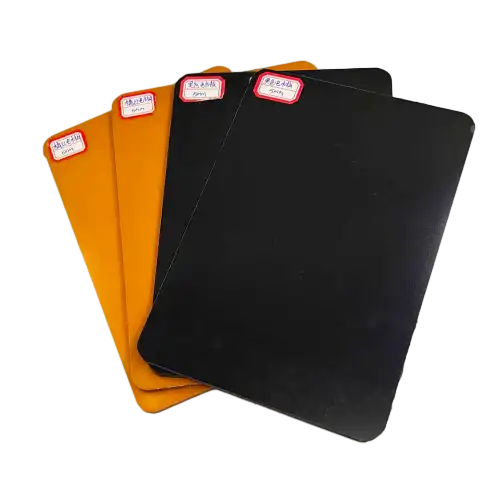
Understanding CNC Machined Bakelite Sheets
What Makes Phenolic Laminate Sheets Unique?
Phenolic paper laminated sheets are a type of thermoset composite that are made using a very controlled process. First, we put down layers of cellulose fibers that have been saturated with phenolic resin. This is a man-made polymer that is made when phenol and formaldehyde react together. In contrast to thermoplastics, which weaken when heated, this substance cures permanently when heated to 150–180°C under hydraulic pressure. This makes a structure that is hard, chemically stable, and keeps its mechanical integrity even when it is exposed to temperatures up to 120°C for long periods of time. This basic feature solves a big problem in engineering: it makes it possible to use cheap electrical shielding where normal plastics would deform when heated.
The CNC Machining Process for Precision Components
CNC machining uses computers to control the cutting, drilling, and milling of phenolic sheets to make precision-engineered parts. This way of making things is clearly better than injection molding or making things by hand. To keep material from chipping, which can happen when working with brittle thermoset materials, the process uses carbide or diamond-tipped tools that run at high spindle speeds and controlled feed rates. Active dust extraction systems are needed when machining because phenolic particles can be harmful to the lungs. We get tight dimensional tolerances within ±0.1mm using this exact manufacturing method. This makes sure that parts fit correctly into complicated electrical systems without needing to be changed or adjusted during installation.
Quality Control Measures for Electrical Applications
Strict quality control procedures make sure that every part made meets standards for electrical safety. As part of our inspection process, we test the dielectric strength with high voltage and usually find numbers higher than 15 kV/mm for normal grades. Using calibrated measuring tools to check the dimensions makes sure that the thickness tolerances stay the same across production batches. This is an important part of keeping the insulation barriers in power distribution equipment uniform. Material certifications show that the product meets UL and RoHS standards and give procurement professionals the traceability they need for regulatory paperwork. These quality control measures give engineering teams trust when they choose parts for electrical systems that are essential to task success.
Advantages of CNC Machined Bakelite Sheets for Electrical Insulation
Superior Dielectric Properties Compared to Alternative Materials
In industrial settings, Bakelite Sheet consistently does a better job of keeping electricity from flowing than many other materials. These sheets stop current from leaking in high-voltage areas well because their volume resistance values are usually between 10^10 and 10^12 ohm-cm. Because the material has a low dielectric constant, it loses very little energy when used with alternating current. This makes it very useful for insulating motor slots and barriers on transformers. Some polymer alternatives break down when electrical stress is applied for a long time, but phenolic resin keeps its insulation resistance stable over years of continuous use. Electrical manufacturers can save money on maintenance costs and get more use out of their equipment because of this long-term dependability.
Heat Resistance and Durability Under Thermal Stress
Temperature changes can make it hard for materials to work properly in places where industrial equipment is often used. Phenolic sheets keep their shape and mechanical strength even when temperatures change in ways that would weaken less durable insulation. The material doesn't change shape at temperatures where PVC and many thermoplastics start to soften. This protects motor windings and power source parts very well. The fact that phenolic resin is naturally flame resistant (rated V-0 in UL 94 flammability tests) makes electrical systems even safer. This mix of thermal stability and fire resistance helps power sector engineers with two issues at the same time: making sure operations are safe and reliable.
Customization Through Precision CNC Machining
Here are the main benefits of precision machining for parts made of phenolic insulation:
- Dimensional Flexibility: CNC capabilities allow us to produce components ranging from thin 0.5mm gaskets to robust 50mm structural insulators, with consistent quality across the entire thickness range.
- Complex Geometries: Multi-axis machining centers create intricate shapes including curved profiles, counterbored holes, and threaded features that integrate seamlessly into mechanical assemblies.
- Batch Consistency: Computer-controlled processes eliminate human variation, ensuring that the thousandth component matches the dimensional specifications of the first piece produced.
- Rapid Prototyping: Digital programming enables quick design iterations, allowing engineering teams to test multiple configurations before committing to full production runs.
When developing new product lines, auto parts suppliers and appliance makers face production problems that these machining benefits effectively solve. Receiving precision-cut parts that are ready to be put together cuts down on extra work and speeds up the time it takes to market for new electrical goods.
Comparing Bakelite Sheets with Other Materials for Electrical Applications
Performance Benchmarks Against Common Insulators
To make good decisions about what materials to use, you need to know how they compare in a number of different ways. When compared to fiberglass-reinforced composites and polyvinyl chloride sheets, phenolic laminates have clear advantages. Although fiberglass is very strong mechanically, phenolic materials are easier to work with and have better edge quality after cutting. PVC is flexible, but it doesn't have the heat resistance that motor parts and power transfer tools need. The cost-effectiveness of phenolic sheets is clear when you look at the total fixed cost. The material's ability to be machined cuts down on the time it takes to make something, and its sturdiness means that it doesn't need to be replaced as often over the course of an item's life.
Thermal and Mechanical Property Comparison
When procurement teams compare insulation materials to meet strict application needs, they use specific performance metrics to help them make decisions for Bakelite Sheet. Phenolic sheets have a compressive strength of about 170 to 200 MPa, which means they can support structures in places where load-bearing insulation is needed. The thermal conductivity of the material stays low at about 0.3 W/m·K, which means that heat can't easily move through insulator walls. Compared to ceramic insulators, which are better at withstanding high temperatures but can be hard to machine and can become brittle, phenolic laminates are a good compromise between thermal performance and ease of production. Because of this balance, phenolic sheets work best for mid-range power uses where resistance to high temperatures can be traded for easier machining and lower component costs.
Chemical Resistance for Industrial Environments
Electrical equipment used in industry often works in environments with oils, solvents, and chemical vapors. When it comes to petroleum-based oils, alcohols, and weak acids that are common in factories, phenolic materials are very resistant. This chemical stability keeps the insulation in motor housings that are exposed to cutting fluids or transformer systems that have mineral oils in them. It is weak against strong oxidizing acids and concentrated alkalis, which is something engineers should think about when choosing materials for specialized chemical processing equipment. If designers know about these limitations, they can confidently specify phenolic insulation within its best use range, while choosing other materials for harsher chemical environments.
Procurement Guide for CNC Machined Bakelite Sheets
Sourcing Channels and Supplier Selection
Finding suppliers who are both knowledgeable about the materials and reliable at making them is the first step in effective procurement. Authorized distributors of branded phenolic materials offer certifications for the materials and technical support that makes it easier to meet specifications. Direct ties with makers that offer both material supply and custom machining services make the supply chain run more smoothly. Having a single point of contact makes it easier to talk about shipping schedules and size requirements. When looking at possible suppliers, people in charge of buying things should make sure they have the right manufacturing certifications, ask for samples of the parts to check the quality of the machining, and make sure the suppliers have enough space to meet the expected volume needs. References from current clients in similar industries are a great way to find out how reliable a supplier is and how quickly they respond to technical questions.
Pricing Structures and Order Considerations
Phenolic sheets have different material costs depending on the grade, thickness, and size of the sheet. Standard grades that can be used for general electrical insulation usually cost less than high-temperature or moisture-resistant versions that are made for specific uses. Minimum order quantities are often based on the smallest batches that can be made efficiently. For example, suppliers may set minimums of 50 to 100 pieces for custom-machined parts or 10 to 20 sheets for orders of raw materials. When you make a bigger commitment, the price per unit goes down because of volume pricing. However, procurement teams have to weigh the benefits of lower unit prices against the costs of keeping inventory. Custom-made parts usually have lead times of two to four weeks, but this depends on how complicated they are and how full the production queue is. When project deadlines call for faster delivery, rush service choices may be offered at a higher cost.
Logistics and Delivery Planning
Shipping issues for Bakelite Sheet affect both the total landing cost and the schedule for the job. Phenolic sheets are dense, rigid materials that need to be shipped in the right way to keep the edges from getting damaged during transit. When sending within the United States, most of the time, freight companies are used for full sheet orders, and parcel service is used for smaller amounts of machined parts. When buying things internationally, customs paperwork and longer shipping times must be taken into account by procurement specialists when planning project schedules. Working with suppliers who keep inventory in the United States and run integrated logistics operations makes shipping easier. For example, our own logistics capabilities let us coordinate delivery schedules directly with customer receiving departments, which makes it easier for busy procurement teams to keep everything in order.
Practical Applications and Case Studies of CNC Machined Bakelite Sheets
Motor and Transformer Insulation Applications
For slot insulation and phase separators, electric motor makers use precisely cut phenolic parts. Custom-machined insulation barriers for a new line of industrial motors were made as part of a recent project with a motor assembly operation. It was necessary for the parts to be able to work continuously at 115°C and keep their sizes stable within 0.2mm. By carefully choosing the right material grade and making sure the CNC code was working at its best, we were able to deliver parts that met all of the customer's requirements while cutting 30% off of the time it took them to put them together compared to when they did it by hand. The project showed that precision machining directly leads to better manufacturing efficiency for companies that make electrical equipment.
Manufacturers of transformers face the same problems with insulation on a larger scale. Arc barriers and coil insulation sheets keep electrical flashovers from happening and keep heat from power conversion losses from building up. We've given parts to distribution transformers where a failure in the insulation could put people in danger and damage expensive equipment. The consistent sizes made possible by CNC machining make sure that the insulation barriers stay at the right distances from each other during the transformer assembly process. This helps the electricity work well for decades of grid service.
Circuit Breaker and Switchgear Components
Phenolic insulation is used in arc chutes, terminal blocks, and parts of the operating mechanism of power distribution equipment. Someone who makes equipment came to us looking for insulation plates for 15 kV medium-voltage circuit breakers. The job needed something that could survive being exposed to an arc during a fault stoppage and still keep its mechanical integrity when the breaker is in use. We suggested Grade XXX phenolic laminate because it is better at resisting moisture and has good electrical properties in places with a lot of humidity. The machined parts have been used thousands of times in field setups and have always worked correctly, which proves the choice of materials and the quality of the making.
Handling and Maintenance Best Practices
Getting the most out of a component's life starts with installing it correctly. Even though phenolic materials are strong physically, they can chip if they are dropped on hard surfaces or hit on sides that aren't supported. During installation, fasteners should not be over-torqued through insulation components. Typical recommended torque values are 20–30% lower than equivalent metal-to-metal joints to avoid stress concentrations in one area. Checking insulation parts on a regular basis during maintenance lets you find problems like wear, coloring from too much heat, or tracking from electrical stress early on. When you store things in a clean, dry place, the qualities of the things you don't need will stay the same. For example, keeping them out of direct sunlight stops UV damage that can affect surface insulation resistance over long storage periods.
Conclusion
CNC-machined phenolic laminates like Bakelite Sheet meet the needs of current electrical equipment by providing good electrical insulation, thermal stability, and accurate manufacture. After working with materials for more than twenty years, we've become very good at turning engineering drawings into reliable parts that meet the high standards needed for power distribution, motor manufacturing, and industrial equipment. The material has been used successfully in a variety of electrical insulation situations, and computer-controlled machining makes it possible to get exact measurements. This gives procurement teams and engineering departments a clear advantage. Precisely machined phenolic parts are the insulation base for safe, reliable electrical systems, whether they are used in high-voltage switchgear, motor assemblies, or specialized electrical equipment.
FAQ
Can surface treatments enhance phenolic sheet durability?
In some settings, surface treatments can make parts last longer. Epoxy coatings make installations more resistant to moisture in places with a lot of humidity, and silicone-based sealants keep edges clean. We suggest that you talk to our technical team about your working system to find out if surface treatment will really help the performance of your application.
What thickness works best for high-voltage applications?
The choice of thickness is based on the power levels and safety factor needs. As a general rule, insulation layers between 3 and 5 mm are good for use up to 10 kV, and between 6 and 10 mm is good for tools working at 15 to 25 kV. To get specific advice, you need to look at your voltage rating, the factors of the surroundings, and the safety standards that apply. Our tech support team can look over your requirements and suggest the best thickness choices.
How does CNC machining improve component performance?
Three important performance improvements are made possible by precision machining: accurate measurements that make sure parts fit together correctly; smooth, clean edge surfaces that keep their full dielectric strength without weak spots caused by rough cutting; and consistent thickness throughout parts that get rid of weak spots in insulation barriers. All of these things work together to make parts that work reliably for their whole service life.
Partner with J&Q for Your Electrical Insulation Requirements
J&Q has been working with phenolic materials for more than 20 years and can help you with your electrical shielding projects. As a provider of Bakelite Sheet for a long time, we know the technical requirements and shipping times that are needed to make electrical equipment. Our integrated operations include finding materials, using precision CNC machines, and coordinating logistics. This makes our service more efficient and makes the buying process easier for you. Engineering managers like that we're willing to look over drawings and suggest the best grades of materials for different uses. Procurement teams like that we deliver on time and communicate clearly.
Get in touch with our expert sales team at info@jhd-material.com to talk about the parts you need. We'll give you suggestions on materials, information on how we can machine them, and prices that are based on the volume you need. You can find more detailed information about phenolic materials and their uses in electrical shielding at blog.jhd-material.com. Our goal is to become your go-to source for precision-machined insulation parts that improve the performance and dependability of your electrical equipment.
References
1. Biron, M. (2018). Thermosetting Plastics: Processing and Applications in Industrial Manufacturing. William Andrew Publishing.
2. Harper, C.A. (2006). Handbook of Plastics Technologies: The Complete Guide to Properties and Performance. McGraw-Hill Professional.
3. Lubin, G. (2014). Handbook of Composite Materials for Electrical Insulation. Springer Science & Business Media.
4. Mittal, V. (2012). High Performance Polymers and Engineering Plastics in Electrical Applications. John Wiley & Sons.
5. Reuben, R.L. (2019). CNC Machining of Engineering Plastics: Techniques and Best Practices for Industrial Production. Industrial Press.
6. Tanaka, T. (2017). Dielectric Materials for Electrical Insulation: Properties, Testing, and Industrial Applications. IEEE Press Series on Power Engineering.

Get a complete product list and quotation

J&Q New Composite Materials Company



