Phenolic Paper Laminated Tube Machining: Cutting Tools and Tolerances
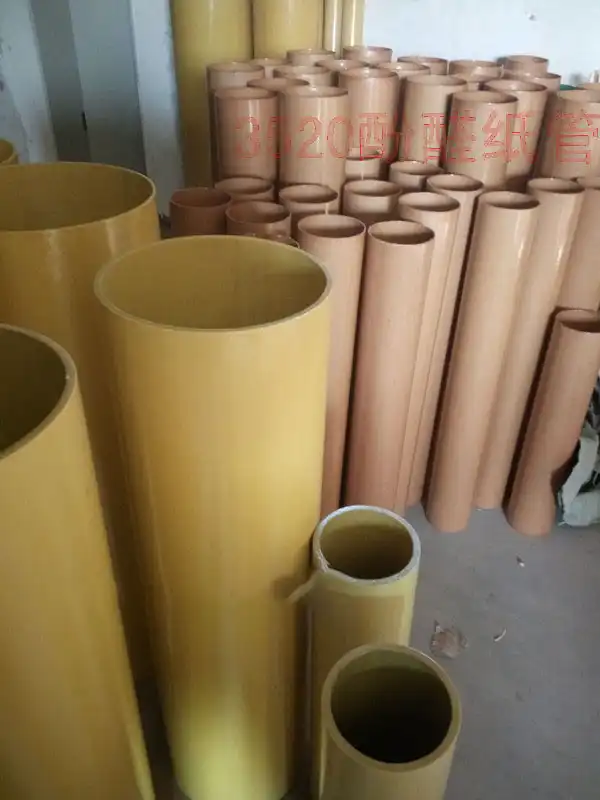
Machining a phenolic paper laminated tube correctly separates a precision component from a rejected one. This brown, resin-impregnated composite—manufactured by winding cellulose paper with thermosetting phenolic resin under heat and pressure—offers strong dielectric strength, a continuous operating temperature of 120°C, and a density of approximately 1.14 g/cm³. Its inner diameter range spans φ8mm to φ550mm, covering a wide scope of industrial applications. Because of its layered structure, however, it demands specific cutting tool selection and tight process control to hold the dimensional tolerances that electronics, power, and machinery sectors depend on.
Understanding Phenolic Paper Laminated Tubes and Their Machinability
What the Material Actually Is?
Electricity-grade cellulose paper and phenolic resin are stuck together to make a Grade 3520 phenolic paper tube. After that, the tube is heated in a smart way to make it hard. The end result is a stiff, brown composite that can handle 8 MV/m of voltage (in oil at 90°C) and keep its dielectric loss factor at 2.1×10⁺², which is much lower than the required level of 3×10⁺². Because of these qualities, it is a good material for insulating motor parts, supports for transformer coils, and sleeves for switchgear.
Why Machinability Requires Attention?
This is strong because of the resin-paper bond, but it's also rough and easy to break. When you cut, the sheets of paper fiber can come off where they meet, and the hard plastic wears down tools faster than the plastic. There are no cracks or bulges after being heated at 120°C for 24 hours. If the tools aren't right or the feed rates are too high, surface checks can still happen.
How Material Construction Affects Cut Quality?
The way the tube reacts to cutting forces depends on how thick its walls are and how it is wound. Because they don't hold as much weight and let you go as deep, thin walls need smaller cuts and a stronger grip on the table. You should also know that the tube can hold about 8% of its own weight in water. Tubes that have been stored in damp places may have small cracks on the outside. These can make it hard to bore or thread precisely.
Cutting Tools for Phenolic Paper Laminated Tube Machining
The only thing that can be changed a lot during this process is the cutting tool. Each group of tools below does a different job. You should use the right one for the job based on the amount of work, the tolerances, and whether it's spinning, drilling, or milling.
When you work with phenolic tubes, these are the main types of tools you should think about:
- Tungsten carbide (WC) tools are the standard choice for production machining of phenolic laminates. Carbide maintains a sharp edge far longer than high-speed steel in abrasive resin-paper composites, allowing consistent bore diameters and surface finishes across long runs. Studies from machining composite materials show carbide tools can outlast HSS by a factor of 5–8× in similar abrasive conditions.
- Diamond-coated tools perform best in high-volume or tight-tolerance applications where surface finish Ra values below 1.6 µm are required. The diamond coating resists abrasive wear from paper fibers and extends tool life significantly, though the upfront cost is higher.
- High-speed steel (HSS) tools remain practical for prototype runs, low-volume drilling, or operations where replacement cost is a priority over cycle time. They require more frequent resharpening but work adequately when cutting speeds stay conservative.
Wrought iron (WC) blades are most often used to cut Phenolic Paper Laminated Tube for business purposes. High-speed steel doesn't stay sharp as long when mixed with rough resin and paper. Having the same hole size and outside finish on long runs is made possible by this. CBN tools last 5–8 times longer than HSS tools when cutting composite materials with the same amount of rough use.
They work best where there are tight tolerances or a lot of work that needs to be done quickly. The surface finish must have a Ra value less than 1.6 µm. The diamond layer covers the tool and stops the rough wear that comes from paper fibers. It costs more at first, but the tool will last longer.
There are still times when high-speed steel (HSS) tools can be used for jobs where the cost of replacement is more important than the cycle time. They need to be cleaned more often, but they work fine as long as the speed of the cut is low.
Geometry and Coating Considerations
The weak plastic structure is easier to cut through when the rake angle is up. Most of the time, this angle is between 5° and 10°. When the relief angle is between 10° and 15°, the cut surface doesn't touch. Step drills or brad-point drills work better for drilling. Parts of electrical shielding often fail because of exit-side blowout.
Recommended Cutting Parameters
It is recommended that the feed rate be between 0.05 and 0.15 mm/rev, the cutting speed be between 150 and 250 m/min, and the depth of cut be no more than 1.5 mm per pass. Coolant flood can make open-cut parts soak up water and make the sizes less stable after they have been machined. Instead, use light air blast or dry cutting.
Achieving Precise Machining Tolerances on Phenolic Laminated Tubes
Standard Tolerance Benchmarks
PVC tubes can be made on CNC lathes with inside diameter tolerances of ±0.1 mm to ±0.2 mm for general industrial use. If the bore width needs to be very close to 0.05 mm for switches or transformer systems, that's what it is. It is possible to do this as long as the temperature stays the same and the tools are set up in a rigid way. Buying teams can use standards like IEC 60893 and NEMA LI-1 as guides when they write buy specs.
Factors That Shift Tolerance Outcomes
The most important thing is how stiff the machine is. If the spindle bearings are worn out or the tailstock isn't lined up right, the sizes of an output batch may not be the same. There is no difference between the tolerance for the first job and the tolerance for the whole run. What makes the difference is how the user sets up the workholding. They need to be careful not to put too much pressure on the chuck, because that can bend tubes with thin walls.
Quality Control and Inspection Methods
You can be sure that the ID, OD, and concentricity of a part are right with a coordinate measuring machine (CMM). Plug gages and snap gages can be set up to help you quickly check on the production floor how thick the bore and wall are. Before a part is permanently put together, sound waves can be used to see if it is delaminating below the surface. When used together, these methods help teams that are buying things see how well a seller can do their job before they hire them on a long-term basis.
Comparison of Phenolic Paper Laminated Tubes with Other Tubing Materials in Machining
An engineer will often compare phenolic paper laminates to aluminum, epoxy glass tubes, fiberglass (G10/FR4), and different kinds of industrial plastics to find the best tubing for structure and insulation. Everything is shaped differently.
They work better electrically when they're wet, and fiberglass epoxy tubes (G10/FR4) can handle water better. But they cost more and make more aggressive glass fiber dust when they are machined, so people usually need to wear masks and use diamond tools. When price or protection against oil exposure is important, Phenolic Paper Laminated Tube is the best choice. Plain carbide tools can be used on it more easily, and it weighs less.
PTFE and nylon are easy to work with as engineering plastics, but they aren't as stable at 120°C or as strong when compressed as phenolic laminates. Aluminum is very accurate in terms of size, but it can't be used to keep electricity from moving. People who buy in bulk should always choose Phenolic Paper Laminated Tube because it is cheap, simple to work with, and good at keeping heat in whether it is dry or oily.
Procurement Considerations for Phenolic Paper Laminated Tubes
Certifications and Quality Systems
Suppliers who are known to be good have ISO quality management approval and can show that they follow RoHS rules. For people who buy power, making sure that the standards don't change after delivery is easy: just ask for material test results that match the dielectric loss factor, withstand voltage, and thermal stability to IEC 60893 PF CP 21/22/23 grades.
Lead Times, MOQ, and Custom Machining
For more direct sales to customers, J&Q's two plants make 43,000 tons of goods every year. Inside diameters range from ±8mm to 550mm, which is a large range that should work for most uses. OEMs can also ask for sizes that aren't available, and they'll be glad to make them. All freight by sea, land, and air is handled by J&Q's own logistics department, so delays are not caused by other companies. Because of this, it takes less time to get both common items and big orders.
Supply Chain Reliability
J&Q has been around for more than 10 years and has been making things for more than 20 years. They've built supply chains with companies in many countries since then. It is important for engineering managers who have strict rules about how many times an order can be made that the fully automatic production workshop always does the same thing.
Conclusion
To cut Phenolic Paper Laminated Tube to the right size, you need to make sure the process parameters are set correctly and find a cutting tool that works with the rough, layered structure of the material. It is important to use carbide tools, check the job with a CMM, keep the feed rates low, and make sure the rake shape is right when cutting this material. These things can help companies that buy technology, power, tools, or cars before they send out a purchase order. This will save them time, help them get better deals from sellers, and keep orders from being turned down.
FAQ
What cutting tool material works best for phenolic paper tube?
Wrought iron carbide works best for large-scale production most of the time. It works because it is made of rough resin-paper, and the sides don't wear down quickly. This kind of tool is great for when you need to finish something well or get a lot done. HSS tools can be used to make prototypes in small amounts, but they need to be sharpened a lot.
What tolerances are achievable on phenolic laminated tube?
A CNC machine can get a bore width accuracy of ±0.1–0.2 mm. For switches or transformers, ±0.05 mm is a tight tolerance that can be reached with rigid sets, sharp tools, and temperature control.
Does coolant affect phenolic paper tube during machining?
Flood coolant can soak up water in cuts that were just made. The best ways to keep the size fixed after grinding are to dry cut or blast with compressed air.
How do I verify tube quality before bulk procurement?
You should get test results for the material that show its ability to withstand voltage, dielectric loss factor, density, and temperature stability. Make sure you ask your suppliers if they can do CMM checks and give you reports on the first items they check that are made to your exact measurements.
What inner diameter range is typically available?
Inner sizes of the normal output range from φ8mm to φ550mm. This means it can be used for many things, from small coil supports to big transformer parts.
Request a Quote from J&Q — Your Phenolic Paper Laminated Tube Supplier
Precision Phenolic Paper Laminated Tube that J&Q sells comes from a plant that can handle 43,000 tons of it every year. For more than 20 years, the factory has been making products. There is a team whose only job is to handle trade with other countries. Our own shipping team makes sure that all of our items get delivered on time every time. They use land, sea, and air routes. Email us at info@jhd-material.com or visit blog.jhd-material.com to get free samples, detailed datasheets, or a price that fits your exact hole diameter and tolerance needs.
References
1. ASTM International. ASTM D229: Standard Test Methods for Rigid Sheet and Plate Materials Used for Electrical Insulation. ASTM International, 2014.
2. IEC. IEC 60893: Insulating Materials — Industrial Rigid Laminated Sheets Based on Thermosetting Resins for Electrical Purposes. International Electrotechnical Commission, 2003.
3. NEMA. NEMA LI-1: Industrial Laminating Thermosetting Products. National Electrical Manufacturers Association, 2020.
4. Krishnamurthy, R., and Mannan, M. A. "Machinability Studies on Fibre Reinforced Plastics." Journal of Materials Processing Technology, 1997.
5. Shaw, Milton C. Metal Cutting Principles. Oxford University Press, 2005.
6. Davim, J. Paulo. Machining Composite Materials. ISTE Ltd and John Wiley & Sons, 2010.

Get a complete product list and quotation

J&Q New Composite Materials Company