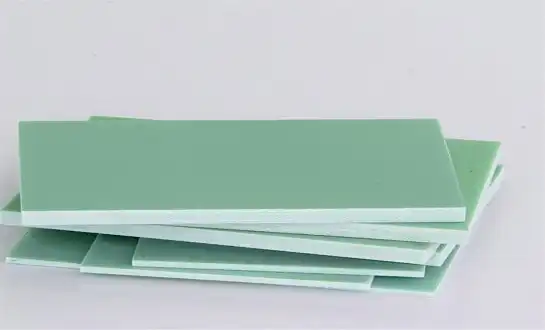
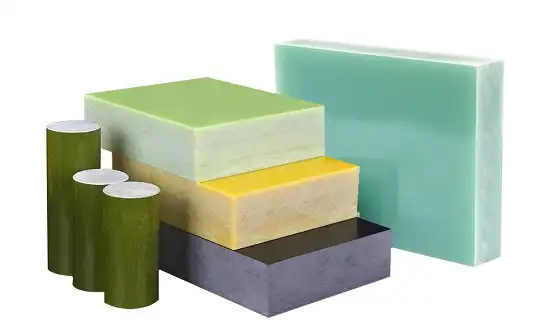
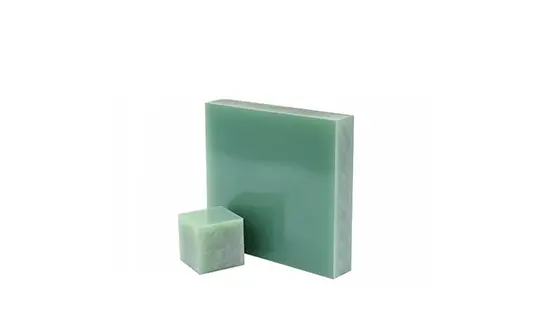
CNC Milling FR4 Epoxy Fiberglass Laminate Sheets for Custom Parts
When engineers and procurement managers search for reliable insulation substrates for precision-machined components, FR4 epoxy fiberglass laminate sheet consistently comes up as the material of choice. Made from 7628 woven electronic fabric bonded with epoxy resin under high temperature and pressure, FR4 delivers a well-tested balance of mechanical strength, dielectric performance, and thermal resistance. Whether you are producing PCB test fixtures, switchgear barriers, battery pack insulators, or motor components, this material handles tight CNC tolerances while meeting UL94 V-0 and RoHS requirements that today's B2B supply chains demand.

Understanding FR4 Epoxy Fiberglass Laminate Sheets
FR4 is a NEMA grade number, not a brand name. It is UL94 V-0 flammable because the epoxy resin core must go out on its own after being lit. JingHong's FR4 sheets pass six tests that check for weather damage. They follow ISO 9001, ISO 14001, and ISO 45001 rules and are linked to RoHS.
Mechanical Properties That Hold Up Under Load
It can pull apart at 282 MPa, push together at 548 MPa, and bend at 571 MPa, according to tests done by JingHong. This means that FR4 can be used to insulate structures, as mechanical spacers, and in gear flats where loads change often.
Dielectric and Electrical Performance
The material breaks down at 16.7 kV/mm for the top layer and at more than 100 kV for the bottom layer. It can be used in wet places and with transformer oil because the insulation resistance goes up to 2.2×10³³ Ω after being soaked.
Thermal Resistance and Available Dimensions
Most Tg is between 130°C and 140°C, and high-Tg types are hotter than 170°C, so they can be used for lead-free soldering. Sheets from 0.3 mm to 100 mm thick are sold by JingHong. Standard sizes are 1030 x 1230 mm, and custom sizes like 1220 x 2440 mm and 1030 x 2070 mm are also available. These sizes cover almost all of the formats that a CNC shop needs for making things.
CNC Milling FR4 Sheets for Custom Parts: Process and Best Practices
When engineers use CNC milling, they can cut fiberglass epoxy laminates into complicated shapes over and over again with great accuracy. The process has to be carefully picked, though, because the woven glass support is rough. If it's not, tools will wear out, or the material will break before it's time.
Tooling and Feed Rate Selection
Most end mills have a coating of solid carbide or diamond on them. High-speed steel tools quickly lose their sharpness when used on fiberglass. To keep the cut zone from getting too hot, feed rates are kept low, and spindle speeds are kept between 18,000 and 24,000 RPM.
Preventing Delamination and Thermal Damage
When machining FR4 Epoxy Fiberglass Laminate Sheet, crushed air or a fine mist takes heat away from the plastic surface where the cut is made. It is less likely for thin sheets to get edge chips when climb milling is used instead of regular milling. When you score the shape before full-depth passes, layers don't separate on panels that are less than 1 mm thick.
Practical Case: PCB Test Fixture for an Electronics OEM
An electronics OEM moved from a test jig made of phenolic to one made of FR4 that was cut on a CNC machine. The switch stopped the change in shape that happened when the phenolic board took in water. More than 60% more jig life was added, and pin registration precision got better to within ±0.05 mm. Because FR4 is 76-Barcol hard and can keep its shape, this was possible.
Comparing FR4 With Other Epoxy Fiberglass Laminates and Alternatives
Choosing the right substrate means understanding where each material excels and where it falls short. Here is a clear comparison across the most common alternatives:
- CEM-1 combines paper and fiberglass, which reduces cost but also lowers moisture resistance and mechanical strength. It is adequate for single-sided boards but not recommended for precision CNC-milled parts with tight tolerances.
- Phenolic (CE grade) handles light mechanical loads well and machines cleanly, but its dielectric breakdown voltage and heat resistance are lower than FR4. It suits dry, low-voltage applications rather than demanding electrical environments.
- Aluminum-core laminates offer better thermal dissipation for high-power LED or power electronics applications, but they are harder to machine into complex shapes and cost considerably more per kilogram.
- Polyimide (PI) outperforms FR4 at temperatures above 200°C and in flexible-circuit formats, making it the choice for aerospace avionics or high-temp motors — though at a price premium of two to four times that of standard FR4.
FR4 occupies the practical center of this spectrum. It provides certified flammability compliance, strong dielectric properties, and machinability at a cost that supports volume production. For most switchgear, motor insulation, and PCB-related custom parts in the US market, it remains the benchmark material against which alternatives are measured.
Procurement Insights: Sourcing FR4 Epoxy Fiberglass Laminate Sheets
When looking for a lot of fiberglass epoxy laminate sheets, you should pay attention to licenses, batch stability, and how the business is always running. This list shows what buying teams that have done this before look for when they need to choose a seller.
- Certifications matter more than price alone. ISO 9001 governs process consistency, while ISO 14001 and ISO 45001 signal responsible manufacturing. Always request UL certification records and RoHS test reports with each lot.
- Dimensional tolerance documentation is non-negotiable. Thickness tolerance typically runs ±0.05 mm to ±0.2 mm depending on gauge. Request micrometer scan reports for thicknesses below 2 mm, especially for automated assembly lines.
- MOQ and lead time planning. JingHong's minimum order quantity is 500 kg, with annual capacity of 43,000 tons across two production facilities. This scale supports priority scheduling for direct orders, which shortens lead times compared to trading intermediaries.
- Logistics flexibility reduces risk when shipping FR4 Epoxy Fiberglass Laminate Sheet. JingHong ships via ocean, air, and land freight, with pallet-protected packaging that prevents warping and surface contamination during transit. Having a captive logistics operation means fewer handoffs and faster issue resolution.
Price isn't the only thing that matters; qualifications are more significant.It is made sure that methods are always the same by ISO 9001. ISO 14001 and ISO 45001 show that production is responsible. Always make sure you have proof that each lot has been approved by UL and passed RoHS tests.No changes can be made to the documentation for measurement error. The thickness range is usually ±0.05 mm to ±0.2 mm, but this can vary by gage. Ask for micrometer scan results for widths less than 2 mm, especially for machine-built parts.- Figure out your MOQ and wait time. It takes at least 500 kg to place an order with JingHong, and its two plants can make 43,000 tons of goods every year. When you compare this size to trading middlemen, straight orders are planned first, which cuts down on lead times.- Having more options for transportation lowers risk. JingHong ships freight by sea, air, and land. To keep goods from twisting and getting dirty during transport, they use pallet-protected packaging. When you own your own transportation business, you don't have to pass the buck as often, and you can solve problems faster.
Why Choose CNC Milled FR4 Laminate Sheets for Your Custom Parts?
Every so often, engineers and OEM sourcing managers have to find a middle ground between the cost of materials, how well they work during a production run, and how consistent the machining is. All three things can be done on a large scale better with FR4 that has been CNC milled.
Here are the best things about this combination to make it stand out:
- Geometry flexibility. CNC milling handles slots, drilled arrays, stepped profiles, and irregular outlines in a single setup. FR4's rigid, non-warping structure holds position accurately throughout the cut, reducing scrap rates.
- Batch-to-batch consistency. JingHong's fully automated pressing lines produce sheets with tight thickness uniformity. Consistent raw material translates directly into consistent machined parts, which matters for high-volume applications like insulation frames or motor brackets.
- Long service life. With a water absorption of only 5.3 mg and insulation resistance above 2×10¹³ Ω after soaking, milled FR4 parts maintain dimensional and electrical integrity in humid or chemically active environments far longer than phenolic alternatives.
It's possible to make holes, drilled groups, stepped profiles, and forms that aren't straight all with the same setting when CNC milling. Because FR4 is stiff and doesn't bend, it stays in place during the cut, which reduces the amount of scrap.- The thickness of all the sheets made by JingHong's fully automatic pressing lines is the same from batch to batch. When you use the same raw materials, the parts you machine will also be the same. This is important for making a lot of things, like insulation frames or motor brackets.
Conclusion
To make sure it works well, comes with many approvals, and is simple to machine, FR4 Epoxy Fiberglass Laminate Sheet is the usual insulation base for CNC-milled special parts. The material is good for many tough business-to-business uses, like making PCB test stands, switchgear barriers, and battery pack insulators. Because JingHong makes a lot of things and helps with logistics directly, buying teams can be sure they will have enough for both small and large runs. When you need something that your CNC shop can successfully machine and that your engineers can trust when they make specifications, FR4 is a good choice.
FAQ
How much heat can FR4 withstand during continuous operation?
Standard FR4 carries a Glass Transition Temperature of 130°C to 140°C. High-Tg grades exceed 170°C. For applications near or above those thresholds — such as near transformer windings or in lead-free soldering environments — specifying the correct Tg grade prevents dimensional softening and pad-lifting failures.
What is the best way to avoid delamination when CNC milling FR4?
Use solid carbide tooling, keep spindle speeds between 18,000 and 24,000 RPM, and apply compressed air cooling at the cut. Score outlines before full-depth passes on thin panels. Delamination almost always results from heat accumulation or dull tooling, both of which are controllable with proper setup.
What certifications should I require from an FR4 supplier?
At minimum, request ISO 9001 process certification, UL94 V-0 flammability test reports, and RoHS compliance documentation. Solder float test results (288°C, 10 seconds) confirm thermal stress performance. For regulated industries, ask for material traceability records by lot number.
Get Your FR4 Custom Parts Quote from J&Q Today
FR4 Epoxy Fiberglass Laminate Sheet that is certified comes from JingHong. Each year, the company makes 43,000 tons of it and has a team of people whose only job is to handle international trade. We can give you a priority schedule, custom sizes, and door-to-door shipping for FR4 Epoxy Fiberglass Laminate Sheet because we make it ourselves. Email us at info@jhd-material.com or visit our blog at blog.jhd-material.com to get examples, full datasheets, or a bulk price.
References
1. IPC — Association Connecting Electronics Industries. IPC-4101: Specification for Base Materials for Rigid and Multilayer Printed Boards. IPC, 2017.
2. National Electrical Manufacturers Association. NEMA LI 1: Industrial Laminated Thermosetting Products. NEMA, 2020.
3. Underwriters Laboratories. UL 94: Standard for Tests for Flammability of Plastic Materials for Parts in Devices and Appliances. UL, 2018.
4. Harper, Charles A. Handbook of Plastics Technologies. McGraw-Hill, 2006.
5. Mohan, T. K., and H. Mahfuz. "Mechanical and Thermal Properties of Epoxy Composites Reinforced with Woven Fiberglass Fabric." Journal of Composite Materials, 2009.
6. Coombs, Clyde F., and Happy T. Holden. Printed Circuit Handbook, 7th ed. McGraw-Hill Education, 2016.

Get a complete product list and quotation
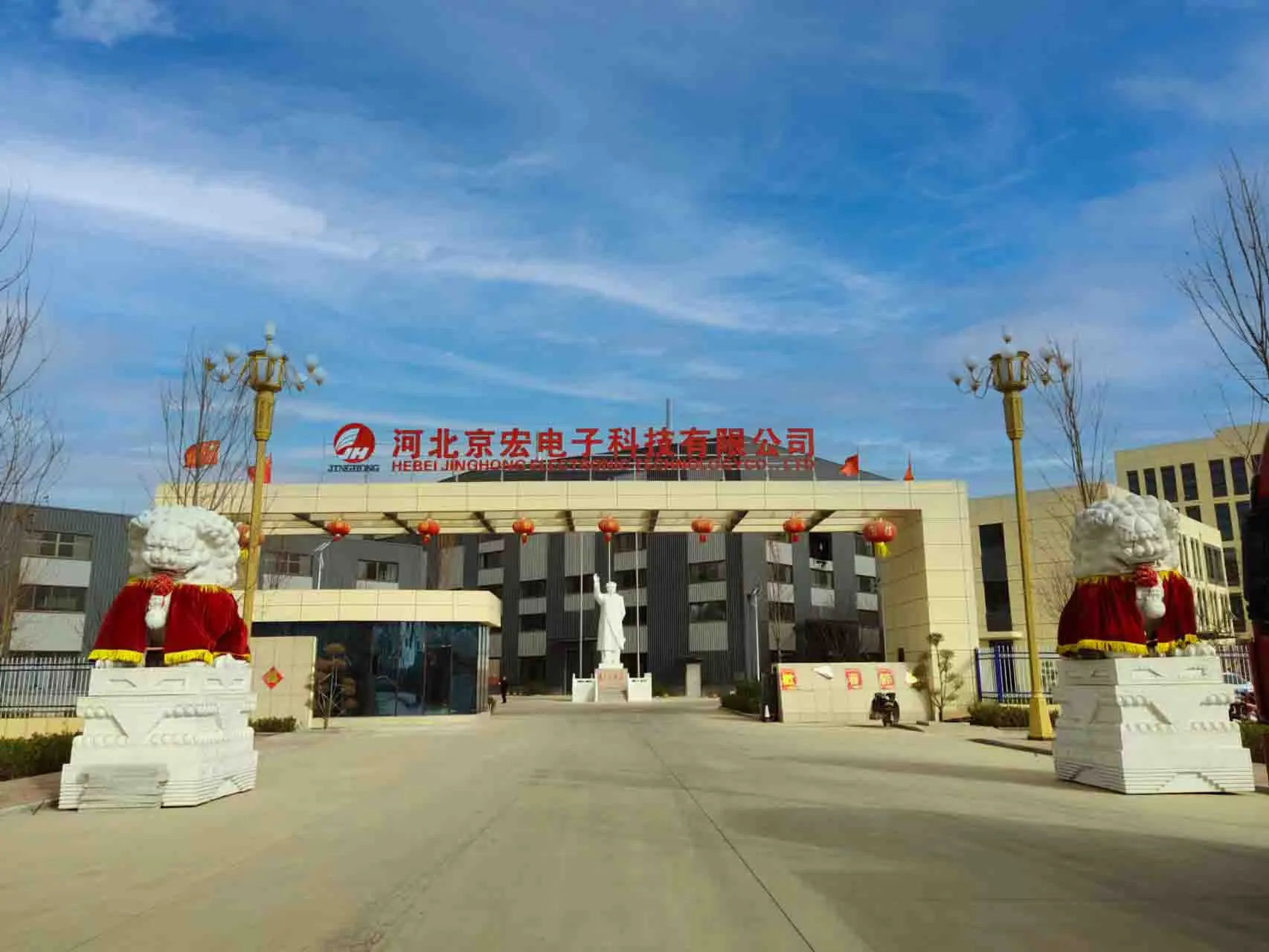
J&Q New Composite Materials Company