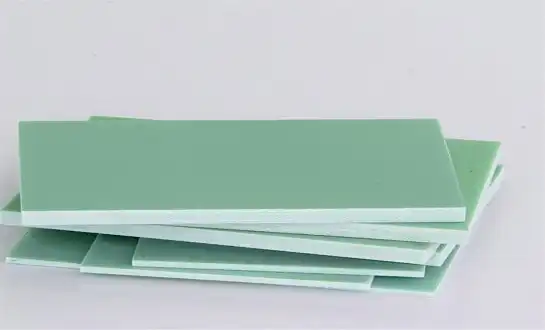
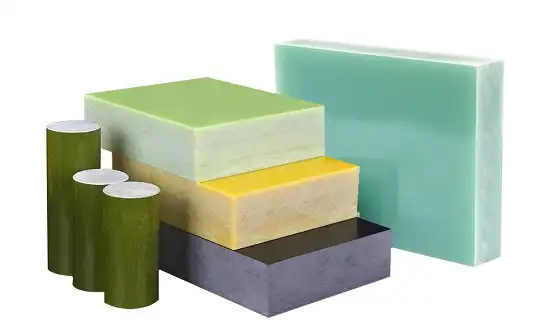
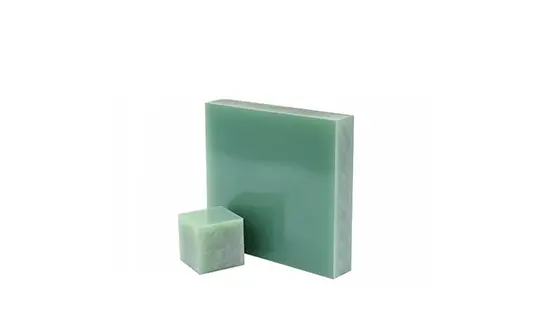
Phenolic Paper Laminate for Electrical Panels and Insulating Components
Pulp and paper are glued together with phenolic glue to make phenolic paper laminate, a stiff, flexible sheet. It can be used for wires and screens that work with low to medium power. It has good shape retention, is easy to cut and machine, and doesn't cost as much as glass-epoxy sheet. It is what engineers use to make parts for transformers, busbar dividers, and spacers for switchgear. It's important to get the right grade because it can only handle so much water, heat, and impact. In this guide, I explain how it works, what to look for before you buy, and which grade is best for what.

What Is Phenolic Paper Laminate?
Before you compare types or sources, it's good to know what the material is and how it gets to your shop floor.
How Is the Material Made?
The people who make things mix layers of cellulose paper with phenolic glue. After that, the sheets are dried, stacked, and pressed with a lot of heat and force. It turns into a hard thermoset once it sets. The board won't melt when it gets hot because of this. The board is stiff and easy to work with because of the paper layers. The layers stay together, and electricity can't run through them once the glue sets. Different things happen along and across the layers. Sometimes the dielectric strength is given perpendicular to the laminations. That's why I always tell people who are buying something to check the datasheet to see which way the test was done. An awful lot of people call it "paper-based Bakelite," but that's just the brand name for the stuff.
NEMA Grades X, XX, and XXX
The people who make things mix layers of cellulose paper with phenolic glue. After that, the sheets are dried, stacked, and pressed with a lot of heat and force. It turns into a hard thermoset once it sets. The board won't melt when it gets hot because of this. The board is stiff and easy to work with because of the paper layers. The layers stay together, and electricity can't run through them once the glue sets. Different things happen along and across the layers. Sometimes the dielectric strength is given perpendicular to the laminations. That's why I always tell people who are buying something to check the datasheet to see which way the test was done. An awful lot of people call it "paper-based Bakelite," but that's just the brand name for the stuff.
Common Supply Formats
People often buy things that come in flat sheets that they need to cut to size or put together. They can also send panels that have been cut to size and parts that have been CNC-machined from models. Shops that have their own cuts and saws can use stock sheets. OEMs like machined parts because they give them a finished item that is already put together. This saves them time and money because they don't have to handle the parts as much. An easy way to make a lot of parts, like panel and gadget parts, is to punch them out. This works especially well for plastic parts. Pick early on whether your team needs a blank sheet or parts that are already made. There will be a wait time, the tools will cost money, and there will be steps to take for review.
Key Properties of Phenolic Paper Laminate for Electrical Insulation
You can only use the numbers on a cheat sheet if you know what they mean. I look at these first.
Dielectric Strength and Insulation Resistance
The dielectric strength is the first number that most engineers look at. If you measure paper phenolics perpendicular to the laminations, the normal range is between 300 and 500 V/mil (12 and 20 kV/mm) in oil. How thick it is, the temperature, the humidity, and the way the test was done all affect the result. Under ASTM D149, you can find the standard way to test for dielectric breakdown. Some types of plastic, like XXX and XXXP, keep their low dielectric loss and high insulation strength when they get wet. This stuff can handle 50/60 Hz service. FR4 works best in circuits with a high frequency, so make sure the grade you use fits the frequency and voltage.
Moisture, Heat, and Chemical Behavior
In grade X Phenolic Paper Laminate, the amount of water that is taken ranges from less than 1% to about 2.5%. That gap tells us where each grade should be most of the time. Most paper phenolics can last for a long time at temperatures of E (120°C) or B (130°C). This means they can be used in a wide range of panel, switchgear, and transformer applications. It is impossible for mineral oils, chlorinated hydrocarbons, or weak acids to damage phenolic resin once it has fully hardened. This means that the plastic doesn't move around in the oil. Stay away from strong acids because they can hurt phenolic glue. Paper also soaks up some water, so keep sheets flat in a room that is about 20°C and has less than 50% relative humidity to keep them from bowing.
Mechanical Strength and Machinability
The flexural strength of good sheets is usually more than 100 MPa, and they stay flat well. The specific gravity is usually around 1.30 to 1.45 g/cm³. Because it doesn't protect as well against contact as cotton-based or glass-epoxy laminates, keep heavy things away from it that could hit it hard. Being able to machine it shows how strong it is. The laminate makes it easier to cut, drill, and route than FR4, and it also makes tools last longer. Warm the standard grades up to between 40°C and 80°C. If you don't, they might crack around the holes you make in them. On the other hand, the P grades make holes that are clean. For extraction, use sharp carbide tools to make sure you have good edges, holes, and low dust.
Applications in Electrical Panels and Insulating Components
Now that you know what the material is made of, let's look at how it works in our fields.
Panels, Switchgear, and Control Cabinets
The laminate is mostly used in low-voltage parts as mounting plates, fuse supports, relay supports, busbar barriers, fuse supports, and insulating spacers. Price matters a lot when a panel builder orders a lot of them. These parts need to be strong enough and protected well. Phenolic handles are made from paper that mixes well, especially in places where glass-epoxy would be too hard to separate at medium voltage. People who work with electricity and technology also like how cleanly it drills and cuts when it's being used over and over again. Check to see if the creepage and clearance distances in your design still meet the needs of your equipment.
Transformers and Power Equipment
People who buy power and energy use paper phenolic to support coils, make barriers, and put spacers inside equipment that is submerged in oil. It's not possible for the mineral oil to stick to the solid plastic, and the board stays stiff even when it's wet. That's why it has been used to make transformers and switchgear for a long time. If you want to do these jobs well, you need a stable temperature. Check the thermal class against the coil's working temperature. Materials that don't catch fire or arc are often needed for arc shields and parts that will be close to areas that are very hot. The reason for this is that standard grades have a rating of UL 94 HB. Electrical engineers should check the test results they order to make sure they match the oil and temperature conditions of the equipment.
Motors, Appliances, Automotive, and Machinery
The sheet is used by automakers to make insulation parts and by gadget makers to make frames and parts that separate heat from the air. The main things that affect decisions are cost and shipping speed. Machine builders use it as a filler and to insulate structures, but phenolic cotton is generally better for gears and heavy use. FR4 and phenolic materials are used by auto suppliers to make heat-resistant fixtures and insulation pads. I believe you should first look at the safety ratings for battery pack barriers. Don't pick the mark based on the name of the item. Instead, match the grade to the load, heat, and moisture.
Grade Selection and Comparison with Other Laminates
You can pick someone by comparing their grade to the job and the other people who are applying.
Questions to Answer Before You Choose a Grade
Start with where you work for a Phenolic Paper Laminate. You need to write down the voltage, the peak temperature, the continuous temperature, the humidity, the oil exposure, the vibration, and the fastener pressure. If you need to punch holes or make sure they are very close to each other, you can add that information. Most of the time, grade XX is fine as long as the pieces inside are dry. Grade XXX should be used in damp places, and grade X might be better for structural parts. If you want to know how good two sheets are, don't just look at their density. Two sheets with the same density can have different amounts of resin and be different sizes. Also, make sure that the width is correct, the surface is smooth, and there is no change between batches. Tests and a drawing are used to make sure the fit is right before the whole thing is made.
Phenolic Paper Laminate vs FR4
Paper phenolic is cheaper and easier to work with than FR4. The UL 94 V-0 flame rating is higher for FR4, which is a glass-epoxy blend. It is also stronger, more resistant to pressure, and better at handling high-frequency electrical signals. You will know what to do by the job. When 50/60 Hz protection is enough and cost is the most important thing, paper phenolic makes sense. FR4 is better when the part needs to be resistant to being hit, being hit a lot, or strict fire safety rules. You can't always use one material instead of the other, so make sure that any changes you make are in line with the datasheet numbers and any safety rules that are in place.
Versus Phenolic Cotton and "Bakelite Sheet" Naming
Cloth made of cotton is used instead of paper for phenolic cotton laminate. It can handle more force and works well for wear parts, gears, and bushings. Paper-based phenolics are better at blocking electricity and taking in water. A lot of sellers offer both under the name "Bakelite sheet," which might be hard to understand. How does it strengthen things? What kind of glue is used? What grade number does it go with? What if you only ask for "Bakelite"? The wrong material might be sent to your dock. Make sure you look at the type of reinforcement, the grade, and the test scores before you accept the replacement.
How to Buy, Verify, and Machine Phenolic Paper Laminate Sheet?
Once you know the grade, you need to place an order, make sure you can trust the seller, and keep the wood safe in your shop.
Writing a Complete Request for Quotation
Having a full specification cuts down on days of back and forth. You should list the type, sheet size, thickness, accuracy, surface finish, electricity needs, working temperature, expected number, packing, and location of the sheets. Draw or cut out the part you need to do. Don't just look at the unit price when you compare prices; also look at the total landed cost. Testing, cutting, packing, shipping, and the amount of resin used are all part of this. Plain sheets work well for making things at home. But they need more time to plan ahead, with parts that are cut to size or made on a CNC machine to cut down on waste and assembly time. People in the U.S. who have set deadlines for production should take this difference into account.
Checking a Supplier's Capability
A good supplier is in charge of the grade and resin, the hot pressing and curing, the range of thicknesses, making sure that measurements are correct, and testing the electrical integrity. Ask about being able to keep track of each batch, set the level, the minimum order number, custom sizes, and packing for export. Ask for scientific datasheets, certificates of approval, material test results, and RoHS or REACH statements if you need to. The electricity sheet has been made and offered by J&Q for over 20 years. We have also dealt with international trade for more than 10 years. People from the US and other countries have hired us to work with them for many years. Since we now have our own logistics company, we can do everything, from making the goods to delivering them.
Machining and Incoming Inspection
The part is safe because it was made well. To avoid overheating and delamination, use carbide tools, make sure the dust is removed, and keep the cutting speed under control. Keep the screw pressure low, finish the sides, and make sure the holes and corners don't get too stressed. Shops should keep machining dust under control because it can be bad for your health. As soon as it arrives, check the grade, batch number, size, thickness, flatness, voids, cracks, and test documents. Place sheets flat on boxes that can hold them up. These steps help panel makers and OEMs when they get the same order over and over.
Conclusion
Electrical panels, switches, transformers, and other similar parts can be insulated at low cost with Phenolic Paper Laminate, a thermoset made of cellulose. Grades X, XX, and XXX of NEMA provide electrical function and water protection for strength. There are different ways to do the test, so the numbers in the datasheet for dielectric strength, water absorption, and thermal class change. Paper phenolic is cheaper and easier to work with than FR4 and phenolic cotton, but it can't handle high frequencies, flames well in normal grades, or be hit hard. To make a good choice, you need to match the grade to the voltage, load, temperature, and humidity. Then, samples, datasheets, and incoming inspection make sure that the requirements for flatness, tolerance, and batch consistency are met. Careful handling and cutting keep that performance safe while it's in use.
FAQ
What does Grade XXX mean?
That is, Grade XXX has the most resin of all the main paper grades. It keeps heat in better and doesn't soak up much water, so it works well in damp places.
Is Phenolic Paper Laminate flame retardant?
The UL 94 HB rating for most normal grades means that they burn slowly and don't put out on their own. FR-1 or FR-2 flame-resistant paper phenolic is a good choice for stricter rules. You could also think about FR4.
Can I punch it cold?
Standard grades need to be heated to between 40°C and 80°C so that they don't crack. Plasticisers are in grades XP, XXP, and XXXP. This means that you can punch them cold or warm and get clean lines.
What should I include in a quote request?
Tell them the grade, the size, the thickness, the use, the working temperature, the number of sheets, the plans, and where the sheets are going.
Request a Phenolic Paper Laminate Quote or Technical Recommendation from J&Q
Send your drawings, grade, thickness, quantity, operating temperature, and destination to info@jhd-material.com, and J&Q will recommend a suitable material. As a Phenolic Paper Laminate supplier with over 20 years in insulating sheets, more than 10 years in foreign trade, and our own logistics company, we offer one-stop service from sampling to delivery. For details, visit blog.jhd-material.com.
References
1. NEMA LI 1: Industrial Laminated Thermosetting Products, National Electrical Manufacturers Association, 1998
2. IEC 60893-1: Insulating Materials – Industrial Rigid Laminated Sheets Based on Thermosetting Resins for Electrical Purposes, International Electrotechnical Commission, 2004
3. ASTM D709: Standard Specification for Laminated Thermosetting Materials, ASTM International, 2017
4. ASTM D149: Standard Test Method for Dielectric Breakdown Voltage and Dielectric Strength of Solid Electrical Insulating Materials at Commercial Power Frequencies, ASTM International, 2020
5. UL 94: Tests for Flammability of Plastic Materials for Parts in Devices and Appliances, Underwriters Laboratories, 2013
6. Handbook of Plastics, Elastomers, and Composites, Charles A. Harper, McGraw-Hill, 2002

Get a complete product list and quotation
J&Q New Composite Materials Company