How Does Flame Resistance FR4 Fiber Glass Laminate Sheet Protect Electrical Assemblies?
Electrical components are protected in three ways by a Flame Resistance FR4 Fiber Glass Laminate Sheet. Because it doesn't catch fire, its epoxy glue goes out on its own when the heat source is removed. Tests showed that the Hongda sheet we sell is V-0 flammable. Its braided glass cloth holds parts in place and straight, even when they are hot or being pushed hard. Living things shouldn't touch metal housings, bolts, or other living things that are made of live metal because it is very electrically conductive. Arcs and short circuits are less likely to happen because of this. How does each cover work? What should you look for? How do I pick the right sheet?

How Flame-Resistant FR4 Protects Electrical Assemblies?
Flame-Retardant Resin Limits Ignition and Spread
Overloading, arcing, and loose connections can all cause heat that can set nearby things on fire. FR4's plastic takes care of this risk. Most standard grades of epoxy binder have flame-retardant additives that are based on bromine. This makes it less likely for the laminate to catch fire and more likely for it to burn out on its own. This is what the UL94 V-0 class says must happen: the flames must go out within 10 seconds of each application in the vertical burn test. FR4 was used instead of the old G-10 board because G-10 doesn't prevent fire. If something goes wrong with the system, the insulation is less likely to turn into fuel in real life.
Woven Glass Cloth Keeps Parts Rigid and Stable
It doesn't matter much if parts crack or bend before they catch fire. Glass cloth that is woven all the way through is used as support in FR4. This makes the sheet stiff and stable in its shape. Sometimes screws get tighter, or the temperature goes up, but mounting plates, spacers, and terminal boards stay put. It was possible to bend the Hongda sheet at 571 MPa and pull it apart at 282 MPa. These numbers show the loads that were tested. You can then compare them to the loads that you thought of. Designers use stable shapes to protect the spaces between live parts so that arcing doesn't happen.
Insulation Performance Depends on Operating Conditions
It's possible that a sheet that keeps you warm on a lab bench won't keep you warm in a warm, damp, and dusty closet. Temperature, humidity, surface dust, electricity, and binding pressure can all change how well insulation really works. FR4 doesn't soak up as much water as paper-based laminates, so it works better with water. Our test sample had a lot of it—5.3 mg—and when it was wet, the insulation resistance reached 2.2 × 10−³ ©. And finally, the grade needs to match the heat load, and the gaps for creepage and clearance need to match the working voltage. App-specific picking is something I think of as part of security because of this.
Key Properties of FR4 Fiberglass Laminate Sheet
Flammability Rating and What V-0 Means
Under UL94, you can find out how well plastics burn in a typical test. In V-0, each sample must put out the fire within 10 seconds of the spark being turned off, and oil drips must not set a cotton sign on fire. UL94-V0 is what the product description talks about, and GB/T 2408-2008 says that the Hongda sheet has a V-0 flammability grade. Check the report to see what thickness it refers to, since the results only apply to that thickness. One more thing that is not the same is flame resistance. A sheet won't catch fire if it stays hot for a long time, but it will still get soft.
Electrical Strength and Insulation Resistance
We can tell how well the sheet keeps current where it should be by how dielectric it is. When measured across the layers, the Hongda sheet had a breakdown voltage of 16.7 kV/mm. When measured across the layers, it had a breakdown voltage of over 100 kV. The transformer oil used to measure these two voltages was 90 °C. It had a dielectric dissipation factor of 7.2 × 10⁻³ and a relative permittivity of 5.40 at 50 Hz. You can only compare two datasheets if they use the same methods. This is because breakdown values change depending on the type of electrode, the temperature of the oil, and the thickness of the sample. Any seller will be happy to explain how they came up with each number.
Mechanical, Thermal, and Moisture Behavior
A Flame Resistance FR4 Fiber Glass Laminate Sheet can hold weight because of how it is made. It was dense at 2.01 g/cm³ and hard at 76 Barcol. Its impact strength was 57.3 kJ/m². The compressive strength was 548 MPa when the layers were not stacked on top of each other. Regular FR4 is used all the time up to 130 °C, while high-Tg grades can handle temperatures up to 170–180 °C. Make sure the score you want is available before you ask for it. It is better to look at the description for the specific product than a general claim about FR4. This is because success depends on the grade, glue system, thickness, and test method.
How FR4 Protects Different Electrical Assemblies?
PCB Fixtures, Test Jigs, and Circuit Support
FR4 is most often used as a base for printed circuit boards, but you can do other things with plain sheet. Circuits are held up by copper-clad laminate, and the area around them is supported and kept warm by a simple sheet. FR4 keeps test jigs and PCB testing tools flat and electrically isolated from each other while probes press against boards. Being able to keep the same size is important for pin patterns that are drilled or cut. Because the glass is rough, machinists use tools with diamond or tungsten carbide tips to clean it. There are clear drawings of these parts that show where the holes are and how the edges are shaped.
Switchgear, Busbars, and Power Equipment
Heater plates, phase barriers, arc chutes, busbar supports, and generator slot wedges are all made of FR4. They are used in switchgear and power distribution. Every use brings up the same question: can the sheet keep the wires apart while a fault generates heat? The tough plastic doesn't let the fire spread, and the glass reinforcements keep the walls in place. Switch insulation plates are one of the most common ways that our Hongda sheet is used. Also, the designers need to check the temperature, voltage, and mechanical loading of the system, as well as the shift and gap.
Battery Packs, Motors, and Machined Parts
Battery equipment needs walls that keep cells and modules from touching each other and don't catch fire. It says that our sheet can be used for lithium battery pack parts. FR4 is employed in various tasks. It's used to make frames that keep heat in, clamps, spacers, and gears that are smooth. By cutting, drilling, routing, and CNC milling to order, OEM customers can get finished insulating parts instead of raw sheets. Send us your drawing and notes on the tolerances. We'll look it over and talk with you about your cutting options. Telling us what the load is will help you choose the right material for parts that will slide or get hit hard.
FR4 Compared With Other Electrical Insulation Materials
FR4 vs. G-10
G-10 and FR4 are both made of a single piece of glass cloth that is glued together with epoxy. The way they work electrically and mechanically is pretty much the same, but G-10 doesn't have any ingredients that stop fires. The National Electrical Manufacturers Association decides what FR-4 is called, and it meets the requirements of UL94 V-0. FR-4 has mostly replaced G-10 in electronics because of this. Most of the time, FR4 can be used instead of G-10 because it works just as well and is less likely to catch fire. First, look over any standards that are unique to the customer.
Standard FR4 and High-Tg Grades
Most Flame Resistance FR4 Fiber Glass Laminate Sheet works at around 130 °C all the time, but high-Tg grades can go up to 170–180 °C. You can also get versions that don't have halogens and use phosphorus-based flame retardants that are safe for RoHS and REACH. "FR4" doesn't tell you what grade you get because the grades are different. If the temperature limit for an assembly is getting close, you should ask for thermal-aging data and make sure you know the grade before you place your order. People buy the wrong things sometimes because flame protection and steady temperature grade are not the same thing.
Bakelite and Phenolic Options
Bakelite sheet and phenolic cotton sheet are two types of phenolic laminates that work well for jobs that need to be cheap or last a long time. Some examples are appliance frames, spacers, and moving parts. Epoxy glass laminate is more stable when it's wet than paper or cotton support because they soak up more water. Most of the time, FR4 is the best material for parts that need to be steady, insulating, not catch fire, and not absorb water. We can also use Bakelite, 3240 epoxy, and phenolic cotton sheets from J&Q to try out different options with your drawing. You can tell what a material is better than its colour and appearance by test data and being able to track it down.
How to Choose the Right FR4 Laminate Sheet?
Define Voltage, Temperature, and Load First
Make a list of the situations that your assembly needs to be able to handle first. Some of these are the working voltage, the constant temperature, the mechanical load, the flame classification, the chance of being wet or exposed to chemicals, and the expected service life. Write down the datasheets you want to compare before you do it. Different voltages change the thickness and creepage distance. Temperature changes the grade, and load changes the rigidity. IEC 60243-1 gives standard ways to check for electric strength, which makes it useful to be able to compare dielectric numbers from different sources. With just one page of requirements, a supplier can quickly give you a good grade.
Match Thickness, Size, and Tolerances
The cost, cutting, strength, and dielectric resistance are all changed by the width. You can get thin spacers and thick building blocks from the same place because Hongda FR4 sheet comes in sizes from 0.3 mm to 100 mm. Each size is 1030 mm x 1230 mm. The sizes that can be made are 1030 × 2030 mm, 1220 × 2440 mm, 1030 × 1030 mm, and 1030 × 2070 mm. Pick a size that is close to how you plan to stack it. This will cut down on waste. On the drawing, write down the acceptable ranges for flatness, warpage, and thickness. Also, check new parts as soon as they are made.
Mistakes to Avoid
A lot of people make these four errors. People who buy FR4 sheets think they all work the same, but the grade, glue, and width of the sheet change how it works. The wires couldn't go through the thin sheet they chose. They mix up the things that can put out fires and work well in hot conditions. They'll believe what UL or RoHS says even if there aren't any products to back it up. It's also important to know how to drill and clamp, because screws that are too tight can break edges that are already weak. It is important to accept samples, set screening standards, and keep records for each batch to avoid measurements going wrong, dielectric failure, and delamination.
Buying FR4 Fiberglass Laminate Sheet From J&Q
What to Include in Your RFQ?
When you make a full request, you don't have to send as many emails. Include the type of material, how much of it there is, how it needs to be packed, where it needs to go, and any papers that are needed. Also include any limits on the material's thickness or ability to burn. You can pay with T/T, and the least you can buy is 500 kg. When you put in the drawing version number, it will be easy to find in the future. Want to send something to the US? Tell us the address or port of delivery so we can figure out how to get it there by air, sea, or land. It's more accurate to look at the total landed cost, which includes shipping and packaging, instead of just the unit price.
Manufacturing Capacity and Experience
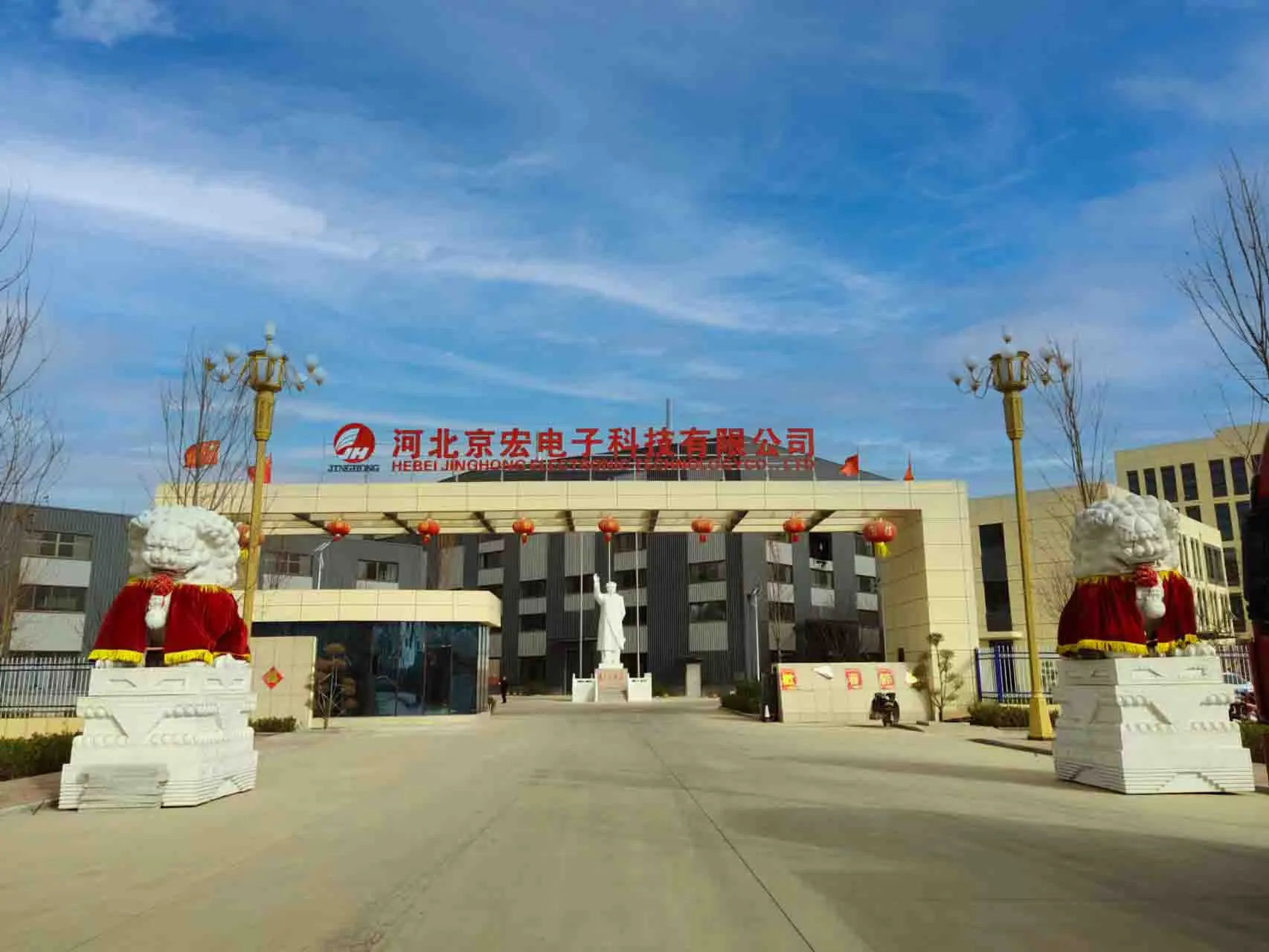
Hebei JingHong Electronic Technology Co., Ltd. works with an export company called J&Q Insulation Material Co., Ltd. We've been making and selling insulation sheets for over 20 years. For over 10 years, we've also done business with other countries. Our two plants can handle a total of 43,000 tonnes per year. Hongda can handle 13,000 tonnes per year. Making things is done in fully automatic workshops, and making things for direct sales comes first. We make 3240 epoxy sheets, Bakelite sheets, and phenolic cotton sheets, so people can get a lot of different things from us.
Packaging, Logistics, and Delivery
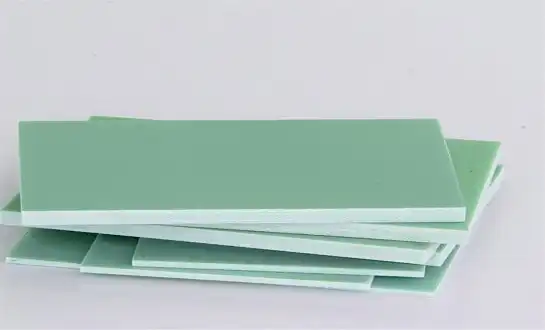
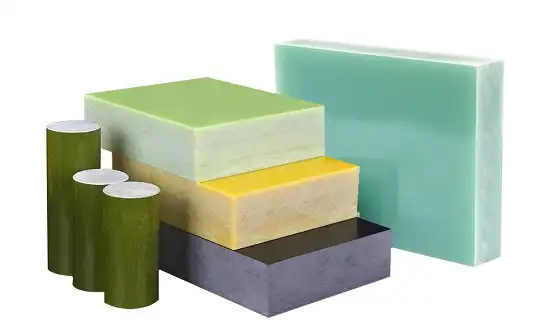
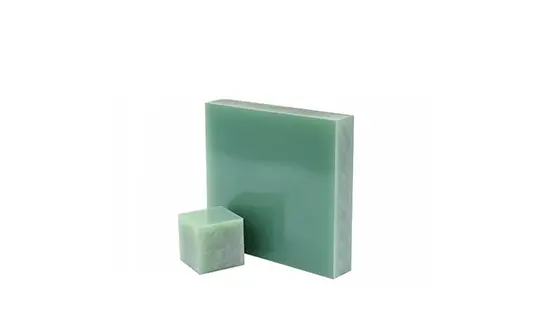
Plain boxes are used to ship sheets, and pallets keep them safe. We can send your orders by sea, land, or air because J&Q has its own logistics company. To be clear, the Hongda sheet is a light green colour by nature. Colour, on the other hand, does not mean grade or qualification. Keeping records and being able to find them is important. Before using a package in production, check its thickness, size, and surface. Let us know what's wrong and the batch number so we can find it quickly.
Conclusion
There are three ways that a Flame Resistance FR4 Fiber Glass Laminate Sheet protects electrical circuits: a flame-retardant epoxy glue stops sparks and goes out on its own; woven glass support keeps parts straight and stable in size; and dielectric strength keeps conductors apart. The material has a V-0 flammability grade, a high breakdown voltage, a high insulator resistance, and a low water absorption rate, according to the Hongda test data. The exact results, though, depend on the grade, the thickness, and the way the test was done. Different from G-10 because it doesn't catch fire easily, high-Tg grades because it can handle higher temperatures, and phenolic laminates because they don't soak up water easily, FR4 really stands out. It's important to know the power, temperature, load, thickness, and acceptable limits before picking a sound. After this, a sample is provided, and the paperwork is checked. If you don't make common mistakes like confusing flame resistance with heat rating, you can stay away from issues with cracking, dielectric failure, and sizing.
FAQ
Is FR4 flame resistant?
Yes. GB/T 2408-2008 says that the Hongda sheet got a V-0 grade for how easily it can catch fire. "FR" stands for "flame retardant."
How does FR4 differ from standard fiberglass sheet?
It is glued to woven glass with an epoxy system that doesn't catch fire. Check the datasheet because the flame rating on normal fibreglass sheet might not have been checked.
Can FR4 be machined?
Yes. You should use tungsten carbide or diamond-tipped tools and a hoover to clean up the dust because the glass is sharp. We'd like to see your picture.
What temperature can FR4 handle?
Every grade stays around 130 °C, while high-Tg grades get to about 170–180 °C. Before you place your order, check the grade.
Which documents should I request?
This is where you can find the product document, which has a test report that talks about your thickness, conformity certificates, UL information, RoHS and REACH statements, and inspection records.
Request a Quote from J&Q for FR4 Fiberglass Laminate Sheet
Contact J&Q at info@jhd-material.com to request a quote from an experienced Flame Resistance FR4 Fiber Glass Laminate Sheet supplier. Send your grade, thickness, tolerances, dimensions, quantity, and destination, and we will reply with suitable options. With more than 20 years in insulating sheet production, our own logistics company, and a 500 KG minimum order, we support sample runs through bulk orders. Further details are available at blog.jhd-material.com.
References
1. UL 94: Tests for Flammability of Plastic Materials for Parts in Devices and Appliances, 2013
2. NEMA LI 1: Industrial Laminated Thermosetting Products, 1998
3. IPC-4101E: Specification for Base Materials for Rigid and Multilayer Printed Boards, 2021
4. IEC 60243-1: Electric Strength of Insulating Materials – Test Methods – Part 1: Tests at Power Frequencies, 2013
5. NFPA 70: National Electrical Code, 2023
6. Printed Circuits Handbook (Coombs and Holden), 2016

Get a complete product list and quotation
J&Q New Composite Materials Company