Phenolic Cotton Tube Offers Strong Insulation Support for Electrical and Mechanical Systems
When electrical and mechanical systems demand materials that hold up under pressure, heat, and voltage stress, the phenolic cotton tube consistently earns its place on the specification sheet. Made from cotton fabric layers impregnated with phenolic resin and cured under heat and pressure, this laminated tube delivers a combination of structural strength and electrical insulation that many standard polymers simply cannot match. Whether you work in power distribution, industrial machinery, or automotive manufacturing, this material addresses real-world performance needs with measurable reliability.
Understanding Phenolic Cotton Tubes: Properties and Manufacturing
What Is a Phenolic Cotton Tube?
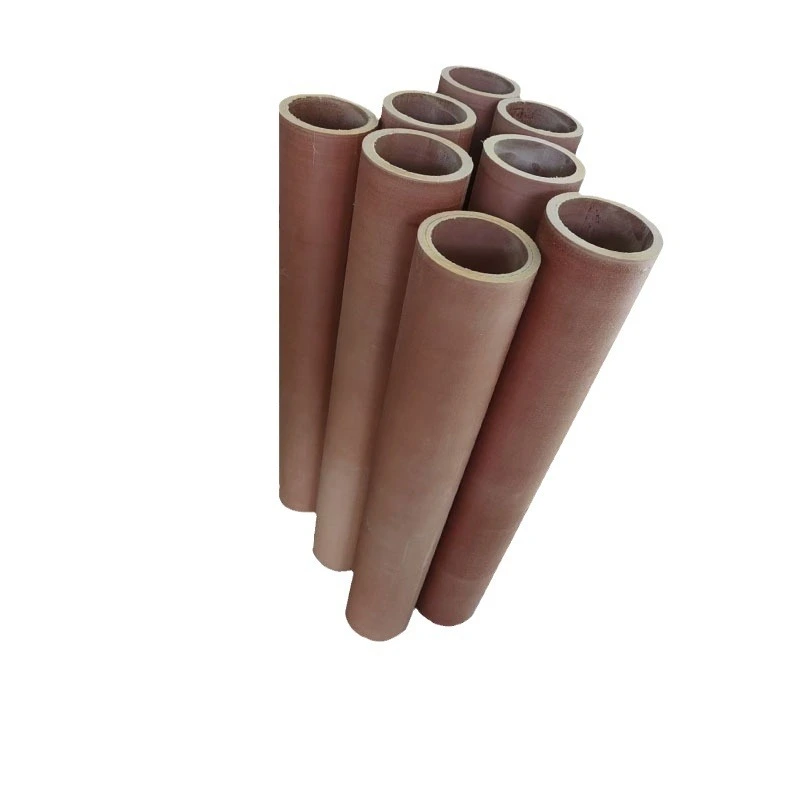
A thermosetting composite made by winding cotton fabric that has already been soaked with phenolic resin and then curing it under controlled heat and rolling pressure is known as a Phenolic Cotton Tube, also known as a Phenolic Cotton Cloth Laminated Tube or PFCC Tube. The end result is a thick, layered tubular structure that is strong in all directions, can withstand electrical insulation up to Class E (120°C constant), and doesn't absorb much water when used normally.
Key Technical Specifications
The material can work at temperatures between 115°C and 120°C all the time, and it can handle temperatures up to 130°C for a short time before breaking down. Because it doesn't creep and has a high compressive strength, it can be used in load-bearing mechanical applications. It is better to use dielectrics for high-voltage insulation jobs because their qualities stay the same over a wide frequency range. The low friction coefficient also keeps moving parts from wearing out, which means that they don't need to be serviced as often.
Manufacturing Quality and Traceability
J&Q's Phenolic Cotton Cloth Tubes are made using quality management methods that are ISO 9001-certified. They are tested for their ability to resist electrical current, mechanical stress, and the effects of the climate. These tubes come in brown and black, and their inner diameters range from φ5mm to φ1500mm. Their outer diameters range from φ6mm to φ2000mm, and their wall thickness starts at 0.5mm. The longest tube length is 2 meters. The annual production capacity is 100 tons, which can handle both regular orders and large-scale purchases.
Key Advantages and Applications of Phenolic Cotton Tubes
Performance Advantages Worth Knowing
Before listing a product's strengths, it's helpful to know why buying teams in tough industries keep coming back to this information. Here are the main success benefits that make that choice:
- Thermal tolerance up to 120°C continuous — It can withstand temperatures of up to 120°C continuously, making it a good choice for motors, coil assemblies, and transformer insulation where heat buildup is a constant worry.
- Strong dielectric insulation properties — The cotton-resin combination has strong dielectric insulation qualities, which means it keeps electrical separation even when exposed to high voltage. This lowers the risk of arcing and short circuits.
- High compressive and impact strength — The cotton weave support absorbs shock and doesn't break under long-term load, which makes it good for structural plates, bushings, and spacers.
- Low friction and vibration damping — The material lowers noise during operation and increases the life of nearby metal parts without the need for constant lubrication in gear and roller applications.
- Easy CNC machinability — Phenolic Cotton Tube is easier on cutting tools than fiberglass laminates, so it can be used to make precision parts with tighter tolerances.
Industrial Applications Across Key Sectors
The Phenolic Cotton Tube can be used in many different types of industries because it is flexible. In the production of electronics and electricity, it is used as safe covers in motor systems, as well as insulating sleeves for transformer bolts. In industrial machinery, it is cut into wear bands, hydraulic cylinder guide rings, and quiet-run gear pinions that protect metal surfaces while absorbing vibration. It is used by companies that make parts for cars for battery pack insulation barriers and heat-resistant structure fixings, where precise measurements and stable batch quality are essential.
Phenolic Cotton Tube vs. Alternative Insulation Materials: A B2B Comparison
How It Compares to Fiberglass and Epoxy Laminates
Fiberglass resin tubes, like those used in FR4 applications, have better thermal class scores (Class F and H) and better dielectric performance when the temperature is high. But fiberglass laminates are much rougher on machining tools, which makes them cost more and take longer to work with. Phenolic Cotton Cloth Tube is a cheaper option that doesn't lose its structural integrity for uses where Class E insulation is enough and ease of machining is important.
Mechanical Strength vs. Standard Plastics
It may be easy to work with standard industrial plastics, but they don't always perform well in terms of their compressive strength, temperature stability, and ability to absorb vibrations under long-term mechanical load. On the other hand, Phenolic Cotton Laminate Tube can handle high side-loading in hydraulic bushings and stays the same size at temperatures where plastics start to creep or deform.
Cost and Long-Term Value
When it comes to buying things, Phenolic Cotton Tube parts have a measured total cost advantage over the product's working life because they last longer and wear down tools less. This is something that OEM sourcing managers and mechanical engineers think about more and more when choosing materials, especially for high-cycle uses in industrial machinery and power equipment.
How to Choose and Procure the Right Phenolic Cotton Tube for Your Business Needs
Matching Specifications to Application Requirements
First, look at the running system. If the temperature stays above 130°C for a long time or there is direct high-voltage contact above Class E standards, you may need a different type of laminate. In the business world, standard Phenolic Cotton Cloth Tube specifications work well for mechanical wear applications, structural insulation sleeves, and moderate-voltage electrical assemblies.
OEM and Custom Sizing Options
J&Q can fill OEM orders with inner and outer sizes, wall thicknesses, and lengths that are exactly what your component plans show. The range includes inner diameters from φ5mm to φ1500mm and outer diameters up to φ2000mm, so it can fit both small precision parts and big industrial sleeves. For large orders, there are also options for custom packaging. Ocean freight, land freight, and air freight are all choices for transportation, which give procurement teams options based on lead time and price.
Evaluating Suppliers for B2B Procurement
With more than 20 years of experience in insulation materials and more than 10 years of experience in foreign trade, J&Q has formed long-term relationships with trading companies in a number of different areas. The company runs its own transportation network, so from production to delivery, everything comes from a single source. Compliance with ASTM and UL standards and ISO 9001 certification give buying teams the proof they need for quality checks and government rules.
Conclusion
Phenolic Cotton Tubes play a specific but important role in choosing materials for industry. They have the right amount of electrical insulation, mechanical load resistance, and machinability for a lot of different uses, from transformer spacers and hydraulic joints to insulation parts for cars. Picking the right source is just as important as picking the right material for buying teams that need to keep track of quality, be able to change sizes, and make sure that production output stays the same. J&Q is a reliable source for both standard and custom sales in the US market and beyond because they can produce a lot of items, have the right certifications, and help with transportation.
FAQ
What is the maximum operating temperature for phenolic cotton laminate tube?
The normal temperature for prolonged use is between 115°C and 120°C. Peak temperatures for short periods of time up to 130°C are fine, but long-term exposure above this range will make the material brittle and less effective as insulation.
What is the difference between NEMA CE and NEMA LE grades?
The cotton weave in CE grade is thicker, which makes it better for heavy mechanical parts that need to be strong against impact. A fine weave is used in LE grade, which gives precision electrical parts a better surface finish and tighter size standards.
Can these tubes be used in submerged or high-humidity environments?
The material does a good job of resisting humidity, but it shouldn't be submerged in water all the time because the cotton reinforcement may soak up water over time and cause the material to swell. Splash-zone environments work well with versions that are coated with oil.
What customization options are available?
J&Q can make unique inner and outer diameters, wall thicknesses starting at 0.5 mm, lengths up to 2 meters, and OEM packaging. To talk about your unique needs, email the team at info@jhd-material.com.
What machining tools work best with this material?
It is best to use tools with carbide tips or polycrystalline diamonds. To keep the layers from coming apart, use high speeds and light feed rates, and always use dust extraction because phenolic dust can make your lungs hurt.
Request a Quote from J&Q — Trusted Phenolic Cotton Tube Supplier
J&Q has been selling insulation materials for more than 20 years and has its own dedicated logistics network that they use for every order. As a reliable Phenolic Cotton Tube manufacturer, we can make tubes in any size; our quality is ISO 9001-certified, and we can ship them by sea, land, or air. Our team is ready to help you with your buying cycle, whether you need standard stock or OEM production runs. To get specs or a project price, go to blog.jhd-material.com or email us at info@jhd-material.com.
References
1. IEEE Electrical Insulation Magazine — Vol. 35, No. 4, 2019
2. NEMA Standards Publication LI 1: Industrial Laminated Thermosetting Products — NEMA, 2020
3. ASTM D709: Standard Specification for Laminated Thermosetting Materials — ASTM International, 2021
4. Polymer Engineering & Science Journal: Thermal Stability of Phenolic Resin Composites — Vol. 61, Issue 8, 2021
5. Machinery Lubrication Magazine: Phenolic Bearings in Hydraulic Systems — Noria Corporation, 2018
6. Journal of Composite Materials: Cotton-Reinforced Phenolic Laminates Under Mechanical Load — Vol. 54, No. 12, 2020

Get a complete product list and quotation
J&Q New Composite Materials Company