Phenolic Cotton Tube Helps Manufacturers Produce Durable Bushings and Structural Parts
When engineers and procurement teams search for a material that genuinely delivers on both mechanical performance and electrical insulation, phenolic cotton tube stands out as a dependable answer. Made from cotton fabric wound and impregnated with phenolic resin under heat and pressure, this laminated composite tube gives manufacturers a practical path to producing bushings, structural spacers, and wear-resistant components that hold up in demanding conditions. Whether you work in industrial machinery, power distribution, automotive, or electronics, this material deserves a close look.
What Is Phenolic Cotton Tube and Why It's Essential in Manufacturing Durable Parts
Composition and Manufacturing Process
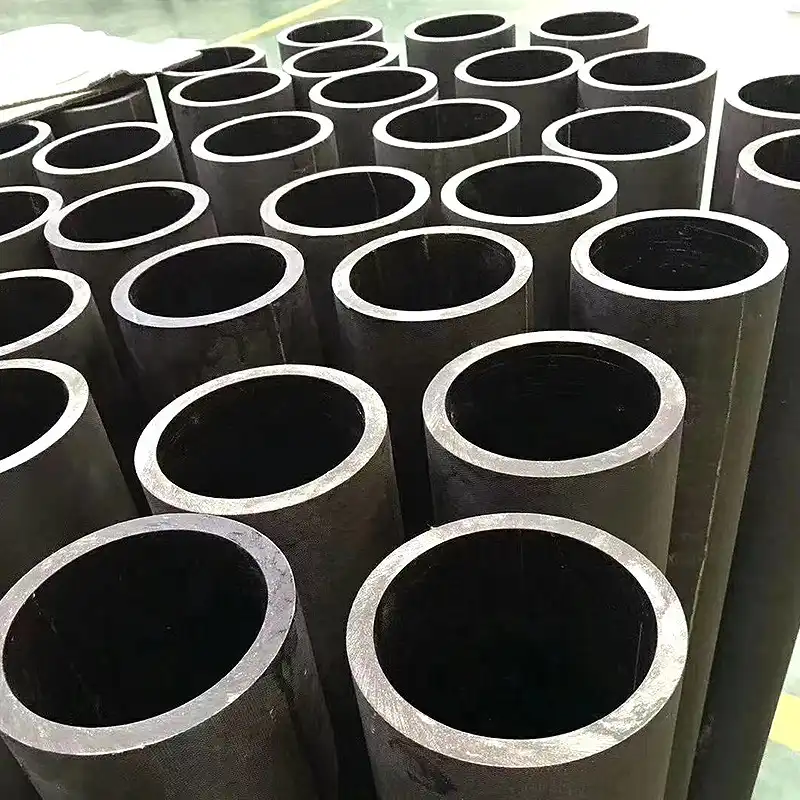
Layers of cotton fabric that have been soaked with phenolic resin are wound around each other to make a phenolic cotton cloth tube. After the layers are cured, they are rolled under controlled heat. This process locks the structure into a thick compound with no holes. The end result is a tube that can't be re-melted or changed. This makes it much more stable in service than thermoplastic options.
Key Physical Properties
The normal constant working temperature of the material is between 115°C and 120°C. It's okay to have short-term peaks up to 130°C. It has a low friction coefficient, strong resistance to creep, good vibration absorption, and real electrical insulation properties. This material has the same qualities as NEMA CE and NEMA LE grades. CE grades have a rougher weave and higher impact strength, while LE grades have a finer weave and tighter machining standards.
Sizes and Specifications Available
Our Phenolic Cotton Tubes come in either a natural brown or black finish at J&Q. The inside diameter is between 5 and 1500 mm, and the outside width is between 6 and 2000 mm. The wall must be at least 0.5 mm thick to begin. 2 meters is the longest length of a standard tube. These sizes are good for a lot of OEM uses, from small motor bushings to big structural spacers in transformer assemblies.
Comparative Analysis: Phenolic Cotton Tube vs Alternative Tubing Materials
Against Fiberglass Tubes
Fiberglass tubes have good insulating qualities and can withstand higher temperatures, but they break easily when hit and are much harder on cutting tools when they are being machined. Phenolic cotton lamination tube, on the other hand, cuts smoothly with carbide tools, causes less tool wear, and absorbs vibrations much better. This makes it the best choice for gear pinions, wear parts, and mechanical bearings where resistance to impact is important.
Against Plastic and PVC Tubes
Plastic and PVC tubing are cheap for light-duty uses, but they don't work well above 80°C to 90°C and don't have the compressive strength needed for load-bearing bushings. Phenolic cotton cloth tubes can handle mechanical loads that would bend most plastics forever. When it comes to switchgear spacers, hydraulic guide rings, or motor insulation bands, phenolic cotton is the only material that can really hold its shape.
Against Paper Phenolic Tubes
Paper phenolic tubes are generally lighter and more economical, but Phenolic Cotton Tube products offer higher impact strength and better resistance to moisture absorption because they are reinforced with a woven cotton structure. When applications involve vibration, shock loading, or occasional humidity, Phenolic Cotton Tube can provide more dependable mechanical performance than paper-based phenolic tubing. The reinforced construction of Phenolic Cotton Tube also makes it suitable for demanding mechanical insulation applications where durability and dimensional stability are important. For equipment exposed to repeated vibration or intermittent moisture, choosing Phenolic Cotton Tube can help improve service reliability and reduce concerns associated with weaker paper-based laminates. Overall, Phenolic Cotton Tube is a practical option when mechanical toughness and environmental resistance are higher priorities than achieving the lowest possible material cost.
How Phenolic Cotton Tube Enhances the Production of Durable Bushings and Structural Parts
Manufacturers in many different industries have switched to cotton-reinforced phenolic tubes because metal, plastic, or paper-based parts kept breaking. The main reason is simple: this material fixes several issues at the same time.
These are the specific performance benefits that make it useful in production:
- Hydraulic cylinder guide rings and wear bands: The tube withstands severe side-loading and compressive forces in hydraulic machinery. It protects cylinder walls from scoring and perform consistently even in oil-contaminated environments, reducing maintenance frequency.
- Quiet-run gears and rollers in textile and printing machinery: When machined into gear pinions, the cotton-phenolic structure absorbs operational vibration and reduces noise transmission. This extends the service life of mating metal gears and eliminates the need for continuous external lubrication in many installations.
- Electrical insulating sleeves and structural spacers in switchgear and transformers: The tube maintains dimensional and dielectric integrity across temperature cycles, protecting live components from mechanical shock and electrical flashover in power distribution applications.
These performance traits directly lead to fewer production stops, lower scrap rates, and longer service intervals for parts used in the manufacturing of automotive, electrical, and industrial equipment.
Procurement Guide for Phenolic Cotton Tubes: How to Choose the Right Supplier and Product
Certifications and Quality Standards to Verify
When looking for cotton phenolic laminated tubes, make sure the seller is ISO 9001 certified and that the goods are made according to ASTM and UL guidelines. These licenses show that the process of making the product and the finished product always meet quality standards. At J&Q, all tubes are made using quality control systems that are in line with ISO 9001. Before they are shipped, they are checked for their ability to resist electrical current, mechanical loads, and the elements.
OEM Capability and Customization Options
Not all uses can be fit into a standard size. If a provider is a real OEM, they can change the length, color, diameter, thickness, and length of the walls to fit your engineering plans. J&Q offers full OEM services and works directly with engineering teams to make tubes that fit perfectly into the design of your part. Our yearly production capacity is 100 tons, which lets us handle both small samples of prototypes and big orders that come back.
Logistics and Lead Time Considerations
J&Q has more than 20 years of experience manufacturing and supplying insulation products, with over 10 years of international trading experience. For customers sourcing Phenolic Cotton Tube, the company has established logistics routes covering ocean freight, air freight, and land transportation. J&Q also operates its own transportation company, reducing reliance on external freight managers throughout the supply chain from production to final delivery. This integrated logistics capability allows buyers of Phenolic Cotton Tube to receive clearer shipment updates and better visibility into transportation status. For international procurement teams, sourcing Phenolic Cotton Tube from a supplier with established manufacturing and transportation capabilities can help reduce uncertainty around lead times and coordinate delivery schedules more efficiently. With production and logistics handled through an integrated system, J&Q can support both individual Phenolic Cotton Tube orders and ongoing international supply requirements.
Future Outlook and Innovations in Phenolic Cotton Tube Manufacturing
Eco-Friendly Resin Formulations
Lower-emission phenolic resin methods that stop the release of formaldehyde during production are slowly being used in the phenolic composite industry. The mechanical and heat performance of these versions stays the same, but they meet the needs of stricter safety and environmental rules in the US and Europe.
Advanced Weave Engineering
Material engineers are improving the density and position of the fibers in cotton weave to make tubes with the right amount of directional strength. Tighter weave patterns make the finish on the machine better, and reinforced cross-ply patterns make the material less likely to separate when it's loaded and unloaded many times. This is useful for battery pack assemblies and motor insulation frames.
Integration With Precision Machining Workflows
As tolerances for CNC machining get tighter in the electronics and auto industries, cotton phenolic laminates are being asked for more often because they respond reliably to high-speed carbide cutting. Suppliers who can send tubes with consistent wall thickness, density, and hardness lower the chance that automated machining lines will have to scrap or rework tubes.
Conclusion
Phenolic Cotton Tube is a proven and cost-effective material for manufacturing durable bushings, structural spacers, and insulation components used in power, automotive, industrial, and electrical applications. With its combination of mechanical strength, thermal stability, and machinability, Phenolic Cotton Tube can meet requirements that may be more difficult to achieve with metal, conventional plastics, or paper-based phenolic materials. The consistent performance of Phenolic Cotton Tube, supported by applicable material standards and certifications, makes it a practical option for procurement teams and engineers evaluating materials for long-service components. For OEM projects, sourcing Phenolic Cotton Tube from a supplier with established production capacity and customization capabilities can help maintain consistent quality across different component requirements. J&Q also combines manufacturing capabilities with integrated transportation services, making the supply of Phenolic Cotton Tube more convenient for international buyers and supporting reliable delivery for both individual orders and long-term procurement programs.
FAQ
What is the maximum continuous operating temperature for phenolic cotton laminated tube?
The normal temperature for continuous use is between 115°C and 120°C. Short-term exposure up to 130°C is fine, but long-term use above this temperature causes carbonization and a loss of mechanical strength.
How does phenolic cotton tube compare to fiberglass for electrical insulation applications?
Fiberglass tubes have higher dielectric values and are better for uses that need Class F or H shielding. Phenolic Cotton Tube has Class E insulation (120°C) and works best in situations where resistance to mechanical wear, ease of machining, and low cost are more important than extreme high-voltage performance.
Can phenolic cotton tubes be manufactured to custom dimensions?
Yes, you can get custom tube lengths up to 2 meters, inner diameters from φ5 mm to φ1,500 mm, and outer diameters up to φ2,000 mm. The wall thickness starts at α0.5 mm. Through our OEM service, you can get custom sizes and get direct help from our expert team.
Is this material suitable for oil-exposed environments?
Yes. Phenolic cotton laminated tube can be used in places with oil and air. It works well as a wear part in hydraulic systems where it is always in contact with oil.
What tools work best for machining this material?
It is best to use tools with carbide tips or polycrystalline diamonds. High spindle speeds and light feed rates keep heat from building up and stop delamination. During cutting, enough dust extraction is needed because phenolic dust can irritate the lungs.
Partner With J&Q for Trusted Phenolic Cotton Tube Supply
J&Q has been making things for more than 20 years, so every order of Phenolic Cotton Tube is handled with care. Our goods are certified by ISO 9001, UL, and ASTM, and our own transportation team handles shipping from our factory to your production floor by sea, air, or land. Our team is ready to help you with your sourcing, whether you need standard stock or custom-sized tubes on a large scale. Please email us at info@jhd-material.com or visit our blog at blog.jhd-material.com to ask for a sample or talk to our expert team about your unique needs.
References
1. Harper, C. A. (2006). Handbook of Plastics Technologies. McGraw-Hill.
2. NEMA Standards Publication LI 1. (2020). Industrial Laminated Thermosetting Products. National Electrical Manufacturers Association.
3. ASTM D709. (2021). Standard Specification for Laminated Thermosetting Materials. ASTM International.
4. Brydson, J. A. (1999). Plastics Materials (7th ed.). Butterworth-Heinemann.
5. IEC 60893-3. (2003). Specification for Industrial Rigid Laminated Sheets Based on Thermosetting Resins for Electrical Purposes. International Electrotechnical Commission.
6. Rosato, D. V., & Rosato, M. G. (2012). Reinforced Plastics Handbook (3rd ed.). Elsevier.

Get a complete product list and quotation
J&Q New Composite Materials Company