Phenolic Cotton Cloth Board Sourcing: How to Avoid CNC Tolerance Issues
To avoid CNC tolerance issues with Phenolic Cotton Cloth Board, treat raw-sheet tolerance and finished-part tolerance as two separate requirements. Specify the grade, thickness range, and moisture condition of the board. Then add machining allowance, fixturing, tooling, and inspection rules to the drawing and RFQ. Approve a first article before mass production. I have seen many rejected parts that came from good material and unclear instructions, not from a weak CNC machine. This guide shows engineers, OEM sourcing managers, and technical buyers in the United States how to control each step, and how JingHong supports that work.
What Phenolic Cotton Cloth Board Is and Why Tolerance Matters
How the Laminate Is Made
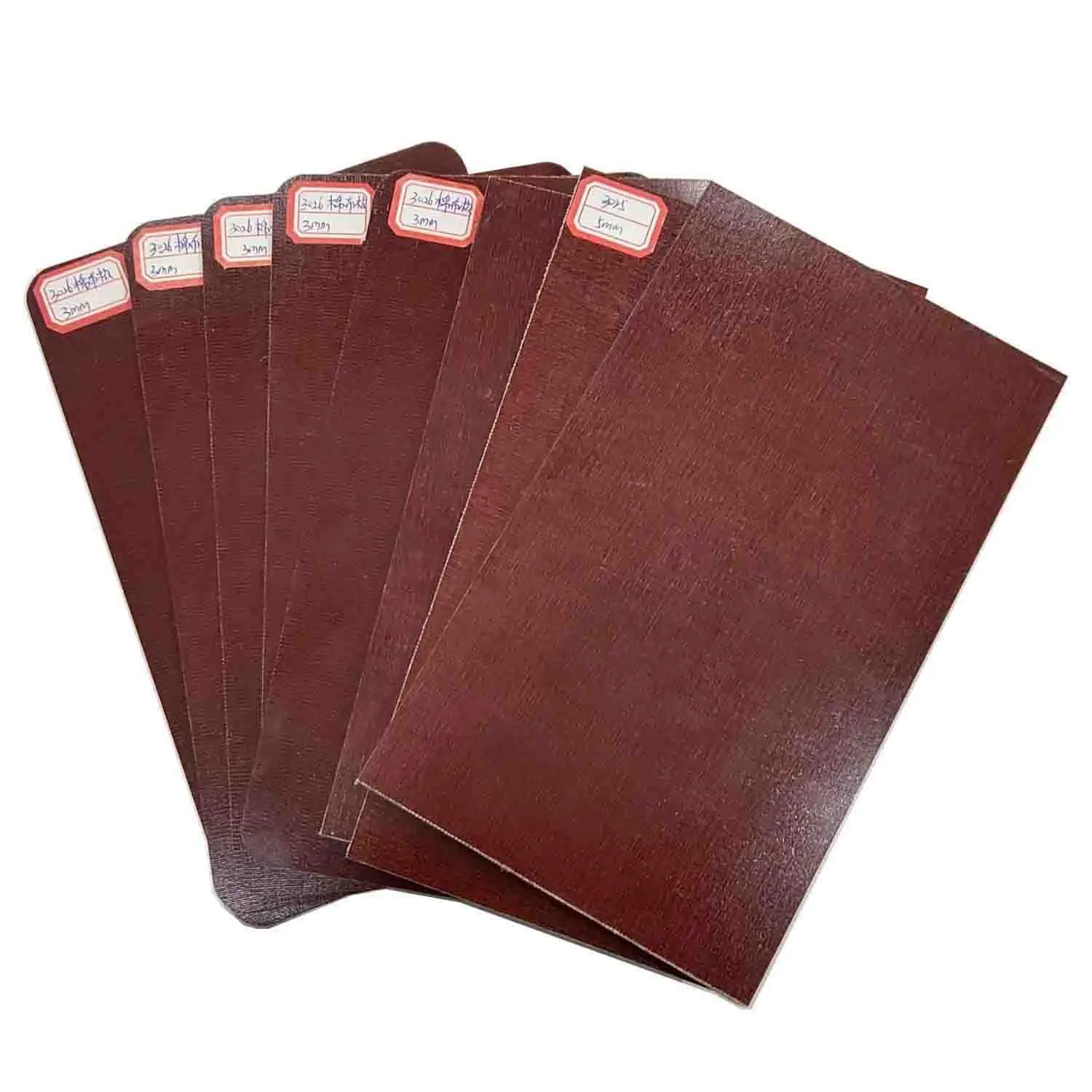
You can call it Phenolic Cotton Cloth Board. It is a thermosetting material. The fabric is soaked in phenolic resin by the people who make it. The layers are then stacked and pressed together with a lot of heat and pressure. As the glue sets, it turns into a sheet that can't be melted back together. What makes the fabric strong, stiff, resistant to wear, and how it responds to water depends on how the resin is spread out in the fabric. It usually has a specific gravity of 1.35 to 1.45 g/cm³, and the cotton reinforcement makes it stronger than the paper-based phenolic when it comes to impact. ASTM grades C (coarse weave) and CE (fine weave) are often used as examples. You can choose from 2 mm to 100 mm thick JingHong boards. Each sheet is 1020 mm x 2020 mm.
Where Buyers Use It
This is needed in a number of fields. Builders use it to make the bottom of medium-voltage panels, wire boxes, and distribution boxes. PCB shops use it as drilling pads. People who work with machines make gears, bearings, spacers, jig boards, and mold pieces out of it. Appliance and car companies use machined phenolic parts to make motor brackets, insulation pads, and fixtures that can handle heat. Electricity and power teams use it to make parts that keep things cool. What holds everything together is a part that has to fit. In every field, the line stops when a spacer bends after it has been cut or a gear hole is too big.
Why Nominal Thickness Does Not Guarantee Finished Accuracy
It doesn't matter if the board is the right width; it can still make a bad part. That which is not finished is known as "sheet tolerance." When a part is made, its shape changes after it has been cut, heated, clamped, and the moisture level has changed. This is called part tolerance. Both ASTM D709 and NEMA LI 1 say how thick laminated thermosetting sheets can be and what their properties must be. However, they don't say what size the bore of your gear will be. This is what I tell buyers to write: one for the board that comes in and one for the part that is finished. Buyers and sellers don't fight as much when they do this little thing.
Main Causes of Phenolic Cotton Cloth Board CNC Tolerance Problems
Thickness Variation and Fabric Orientation
The level of parallelism, pocket depth, and bearing fits all change when the thickness of a sheet changes across it. A pocket cut from the top will sit at a different depth on the bottom if the sheet isn't the same on both sides. The direction of the fabric is also important. You can get different hole shapes and edges when you cut along and across the weave because the cutting resistance is different. The edges can come apart if the tool's shape isn't right because it can lift the cotton layers at the exit points. On the nesting plan, I think you should mark the direction of the sheet and check the width a few times before you program.
Moisture and Machining Heat
Water makes things bigger or smaller. Cotton fibers soak up water. That's less than 1.6% of the thickness of 1.5 mm, which is what ASTM D570 says. This is shown in the datasheet for grade CE. Someone moved a board from a wet building to a dry shop. The board may move after the parts are taken out of the machine. The surface gets weaker when tools are dull or feed rates are fast. The plastic also gets burned and stressed, which will show up later as warping. When you cut with sharp tools at the right speed and leave enough space between chips, the cut stays cool, and the part stays stable.
Allowance, Tooling, and Fixturing
If the process doesn't allow any changes to happen, even a stable board can fail. Not enough cutting room means the shop can't get rid of layers on the surface that are damaged by stress or finish it to the right size. The sides of old tools are fuzzy, and the holes they make are too big. Too thin or too thick a piece can bend when cut and then spring back when the force is taken away. You can keep things flat with vacuum tables, extra backing boards, and light finishing passes. Talk to the seller about these things before they give you a quote. Each one will change the price and process time.
Step-by-Step Sourcing Plan and RFQ Specifications
Six Steps Before Mass Production
I believe six steps should be taken. First, write down all the things that you need to do for the last part. Second, write down the grade of board and the raw sheet's width. Third, plan the space for machining and the rules for conditioning. Fourth, agree on how to check, what tools to use, and where to put the fixtures. Fifth, give your OK to a sample or first draft. Sixth, stop any changes that could be made and make sure the process stays the same as the buying deal. At each step, an idea is turned into a written rule. Providers will then be able to quote based on the real job, not just a guess, and your team will be able to compare offers in a fair way. People who buy things usually take on more risk when they skip any one step.
What the RFQ Should State
Words like "high precision" should be changed to numbers. Along with the finished length, width, and thickness, write down the hole sizes and locations, as well as the surface roughness, flatness, parallelism, concentricity, runout, and edge quality, such as the amount of chipping or fiber showing that is okay. Use ASME Y14.5 geometric dimensioning so that both sides of the drawing look the same. Make sure that you mark important features differently from less important ones. The seller can then put process control where it's needed to make sure it fits and works right. Write down how much, what temperature and humidity it will be used in, and if it needs electricity.
Documentation and Prototype Approval
You can ask for material certificates, batch tracking certificates, or certificates of compatibility. Explain the checking tools, such as calipers, micrometers, or a coordinate measuring machine, and make it clear how things should be packed. Before you send out the whole order, compare the first item to the picture. If the application for a job in the US asks for RoHS and REACH information, you should send it. We can tell you more about our Phenolic Cotton Cloth Board if you ask. It has passed tests for UL (file number E310670), RoHS, and REACH.
Choosing the Right Board and Supplier
Comparing Phenolic Cotton, Phenolic Paper, and Epoxy Fiberglass
Not just price should be used to decide what materials to buy. Phenolic Cotton Cloth Board is good for gears, bushings, and bearings because it can handle more stress and wear. A datasheet will usually show a tensile strength of more than 100 MPa. Phenolic Paper Board is less expensive and easier to work with for flat insulation parts, but it doesn't hold up as well when hit. Certain types of epoxy fiberglass sheets, such as FR4 and 3240 epoxy, can handle more heat and dielectric stress. However, glass fibers wear out tools more quickly. It is important to think about cost, strength, wear, insulation, temperature, moisture, and machinability all at the same time.
Questions to Ask a Supplier
They should give you more than just a catalog. Check to see if they offer custom thicknesses, help with cutting to size, reviewing drawings, and inspecting the first piece. Find out how they keep an eye on each batch, check the thickness and flatness, and watch the pressing and curing. Find out what you can do to make things right when bad things happen. Before you send an order overseas, make sure you know about the company's licenses, wait times, packing, and experience with OEM and distributor programs. Everyone can be judged on the same set of questions, so you can compare their answers without any bias.
What JingHong Offers
A 36,300 m² site that is certified to ISO 9001, ISO 14001, and ISO 45001 was built in 2018. This business is known by its brand name, JingHong. We've been in business for more than 20 years, so we know how to make and sell insulation sheets. For more than 10 years, we've also done business with other countries. Phenolic Cotton Cloth Board and Phenolic Paper Board come in normal sizes of 1020 mm x 2020 mm and are 2 mm to 100 mm thick. If you buy more than 500 kg, it will be sent in boxes by sea, land, or air, and you can pay by T/T. Our own transportation business makes it possible for delivery to be made in one place.
Inspection, a Gear Example, and Common Mistakes
Inspection and Acceptance Plan
Look three times. When the sheets get there, make sure they are flat and check their thickness in a few different places. You should also look for flaws on the surface like cracks, delamination, places with a lot of resin, and batch papers. On the first piece, check the important measurements, drill holes, check the roughness, and look at the quality of the edges. Decide how many checks need to be done, keep an eye on how much the tools are wearing down, make sure the shop stays cool, and keep control samples. You should spell out how to handle parts that don't meet standards, repairs, replacements, deviations, and changes to the way things are done in the purchase agreement. With clear rules for acceptance, everyone is safe, and fights are less likely to happen.
Example: A Gear That Failed Inspection
In this case, we'll look at a gear that was cut from a board that was the right thickness. The hole was too big, the teeth weren't all the same size, and the runout was bigger than what the drawing showed. There wasn't enough room to work, the board wasn't used to the shop's humidity, the fixtures were weak, the cutter was worn out, and the model didn't explain runout. The grade and the board's raw edge are the first parts of the fix. First, add finishing stock. Next, make sure the board is in good shape before cutting it. Finally, make sure it is held firmly in place and set clear limits for the hole size, tooth profile, runout, and smoothness. Approval of the first item and group checks cut down on waste, extra work, and delays in putting things together.
Common Mistakes and Final Checklist
People often make mistakes like choosing the lowest price, asking for vague "tight tolerances," ignoring humidity, skipping the sample, believing that all grades are identical, and forgetting to pack the goods for export. There are hidden costs for each one that come from waste and downtime. Before I approve an order, I need to make sure of five things: the material grade and certificates, the drawing controls and machining allowance, the ability of the supplier to be tracked, the acceptance of the prototype and the inspection methods, and the written shipping terms, which include how the pallets will be packed and how they will be shipped. If any of the items are open, the order is not ready.
Conclusion
CNC tolerance problems with Phenolic Cotton Cloth Board are not usually caused by the machine itself. You can get them from differences in thickness, the direction of the fabric, moisture, high temperatures during machining, not leaving enough room, tools that are worn out, and fixtures that are not strong enough. When you separate the tolerance for the raw sheet from the tolerance for the finished part, add numbers to the RFQ, and agree to a first article, everyone is on the same page. Based on how much load, wear, insulation, temperature, and moisture you need, you should pick between phenolic cotton, phenolic paper, and epoxy fiberglass. Not only do receiving, first-piece, and production stages get inspected, but suppliers are also checked on quality systems, tracking, licenses, and export packing. This cuts down on waste, rework, and assembly delays. When you write down a process, tolerance goes from being a point of disagreement to a need that can be measured.
FAQ
What CNC tolerance can I expect from phenolic cotton board?
It depends on what tools are used, how the part is fixed, how stable the material is, how the board is cut, and what shape and size the part is. There isn't just one number that works. Need the supplier to show proof that they can do what they say they can do? Then use a first piece to test it.
Is it suitable for gears and bearings?
Yes. It keeps things quiet and is strong against damage, so it works well in gears, bushings, and bearings. First, ask your provider about the temperature, speed, and load.
How should I store the sheets?
Do not wet them. Lay them flat on boxes. Before you machine them, let them get used to the shop.
What information do you need for a quotation?
As well as the grade, thickness, tolerances, operating conditions, quantity, certification needs, location, and due date of the product, please send pictures or 3D models of it. We'll talk about your project and decide if sheets, blanks that are cut to size, or machined parts will work.
Request a Technical Review and Phenolic Cotton Cloth Board Quotation from J&Q
Are you ready to stop having issues with CNC tolerances? Send J&Q your drawings, grade, thickness, tolerances, amount, and where the material is going to info@jhd-material.com for a full review. We sell Phenolic Cotton Cloth Board and have an ISO 9001 certification. We offer one-stop services and have a minimum order quantity of 500 kg. We'll make a quote that fits your needs after we look at them. Blog.jhd-material.com is the place to go to find out more.
References
1. ASTM International, Standard Specification for Laminated Thermosetting Materials (ASTM D709), 2017
2. NEMA, Industrial Laminated Thermosetting Products (NEMA LI 1), 1998
3. ASME, Dimensioning and Tolerancing (ASME Y14.5), 2018
4. ASTM International, Standard Test Method for Water Absorption of Plastics (ASTM D570), 2018
5. ASTM International, Standard Test Methods for Rigid Sheet and Plate Materials Used for Electrical Insulation (ASTM D229), 2019
6. ISO, Quality Management Systems – Requirements (ISO 9001), 2015

Get a complete product list and quotation

J&Q New Composite Materials Company