How to Choose CNC Routers for G10 FR4 Sheet Cutting and Drilling
To choose a CNC router for G10 FR4 Sheet cutting and drilling, start with the sheet itself: grade, thickness, and part tolerance. Then look for a rigid frame, a flat table, a spindle with steady torque and low runout, carbide- or diamond-coated tools, firm workholding, and strong dust extraction. Glass fibers wear cutters quickly, so a machine built for wood or soft plastic often struggles. Test cuts on real production material confirm your choice. If your volume is low or uneven, outsourcing may cost less than owning a machine. Below, we explain each step in plain language.
Understand G10 FR4 Sheet Properties Before Choosing a CNC Router
The stuff is looked at first by machines. Every choice after these three is based on them.
Know the Difference Between G10 and FR4
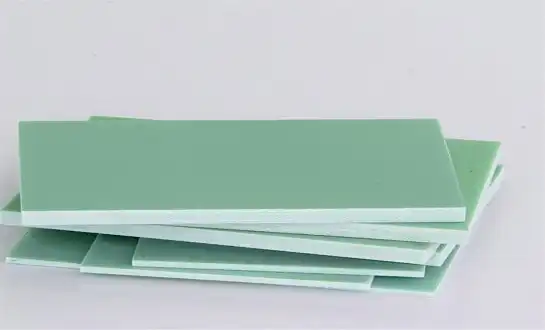
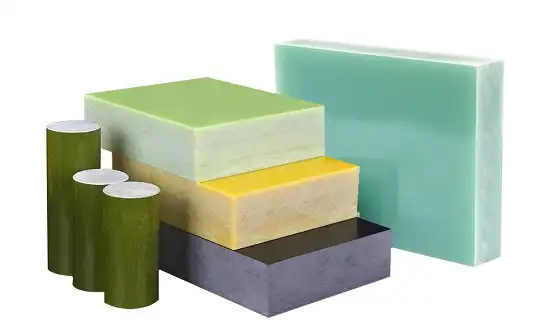
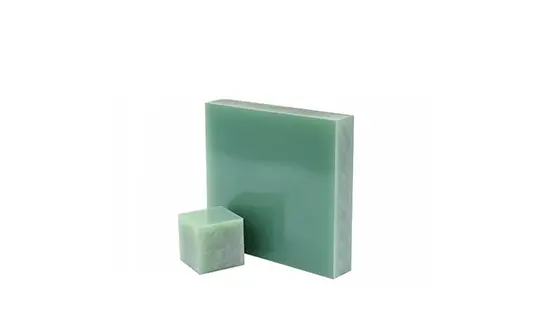
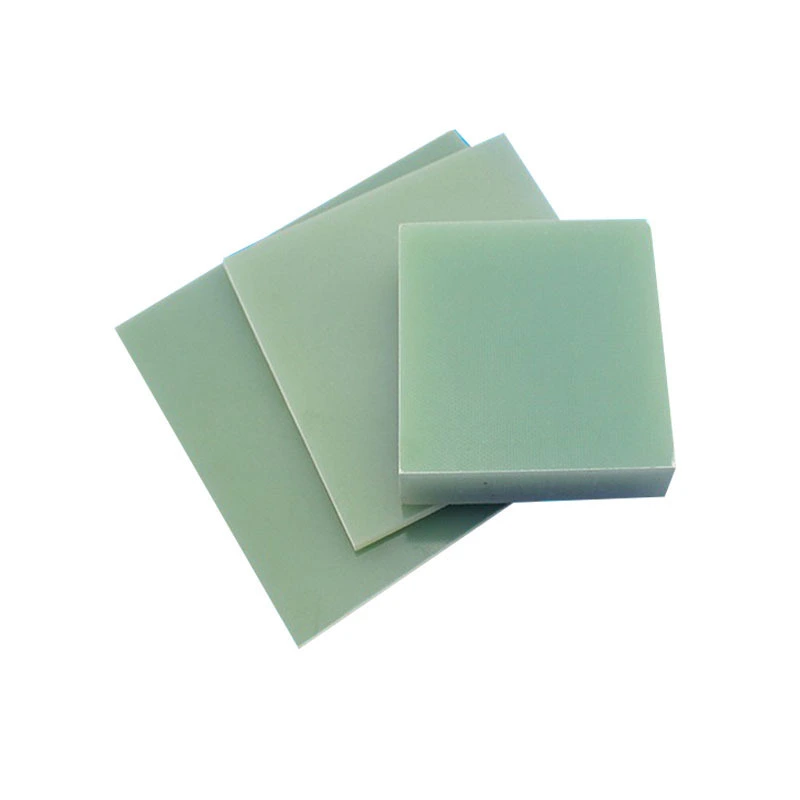
There are two kinds of glazes, which are G10 and FR4. Both are made with epoxy glue and glass cloth. The major difference is that one is not deadly. G10 comes in FR4 grade, which meets the UL 94 V-0 standard for fire safety. What this does is change how replacement works. If you don't want halogens, you can use FR4 instead of G10 most of the time. When the scene calls for it, G10 can never be used instead of FR4. This is something you might want to check out on your picture before getting prices for machining. We use electronic-grade glass cloth and epoxy glue to make our JingHong covers. They are approved by UL 94 V-0 and NEMA, and they are a light green color. Check out the grade of the sheet because that changes how the tools cut before you compare them.
Why Glass Fiber Makes Machining Difficult
G10 FR4 Sheet is strong and stiff because it has glass in it. Also, cutting edges wear out very quickly. The board is between 1.80 and 2.00 g/cm³ dense, and it only soaks up 0.15% water, so even when it gets wet, it will keep its shape. It's hard in service, but when you route, it creates heat, tool wear, and fine dust. People who work with polymer composites say that tools wear out faster on fiber-reinforced laminates than on plastics that aren't strengthened. Plus, they say these laminates can separate the places where the tool goes in and out. It takes more power and passes with a saw to cut through thick sheets than thin ones. If you know these things about the machine, you can make a better model.
Match Sheet Size and Thickness to Your Machine
The smallest area that can be used for work is set by the sheet size. 1020 x 1220 mm, 1220 x 2440 mm, and 1020 x 2020 mm are the most common sizes. These are the same as 40 x 48 inches, 48 x 96 inches, and 40 x 80 inches. You can order sizes like 1030 x 2030 mm, 1030 x 1030 mm, and 1030 x 2070 mm. It's about 0.012 in. and 3.94 in. from 0.3 mm to 100 mm thick. Pick a table that has enough space for clamps or vacuum zones and can hold the biggest sheet you want to cut. Then check the Z-axis travel and see how it measures up to the longest piece of stock, the tallest fixture, and the longest tool. A small cutter might work if you only need to cut small bits. Make sure the sheets are shrunk first.
Define CNC Router Requirements for G10 FR4 Sheet Cutting and Drilling
The metal can be used to set up the machine. First work on the frame, then the machine and controls, and finally your app.
Frame, Gantry, and Table Rigidity
The stiffer they are, the better the edges are. There is a stable gantry, stable linear guides, a heavy, stiff frame, and a flat table that keep the machine from shaking. Chips, delamination, and mistakes in where holes are put can happen because of vibration. If the frame is bent, a strong shaft won't help. What kind of guide is it, what kind of drive system is it, how is the frame put together, and how well can the machine repeat? Instead of wood or foam, ask for a model that is cut out of glass resin laminate. A clean test in soft stuff doesn't really show how well fiberglass will work. Also, make sure the table is level. If you cut thin sheets on a table that isn't flat, the sheets will move around.
Spindle, Z-Axis, and Control Features
Pick a spindle with a low runout that can change speed but not power. A tool with less runout lasts longer and makes holes that are more even. There are collets that can hold small drills in place. Also, check that the Z-axis space is right. You might need more passes and more power if the stock is thick. You won't have to do extra work by hand to turn drawings into toolpaths if the control side works with both CAD and CAM. The depth stays the same when the tools are switched out because of tool-length probing, which is not needed. You waste less paper when you use nesting software on full-size sheets. When making the same thing over and over, idle time can be cut down with auto-measured tools and machine monitoring. Test shops don't always care about automation; they care more about how fast they can set up.
Match Machine Capability to Your Application
People have different needs when they buy something. People who work with electricity and electronics need to be able to precisely cut holes and slots in PCB test tools, insulation plates, and terminal boards. Also, they need to be able to hold thin sheets well. They need a stable width and a rigid machine for the bigger stock when they make machines to make spacers and structural insulation. When people buy things to cut spark shields and coil insulation, they want things with smooth edges that can handle flames. People who work on barriers for car battery packs want to be able to make groups that can be used more than once. A company that makes motor clamps and insulation frames for appliances wants to save time and money by making parts quickly. A router that can be moved around is best for making prototypes. But stable bases and robots work better for OEM runs.
Select Tools, Settings, Workholding, and Dust Control
Even for a good machine, you need the right tools and a good setup. The shop will be safer, the tools will last longer, and the holes will be made better depending on what you choose.
Choose the Right Cutting and Drilling Tools
Things like the tools are just as important as the machine. Carbide drills and end mills are used by many people. Diamond-coated tools can be worth the extra cost when making a lot of things because glass strands quickly weaken regular steel. Pick the right size for the job. Cutters that are smaller are used for small details, while cutters that are bigger make the work stiffer for roughing. The tool won't have to cut chips again, which would make it hot, if the chips can drain well. For drilling, use peck cycles, carbide or composite drills, and a backing board under the sheet to keep the side that comes out from breaking. You should get new tools before the edges get rough. When you cut with a dull knife, the glue gets warmer, which makes the holes bigger.
Set Cutting Parameters Step by Step
There isn't just one speed and feed plan that works for all sheets. What happens depends on the type of material, the size of the tool, and how hard the machine is. It gets hot when the feed rate is too low and the spindle speed is too fast. The tool wears out, and the plastic loosens up. When there is too much feed, the machine shakes, chips, or breaks. Start by making careful test cuts on the material that will be used. Then, as you check the edge, make small changes. To protect the laminate, it's best to use a steep or spiral entry, light multiple passes, and smooth lead-in routes. You can use the same settings over and over, so write them down.
Plan Workholding and Dust Control
Yes, the holes and edges can look different even if you only make small changes to the sheet. It's best for vacuum tables to be flat, not leak much, and have areas where you can cut big flat sheets and work that's the same size over and over. For deep drilling, metal clamps, thin sheets, and small parts work well. To keep thin sheets safe, there should be a spoilboard or backing board all the way around them. When you machine G10 FR4 Sheet, you make small bits of fiberglass and resin dust. Plan to have safety gear, HEPA-grade filters, restricted extraction, and upkeep for the filters. Laws say how much people should be exposed to moving glass fiber and particles. These laws come from groups like NIOSH and OSHA. One more way to keep the dust down is to cut while wet. When you store sheets, keep them flat. To bend sheets, put things on their sides and take things out of one side.
Evaluate Machining Quality and Avoid Common Mistakes
There should be a rule about quality first. Here's what not to do and how to set them.
Set Inspection Requirements Early
You should decide what quality means before you buy a machine or give a seller the go-ahead to mill something. The general size, thickness, smoothness, profile shape, hole diameter, hole position, countersinks, perpendicularity, burrs, edge chipping, delamination, and color change of the plastic are some of the things that are usually checked. Mark the picture with the end of each important part. We agree on how to measure too. You can only get one number from a coordinate measuring machine, a caliper, and a gage pin. Before you send out a bigger order, you can use a first-article or sample-order step to make sure that the material, tools, parameters, and inspection plan are all correct. Many tasks don't need to be done again, which saves a lot of money. It's quick.
Request the Right Material Documentation
If you want to use it with power or high heat, make sure you get the right papers from the service provider. Many of these include dielectric strength, temperature grade, water absorption, chemical protection, and the standards from NEMA, UL, RoHS, or the customer. It covers laminated thermosetting items used in business (NEMA LI 1). At V-0, UL 94 sets the level of fire safety that FR4 grades try to meet. ASTM D709 is a set of rules for joining heat-sensitive materials that are different from each other. Any grade is fine for our JingHong sheets. Before you place your first order, make sure the paperwork works with your plan. Even if two laminates look the same, they might not work with power, heat, or force the same way.
Avoid Common Mistakes
When choosing a machine for machining G10 FR4 Sheet, buyers often focus too much on spindle power while overlooking other critical factors. Even a powerful spindle cannot compensate for a weak machine frame, loose motion system, unstable workholding, or inadequate dust collection. Since G10 FR4 Sheet contains abrasive fiberglass reinforcement, using high-speed steel tools can cause rapid tool wear and produce rough or uneven edges. Carbide cutting tools are generally a better choice for maintaining machining accuracy and extending tool life. Incorrect machining parameters can also cause delamination, chipping, tool breakage, and excessive heat buildup, especially when the feed rate, cutting depth, or spindle speed is not properly adjusted. Another common mistake is failing to check the material specifications before machining. Different grades of plastic laminates have different mechanical and thermal properties, so machining settings suitable for one material may not work well for G10 FR4 Sheet. Buyers should also evaluate the overall operating costs, including tooling replacement, maintenance, dust extraction, and production efficiency, rather than comparing machines based on spindle power alone. A comprehensive evaluation helps manufacturers select suitable equipment and achieve more reliable results when processing G10 FR4 Sheet.
Compare In-House Machining With Supplier Services
Finally, you can choose to either buy a router or look for sheet metal that has already been made or cut to size. Risk, cost, and room all play a role in that choice.
When In-House CNC Routing Makes Sense
When demand stays the same, a router helps you track things better and move faster. The best things to have are repair help, CAM software, and tools to keep the dust down. When you have a lot of OEM projects for parts that go into electronics, machines, power tools, cars, or toys, you can automate and make your own parts. This is because cycle times and tool life can be planned for. Also, a router should be used for enough hours every month to cover tool wear, repairs, and teaching new users how to use it. While the prices of electricity and space keep going up, those things can't happen, and the machine can't do anything. Outsourcing is often a good idea when there are samples, uneven demand, odd sizes, or teams that don't know how to do composite cutting very well.
Count Total Cost, Not Just Machine Price
The company covers the cost of the machine, its setup, tools, collets, fixtures, extraction, software, training, maintenance, spare parts, scrap, inspections, downtime, and the time it takes for the operator to do their job. Some of the costs that are outsourced are labor, materials, charges for custom sizes, packing, freight, taxes, and making samples. Never use your best-case annual volume to compare them to your real annual volume. You pay for the whole sheet, not just the 60% or 90% that you use, so you should add eggshell waste. It's usually easy to see who won with this simple paper that has these lines. That way, you won't be surprised after the sale.
Choose a Supplier With a Clear Checklist
When you compare providers, these are the things that matter the most.
- Material and grade: Make sure you have the right color, flame rating, and grade of laminate for your job. Our JingHong sheets are safe for electronics because they are made with glass cloth and epoxy glue. They are a warm green color and have the OK from UL 94 V-0 and NEMA. That is, stock can be matched to either thin insulation pieces or thick building blocks. It can be anywhere from 0.3 mm to 100 mm thick.
- Sizes and supply: You can ask more about packed items, standard and special sizes, or how to place an order. You can order as little as 500 kg, and we have both standard and custom sheet sizes. The pallet is safe because of the packaging. You can pay by T/T, and the goods can be sent by land, sea, or air. We have our own delivery service, so the same people do both work and package.
- Experience and capacity: Think about the skills and experience you have. Over the past 20 years, we've made and sold insulation sheets. For over 10 years, we've also done business with other countries. Every year, two of our companies work together to make 43,000 tons of goods. The quality stays the same because the warehouse is fully automated. You are the first person whose order is going to be filled.
Conclusion
Before you pick a CNC cutter, you need to know the G10 FR4 Sheet's grade, flame rating, thickness, sheet size, and part tolerance. For the machine to work well with glass fibers, it needs a rigid frame, a flat table, a stable wheel, and movement that is smooth. Tools and tests that are covered in carbide or diamond protect the quality of the edge and the accuracy of the hole. The shop is safe, and the parts are right because there are safe ways to hold work and collect dust. Lots of inspection plans, first-article samples, and material paperwork are used to make sure the results are right before big orders are put in. More than just the price of the router should go into your choice of whether to buy it already made or cut to size. You should also think about how much the whole thing costs, how long you have to wait, and how much the items cost. When these things are used for the right task, mistakes happen less often, and work gets done faster.
FAQ
Can a standard CNC router cut G10 FR4 Sheet?
Yes, as long as it has a steady frame, a flat table, tools with carbide or diamond coating, and a way to clean up. Things that are light and tools are more likely to break or bend quickly.
Which drill bits are the best?
You can use a drill made for tungsten or composite materials to get the job done. This will keep the sheet from coming off on the exit side. Use peck cycles and a backing board under it.
How can I keep the dust down?
The machine can be used wet or closed with HEPA screens. Wear the right gear and keep the filters in good shape to stay safe.
Should I buy a router or outsource machining?
The best time to buy is when demand is stable, and it's easy to find trained workers. Hire someone else to do it if you need samples, special sizes, or demand that isn't level.
What do I send for a quotation?
Please send the drawings along with the grade, thickness, size, tolerances, quantity, area that needs to be certified, and the address where the goods will be delivered.
Request a G10 FR4 Sheet Quote and CNC Machining Consultation from J&Q
You want to buy G10 FR4 Sheet from a business that knows what you need for cutting. Send an email to info@jhd-material.com with your drawings, grade, thickness, quantity, and mailing address for J&Q. For your CNC process, we help you figure out what size and amount of sheet you need. We've been making insulation sheets for more than 20 years and also run our own shipping company. We make 43,000 tons of them every year. Visit blog.jhd-material.com to learn more.
References
1. NEMA LI 1, Industrial Laminated Thermosetting Products, National Electrical Manufacturers Association, 1998
2. UL 94, Tests for Flammability of Plastic Materials for Parts in Devices and Appliances, Underwriters Laboratories, 2013
3. ASTM D709, Standard Specification for Laminated Thermosetting Materials, ASTM International, 2017
4. Machining of Polymer Composites, Springer, 2009
5. ASM Handbook, Volume 21: Composites, ASM International, 2001
6. NIOSH Pocket Guide to Chemical Hazards, National Institute for Occupational Safety and Health, 2007

Get a complete product list and quotation

J&Q New Composite Materials Company