Phenolic Cotton Cloth Board CNC Machining for Gears and Bushings
Phenolic Cotton Cloth Board is a practical choice for CNC-machined gears and bushings that need strength, wear resistance, and electrical insulation in one material. Cotton fabric gives the laminate toughness, and phenolic resin adds hardness and dimensional stability. Machinists can mill, drill, turn, and tap it into quiet, lightweight parts for motors, machinery, and electrical equipment. Good results depend on the right grade, firm workholding, sharp tools, and tolerances agreed before production. In this guide, I cover material properties, machining steps, design rules, quality checks, and sourcing tips from the J&Q team.
Why Phenolic Cotton Cloth Board Fits Gears and Bushings
Before you cut any part, it helps to know what the laminate is made of and where it performs well.
Material Composition and Performance
First, phenolic resin is mixed with fine-weave cotton cloth to make Phenolic Cotton Cloth Board. After that, the cloth is dried with a lot of heat and pressure. It's not easy to break when you hit it because it's made of cotton. It is warmer, stronger, and less likely to be damaged, though, because of the resin. Coarse-weave Grade C has a specific gravity of 1.35 to 1.45 g/cm³, a Charpy impact strength of at least 8.8 kJ/m², and a bending strength that is generally above 100 MPa, according to business documents. They say that Fine-weave Grade CE, which is 1.5 mm thick, only soaks up 1.6% water and has an oil dielectric strength of about 5.5 kV/mm. When the weave, plastic, or process changes, I always check the provider's manual. Service life can be shortened if parts become too hot, too wet, suffer shock loads, or don't have enough grease.
Where the Laminate Performs Best
Insulation gears, wear pads, and low- to medium-load gears are a few places you might find Phenolic Cotton Cloth Board. It doesn't let electricity flow, is lighter than metal, and makes less noise than metal on metal because it absorbs vibrations. It's also simple to cut up. Our cotton cloth sheet is stacked and has been cleared by UL (file number E310670). It has also passed tests for RoHS and REACH. People who buy technology and electrical goods should know these things. Still, there's only so much you can do. You might need G10 Epoxy Fiberglass, a designed plastic, or metal for jobs that need to be done in hot weather, with hard hits, all the time in water, or at high speeds. Being honest at the start will save you money in the long run.
Phenolic Cotton Cloth Board vs. Alternative Materials
Most of the time, cotton reinforcement is harder and tougher than paper reinforcement. So, Phenolic Cotton Cloth Board is better for heavy-duty parts, and Phenolic Paper Board is better for light-duty parts. And G10 Epoxy Fiberglass can work better with electricity and body parts when it's really tough, while Phenolic Cotton Cloth Board usually lasts longer. It doesn't rub against other things as much and is harder than cotton, but it can soak up water. Things made of metal can move energy better, hold more weight, and make more noise. When you compare things, you should look at the cutting costs, service life, load, speed, temperature, humidity, chemical exposure, and limits. If you want something strong, cheap, easy to cut, and durable, Phenolic Cotton Cloth Board is the best choice.
CNC Machining Process and Design Rules
Good parts come from a clear process and a design that respects the laminate.
CNC Machining Process Step by Step
The model and working conditions of machinery are the first things that are thought about. These include the load, speed, power, temperature, lubrication, parts that fit together, and how long the machinery should last. Then I chose a grade of board and a blank thickness that gave me enough room to finish. Take a firm hold on the work, as moving Phenolic Cotton Cloth Board around can cause cracks and pieces to fall apart. If you use too much heat, the edge will come off. Do not use fast or slow feed rates. Instead, use sharp tools that are covered with diamond or carbide and light passes for finishing. Because the dust is gone, people who are cutting don't have to worry about getting hurt. In the final check, the tooth shape, hole size, concentricity, runout, wall thickness, surface finish, flatness, and any damage on the laminate are all checked. You can pick a blank that is close to the height of the end part and remove less skin. JingHong makes sheets that are between 2 mm and 100 mm thick.
Design Guidelines for Gears and Bushings
Plan your work around the edges of the layers and the material. I think gears should have thick enough teeth, big enough bases, and no sharp edges inside. I also think that loads shouldn't go over the limit set by the grade. You can tell if a bushing fits right by looking at its temperature, moisture, thermal expansion, shaft hardness, housing material, and lubrication. While being put together, things don't break if the walls are thick enough and there are chamfers. Things don't bend if there are press fits. To keep costs down, be strict on the sizes and styles that are most important and not so strict on the ones that aren't. Make sure you and the maker agree on the limits right away. Certain rules, like ASTM D709 and NEMA LI 1, help everyone talk about grade and property in the same way.
Common Machining Problems and How to Avoid Them
Flaws like delamination, chipping, edge breakout, measurement drift, poor concentricity, burn marks, resin damage, and the wrong bushing fit happen a lot of the time. Most of the time, they happen because the tools are dull, there is too much feed, the workholding is unstable, the board bends, or you don't pay attention to the press-fit effects. If you want to finish in steps, you should have strong support, sharp tools, controlled cutting parameters, and remove chips and dust slowly. Before you make the last cut, condition the fabric. After the pieces have had time to settle down, measure them. Small mistakes are most likely to happen in thin walls, gear teeth, and keyways. If you only choose a grade based on price, rejects, early wear, and downtime can add to the total cost. That's why I first look at it as an engineering choice.
Quality Control, Material Selection, and Industry Use
Verification and a clear selection sequence protect both the project schedule and the budget.
Quality Control and Verification
Both the budget and the project plan are safe because they are checked and the choices are made in a clear way. People check both the board that comes in and the bit that is done to make sure they are good. Before you buy the Phenolic Cotton Cloth Board, you should look at its grade, thickness, batch number, surface condition, flatness, laminate integrity, and certificates. To check the part's surface finish, gear teeth, concentricity, runout, and hole outside diameters, you need tools that have been calibrated. As soon as the matching shaft, case, or gear is used for the first test, any fit issues become clear. Tests for noise, wear, temperature, physical stability, and resistance may be part of validity studies. The factory that Hebei Jinghong owns holds ISO 9001, ISO 14001, and ISO 45001 certifications.
Recommended Selection Workflow
In math and buying, there is less risk when there is a clear trend. Take note of the load, speed, temperature, weather, lube, fitting materials, number of hours used, and the cost of failure. Second, see how Phenolic Cotton Cloth Board compares to G10 Epoxy Fiberglass, nylon, metals, Phenolic Paper Board, and more. Third, check the style to make sure it fits well. Check how thick the walls are, how big the cuts can be, the standards, the outside finish, and how simple it is to check. Fourth, check a sample or first item for things like size, fit, noise, warmth, insulation, and wear and tear. The grade, drawings, and inspection plan must not be changed while the sample is still being checked. This is done to make sure that the sample that was accepted will match the next sales. The tech team and the marketing team will always know the same things because of this order.
Use Cases Across Industries
Everyone can buy laminate in their own way. People who work with electricity and electronics use it to make wiring parts, jig boards, and PCB cutting pads. UL, RoHS, and REACH rules say it's safe, which they like. Machinery builders who shape, drill, and package things use it to make wear parts, gears, and bearings. These kinds of parts need to last a long time and be able to work with a range of sizes. When people buy power and energy, they use it as a base for heavy-duty panels, wire boxes, and distribution boxes where temperatures need to stay the same. If someone buys a car or appliance, they often need repair parts, mold splints, motor bearings, and gears that are all of the same quality and arrive quickly.
Sourcing, Pricing, and Ordering
A well-prepared request and a clear view of cost make buying simpler.
How to Choose a Manufacturer or Supplier
A skilled worker knows how to utilize Phenolic Cotton Cloth Board sheets in both mechanical and electrical settings. You should look at the drawings, talk to experts, make sure the thickness and flatness are right, pack it for export, and fill out all the paperwork that needs to be done. When you ask for a price, make sure you know the minimum order size, the lead time, the grade that is suggested, and any awards. For more than 20 years, J&Q has made and sold soundproof sheets. We have our own shipping company, so we can do everything, from packing the sheets to sending them out. This experience helps us answer questions quickly.
Price Factors and Quotation Comparison
How much the parts cost in the end depends on the type of material, how thick it is, the size of the blank, the tolerances, the shape of the teeth, the finishing, the number, the inspection, the packing, and the shipping. So, I make sure that all the quotes are based on facts and that I know what each one covers. There may be extra costs or less strict rules if the unit price is low. It's not all about the price per unit. Also, think about how long it should last, how much it can make, and how well it helps with quality. You can pay JingHong via T/T, and they require at least 500 kg for bulk sheet orders.
What to Include in Your RFQ
They can give you the right grade the first time if you tell them everything they need to know. I believe this should be added:
• Technical data: Send a 2D drawing or a 3D CAD file, along with any important limits or measurements and information about how the material should work. They can be sure that the grade they picked is right for the job by adding things like load, speed, temperature, moisture exposure, lubrication, and mating materials. Mark any part that you believe is important for it to work.
• Volume and schedule: State when you would like them sent and how many you need (or an estimate for the whole year). Also, let them know if you need samples, first items, or production lots. The supplier doesn't have to wait for missing data if they already know how much they need to send. Talk about repeat-order plans as well.
• Shipping and documents: Give the address or port of arrival, your choice of shipping method (ocean, land, or air), and the paperwork you need, such as inspection reports, fitness certificates, and records of where the goods have been. Note any packaging preferences; to keep the sheets safe, they are sent on slabs.
JingHong Supply Details
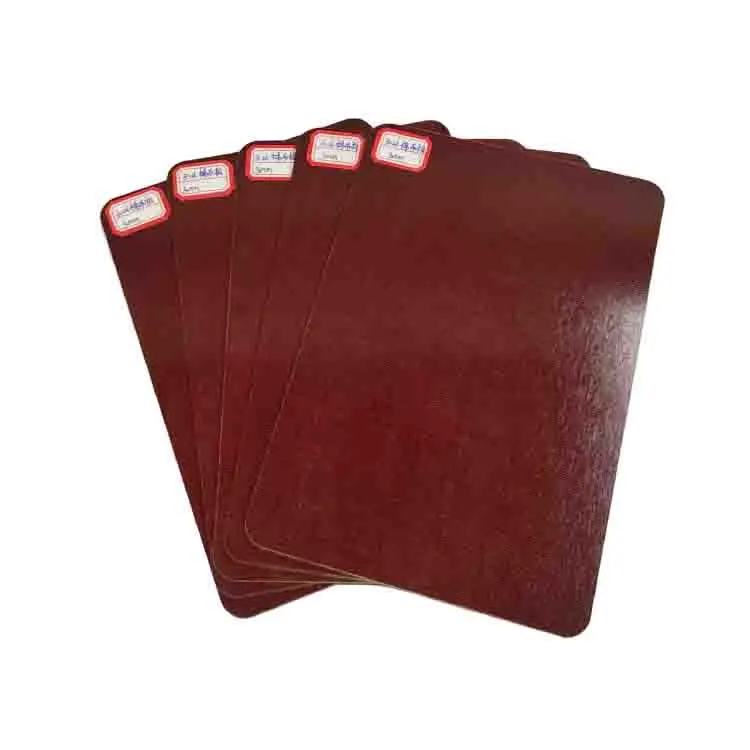
JingHong sells Phenolic Cotton Cloth Board and Phenolic Paper Board. They are between 2 mm and 100 mm thick. It comes in sheets that are 1020 mm x 2020 mm. As always, we use regular packing with pallet protection. We can ship by air, sea, or land. Even when they're hot, the sheets don't melt. They're strong and last a long time. For 191 million RMB, Hebei Jinghong Electronic Technology Co., Ltd. ran a 36,300 m² building. Polyester sheets, bakelite sheets, epoxy sheets, and insulation tubes and bars are some types of insulation produced by the same team.
Conclusion
Phenolic Cotton Cloth Board is hard, shields against wear, insulates, and is simple to machine. It is good for making gears and bushings. The speed, load, temperature, and amount of water must all be just right for the grade to work well. This is not the same as Phenolic Paper Board because cotton is added to it. Parts that don't have to carry a lot of weight work well with it, while G10 Epoxy Fiberglass, nylon, or metal might be better for harsher duty. When making teeth, it's important to use sharp tools, make light passes, and follow good design rules for tooth bases, wall thickness, and fits. The parts are checked, measured, and put together to test Fitting issues. More accurate quotes come in when you compare the whole RFQ and total costs instead of just unit prices.
FAQ
Can Phenolic Cotton Cloth Board be CNC machined into gears and bushings?
Yes. Phenolic Cotton Cloth Board is good for cutting, drilling, grinding, and sawing. As little heat, chipping, and delamination as possible should be used, along with firm grips and light finishing passes. Use tools that are very sharp and have diamond or carbide on them. Grades are based on ASTM D709, and you should talk to your maker about margins before they start working.
How does it differ from phenolic paper board?
For parts that can hold more weight, like gears and bushings, use cotton cloth reinforcement to make them stronger. It's stronger and less likely to break if you hit it. Phenolic Paper Board can be used to make insulation parts that don't need to be very strong.
What sizes and thicknesses can I order?
JingHong sells sheets that are 1020 mm by 2020 mm and 2 mm to 100 mm thick. Regular packing with pallet safety sheets keeps them safe while they're being shipped.
What are the order and payment terms?
With T/T, you can pay for your order and ship it by land, sea, or air. You need at least 500 kg to place an order. Get in touch with us to find out when your quantity will arrive.
What should I send for a quotation?
Tell us about the drawing, how much you need, what grade you need, where you want it sent, and when you need it. We'll help you pick the right grade.
Request a Phenolic Cotton Cloth Board Machining Review from J&Q
Do you need Phenolic Cotton Cloth Board for a job with gears or bushings? J&Q has been open for more than 20 years and even has its own shipping company to take the stress out of shopping. It has also done business all over the world for more than ten years. We'll help you pick the right grade if you email info@jhd-material.com with your picture, how much you need, and where you'd like it sent. You can read more tips from experts at blog.jhd-material.com.
References
1. ASTM International, Standard Specification for Laminated Thermosetting Materials (ASTM D709), 2017
2. National Electrical Manufacturers Association, Industrial Laminated Thermosetting Products (NEMA LI 1), 1998
3. Industrial Press, Machinery's Handbook (31st Edition), 2020
4. Marcel Dekker, Plastic Gearing: Selection and Application, 1986
5. Woodhead Publishing, Machining Technology for Composite Materials, 2012
6. McGraw-Hill, Handbook of Plastics, Elastomers, and Composites (4th Edition), 2002

Get a complete product list and quotation

J&Q New Composite Materials Company