FR4 Epoxy Resin Sheet Manufacturing Equipment: What Buyers Should Check
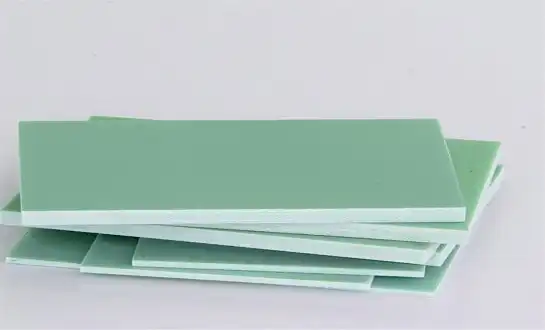
Buyers should check five things in FR4 Epoxy Resin Sheet manufacturing equipment: how the line impregnates glass cloth with resin, how the hot press controls heat and pressure, how the plant cools and trims each sheet, how the lab verifies test data, and how the supplier records each batch. Equipment shapes resin distribution, thickness, dielectric strength, flatness, and flame performance. At J&Q, we supply insulation sheets to electrical, machinery, power, automotive, and appliance buyers. This guide gives you a practical checklist to use before you approve a supplier or place a first order.

Understand the FR4 Epoxy Resin Sheet Manufacturing Process
How Glass Cloth and Resin Become Prepreg
FR4 Epoxy Resin Sheet is made of knitted fiberglass cloth that is joined together with an epoxy resin that doesn't catch fire. The process starts on the line for impregnation. Put the glass cloth in a bath of resin and then in an oven. The oven makes prepreg and partly dries the resin. How strong and insulating the finished laminate is depends on how much resin is used and how evenly it is spread out. That's why I always tell people who buy from a plant to ask how they measure the resin content. Resin that isn't spread out evenly can leave dry or brittle spots. Also, find out how the prepreg is kept because humidity and heat can change how it works. FR4 Epoxy Resin Sheet is a standard grade for industrial laminates as of NEMA LI 1. This gives everyone a point of reference when they talk about specs.
Lay-Up, Hot Pressing, and Cooling
Prepreg is added in layers until the right width is reached. The hot press then puts pressure and heat on the paper. After the resin flows between the layers, it sticks them together and makes a solid laminate. There is a lot to know about temperature, pressure, and time to cure. For air to escape, there should not be enough pressure. If there is too much pressure, too much resin will be squeezed out. And cooling is just as important, since uneven cooling puts stress on the inside that shows up later as warping. Hongda FR4 Epoxy Resin Sheets can be as thin as 0.3 mm or as thick as 100 mm, so the press plan needs to be able to handle both types of plates. Ask the provider if they keep track of how the press is set up for each batch.
Trimming, Cutting, and Machining Capability
After the sheets cool down, the plant cuts them to size. We can make it 1030 mm × 2030 mm, 1220 mm × 2440 mm, 1030 mm × 1030 mm, or 1030 mm × 2070 mm. The standard size is 1030 mm × 1230 mm. For CNC work and cutting, you need carbide or diamond tools and a good way to get rid of dust because glass reinforcement is rough. People who make test jigs, insulation plates, or gear blanks should check the cutting tolerances and edge quality before placing an order. Also, find out who is in charge of the gear. You can ask the production team about equipment if you have any questions. The factory that makes the sheets is also the one that runs J&Q.
Check the Core Performance of FR4 Epoxy Resin Sheet
Read the Mechanical Data Line by Line
What the equipment makes can be seen in the test results. Our Hongda FR4 Epoxy Resin Sheet can bend 571 MPa perpendicular to the laminations, push 548 MPa, pull 282 MPa, and take 57.3 kJ/m² of impact for layers that are parallel to each other. There are 2.01 grams of it in every cubic centimeter, and it is 76 Barcol hard. The GB/T 1303.4-2009 standard says what the bending strength should be, and the GB/T 3854-2005 standard calls it tough. A mechanical engineer can use these numbers to match items like gaps, gears, and insulators for buildings. Read the test notes too, because the sample size and width can change the results. Anyone who gives you a report should give you the same level of detail as we do: the sample sizes for each test.
Review Electrical and Flame Data
There are two things that people who want to buy electrical goods should look at: the breakdown voltage and the test conditions. The study says that the voltage in the parallel layer is over 100 kV and the voltage in the vertical layer is 16.7 kV/mm. This is what the 25# transformer oil read at 90 ± 2 °C. The dissipation factor is 7.2 × 10⁻³, the relative permittivity is 5.40 Hz, and the insulation resistance after soaking is 2.2 × 10²³. GB/T 2408-2008 says it can hold 5.3 mg of water and is flammable at V-0. In the US, people often compare the results to ASTM D149 for flame rating or UL 94 for dielectric strength. Make sure that the test method and sample thickness are the same for both suppliers before you compare them.
Compare FR4 With Other Insulation Sheets
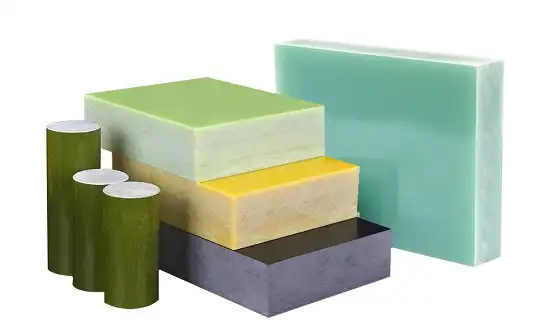
FR4 Epoxy Resin Sheet and G10 both use glass cloth and epoxy, but FR4 Epoxy Resin Sheet doesn't catch fire and goes out on its own, while G10 does. You can also get bakelite and phenolic cotton sheets from us. These are good for cheaper insulation parts and gaps in machines. FR4 Epoxy Resin Sheet is the same way. Because it changes with frequency and has a higher loss factor than PTFE, it's not the best material for high-frequency designs. For normal grades, FR4 Epoxy Resin Sheet turns into glass at about 130 °C. For high-Tg grades, it turns into glass at about 170 °C. If your battery pack or motor part gets hot, ask the supplier for the Tg of that grade.
Evaluate the Manufacturing Equipment and Quality Control System
Press, Impregnation, and Process Control
Things only work when someone is in charge of them. Check to see if the line that applies the resin keeps track of how much resin is used, if the press keeps track of temperature, pressure, and drying time, and if the team checks and changes sensors and gauges on a regular basis. Because our workshop is fully computerized, mistakes made by hand are less likely to happen, and the quality of each batch of FR4 Epoxy Resin Sheets is always the same. You can also tell a story by how much you can do. Every year, Hongda FR4 Epoxy Resin Sheet makes 13,000 tons of goods, and those two plants together make 43,000 tons. The new plant began making real things in October 2022. Ask a supplier to show you how they do what they say they can do.
Inspection Points for Every Batch
A good plan for an inspection looks at length, width, thickness, flatness, diagonal difference, edge condition, and flaws on the surface. When it comes to making machinery, width is the most important thing because spacers and gears need to be able to repeat exact measurements. Test stands and jigs for PCBs need to be flat because the sheet can bend easily when it is stressed. Automobile teams that make battery pack barriers and insulation pads should look at the supplier's inspection records and match them up with the checks they send in. The exact grade and width that were shipped should be used on records. It's not clear from a story about a 2 mm sample that a 20 mm plate worked well.
Traceability and Documentation
A finished sheet can be tracked back to the things that were used to make it and the steps that were taken. Ask for batch numbers, lists of raw materials, production logs, the steps that were taken to fix the problem, and reports on what went wrong. People buy these kinds of power and transformers for long-term projects because it helps them find any problems more easily. Shipping and packing can also change the delivery state. To keep the sheets safe, we put them on pallets and use regular boxes to pack them. Our own haulage company ships by air, sea, or land. It is important to find out how the paperwork, packing list, and transport are connected so that the goods that arrive at your dock match what is written on the paperwork.
Use a Technical Checklist and Assess Supplier Capacity
Build a Clear Specification
With a clear outline, you can avoid making mistakes when you quote for FR4 Epoxy Resin Sheet. First, write down the width. We have thicknesses from 0.3 mm to 100 mm, so thin sheets can be used for light insulation and thick plates can be used for parts that hold things together. You can describe the sheet size, the accuracy of the cuts, the quality of the edges, and anything else the CNC needs. After that, you need to think about electrical needs like flame rating and breakdown voltage, as well as safety needs like UL 94 or RoHS. Describe the temperature, humidity, chemicals, tremors, and thermal changes of the area as well. Insulation plates, switch insulation plates, gear parts, and lithium battery pack parts are just some of the things that our FR4 Epoxy Resin Sheets are already being used for. If you need very close tolerances, send a drawing.
Check Capacity, MOQ, and Lead Planning
Knowing how much a supplier can hold helps you decide if they can handle your order. What is the press's capacity, the largest sheet size it can handle, the monthly output, how flexible is the schedule, and is there any backup equipment? Then, agree on the business terms right away. You can pay us by T/T, and orders that come from you are made first. Our minimum order size is 500 kg. Assuring lead times in writing is helpful for appliance makers who need to make a lot of appliances quickly. Also, find out when the return order will arrive. It's tough to plan for your line when a supplier gives you two different lead times for the same order.
Verify Certifications and Supplier Experience
Check that each certificate fits the grade, width, use, and place where it was made. People in the US often ask for UL 94 paperwork or RoHS statements. In your question, please list the papers you need, and we'll let you know what we can do for that grade. It's also important to have experience. For more than 20 years, we've made and sold shielding sheets, and for more than 10 years, we've worked with other countries. We've also done business with a lot of companies in other countries for a long time. A professional team that works in foreign trade answers technical questions, explains how tests are set up, and makes sure that all quotes and reports use the same words.
Avoid Common Mistakes and Follow a Buyer Evaluation Process
Common Buying Mistakes
A lot of mistakes make prices come up out of the blue. If you pick FR4 Epoxy Resin Sheet based on price per sheet, you don't have to think about freight, cutting, packing, grinding, repair, or scrap. If you treat all FR4 Epoxy Resin Sheets the same, you might not notice that they are different in how much resin they have, how thick they can be, how well they conduct electricity, and how they handle flames. You shouldn't accept a certificate without first making sure it's valid and covers what you need it to cover. You could also lose if you need custom sizes and don't check the equipment. The press and cutting line need to be able to handle them. If your parts fit well on the sheet, our standard size of 1030 mm × 1230 mm and custom sizes like 1220 mm × 2440 mm can help you cut down on waste.
A Step-by-Step Evaluation Process
There is a set way to make sure that comparisons are fair. The first thing you need to do is explain the purpose, position, size, thickness, power, mechanical load, temperature, and any rules that need to be followed. Next, make a short list of makers who have the available space, testing tools, and exporting knowledge you need. Then, ask for a full quote package that includes information, documents, sample terms, MOQ, lead time, shipping, and packaging. Look at samples to see how well they work and how they react to being machined. Before production starts, write down the grade, the tolerances, the inspection criteria, and the steps to be taken if there are any problems. Last but not least, check how consistent the quality, service, contact information, and help after the sale are. These steps will help the engineering and buying teams agree on the same record.
Sample Approval Before Bulk Orders
Claims are true because samples back them up. Look at how thick it is, how flat it is, how it looks, and how it fits your picture. Do a short CNC test with carbide or diamond tools and dust extraction to see how the sheet cuts, drills, and slots. Compare your results to the supplier's test report. As long as both of them agree, you should place a test order and compare the first batches to the good sample. We work with you from the beginning to the end of the process, so you only have to deal with one person for samples, large production, and shipping. This keeps the schedule simple and cuts down on handoffs.
Conclusion
Before you buy FR4 Epoxy Resin Sheet, you should learn how it's made. In this process, the resin is mixed, heated, pressed, cooled, and then carefully cut so that the thickness, flatness, and insulation properties can be controlled. If someone wants to buy FR4 Epoxy Resin Sheet, they should only look at test data that fits their needs. The test method, sample size, and conditions should all be in this data. This is important because it lets you keep track of the tools, check the process, and keep review records. You can cut down on hidden costs like scrap and rework by having clear specifications, documents that have been checked, a reasonable MOQ, and sample approval. In real life, this means that the proof has to be the right grade, thickness, and use. A structured evaluation gives the engineering and purchasing teams a good reason to choose a long-term supplier.
FAQ
What equipment should I look for in an FR4 sheet plant?
You should look for a hot press with temperature and pressure records, a cooling system, cutting machines, CNC equipment, and testing tools. Also, look for an impregnation line. Find out how the plant checks and keeps track of each one.
What are the order terms for Hongda FR4 sheets?
You can pay by T/T, and the least you can order is 500 kg. We ship by sea, land, or air, and we make sure the pallets are safe. It is possible for it to be 0.3 mm to 100 mm thick.
Can I order custom sizes?
Yes. Each size is 1030 mm x 1230 mm. You can order it in sizes 1030 mm x 2030 mm, 1220 mm x 2440 mm, 1030 mm x 1030 mm, and 1030 mm x 2070 mm. If you need close rules, send a picture.
Does FR4 suit high-frequency designs?
Not often. It has a higher dissipation factor than PTFE, and the dielectric constant changes as the frequency changes. Make sure it fits your needs by talking to your engineer first.
Request FR4 Epoxy Resin Sheet Samples and a Technical Quote from J&Q
Looking for a business that sells FR4 Epoxy Resin Sheet and can answer your questions about data-enabled equipment? At J&Q, you can find all the soundproofing sheets you need. We have our own transportation company and have been in business for more than 20 years. We have been dealing with other countries for more than 10 years. Please email us at info@jhd-material.com with your thickness, size, range, and number needs. We'll get back to you with test data and a detailed price. More tools can be found on blog.jhd-material.com.
References
1. NEMA LI 1, Industrial Laminated Thermosetting Products, National Electrical Manufacturers Association, 1998
2. UL 94, Tests for Flammability of Plastic Materials for Parts in Devices and Appliances, UL Standards, 2023
3. IPC-4101, Specification for Base Materials for Rigid and Multilayer Printed Boards, IPC, 2017
4. ASTM D149, Standard Test Method for Dielectric Breakdown Voltage and Dielectric Strength of Solid Electrical Insulating Materials at Commercial Power Frequencies, ASTM International, 2020
5. IEC 60893-1, Insulating Materials – Industrial Rigid Laminated Sheets Based on Thermosetting Resins for Electrical Purposes, International Electrotechnical Commission, 2004
6. Printed Circuits Handbook, Clyde F. Coombs and Happy T. Holden, McGraw-Hill, 2016

Get a complete product list and quotation

J&Q New Composite Materials Company