Phenolic Cotton Cloth Board Cutting Equipment for Precision Components
The best cutting equipment for Phenolic Cotton Cloth Board is a rigid CNC router for profiles and holes, a panel saw for straight cuts, and a waterjet for intricate shapes. Pair each with carbide or diamond tooling. The cotton fabric layers wear tools quickly, and heat or loose clamping leads to chipping, burning, or delamination. Good results come from matching the machine to thickness, tolerance, and volume, then checking the first part before full production. We wrote this guide from our experience supplying JingHong insulating sheets. It helps engineers and buyers in the United States choose equipment, set parameters, inspect parts, and source boards.

Know Your Phenolic Cotton Cloth Board Before Choosing a Cutter
How the Board Is Made and Graded
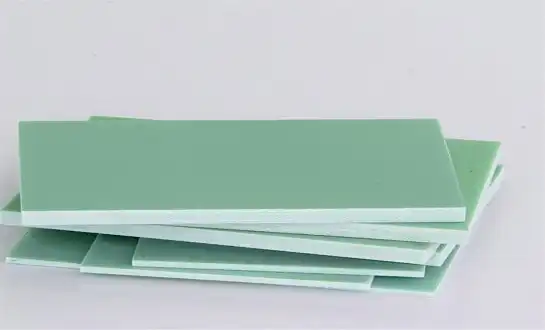
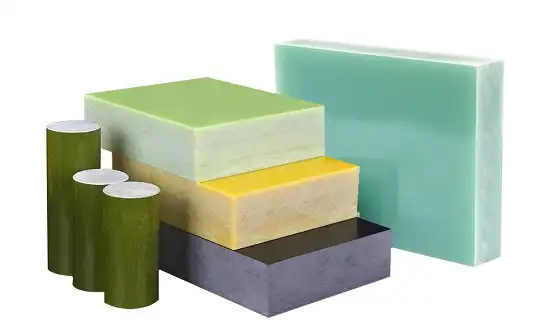
Woven cotton cloth that has been soaked in phenolic resin is what a Phenolic Cotton Cloth Board is made of. High heat and pressure are used to fit the layers together, and the sheet turns into a thermoset when it cools down. The rules talk about this family in a number of different ways. In NEMA LI 1, Grade C means electrical canvas with a coarse weave, and Grade CE means electrical canvas with a fine weave. Grade PF CC 201 is used in IEC 60893. What changes how the sheet cuts are the thickness, the weave, and the amount of glue. The cotton parts make the board stronger than it would be with phenolic sheets made of paper, but tools break down faster. Read the data sheet to find out what grade you are before you set up a machine.
Properties That Affect Cutting
The specific gravity of this material is written as 1.35 to 1.45 g/cm³ on most datasheets for it. Most of the time, the bending strength is greater than 100 MPa. That's why the board's cutting edges wear down, and its bearings and gears hold up. Fine-weave grades don't soak up as much water and have an oil dielectric strength of about 5.5 kV/mm, which means they can be used to insulate parts with medium voltage. Strong acids, oils, and liquids don't hurt the glue, but strong bases do. Our Phenolic Cotton Cloth Board is also safe, as tested by UL, RoHS, and REACH. Compare these numbers to what your part needs in terms of load, temperature, and power. For each part, they tell you how much force and heat it will have to handle.
Where Cut Parts Go
Our customers took this laminate and cut it up into big pieces. It is used by electricians to make the bottom of medium-voltage panels, distribution boxes, and high- and low-voltage wiring boxes. The people who make PCBs dig into it with it. Motor bearings and gears, molds, splints, and ICT jigs and boards are just some of the things that machine builders make out of it. Things that shape things, drill holes in things, package things, and grind on a table all use it. Every one of these parts is a different size and style. A drilling pad's faces should be flat and clean. A gear blank needs to have exact holes and sides. When you know what the machine will be used for, you can choose the right one and avoid extra work.
Matching Cutting Equipment to Precision Components
Why Manual Saws and General Tools Fall Short
It's possible to make holes with a hand saw or other all-purpose tool, but it's not very good at keeping its shape. Uneven sizes, ragged edges, burrs, cracks, and not being straight are all common flaws. Things go wrong more often when a part needs exact holes or profiles that can be used over and over. Sharp tools and a lot of force can cause delamination. If the feed is too slow, the resin will burn. The sizes can also be changed in the middle of the cut by moving the board and adding heat. It has been found that these flaws are linked to rough fibers, tool wear, and cutting heat by people who study how to make fiber-reinforced materials. For OEM and bulk orders, you need tools that don't move, a way to clean up the dust, and written instructions. That setup is great for keeping good records, so you can use it again and again.
CNC Routers, Panel Saws, and Waterjet Systems
There are various machines that can do various tasks. A CNC router can work with parts that have a lot of holes, mounting plates, insulating panels, and profiles that aren't straight. It works well for one-time jobs and small to medium amounts of work. With a panel saw or circle saw, you can quickly cut straight lines. But you may need to do some extra work on the sides after the first cut. The shapes aren't hurt too much by the heat from the waterjet. It costs more to run, though, and parts get wet and need to dry. After that, they need to be measured again. A saw is often used to cut the sheet into pieces, and then a cutter is used to finish the edges. That way of doing things saves time on the machine and keeps tolerances tight.
Drilling, Milling, Lasers, and Sheet Size Planning
A cutting or milling machine can cut blanks by adding slots, grooves, holes, and stepped shapes. A lot of testing needs to be done on lasers and rough processes because heat can burn phenolic glue and make fumes. Plan around the sheet too. Boards from JingHong come in sheets that are 1020 mm by 2020 mm, or about 40 inches by 80 inches. They are thick from 2 mm to 100 mm. Thin sheets shouldn't flutter, so make sure you vacuum or clamp them well. Big plates need more than one pass, and the machine needs to have enough power to keep them from getting too hot. If you stack your parts on regular-sized sheets, you'll have less waste and extra pieces.
Cutting Parameters and Workflow for Accurate Parts
Tooling and Parameter Setup
For most normal work, carbide tools work best. With a lot of rough work, polycrystalline diamond tools can last longer. No set parameters for all plastics should be used to figure out the spindle speed, feed rate, cutting depth, tool diameter, and flute shape. Instead, sample cuts should be used. It will get too hot if you move too quickly, and it will burn the glue if you move too slowly. A lot of research on drilling composites, like the work by Hocheng and Tsao, shows that thrust force at the drill exit is what causes delamination. It goes down with a backing board and a stable feed. Make a note of the setting that makes the edges smooth. When orders are sent again, they begin with numbers that have already been used.
Workholding and Dust Control
Parts that are loose move, and parts that move too far out of range move. Put a spare backing board under the sheet and use stiff clamps or a vacuum table to get a clean exit. Pick a cutting direction that moves the part toward the fixture instead of lifting it. It's good for the part and your crew that you keep the dust down. The cotton and resin dust that you breathe in, and the machines that you use, get clogged up when you cut. Wear respirators and clean the filters as your safety officer tells you to. Run local dust extraction at the tool. Clean air also keeps sprockets and rails safe and makes sure they stay in the right place over time.
A Practical Workflow From Drawing to Shipment
A written workflow cuts down on risk and makes sure that orders that are done more than once are always done the same way. We tell our clients to do these three things.
- Confirm the material and drawing: Look at the model and the material. First, choose the type of board, its width, its load, its temperature range, and how much electricity it needs. Send a CAD file with measurements, a list of important tolerances, hole details, and inspection points after that. A clear drawing keeps you from having to reprogram and links each step to a single point of reference.
- Run trial cuts and approve a first article: On scrap or a sample, test the speed, feed, depth of cut, tooling, and how the work is held. After that, okay the first piece. Write your name on the first part that matches the picture. Do not guess if you want to repeat an order. Instead, start from a known setting.
- Monitor production and pack for transit: Keep an eye on production and prep for shipping. As the run goes on, keep track of the number of checks, the tool wear, and the batch number. Wrap finished parts to keep them safe from dust, water, and impact. Each package should have the material name, amount, batch number, and purchase order number written on it so that the team that gets it can quickly match it with the papers.
In these three steps, you don't have to try things out and see what works and what doesn't. This saves time and money and keeps deliveries on time.
Inspection and Material Comparison
Post-Cut Inspection That Catches Problems Early
The inspection should make sure that the form and condition of the object are both correct. You can use calipers, micrometers, height gauges, vision tools, or a CMM to check the shape's size, thickness, smoothness, squareness, and accuracy. Then, use the agreed-upon acceptance criteria or a reference sample that has been approved to look for chipping, fraying, delamination, cracks, burns, and burrs along the edges. You can find out about the board's density, flexural strength, dielectric strength, water absorption, and temperature protection, among other things, by looking at its specifications. Keep all of the data for the first item, the material certificates, the batch numbers, and the inspection records in one place. People who buy things in the manufacturing and electrical fields can use this file to keep records for audits and future sales.
Cotton Cloth Versus Phenolic Paper Board
Since we make both, JingHong is often asked to help people decide between Phenolic Cotton Cloth Board and phenolic paper board. Most of the time, cotton-fabric laminate is stronger, lasts longer, and is less likely to wear out. It's a good choice for parts that have to hold weight, like gears, spacers, and wear plates. Paper-based phenolic sheet can be used for parts of the insulation that don't get hit or worn down very often. They also act differently when cut. Cotton weave tools wear out more quickly, and paper board sides can get chipped. What we ask about first is the weight, speed, temperature, and how wet it is. Most of the time, these four things determine the grade. Paper board might be enough if the part doesn't have to handle a lot of mechanical stress.
Cotton Cloth Versus Glass Epoxy Laminates
Glass epoxy laminates are another common choice for parts that are used with electricity. It's better to check the datasheets than to guess since they usually have to handle more heat or electricity. Besides being rough, glass strands can also break when you cut or route them. Our product data says that Phenolic Cotton Cloth Board is strong, sturdy, and heat-resistant. It is easy to work with on a number of different tools. It's not enough for engineers to just look at the potential strength; they should also look at things like load, temperature, wetness, friction, stiffness, electrical performance, and variation. Before you decide to use a lot of a certain material, you should cut a piece that is typical of that material on the machine you plan to use.
Sourcing Phenolic Cotton Cloth Board and Cutting Services
Information to Prepare Before You Request a Quote
Less back and forth for days with a full request. Get your drawings or CAD files ready, along with the type and grade of board, how thick it is, the size of the sheet or part, any tolerances, and the finish you want on the outside. Include the number of items you want to order, how often you need them, the inspection standards, the certification requirements, and the address where you want the goods to be delivered. Please let us know if you need parts or sheets that are already cut to size. If it's important that the edges, holes, or electrical performance are good, you should ask for a first-article sample. Someone from the technical team can look at this information and decide if the material is right. They can also suggest a way to cut it and give you a price that fits your needs exactly.
How to Evaluate a Supplier
Look for materials that are always the same, technical documents, experience working with OEMs, inspection systems, output in custom sizes, and export packaging. You should ask for examples and records of exams. Also, look at the certificates. The 36,300 m² Jinghong Electronic Technology Co., Ltd. was completed in 2018 and is now open for business. For example, it does research on bakelite sheets, epoxy sheets, glass fiber sheets, NEMA CE sheets, Phenolic Cotton Cloth Board, ESD bakelite sheets, and insulation tubes and rods. It also makes these materials, sells them, and fixes them. The company has ISO 9001, ISO 14001, and ISO 45001 certifications. It's been more than 20 years since J&Q has worked with insulating sheets and more than 10 years since they've done business with other countries.
Terms, Logistics, and Total Cost
You can pay by T/T, and the minimum order is 500 kg. Pallets are packed safely so that the boards stay safe, and goods can be sent by sea, land, or air. J&Q has its own logistics company, so one team can deliver and move the goods. When you get the quote, make sure you agree to the Incoterms, the wait time, and the people you will talk to about the order. Check out how much each deal costs altogether, not just the price per unit. Remember to keep track of how much it costs for materials, tools, scrap, inspections, packaging, freight, rework, and the chance that parts will be turned down. It usually costs more to get a cheaper rate and have to throw away batches or ship them late than to get a fair price and a clear order.
Conclusion
To cut Phenolic Cotton Cloth Board into precise parts, you need to make sure that the material, machine, tools, and checks are all the right ones. The fabric layers make tools less useful, and the resin burns or separates when heat, thrust force, or bad clamping are not controlled. It is tough and doesn't wear down easily. While panel saws are good for making straight cuts, waterjets are better for making forms that aren't simple, and CNC cutters are best for making holes and profiles. It's important to plan out how to use drills, mills, lasers, and rough materials. You can always get the same results with test-cut parameters, rigid workholding, dust extraction, and a written first-article workflow. By comparing it to the drawing and the datasheet, you can be sure of both the shape and the properties of the material. Among phenolic paper board and glass resin, cotton cloth fits the best. To keep a steady supply going, you need to check with wholesalers, look at full plans, and think about how much the whole thing will cost.
FAQ
What equipment cuts phenolic cotton cloth board best?
CNC cutters can make runs that are short to long and can make forms that aren't already there. They can cut sheets in half and make straight cuts. Waterjet can cut complicated shapes, but you need to let the parts dry and check the sizes again afterward.
Can I use ordinary woodworking tools on this board?
In that way, you can rough out blanks, but steel tools get dull very quickly on cotton. The edges and sizes are better and more stable when you use carbide or diamond tools, tight clamps, and dust extraction.
What should I send with a quotation request?
Send the type of board, its thickness, the number of boards you need, any tolerances, proofreading or certification needs, and where you want the boards to go, along with drawings or CAD files. We accept T/T as payment, and the minimum amount you can buy is 500 kg.
Request a Phenolic Cotton Cloth Board Quote from J&Q
Looking for someone who can make a Phenolic Cotton Cloth Board and cut things perfectly? J&Q has been around for more than 20 years and has its own shipping company, so it can meet all of your needs in one place. Email info@jhd-material.com to send your drawings along with the grade, thickness, and number. Our team will get back to you with sample options and prices. Blog.jhd-material.com has more technical writing.
References
1. ASTM D709 Standard Specification for Laminated Thermosetting Materials, ASTM International, 2017
2. NEMA LI 1 Industrial Laminated Thermosetting Products, National Electrical Manufacturers Association, 1998
3. IEC 60893-3-4 Insulating Materials: Industrial Rigid Laminated Sheets Based on Thermosetting Resins for Electrical Purposes, Requirements for Rigid Laminated Sheets Based on Phenolic Resins, International Electrotechnical Commission, 2003
4. Teti, R., Machining of Composite Materials, CIRP Annals, 2002
5. Hocheng, H. and Tsao, C.C., Effects of Special Drill Bits on Drilling-Induced Delamination of Composite Materials, International Journal of Machine Tools and Manufacture, 2006
6. Pilato, L., Phenolic Resins: A Century of Progress, Springer, 2010

Get a complete product list and quotation

J&Q New Composite Materials Company