NEMA Phenolic Cotton Sheet Processing: Choosing the Right CNC Equipment
The right CNC equipment for NEMA Phenolic Cotton Sheet depends on part shape, tolerance, and volume. A CNC router handles large flat panels and nested profiles. A milling machine suits gears and tight-tolerance features. A lathe suits sleeves, rings, and rollers. Whatever the machine, sharp carbide tools, full workpiece support, and controlled feed rates prevent chipping, delamination, and burning. At J&Q, we have supplied insulating sheet for more than 20 years, and we see the same pattern in every project: matching the machine to the material first saves rework later. This guide shows how to make that match step by step.
Start With the Part and the Material
Define the Part, Tolerances, and Volume Before You Buy
Write down what the end part needs to do before you look at the tools. For the picture, write down the working setting, the surface finish, the state of the edges, and the amount you pay each year. There are different things that an electric barrier, a motor bracket, and a gear blank need. It's important to leave enough space and draw straight lines around barriers. All of the holes in a bracket need to be the same distance apart. The teeth on a gear need to be stable and all the same width. Choose how you're going to check right away. You could, for instance, measure the first piece or pick out pieces from a lot. If you know what you need, you won't buy a machine that is too easy for small jobs or too expensive for making flat panels. They also give your seller enough information about the grade to help you pick the right one.
How NEMA Phenolic Cotton Sheet Behaves Under the Cutter
NEMA Phenolic Cotton Sheet can be made from phenolic resin and cotton cloth. This stuff cools down. Too much heat burns the resin, changes its color, and makes the tool heavy because it doesn't melt and harden as thermoplastic does. Along and across the weave, the cotton layers are cut in different ways. This changes how holes look and how good the edges are. You can change the size and warmth of cotton by storing it in damp places. This is because cotton soaks up water. The sheets should be kept in a stable, dry workshop. Before production starts, the real grade should be used for a test cut.
Confirm Grade and Data Before Programming
Before you draw the lines, choose the grade. Based on the NEMA LI 1 standard, cotton-based laminates are split into three groups: L for linen, CE for electrical canvas, and C for canvas. The linen grades are better for making small parts, while the canvas grades are better for making gears and other heavy machine parts. J&Q sells cotton types C, CE, and L. Up to 20 kV/mm of electricity can't get through it, and it can bend up to 140 MPa and squeeze up to 200 MPa. It also doesn't soak up much water—less than 2%. Our sheets are all 1220 mm x 2020 mm and 0.5 mm thick. Please compare each number to the datasheet to make sure you have the right grade and width before you finish.
Choose the Right CNC Equipment for NEMA Phenolic Cotton Sheet
CNC Routers for Large Sheets and Flat Profiles
It's easy to make flat profiles, insulation panels, big sheets, drilled designs, pockets, and stacked output with a CNC router. Cutting a 1220 mm × 2020 mm NEMA Phenolic Cotton Sheet into several pieces is easy with its large table. This saves time and cloth. This cutter type can handle most flat work. You can use a vacuum table to hold large sheets without clamps getting in the way. It will also keep the area where you'll be cutting dust-free. Routers can only do a few things. A light gantry frame will bend if you use it to make heavy cuts. This means it fits panels with some room for error better than mechanical parts that are too tight.
Milling Machines and Lathes for Precision Parts
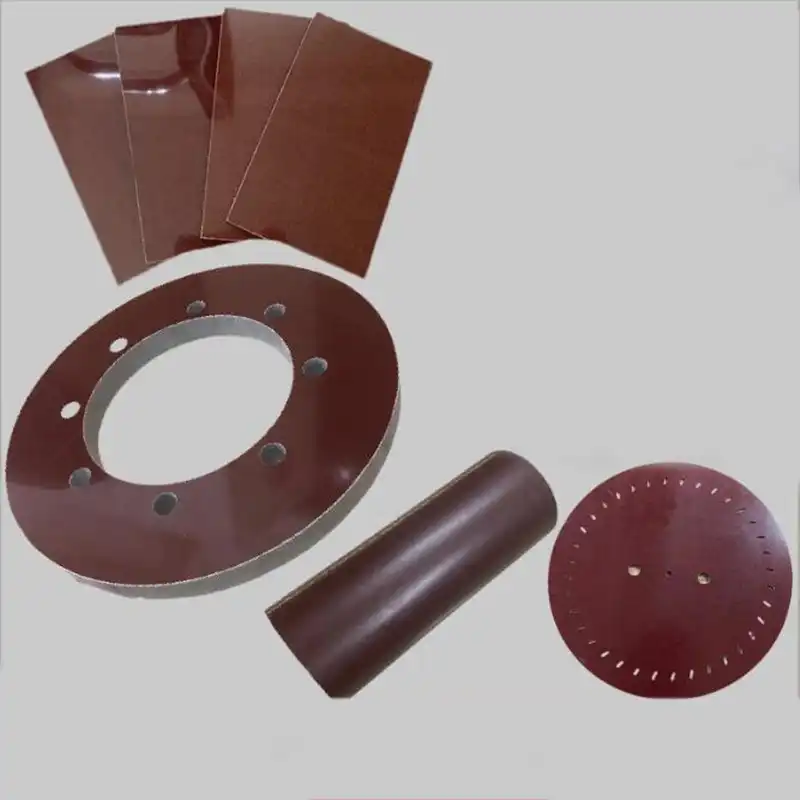
If you need to keep size specs very tight, a rigid CNC cutting machine, gears, bushings, and features with steps are better. The bigger frame and steady wheel keep it from shaking. This keeps the edges of thick stock in good shape. For parts that need to be worked on in more than one way, add a probe and an automatic tool changer. For shapes with lots of angles or sides, a four- or five-axis machine is better. But for most flat work, a three-axis machine is cheaper and will do the job. A CNC lathe is used to make round parts like sleeves, rollers, rings, and spacers because the outside circle needs to be smooth and round.
Match the Machine to the Application
The machine has to do different things in each field. This is how I make tools that work with the most common ways that NEMA Phenolic Cotton Sheet is used:
- Transformer and switchgear insulation: To protect switches and transformers, pick a router or mill that is simple to clean. Before putting the pieces together, look for cracks and dirt along the cut edges. There must be proof that these parts work electrically and that the sides are smooth. The gaps must be exact, and the thickness must be controlled.
- Motor parts and terminal blocks: Select a machine that can be put in the right place and hold the work steadily. It is important for repeat orders that the hole locations, mounting surfaces, and sizes don't change from one batch to the next. A mill with probing makes sure of this. This is the case because these things must stay the same.
- Gears, bushings, and wear rings: For parts with gears and keys, you need a milling machine. For round parts, you need a machine. Check that the grade you want to buy stays the same in terms of its physical state, load, speed, temperature, and lubrication. This is because they wear out in real life.
When making things, one problem that often comes up is fitting all the parts into one machine. These pairs make that work. When someone sells sheet, cut-to-size blocks, and helps with machining all in one package, you only have to deal with a few sellers and can easily keep track of each batch.
Select Tools, Parameters, and Workholding
Carbide Tools and Cutting Parameters
These are the tools that are most often used for NEMA Phenolic Cotton Sheet because they stay sharp, don't wear out quickly, and keep their cutting edge clean. Heavy-duty steel can cut the material, but it breaks down faster, and if it gets too hot on the surface, the resin can catch fire. The grade, thickness, and finish you need should match the tool's width, speed, feed rate, and pass depth. To get a good edge, you should rough and finish with different tools. Carve a few small holes in the pockets, and then cover the drilled holes where they come out of the pockets to keep the stuff inside. You can avoid having to wait until something is broken to fix your tools; do it often.
Workholding and Support
The work won't move, shake, or damage the edges if you hold it in a steady place. Sheets can be thick or thin, as long as they are flat, the seams are well sealed, and there is enough space on the table after cutting. You can put small, hard, or multi-sided parts together over and over with mechanical fasteners. Hold the plastic tight, but don't break or damage it. Not so much that it moves. During through-cuts, safety boards, tabs, and full-surface support keep both the part and the machine bed safe. That way, the next order will be the same as the first one. For data control, attachment standards, and program changes, all you have to do is add records.
Dust Control and Process Checks
Dealing with NEMA Phenolic Cotton Sheet dust must be done the right way. Find good ways to filter, extract, and protect yourself. A general rule set by OSHA is 5.5 mg/m³ for respirable dust and 15.5 mg/m³ for total dust. These rules apply to particles that aren't controlled in any other way. Your safety officer should check with the place to see if there are any other rules. It's also important to have good process checks. At the beginning, check the width and type of cloth. Next, look at the drawing and see how it matches the first one. Last, clean and pack the finished pieces to make sure the edges are safe. If the parts are electrical, you might need to do more than just look at them. You need to test them based on the type and any rules that apply.
Compare Materials and Avoid Common Problems
Cotton Phenolic Versus Paper Phenolic and Epoxy Glass
While paper-based grades like XX and XP are more likely to tear, cotton-based NEMA Phenolic Cotton Sheets are stronger and last longer. However, marks on paper might be better for tasks that need to save money or electricity. Epoxy glass veneer is harder to work with and doesn't bend or break as easily. Glass epoxy doesn't soak up water as well as cotton phenolic, so places that get wet need wire grades like CE. Before you agree to a replacement, you should find out how strong it is, how much water it can hold, how dense it is, how well it works mechanically, how well it handles temperature, how easy it is to make, and how well it meets safety standards. If you use application data instead of material names, you will make a better choice.
Common Defects and Their Causes
Broken down, chipped, burned, smeared resin, overloaded tools, changes in size, and loss of insulation performance are some of the most common problems. Most of them are caused by a short list of problems: tools that are too dull, a feed or spindle speed that is too fast, bad support, the wrong toolpaths, poor chip removal, changes in moisture, vibration, and the wrong datums. You can figure out what went wrong by reading the flaw. Burn lines are usually caused by blunt tools or slow feeds that give off heat. If the hole exits break out, it means there isn't enough support behind them. When the moisture level changes or the workholding isn't tight, sizes often move.
Practical Fixes That Save Material
It's simple to fix. To begin, use tools that are very sharp. When you see marks of heat, lighten the load on the blades. Save the whole work as a backup and check the release for each hole that is made. Keep the sheets where they are at all times and measure them to see how thick they are before you cut them. Check to see if the parts are cracked, deeply scratched, dirty, or have broken edges by comparing them to the picture and any wiring needs. It doesn't cost much to test a few on the real grade, so why throw away a bunch? If you remember it, it will help you and the seller when you need to place another order.
Evaluate Suppliers and Make the Decision
Questions to Ask Before You Buy Equipment or Material
There are a few things you should check out about the machine: its working area, spindle range, precision in placement, workholding, dust collection, tool compatibility, inspection equipment, and CAD/CAM support. To pick a material provider or machine partner, you should think about their grades, thicknesses, sheet sizes, ability to do custom cutting, paperwork, tracking, export packing, and experience with OEM plans. Get inspection reports, test pieces, and photos with straight edges to learn about the materials. What kinds of paperwork do they have, like RoHS or UL paperwork? This will help you make sure the seller can give you the right paperwork for your job. Before you buy a lot, look at a sample or the first piece.
What J&Q Offers Buyers
J&Q New Composite Material Group has been making gear for over 20 years that keeps things warm. For more than 10 years, they've also done business with other countries. The ISO 9001 method that we use to make our JingHong brand NEMA Phenolic Cotton Sheet is safe and effective. It is made in 13,000 tons every year. We keep everything in one place since we ship by land, sea, and air as our own business. Once sheets are packed and sent, they stay safe in regular boxes. You need at least 500 kg to place an order, and you can pay by T/T. People come to us for help picking the right grade and understanding how to use it. We ship things to the US and more than 40 other countries.
A Simple Decision Path
Follow this order when you pick up the gear. First, pick whether the shape is flat, drilled, hollow, a cylinder, a gear, or has more than one side. Second, write down the things that are most important to you, like cost, repeatability, finish, edge condition, insulation, strength, and so on. For large sheet shapes, pick a router. For smooth parts, pick a mill. For round pieces, pick a lathe. For the fourth step, use the real grade to test the tools, devices, and settings. Now that you're ready to start the process, check the measurements of the first piece, the material papers, and the packing. Don't spend too much on features that won't be useful for this sequence.
Conclusion
Before you buy the machine itself, you should look at the part that you need for the NEMA Phenolic Cotton Sheet. How the thermoset works, how strong the cotton is, and how well it soaks up water will determine how to store, handle heat, and use tools. For big, flat forms, you use a router. With a mill, you can make parts and gears that fit together very well. A lathe is used to make round parts. Some common flaws that can be avoided are chipping, delamination, burning, and lack of full support. Sharp carbide tools can help you avoid these problems. There are clear differences between cotton phenolic, paper phenolic, and epoxy glass in terms of how tough they are, how they handle water, and how much tool wear they have.
FAQ
Which CNC machine suits NEMA Phenolic Cotton Sheet best?
It makes a difference. Routers are the best for making big flat profiles from NEMA Phenolic Cotton Sheet. Most of the time, mills work better for shapes with tighter specs. And lathes work best for making round parts like bands and rings.
Can I drill, mill, turn, and route NEMA Phenolic Cotton Sheet?
Yes. It is important to use carbide tools and controlled cutting settings. Before you start making things, you should also make a test cut on the grade you want to use.
How do I reduce chipping and delamination?
Sharp tools are used to make sure the sheet is fully supported, and the amount of lift at the hole exits is managed. Before the press run, there should also be a test cut. The edge can get a lot of damage from dull tools and bad support.
Does the grade matter for electrical insulation?
Yes. Before you sign off on the grade, look at its specifications to make sure it meets the standards for thickness, dielectric, thermal, moisture, and compliance.
Request NEMA Phenolic Cotton Sheet and CNC Machining Support
J&Q wants to hear your idea. You can send the grade, thickness, drawing, amount, and delivery date to info@jhd-material.com. Then, our team will tell you what grade is best and how to machine it. We help you get your NEMA Phenolic Cotton Sheet from the point where you have an idea to the point where it gets delivered to you. We have ISO 9001 certification for our work, and we can help you with both transportation and technology in one place. Blog.jhd-material.com has more information.
References
1. NEMA LI 1, Industrial Laminated Thermosetting Products, 1998
2. ASTM D709, Standard Specification for Laminated Thermosetting Materials, 2017
3. ASTM D570, Standard Test Method for Water Absorption of Plastics, 2018
4. ASTM D229, Standard Test Methods for Rigid Sheet and Plate Materials Used for Electrical Insulation, 2019
5. Machinery's Handbook, 31st Edition, Industrial Press, 2020
6. Occupational Safety and Health Administration, Air Contaminants, 29 CFR 1910.1000, 2021

Get a complete product list and quotation

J&Q New Composite Materials Company