FR4 Epoxy Resin Sheet Processing for CNC-Drilled Circuit Insulators
FR4 Epoxy Resin Sheet processing for CNC-drilled circuit insulators works best when you match the laminate grade to the electrical load. You then drill with sharp carbide tools, firm backing support, and steady feed rates. The sheet combines woven fiberglass cloth with a flame-resistant epoxy binder, so it insulates well and holds its shape under load. The main risks are delamination, burrs, fiber pull-out, heat, and dust. This guide covers material properties, design rules, drilling methods, inspection, and buying steps for engineers and sourcing teams in the United States who need accurate holes and consistent batches.
Typical uses include terminal boards, transformer supports, busbar barriers, relay supports, and custom mounting plates. CNC machining fits prototypes, low-volume runs, and parts that need exact hole positions or complex outlines. We supply the laminate under the Hongda brand, and we wrote this guide from more than 20 years of experience producing and selling insulating sheets.
Understanding FR4 Epoxy Resin Sheet Properties and Material Selection
What the Laminate Is Made Of
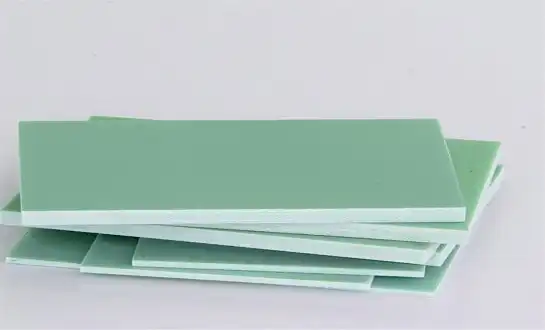
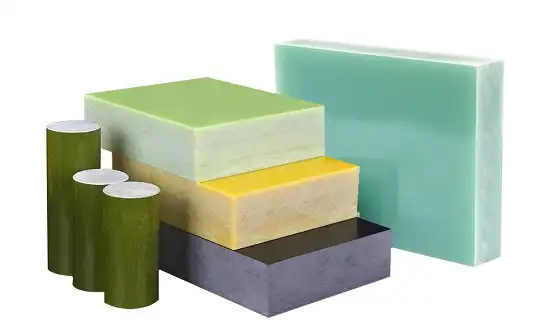
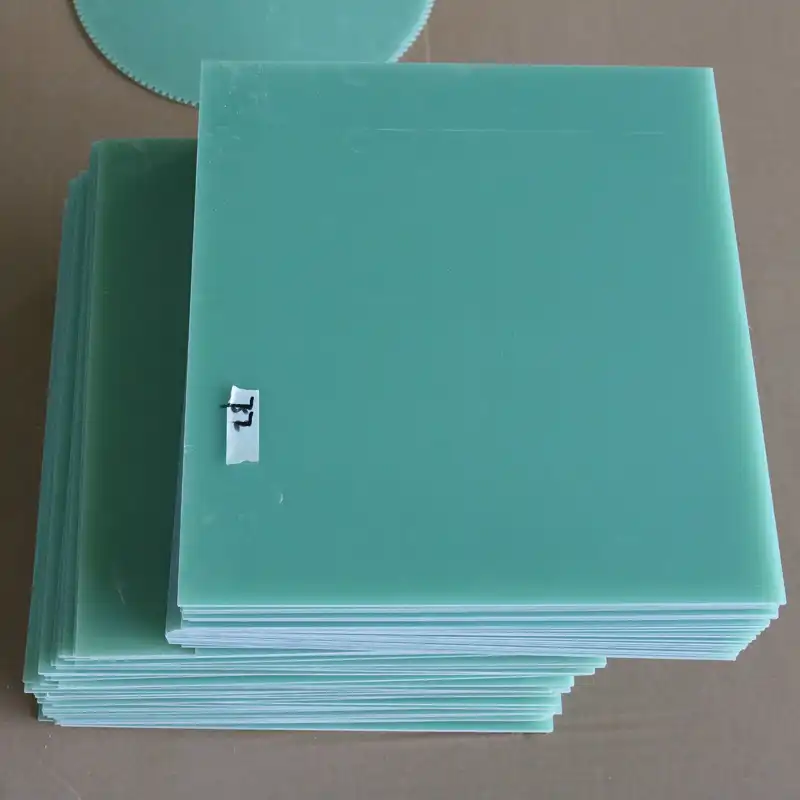
FR4 Epoxy Resin Sheet is made of thermoset laminates that are put under a lot of pressure. Fiberglass cloth that has been knitted together is pressed together with epoxy glue that doesn't catch fire. The glass makes it strong and stiff. The layers stay together because the glue is tough and won't rust. It's hard to work with because the glass strands dull cutting tools fast, and the plastic can get soft when drills are used with too much heat. Hongda FR4 Epoxy Resin Sheets can be as thin as 0.3 mm or as thick as 100 mm. Of course, they are light green. Because features are different for each brand, don't choose based on color or looks. Instead, check the grade sheet to see your exact grade.
Technical Data That Affects Drilling and Insulation
Engineers can use test data to get started. When our Hongda sheet is bent or compressed, it has high strength. In other words, it can handle holding force and mounting load while it is being used and while it is being made. This table shows the most important parts of our test report:
| Test item | Result |
|---|---|
| Bending strength perpendicular to laminations | 571 MPa |
| Compressive strength perpendicular to laminations | 548 MPa |
| Tensile strength | 282 MPa |
| Vertical layer breakdown voltage (90℃, 25# transformer oil) | 16.7 kV/mm |
| Insulation resistance after soaking | 2.2×10¹³ Ω |
| Flammability (GB/T 2408-2008) | V-0 |
It can hold 5.3 mg of water, weighs 2.01 grams per cubic centimeter, and lets 5.40 hertz of electricity flow through it at 50 hertz. Before you choose a supplier, make sure that the test method and slice thickness are the same. Following the steps in ASTM D149 will help you test for dielectric breakdown.
Selecting the Best FR4 Epoxy Sheet for Electrical Insulation
Look around to see what else is out there. Sometimes FR4 Epoxy Resin Sheet isn't the best choice. G10 has about the same strength when it comes to tools and electricity. But it doesn't put out fires or do it by itself. FR4 is better for electronics because of this. It can be cheaper than Bakelite sheet and can be used with a lot of motor and gadget parts. But it might not be able to handle heat, water, or mechanical stress as well. Plates made of metal can carry electricity if they are not covered. They move heat and make things stronger. Still, it's not perfect. Because the dielectric constant changes with frequency, you might need a different base if your circuit has a lot of it. First, write down what you need in terms of voltage, temperature, flame, load, and environment. After that, pick which mark to use.
Designing and CNC Drilling FR4 Epoxy Resin Sheets for Circuit Insulators
Designing Circuit Insulators for CNC Drilling
A good design for FR4 Epoxy Resin Sheet should think about how much it will cost, how much room it needs for electricity, how strong it needs to be, and how easy it is to make. You can pick the width based on the voltage, the load you want to put on it, the space you have, and the distance between the insulation. A lot of people pick one, two, three, or five millimeters. The critical gaps, critical hole width, critical pitch, critical edge distance, and critical location error should all be shown on your model. You should stay away from features that are stepped for no reason, have short edge distances, or have thin webs between holes. The piece is more likely to break and chip because of these things. A quick check with the maker before the design goes public can often find problems with tool access early on. This means that batches don't have to be done again or thrown away.
CNC Drilling Process for FR4 Epoxy Resin Sheets
Glass-fiber materials can be cut with CNC, but only if the process is changed to work with them. This is because the glass wears down tools quickly. Check the sheet's width, flatness, grade, and surface state before you do anything else. Then, put a backing board that will only be used once over the whole sheet with clamps. When you drill metal without carbide or diamond on them, the holes you make aren't as smooth, and the drills wear out faster. You can only find the right spindle speed, feed rate, peck cycle, and retract distance by testing them. It's important to keep fiberglass dust from getting into your eyes, nose, and lungs. Also, workers should put on the right PPE. So the glue doesn't get too soft, clean up the space between the chips.
Preventing Common CNC Drilling Defects in FR4 Insulators
Most of the time, when drilling, things go wrong because the tools are dull, there is too much feed pressure, the backing support is weak, the tools move, or the clamps are too loose. Fiber-reinforced plastic drilling is linked to delamination and push force, especially where the drill leaves the sheet. This was written in 2007 in the Journal of Materials Processing Technology and other places. It's less likely to happen if you use new backing boards, stable fixtures, sharp composite drills, and certified feed rates. You need to change the tool at the right time and make sure it is the right shape to get rid of burrs, chipped edges, and rough hole walls. Sizes can change because of worn-out parts, heat, moving parts, and tool movement. On the buy drawing, write down the maximum height of the chips and burrs, the hole tolerances, and the visual criteria so that testers can fairly judge the parts.
Inspection, Documentation, and Applications of CNC-Drilled FR4 Insulators
Inspection and Qualification of CNC-Drilled FR4 Circuit Insulators
After FR4 Epoxy Resin Sheet parts have been drilled, they are checked to make sure they meet standards for size, electrical, mechanical, and aesthetics. Check out the whole thing's size, width, holes, slots, flatness, and hole measurement. Next, look for breaks, cracks, scorched resin, and fibers that can be seen along the edges. It depends on the standards and the use that things like dielectric strength, insulation resistance, breakdown voltage, creepage, and clearance may be a part of an electrical qualification. ASTM D149 is a simple way to check for dielectric breakdown, and UL 94 has a list of flammability classes that many buyers look at. Parts of the generator, motor, switches, and busbar may also need to be put through machine or heat tests. Before the output starts, figure out how samples will be taken and how many are fine.
Documents to Request Before Approval
Both sides of an order are safe when it's written down. For every lot, ask for a technical data sheet, proof that it was approved, records that show how it was made, and a CNC inspection report. During the pricing process, let the seller know if your project needs certain papers for compliance, like UL or RoHS paperwork. That way, the seller knows it can give you what you need. You can quickly find the production lot where the problem started if you know how to track it. People who have read the first story say that the setting works before the main run starts. Line by line, match the numbers on the sheet to what you need for your drawing. Engineers and inspectors will often need these records months after the project is over, so make sure you keep them with your quality files.
Applications of CNC-Drilled FR4 Epoxy Resin Sheets Across Industries
FR4 parts that have been CNC-drilled are used in many places. We sell things like test tools, PCB testing fixtures, grind gears, molds for shoes and clothes, insulation plates, and switch insulation plates. Drilled plates are used as supports, connecting plates, and hardware by people who work with electronics. In order to keep temperatures stable and protect transformer coils from damage, people who buy power and energy use machine parts such as phase barriers, switchboard walls, and winding separators. Spacers, guide plates, and brackets that are strong and have the same diameter need to be ordered by machine builders. Battery pack spacers and insulation pads are used by car makers. Frames and motor plates are used by furniture brands. Bakelite sheet could be a cheap way to get them. Check how well each part works with heat, load, hole accuracy, and the distance it moves when it moves.
Buying and Customizing FR4 Epoxy Resin Sheets
Preparing a Complete RFQ
With a full RFQ for FR4 Epoxy Resin Sheet, you can get quotes, wait times, and skilled help faster. What kind of FR4 is it, how thick it is, what the tolerances are, what the annual amount is, what the hole details are, what the surface needs are, what the compliance needs are, how it will be packed, and where it will be used. It depends on the tolerances, the programming, the tools used, the inspection, the packaging, the freight, the cost of the materials, and the type of laminate that is ordered. It also depends on how thick it is and how many holes it has. Make sure that each of these things is included on its own when you compare quotes so that it is fair. To avoid throwing away paper, it's best to order sheets that are close to the size of the pieces you already have. It comes in two different thicknesses: 0.3 mm and 100 mm. This range has most of the choices.
Evaluating a Supplier and Planning Delivery
You should look for a stable production capacity, experience exporting, sample help, and a track record of keeping jobs on track. Hongda FR4 Epoxy Resin Sheets can make 13,000 tons of goods each year. Fourteen thousand tons can be made by our two plants together. Good work is always done in this workshop because of the computers that run it. It needs to be 1030 mm x 1230 mm. You can order them in 1030 mm x 2030 mm, 1220 mm x 2440 mm, 1030 mm x 1030 mm, and 1030 mm x 2070 mm sizes. Sheets are kept safe on pallets before they are sent by sea, land, or air. They are put in regular boxes. You must buy at least 500 kg and pay by T/T. You are the first person whose order is going to be filled.
Recommended Production Workflow for CNC-Drilled FR4 Insulators
Both technical and business risk go down when you write down your workflow. To begin, write down the voltage, temperature, humidity, mechanical load, distance between insulation, spark standards, and temperature. Next, talk to the machinist about the CAD model, the datums, the tolerances, the minimum hole sizes, and the lengths of the edges. Third, approve a sample that is a good representation of the whole and has been checked for grade, size, flatness, hole quality, and a smooth surface. For each run, write down details about the lot, tool wear, first-article results, and measurements taken during the process. Finally, clean, label, keep safe, and pack the parts with the assurance and inspection forms you asked for. Your team can quickly find any problems if you keep good records. With the same accepted reference, it's also easier to place orders over and over again.
Conclusion
When the design is well thought out, the material is FR4 Epoxy Resin Sheet CNC-drilled circuit insulators work well. The drilling must also be well controlled, and the test must be done. The strong material is made of woven glass and flame-resistant resin. Engineers test the laminate for things like breakdown voltage, insulation resistance, and V-0 flammability to see if it's right for the job. Metals, G10, and phenolic laminate all have different needs when it comes to electricity, heat, load, and flame. Each one needs to be looked at separately. They are less likely to happen if the edges are well spread, the tools are carbide, the backing is supported, and the dust is kept in check. Each batch's size, energy, and papers are checked to make sure they are right. A full RFQ and a writing process hold these steps together. People who buy tools can use them over and over.
FAQ
Which drills work best on FR4?
You can see that drills with a carbide or diamond coating are the best for FR4 Epoxy Resin Sheet. Because the glass support is rough, metal tools break down quickly and leave hole walls that aren't smooth.
How can I reduce delamination?
It is important to have a stable clamping system, a hard backing board, controlled feed rates, sharp composite drills, and to clear the chips often. The best side is the one that requires less force.
How do I choose the sheet thickness?
Some of the things that can help you decide are the voltage, the distance between the insulation, the motor load, and the storage space. Because Hongda sheets come in sizes from 0.3 mm to 100 mm, you can change most of the patterns.
What documents should I request?
As well as a conformity certificate, an inspection report, and records that show how each batch was made, you should ask for these things. If you tell us about your legal needs right away, we can make sure we can meet them.
Request a Custom FR4 Epoxy Resin Sheet Quotation from J&Q
Are you going to use a CNC to make holes in an insulator? We've been selling FR4 Epoxy Resin Sheet for more than 20 years. We have our own shipping company and have done business with other countries for more than 10 years, so we can meet all of your needs here. We'll give you a full price quote once we see your picture, know how thick the material is, how much you need, and where you want it sent to info@jhd-material.com. Visit blog.jhd-material.com for more guides.
References
1. IPC-4101E, Specification for Base Materials for Rigid and Multilayer Printed Boards, IPC, 2021
2. NEMA LI 1, Industrial Laminated Thermosetting Products, National Electrical Manufacturers Association, 1998
3. UL 94, Tests for Flammability of Plastic Materials for Parts in Devices and Appliances, Underwriters Laboratories, 2013
4. ASTM D709, Standard Specification for Laminated Thermosetting Materials, ASTM International, 2017
5. ASTM D149, Standard Test Method for Dielectric Breakdown Voltage and Dielectric Strength of Solid Electrical Insulating Materials at Commercial Power Frequencies, ASTM International, 2020
6. Journal of Materials Processing Technology, "Drilling of Fiber Reinforced Plastics: A Review," 2007

Get a complete product list and quotation

J&Q New Composite Materials Company