G10 FR4 Sheet CNC Machining for Precision Electrical Insulation Parts
G10 FR4 Sheet CNC machining turns a flat glass-epoxy laminate into precise insulation parts such as washers, spacers, bushings, transformer barriers, PCB supports, and mounting plates. The process works because the laminate keeps its shape under heat, resists moisture, and holds its electrical insulation values. CNC tools then cut holes, slots, and profiles with repeatable accuracy. Success depends on three choices: the right material grade, carbide or diamond-coated tooling, and a clear drawing with stated tolerances. In this guide, I explain each choice so engineers and buyers in the United States can specify parts with confidence.
G10 FR4 Sheet Basics: Composition, Properties, and Alternatives
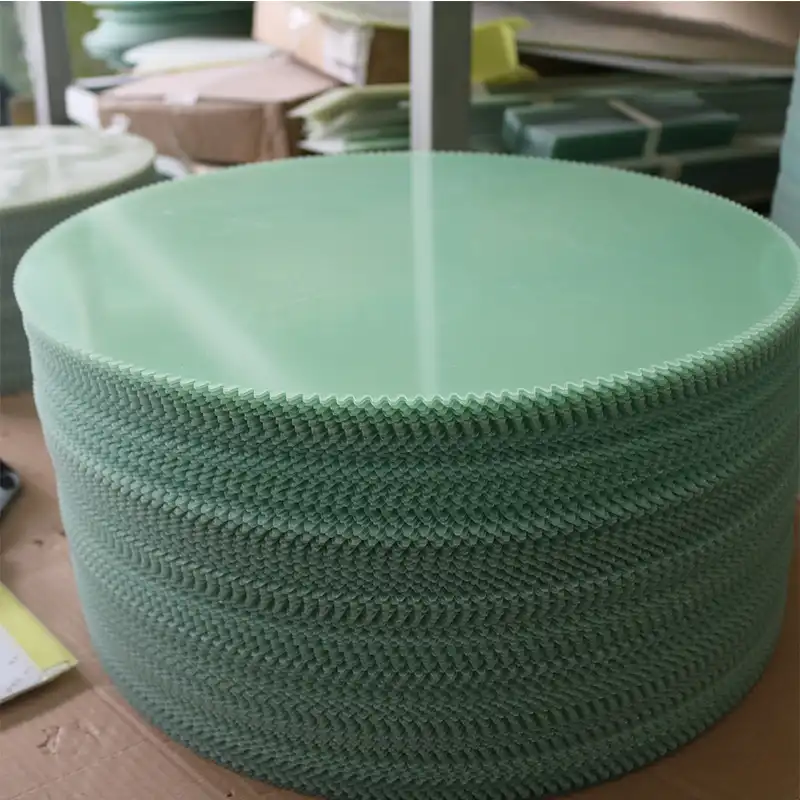
The G10 FR4 Sheet is made of glass and resin. Epoxy resin is mixed with electrical-grade glass cloth that has been woven. The layers are then put together using controlled heat and pressure until the epoxy resin hardens into a board. It's stiff, strong, and not heavy. It's also good at moving electricity around, and heat doesn't make it much bigger.
What Is G10 FR4 Sheet?
The names are different, even though they sound alike. This is the mark that NEMA gives to glass-epoxy laminate: G10. For fire safety, G10 comes in FR4 grade, which usually meets UL94 V-0. If the plan doesn't allow halogens, you can't use a G10 call-out. You can use a FR4 board instead. When safety from fire is important, you should never use G10 board instead of FR4.
Both names are used in a vague way by providers, so before you approve production, you should look at a material's resin system, thickness limit, certificates, and other details.
Key Material Properties of G10 FR4 Sheet
It was chosen because it has a good range of features on a single board. It doesn't absorb more than 0.15% water, and most datasheets say that it has a density of 1.80 to 2.00 g/cm³. This means that parts stay the same size in damp rooms. These grades don't change shape until they reach 130°C to 140°C. After that, they turn into glass. When they get to about 180°C, high-Tg grades don't melt. Only UL 94 V-0 (and not V-1 or V-2) is stricter than the other two. This is the main reason why electrical plans use FR4 grades so often.
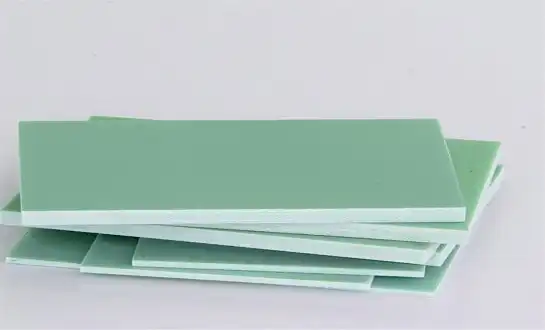
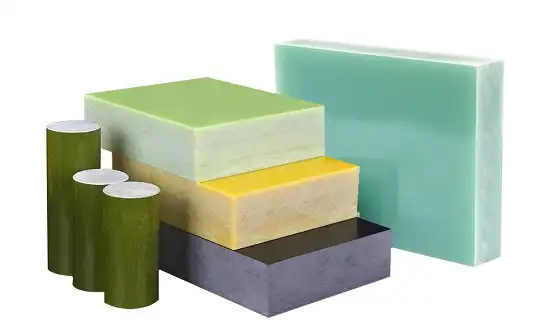
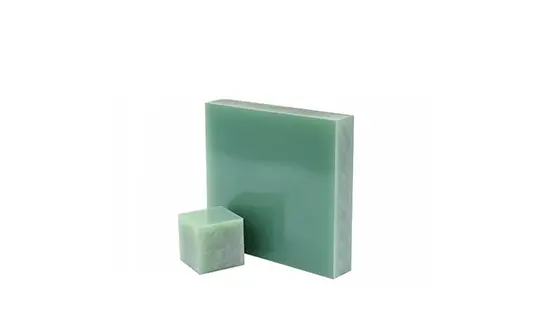
Based on the thickness, test direction, humidity, and test method, these numbers need to be changed. If you want to learn more about a product, I think you should look at records from tests that have been accepted, such as ASTM D149 results for dielectric breakdown and ASTM D790 results for rigidity. We have UL94V0 and NEMA grades of our JingHong boards. They are a light green color in real life.
G10 FR4 Sheet Compared with Alternative Materials
You can get phenolic laminates like Bakelite sheet and phenolic cotton sheet for less money. A lot of different things can be made from these, such as spacers, gears, and simple insulation parts. They work well in places where there isn't a lot of power or water. It is best to use glass-epoxy for parts that need to be strong, not soak up water, and work well with electricity. Sometimes these parts are fences for switchgear, or test stands for PCBs.
Glass-epoxy is what makes FR4 and plain G10 the same. But G10 might not be safe around fire, so look at the picture to see what grade it is. It is also important to be thick. You can use the 1 mm sheet to separate things and make thin walls. 3 mm to 5 mm thick sheets can be used to make strong frames and plates for fixing things. People who make appliances and want to save money might use phenolic for parts that keep heat in and glass-epoxy only when the design calls for it.
How CNC Machining Shapes Precision Insulation Parts
Why CNC Machine G10 FR4 Sheet for Precision Parts?
The only way to make a simple gap by hand is to cut and drill. But it's hard to do the same thing over and over. CNC routers and mills remember where the slots, holes, countersinks, and forms are on every piece they make. Motor parts, PCB supports, guide rails, mounting plates, insulation screws, and bushings all need to be more or less the same.
The same program is used for both prototypes and small runs. This means that a few lines of code are all it takes to change the design. Shops use carbide or diamond-coated tools to keep track of how fast they wear out. This is because glass fiber is rough. Fine glass dust is bad for your eyes and lungs, so you should wear safety gear and use water to cut glass. You can avoid delamination, rough edges, and burning if you have good control. The G10 FR4 Sheet machining process requires strict oversight.
The G10 FR4 Sheet CNC Machining Process
Well-thought-out steps begin before the first cut. The shop compares the papers to the grade, batch marks, thickness, form, and state of the surface. Then, programmers look at the CAD file to see if there are any problems with the thin walls, close holes, sharp inside corners, or binding risks. After that, the fixings are made to fit.
You will need to use the right tools and feed rates to route, mill, drill, slot, countersink, or deburr an abrasive laminate. You can use a CMM, micrometers, calipers, optical tools, or calipers for the last test. One more thing that is checked is that the sheets are flat and there are no tears in them. Keep the cartons dry, separate the parts, label each one, and pack them tightly so the parts get to their destination in the same condition they were in when they left.
Common Machining Problems and How to Avoid Them
It's pretty easy to spot most flaws, like rough edges, cracks around holes, burrs, size differences, and a lot of dust. Most of them are caused by tools that are too dull, too slow, too hot, not supported well, not held securely, or tools that aren't the right shape.
It is good to stay away from problems. There should be enough space around holes, starter drills, thin parts, support, sharp carbide tools, and cutting settings that have been tried. Also, the edges should be rounded. Check the tool wear every once in a while, and run the dust extraction all the time.
There must be written quality processes; the sheet thickness must stay the same, the checking methods must stay the same, and the first item must be accepted for each batch to be the same. There are safety rules that workers must follow at work. In the US, these are called OSHA rules. They should put on safety gear to do this.
Specifying the Right Material and Drawing
How to Choose the Right Sheet for CNC Machining
First, take a look at the working conditions. Write down the voltage it can take, the dielectric resist, the creepage and clearance lengths, the flame rating, the type of load, the vibration, the temperature, the humidity, and the chemicals that come in contact with it. Next, make sure that the G10 FR4 Sheet thickness and size fit the space you have. Also, check that the material is stiff enough, that the insulation is far enough away, and that the fasteners are connected correctly.
Specification Checklist for G10 FR4 CNC Parts
A full specification is made up of three things. It is important to write down the grade, thickness, dielectric strength, insulator resistance, temperature range, rate of water absorption, mechanical strength, flame rating, and chemical exposure of the material. To make something, you need to write down the final measurements, important standards, where the holes and slots are, how the edges will be treated, how flat and straight the pieces will be, how the surface will look, what the obvious acceptance criteria are, and how the first piece will be inspected. When you write business terms, you should include the prototype and production quantities, the annual demand, the packaging, the certifications, the delivery terms, the destination, the lead time, and how often you plan to place another order.
Be sure to only mark the margins that you need for the job. Making limits that are too tight for the job takes more time. Because these are written down, they all begin in the same place. There is also no going back and forth once the work has begun. It's easy to compare quotes this way.
Where Buyers Use CNC-Machined Insulation Parts
A business that works with electricity makes a lot of different things, such as PCB test tools, mounting plates, terminal boards, and insulation supports. Gears, spacers, and structural insulation plates are used by machine builders to control length and width. Busbar insulation, spark shields, switching barriers, and coil separators are all picked by people who buy power and energy based on how well they keep the temperature stable and prevent fires.
The people who work on cars make shields and pads that keep lithium battery packs warm. They like it when every batch is the same quality. There are motor brackets, insulation frames, and parts that separate heat that are used by different types of machines. They also look at how much they cost and how long it takes to deliver. In many areas, quality is important, but in all of them, measurements must be exact, and ingredients must be the same from batch to batch.
Buying G10 FR4 Sheet and Choosing a Supplier
Standard Sheet or Custom CNC-Machined Parts
This is the best choice for people who cut their own pieces, order samples, buy small amounts, or change designs a lot. When you need to make the same thing over and over, have complicated design, need tight tolerances, or want to do less work by hand, cut-to-size blanks and fully made parts can help. Using a G10 FR4 Sheet for fully machined components ensures high repeatability for critical assemblies.
Working with a G10 FR4 Sheet Manufacturer or Supplier
A good partner makes sure they have what they need, checks the work, writes detailed reports, and takes care of shipping between countries. Find out if the business makes laminate, sells approved sheets, machines parts, or works with other businesses on a lot of different projects. Then, find out what grades and thicknesses are available, if the material can be cut to size, what the tightest tolerances are, how the edge quality is controlled, how many samples need to be approved, how long the wait time is, and if they can help with certification.
A good RFQ includes the goal date, drawings, CAD files, yearly demand, tolerances, certification needs, location, and how the goods will be packed. You can get a good quote on G10 FR4 Sheet right away if you tell the people who sell it everything they need to know. Also, a clear answer to these questions is the fastest way to build trust.
What J&Q Offers
These are the main things you will need to get JingHong G10 FR4 Sheet:
- The JingHong sheet is made of electronic-grade glass cloth and epoxy resin that is rated UL94V0 and NEMA. It's a light green color in real life. Because the thickness runs from 0.3 mm to 100 mm, you can get both thin dividers and thick structural plates for your CNC programs in the same place.
- The standard sizes are 1020 mm x 1220 mm, 1220 mm x 2440 mm, and 1020 mm x 2020 mm. What kinds of sizes are there? Among the custom sizes are 1030 × 2030 mm, 1030 × 1030 mm, and 1030 × 2070 mm. Each box is carefully packed, and a pallet keeps it safe while it's being shipped.
- How much stock do you have? How much space do you have open? This can make the same amount of goods each year as our two plants, which is 43,000 tons. We accept T/T as payment, and we ship by sea, land, or air through our own company. To place an order, you need at least 500 kg.
There are a lot of people who want to know more about delivery, size fit, and volume. It should be helpful to read these replies. These insulation sheets have been made by us for more than 20 years, and they have been sent abroad for more than 10 years. The first orders that are made are direct orders.
Conclusion
For correct electrical insulation parts, the G10 FR4 Sheet is a good insulator. It is stiff, doesn't soak up water, and in FR4 grades, it doesn't catch fire. There are some differences between G10 and FR4 in how well they resist fire. Phenolic laminates are better for jobs that don't need a lot of strength. A part's thickness should be right for its job. CNC cutting is always more accurate, but it needs tools covered in carbide or diamond to avoid delamination and burrs, to keep the dust down, and to hold the work in place. It is less likely that quotes will be wrong and production will be held up when there are clear drawings, a written specification, and certified datasheets for electronics, machinery, power, cars, and appliances. What you should look for in a seller is the grades they offer, the sizes they offer, how much they can supply, and how well they handle transportation.
FAQ
Can G10 FR4 sheet be CNC machined?
Yes, the G10 FR4 Sheet does work well with CNC tools and mills. Carbide or diamond-covered tools will help keep the dust down. Hold thin pieces up so that the holes don't crack and the edges stay clean. Check out how often the tools are being used.
What is the difference between G10 and FR4?
In NEMA, G10 is the grade for glass-epoxy. Most of the time, FR4 can be used instead of G10, except when halogens must be avoided. However, G10 can't be used instead of FR4 when it's important to resist fire.
Can G10 FR4 sheet handle high temperatures?
It is based on the grade. Standard grades turn into glass at 130°C to 140°C. High-Tg grades turn into glass at 180°C. Before you accept the part, make sure that the temperature and load listed on the datasheet are the same as they are in real life.
What do I send to get an accurate quote?
Please provide drawings or CAD files that show the thickness, amount, yearly demand, limits, proof needed, end location, delivery date, and the way the work will be done. The more you fill out the form, the faster and better we can give you a price. Sizes range from 0.3 mm to 100 mm at J&Q.
Request a Quote for G10 FR4 Sheet CNC Machining Parts from J&Q
Want to find a company that sells G10 FR4 Sheet and can make the right parts for electrical insulation? J&Q has been around for over 20 years and has its own shipping business. In other words, we can do everything for you in one place. We need you to email us at info@jhd-material.com with your ideas, the amount you need, and the address where the material should be sent. We'll give you a quote after we think about what you need. Find out more at blog.jhd-material.com.
References
1. NEMA LI 1, Industrial Laminated Thermosetting Products, 1998
2. UL 94, Standard for Tests for Flammability of Plastic Materials for Parts in Devices and Appliances, 2013
3. ASTM D709, Standard Specification for Laminated Thermosetting Materials, 2017
4. ASTM D149, Standard Test Method for Dielectric Breakdown Voltage and Dielectric Strength of Solid Electrical Insulating Materials, 2020
5. ASTM D570, Standard Test Method for Water Absorption of Plastics, 2018
6. ASM Handbook, Volume 21: Composites, 2001

Get a complete product list and quotation

J&Q New Composite Materials Company