NEMA Phenolic Cotton Sheet CNC Machining for Industrial Bushings
NEMA Phenolic Cotton Sheet CNC Machining for Industrial Bushings turns a cotton-reinforced thermoset laminate into accurate, repeatable parts that carry load, guide shafts, and insulate. A NEMA Phenolic Cotton Sheet machines cleanly with sharp carbide tools and controlled heat, holds tight dimensions, and offers dielectric strength that metal lacks. Success depends on the right grade, such as C or CE, a complete drawing, and steady cutting conditions. I wrote this guide to help engineers and buyers in the United States compare materials, plan machining, and request accurate quotes.
Introduction: Why NEMA Phenolic Cotton Laminate Is Used for Industrial Bushings
What NEMA Phenolic Cotton Sheet Is
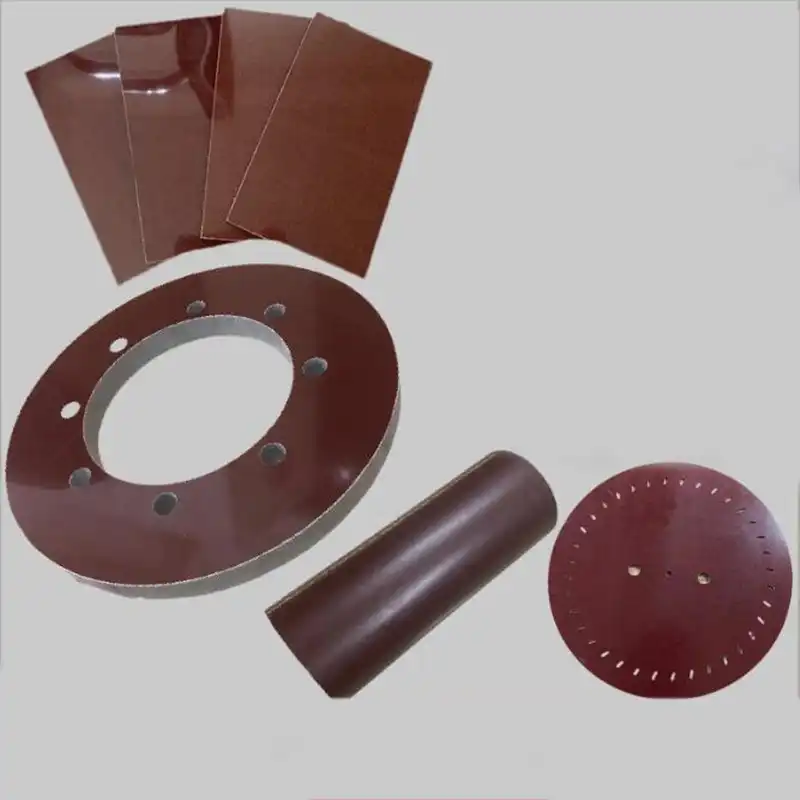
There is a thermosetting laminate on it. It's called NEMA Phenolic Cotton Sheet. Phenolic resin is mixed with layers of cotton fabric, and then heat and pressure are used to harden the mixture. The resin makes it warmer, less likely to melt, and easier to stick together. The cotton makes it stronger and less likely to break when hit. This is because cotton cloth is more stable and can handle more impact than phenolic paper laminate. It is better for making bushings, wear rings, spacers, and guide parts. NEMA LI-1 sets the marks. This type of weave is rougher in grades C and CE, while it's softer in grade L. What does the "E" in grade L mean? It means that the electrical properties have gotten better. J&Q sells grades XX, XP, C, CE, and L under the name JingHong. Always look at the most recent data sheet to see what the properties are.
Why Engineers Select It for Bushings
Phenolic cotton laminate was chosen because it has a lot of good points. Because it doesn't let electricity flow through it, a bushing can separate a shaft from a frame. It's easy to cut with standard CNC tools, which keeps the cost of group production low. It doesn't lose its shape when you move slowly or only sometimes, and the cotton layers soak up vibrations. When our product is bent, it can withstand 100–140 MPa of force, and when it is compressed, it can hold up to 150–200 MPa of force. For motors, switches, and machinery parts, these numbers are a good place to start. However, each design still needs to be checked on its own.
What Performance Depends On
A data sheet can't tell you how long something will last in service. How well the part works is determined by the grade, the resin system, the temperature, the moisture level, the radial load, the shaft material, the lubrication, and the quality of the machining. If the steel shaft is smooth, something that works well might break down quickly if it is rough. Wet places change size and electrical values more than dry places that use glass-reinforced cement because cotton soaks up water. The ends of the part could get burned or come apart before it ships if it isn't made well. I believe that catalog numbers should be the first step in the screening process. After that, samples should be checked once they are put together. In that order, the parts that follow talk about qualities, cutting, comparing materials, and buying.
NEMA Phenolic Cotton Sheet Properties for Industrial Bushings
Mechanical Strength and Wear Behavior
This is the most important piece of information because bushings have to deal with compression, shock, and sliding contact. Strengths: The NEMA Phenolic Cotton Sheet can pull apart 100 to 140 MPa and crush 150 to 200 MPa. A nut with a high compression strength won't bend when it's being pushed in a circle. When things get hit, cotton reinforcements are stronger than paper laminates. This helps with small alignment problems and shock loads. Wear is based on how fast, how well oiled, and how hard the shaft is. Most of the time, phenolic cotton works better when it moves slowly, sometimes, or back and forth than when it rotates all the time quickly. I think you should get hardness and wear data for the exact grade before you start making heavy-duty tools.
Electrical Insulation and Dielectric Performance
When people buy electrical goods, they look at the insulation resistance and dielectric strength. This is especially true when the air is humid. Our sheet has a dielectric strength of up to 20 kV/mm. In motors, transformers, and switches, this means it can hold shielding plates, spacers, and support rings in place. A test called ASTM D149 can be used to check for dielectric breakdown. How the electrodes are set up, how thick they are, and what the condition is all affect the results. Grade CE is often used for electrical bushings because it works better with electricity and doesn't get damaged by water as quickly as grade C. Because cotton soaks up water, if the part is going to be used outside or in a damp area, make sure it is humidity-conditioned. Plus, mineral and generator oils don't stick to phenolic cotton, which is good for gear that is full of oil.
Temperature, Moisture, and Dimensional Stability
Things get smaller and stronger when they get hot or wet. The data sheet for this product says it can handle temperatures up to 150°C and doesn't soak up more than 2% of water. The limits for long-term exposure and continuous service temperature are not the same. If you heat and cool any resin a lot, it will break down over time, so make sure the rating is right for your grade and daily use. ASTM D570 is mostly used to check if something can soak up water. If you want to make sure the clearances you set are correct, you should think about how the bushing will fit when it gets wet. When sheets are shipped, they are safely put on a pallet. Before you cut them, I suggest laying them out flat in a dry place.
CNC Machining NEMA Phenolic Cotton Sheet into Industrial Bushings
A Typical CNC Workflow
The CNC machine can be used to make samples as well as large OEM runs. The first step in a normal process is to look over the drawings and pick a grade. First, the shop cuts a blank out of sheet stock. They use bars that won't damage the laminate to hold it in place and then make the shape rough. Finishing passes set the center hole, the outside diameter, and the length. After the burrs and scratches are taken off, grooves, chamfers, and holes are made. As a general rule, our sheets are 1220 mm × 2020 mm and are between 0.5 mm and 100 mm thick. We can also make sheets in any size you need, which means you can use thick blanks to make long bushings. Sheet layers usually move in a certain way. Find out about orientation from your provider before you start the program.
Tooling, Heat Control, and Dust
Heat is the most dangerous thing. If you use too much heat, the plastic can get burned or broken. This can cause it to separate and change size when it cools. Carbide-tipped tools that are sharp are better for me than steel tools that are dull because they cut faster and keep the surface cool. That the feeds aren't too fast or too slow, and that the speeds stay the same. For less chipping, use high-speed, sharp drill bits and hold up the side that comes out. Because fine phenolic dust is unpleasant, shops should use dust extraction and make sure that workers have respiratory protection on. When you put the finishing parts together, make sure you follow safety rules and business ethics.
Inspection of Finished Bushings
Every part is checked to make sure it matches the drawing. Most checks look for roundness, concentricity, cracks, burns, delamination, length, wall thickness, concentricity, inside and outside lengths, and surface finish. Before you measure the parts, make sure they are at a stable room temperature. This is because laminates move a little when they get hot or wet. When you get the same order over and over, first-article review and batch records help you find the bad batch of materials. Quality control checks how well a blank rides by seeing how flat the sheet is, how well the ply sticks to the sheet, and if there are any dry spots.
Comparing NEMA Phenolic Cotton Sheet with Alternative Materials
Versus Phenolic Paper and Epoxy Fiberglass
Phenolic paper laminate fits better than loaded bushings for flat insulating parts because it is more flexible and costs less. Fiberglass epoxy is stronger, doesn't soak up water as much, and can handle higher temperatures. This makes it a good choice for strong electrical parts. Also, cutting tools break down more quickly. You can find the NEMA Phenolic Cotton Sheet in the middle. It's tough, easy to work with, insulating, and doesn't cost too much for big joints that you have to move by hand. I choose epoxy fiberglass when mold or water damage is a big issue. Phenolic cotton is what I choose when impact strength and ease of machine use are more important.
Versus Nylon
Nylon doesn't stick to things easily and can take a beating, which is why it works well in a lot of moving bushings. It can also take in water and change size when heated or loaded. Phenolic cotton tends to keep its shape better when it is pressed down. Not only does it make better stiff, heat-stable electrical insulation, but it also wears down more quickly against dry shafts. When it gets cooler, nylon softens, but a thermoset that has already hardened won't melt. For electrical parts that need to stay stiff near heat, phenolic cotton works better most of the time. If you want to slide quietly with little oil, nylon might be the best choice. Compare them to your speed, temperature, and load.
NEMA C Versus NEMA CE
Grades C and CE both use cotton canvas, but they use different resins and have different properties. You should use grade C to make gears, wear parts, and wheels that carry weight. Grade CE is better for electrical performance and resistance to humidity, so it's a good choice for parts that are close to electrical equipment and bushings that protect them. In all of these situations, neither grade wins. You should pay close attention to CE if a nut holds weight and stops power from spreading in damp air. C might be enough if it only moves things when it's dry. I believe you should compare up-to-date data sheets for the grade of the batch you want to buy.
Selecting, Applying, and Buying NEMA Phenolic Cotton Sheet
Collect Data and Avoid Common Mistakes
How big are the shaft and case? What is the speed? What is the temperature? What is the humidity? How much fluid will be exposed? How much lubrication is needed? How much electricity is needed? Then, match the grade to the risk that you think will happen most often: fit, mechanical load, voltage, or moisture. A lot of mistakes keep happening. The buyers pick the least expensive grade without looking at the batch data or the amount of moisture. Designers use nylon or metal to make space between things, but phenolic cotton changes shape when it's hot or foggy. Some people don't care which way the layers go, keep the tools too hot, or don't clean up the dust. When drawings aren't finished, they don't fit right, which means more work. Before making the first cut, show the supplier a full drawing or CAD model of the part and be clear about the acceptable ranges and standards. You should also find out how the part is oriented and the order in which it was machined.
Where Phenolic Cotton Bushings Are Used
Milled parts can be found in motors and generators. These include insulating spacers, guide bushings, shaft supports, and terminal components. In transformers and switches, they act as insulating covers, support bushings, barriers, and separation parts. They need to be able to handle moisture and be easy to track. For machinery makers, they are used to make hinges, chains, pumps, fittings, and low-speed assemblies. The metal that is used to make wear bands, collars, rollers, and rings is the same. It can also be used to make tools that work at high temperatures, car gaskets and washers, and circuit breakers' insulation. When making a lot of something, teams in the car and gadget industries often want stable batches that are all the same thickness.
RFQ Checklist and Supplier Evaluation
There are many things that affect the price besides just the price of the sheet itself. These include the grade, thickness, quantity, machining time, scrap, tolerances, inspection, shipping, and so on. With a full RFQ, it's easier to get quotes. Writing down the material's NEMA Phenolic Cotton Sheet grade, thickness, mechanical and electrical needs, temperature range, and how it reacts to water and other fluids is important. Fill in the part with its diameters, length, wall thickness, grooves, holes, tolerances, concentricity, roundness, finish, quantity, and expected delivery date. You can also add a drawing or model in 2D or 3D. Make a list of the test results, certificates, first-article checks, batch tracking, delivery dates, and where the goods need to go.
J&Q has been making insulation sheets for more than 20 years and has been in business for more than 10 years. ISO 9001 says that our products are good. Every year, we make 13,000 tons of goods and send them to more than 40 countries, including the US. Your gift can be sent by air, sea, or land through our own shipping company. The least you can order is 500 kg, and you can pay by T/T.
Conclusion
NEMA Phenolic Cotton Sheet is a strengthened thermoset made of cotton. It is tough, doesn't conduct electricity, and can be machined, which makes it useful for bushing makers. The grade affects how much it's worth. If you want to know how well a grade performs under mechanical load, Grade C is better than Grade CE. The first test is based on information about heat, moisture, mechanical strength, and dielectric strength. The choice is confirmed by testing samples in the real assembly. To protect the quality of CNC-machined parts, it is important to use sharp carbide tools, keep the heat under control, collect the dust, and check the sizes. When you compare phenolic cotton to phenolic paper, epoxy fiberglass, and nylon, it is a good middle ground between toughness, insulation, and cost. All of these options are better in some situations, though. Quotes that are correct and fit issues that happen less often happen when there are full specifications, clear limits, and full plans.
FAQ
Can NEMA Phenolic Cotton Sheet be CNC machined into bushings?
Yes. It can be milled, turned, bored, drilled, and grooved. Controlled heat, sharp carbide tools, stable workholding, and dust collection should be used, and then the sizes should be checked.
Is NEMA C or NEMA CE better for bushings?
Neither grade is good for every job. Grade C is better for mechanical load, and grade CE is better for protecting against electricity and being resistant to water. Compare the most recent grade-level data sheets, and then have your group test the items.
What information do I need for a quotation?
Send a drawing or CAD model, along with the grade, thickness, number, working conditions, electrical needs, and location of the product you want to send. When you order sheets, the minimum amount you can have is 500 kg.
Request a NEMA Phenolic Cotton Sheet Quote from J&Q
On the lookout for a business that can make NEMA Phenolic Cotton Sheet and do bushing work? For more than 20 years, J&Q has been making insulation. It also has its own transportation business that can do everything for you. Send your plans, the grade you need, the amount you need, and where the material is going to info@jhd-material.com to get a price and advice on what material to use. To find out more, please go to blog.jhd-material.com.
References
1. NEMA LI 1, Industrial Laminated Thermosetting Products, 1998.
2. ASTM D709, Standard Specification for Laminated Thermosetting Materials, 2017.
3. ASTM D570, Standard Test Method for Water Absorption of Plastics, 2018.
4. ASTM D149, Standard Test Method for Dielectric Breakdown Voltage and Dielectric Strength of Solid Electrical Insulating Materials at Commercial Power Frequencies, 2020.
5. Machinery's Handbook, Industrial Press, 2020.
6. Handbook of Thermoset Plastics, Elsevier, 2021.

Get a complete product list and quotation
J&Q New Composite Materials Company